
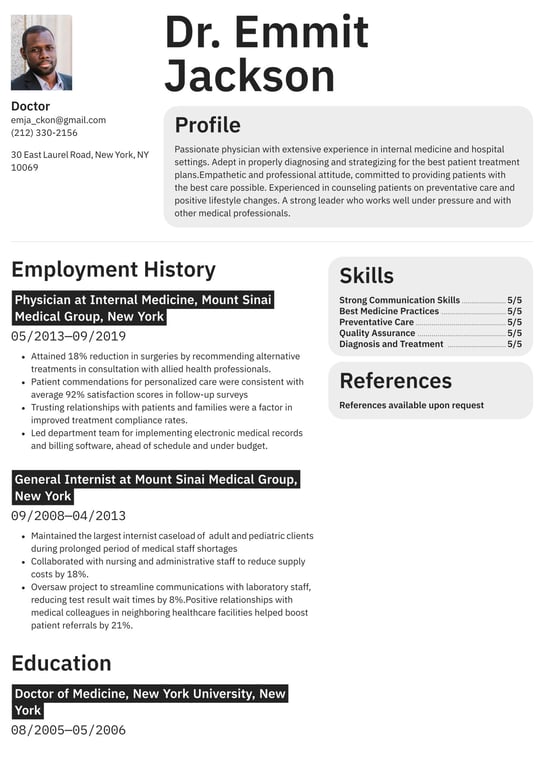
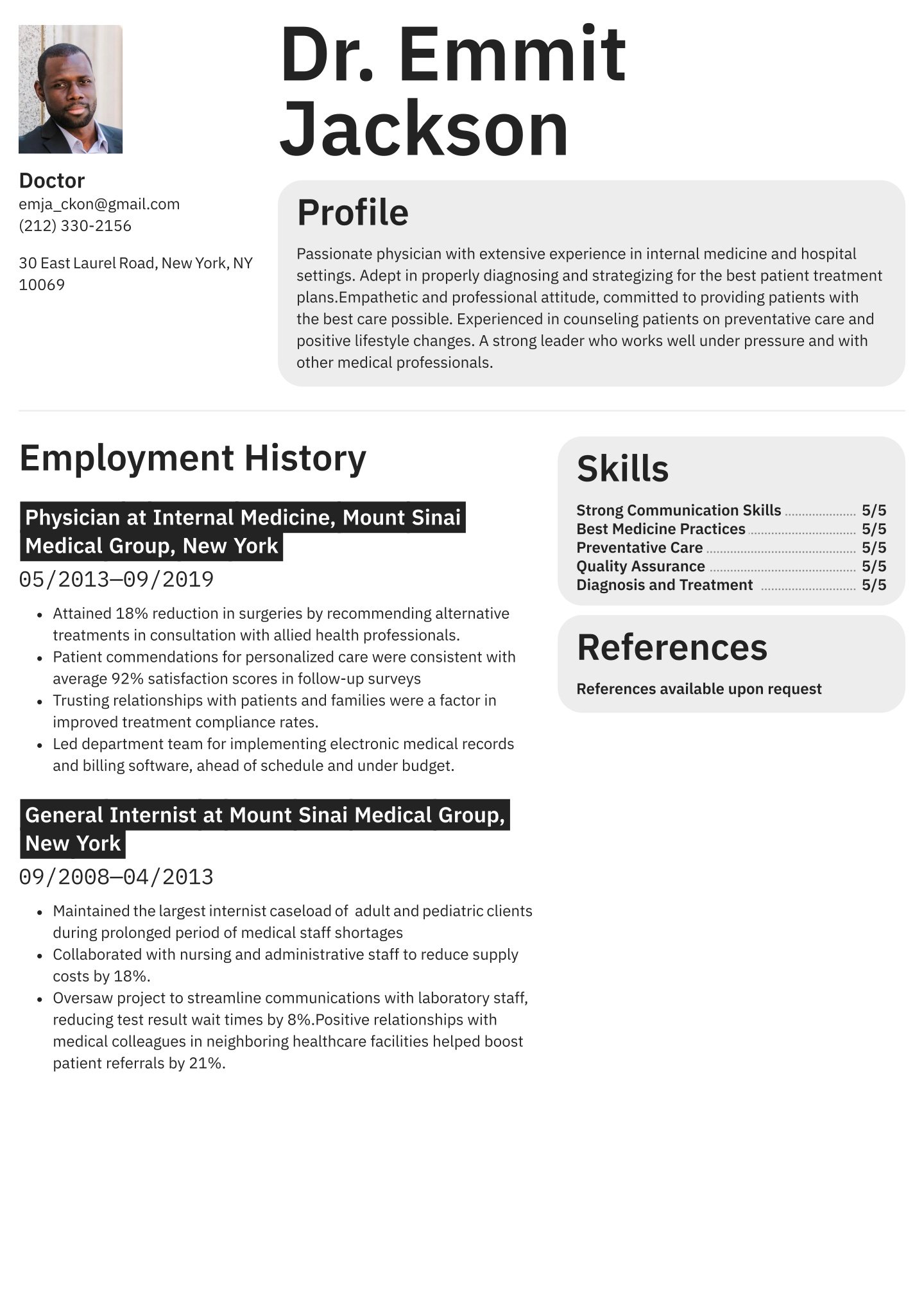
Passionate physician with extensive experience in internal medicine and hospital settings. Adept in properly diagnosing and strategizing for the best patient treatment plans.Empathetic and professional attitude, committed to providing patients with the best care possible. Experienced in counseling patients on preventative care and positive lifestyle changes. A strong leader who works well under pressure and with other medical professionals.
05/2013 - 09/2019, Physician, Internal Medicine, Mount Sinai Medical Group, New York
- Attained 18% reduction in surgeries by recommending alternative treatments in consultation with allied health professionals.
- Patient commendations for personalized care were consistent with average 92% satisfaction scores in follow-up surveys
- Trusting relationships with patients and families were a factor in improved treatment compliance rates.
- Led department team for implementing electronic medical records and billing software, ahead of schedule and under budget.
09/2008 - 04/2013, General Internist, Mount Sinai Medical Group, New York
- Maintained the largest internist caseload of adult and pediatric clients during prolonged period of medical staff shortages
- Collaborated with nursing and administrative staff to reduce supply costs by 18%.
- Oversaw project to streamline communications with laboratory staff, reducing test result wait times by 8%.Positive relationships with medical colleagues in neighboring healthcare facilities helped boost patient referrals by 21%.
08/2005 - 05/2006, Doctor of Medicine, New York University, New York
08/2001 - 05/2005, Bachelor of Biology, Manhattan College, Bronx
- 3.9 GPA
- Strong Communication Skills
- Best Medicine Practices
- Preventative Care
- Quality Assurance
- Diagnosis and Treatment
The doctor’s resume: A prescription for success. The medical profession is one of the world’s most coveted, highest-paying and respectable fields, and there are good reasons for that. Doctors are life savers, and we trust them to safeguard our most precious asset, our health. There is perhaps no field that requires so many years of study and on-the-job training. And so it’s eminently fair that doctors are well remunerated. But while doctors can set a broken bone, diagnose a rare skin disease or even operate on a brain, they tend to be quietly competent professionals and not big self-promoters. Yet intelligent self-promotion is precisely what they need to find the job that’s right for them. Medical school teaches how to diagnose exotic illnesses, but it doesn’t teach how to write a resume.
.jpg)
.jpg)
Related Resume Examples
Pharmacist resume example
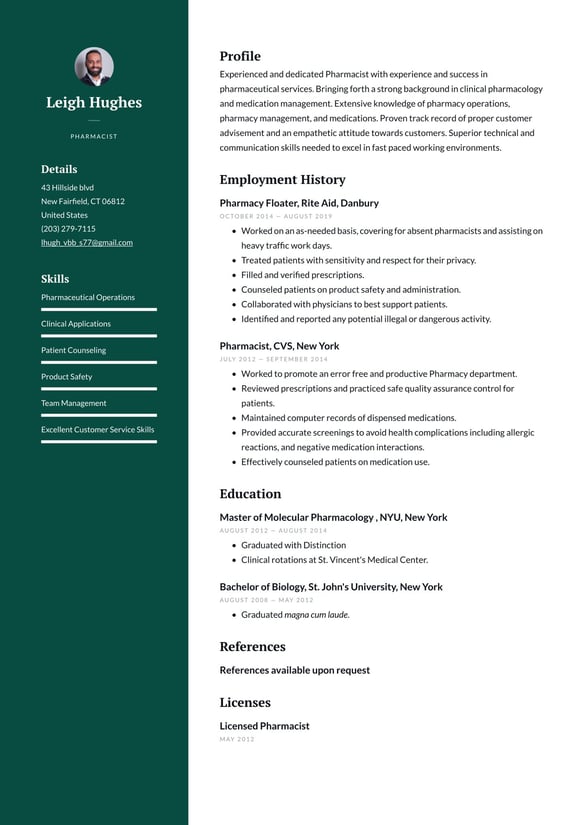
Shaped for precision and trust, this clean, organized layout highlights your technical expertise and patient-centered care as a Pharmacist. Its structured sections and professional font emphasize your clinical skills and compassionate approach for healthcare employers.
Physician Assistant resume example
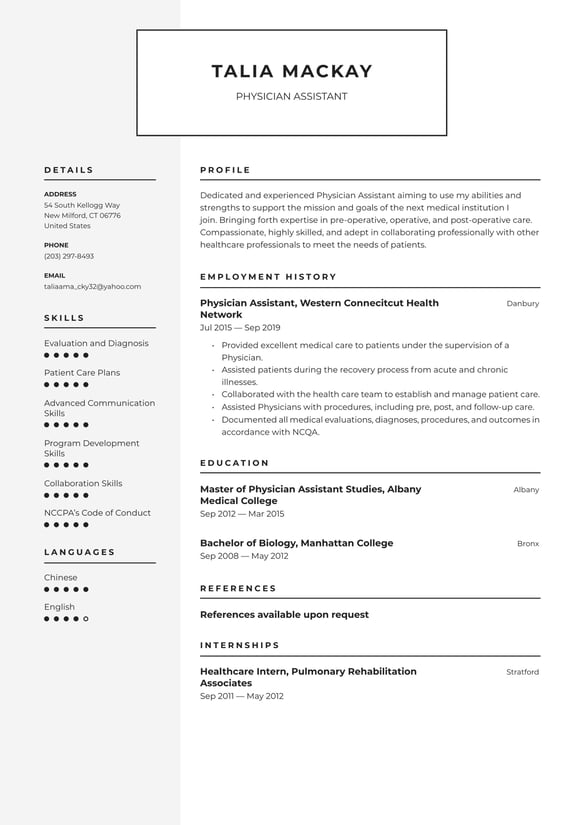
Structured for healthcare professionals, this clean, organized layout highlights your expertise in patient care and teamwork as a Physician Assistant. Its professional design emphasizes key skills, fostering trust and credibility with medical institutions.
Medical Science Liaison resume example
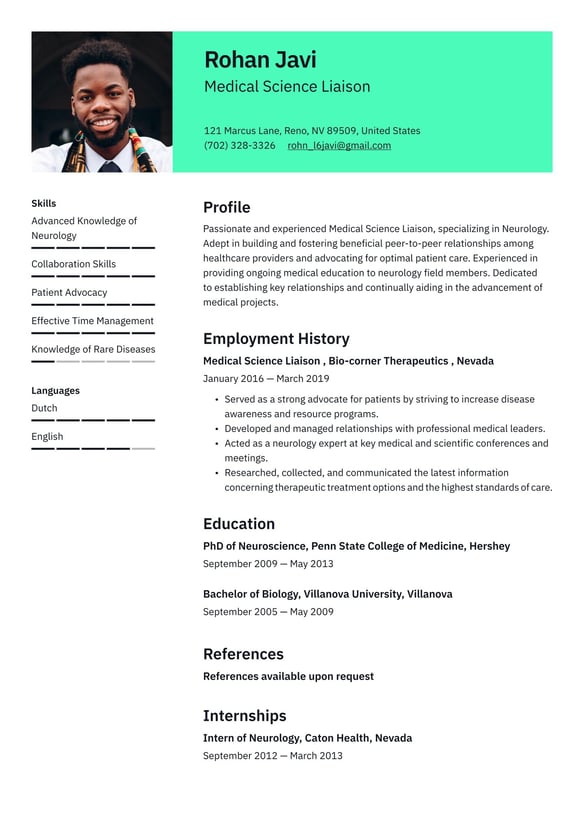
Primed for precision, this sleek, professional layout spotlights your expertise in neurology and patient advocacy, perfectly aligning with Medical Science Liaison roles. Its clean structure highlights key achievements, fostering trust with healthcare leaders and peers.
Licensed Practical Nurse (LPN) resume example
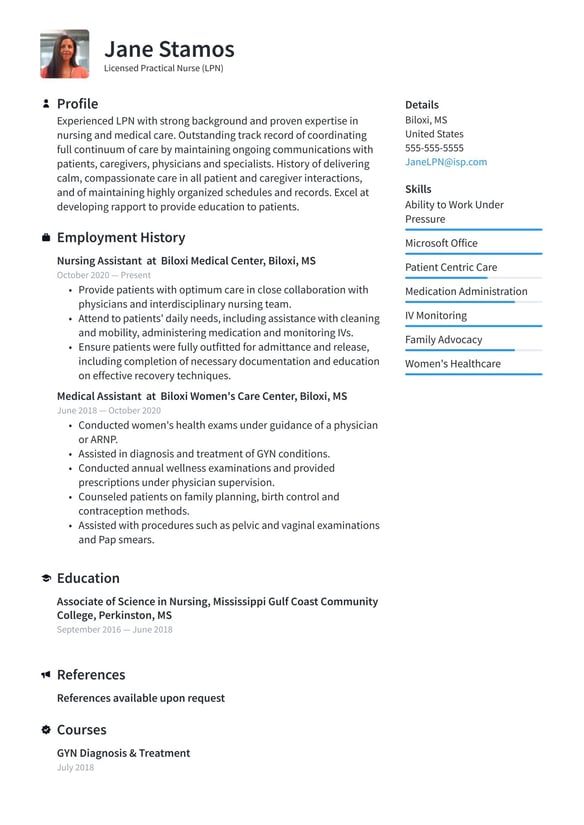
Made to match the compassionate care and precision of an LPN, this template blends a clean layout with soft, professional tones. Its organized structure highlights your clinical expertise and patient-centered skills, inspiring trust in healthcare employers.
Nurse Practitioner resume example
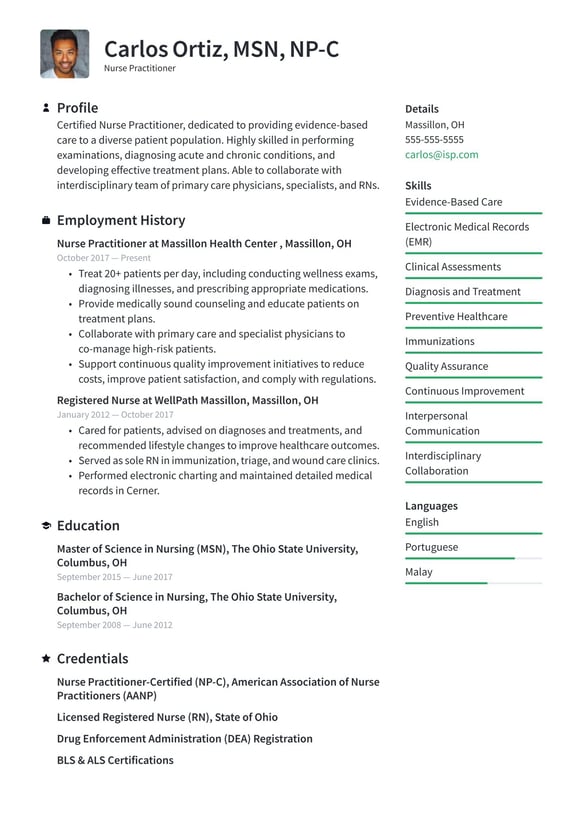
Perfectly suited to healthcare professionals, this clean, organized layout highlights your clinical expertise and collaborative skills as a Nurse Practitioner. Its clear structure showcases patient care achievements, fostering trust with hiring managers in medical settings.
Medical Student resume example
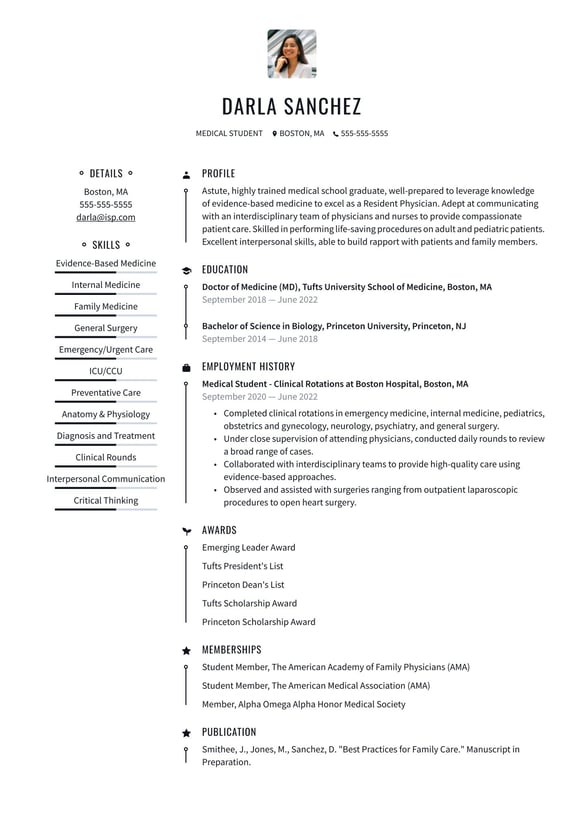
Structured for aspiring medical professionals, this clean, organized layout highlights your clinical experience and medical expertise with precision. Its clear sections and professional fonts showcase your skills and education, impressing residency directors and healthcare teams.
Emergency room (ER) nurse resume example
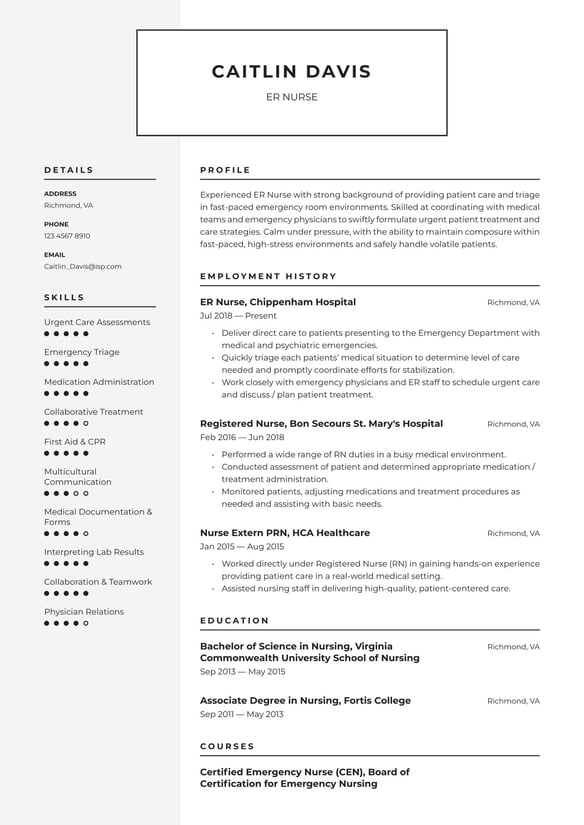
Made to match high-pressure healthcare environments, this clean, organized layout highlights your calm expertise and quick decision-making as an ER Nurse. Its structured sections showcase critical skills, fostering trust with medical teams and employers.
Charge Nurse resume example
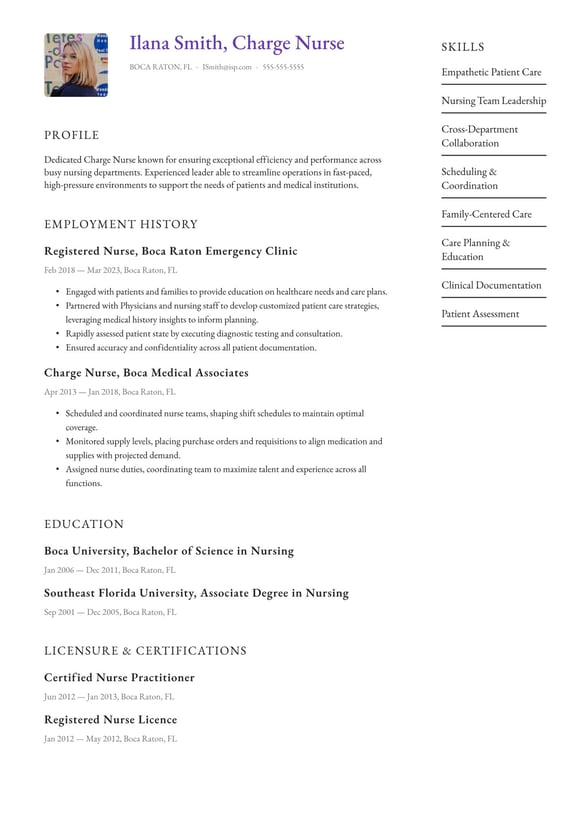
Perfectly suited to healthcare leaders, this template’s clean layout and structured sections highlight your leadership, collaboration, and patient care expertise. Its professional design ensures your skills and achievements resonate with hiring managers in high-pressure medical environments.
Medical Scribe resume example
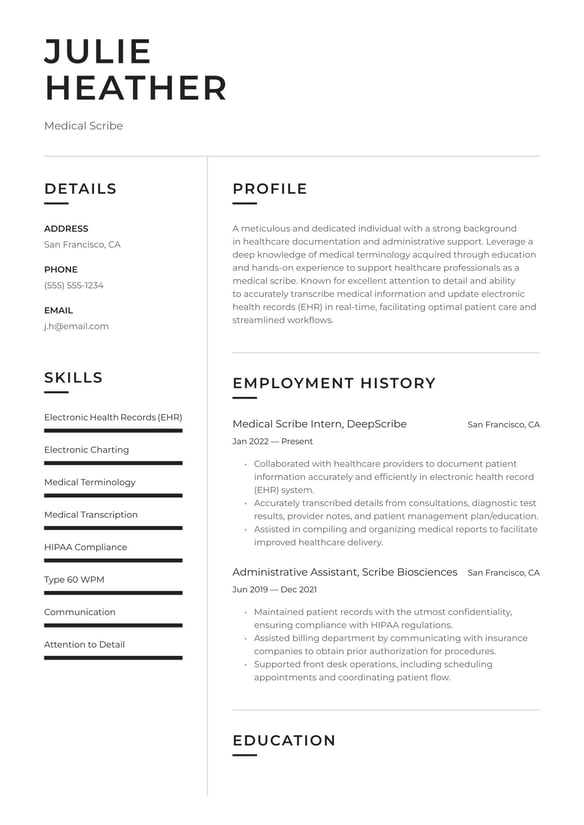
Customized for medical scribes, this clean, structured layout highlights precision and professionalism. Its organized sections and subtle accents showcase your expertise in EHR, transcription, and HIPAA compliance, helping you stand out to healthcare providers.
NICU Nurse resume example
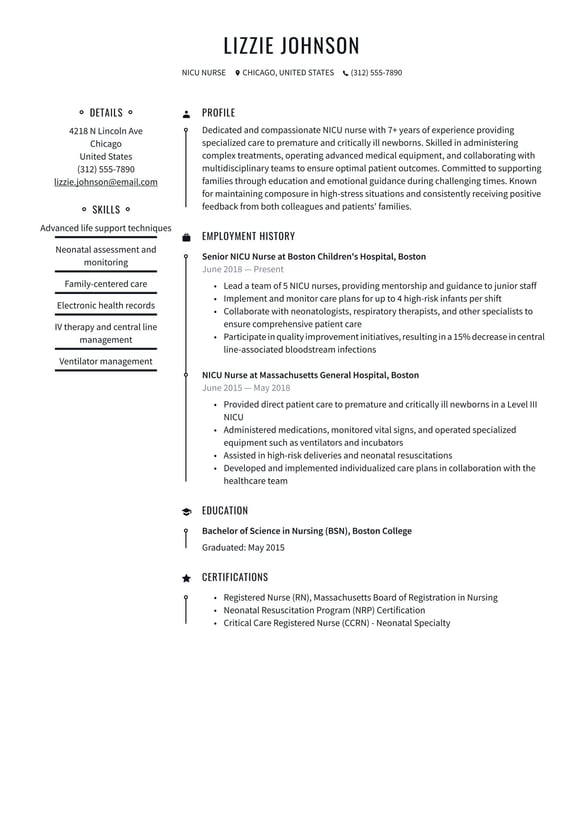
Tailored to the precision and empathy of NICU nurses, this clean, structured layout highlights your expertise in neonatal care and teamwork. Its balanced design emphasizes your technical skills and compassionate approach, resonating with healthcare recruiters and hospital administrators.
We at resume.io don’t peer into people’s ears or palpate their abdomens, but we are experts at providing layout templates and builder tools to help people in all occupations attain their dream jobs. This guide will provide all the information you need to build a winning resume to help you land the right medical position for you. We’ll cover the all-important profile, how to describe your work history and education, how to design your resume and more. Our objectives here are to help you:
- Craft a resume that stands out from the competition
- Emphasize your strengths and showcase your skills in the best light possible
- Explore the most in-demand jobs in the medical field
- Avoid the pitfalls of automated systems that can filter out your resume.
Understanding the medical job market

The job outlook for doctors of all kinds is good, but some specialists have an advantage. Doctors will always be in demand, though some specialties will be needed more than others. The Bureau of Labor Statistics forecasts that U.S. doctors’ jobs will grow by 7 percent between 2018 and 2028, more than the overall job market. There were 756,800 U.S. doctor’s jobs in 2018, and there are expected to be 55,400 more by 2028. Demand for health care is expected to grow because the population is both growing and aging. Almost all new medical school graduates are offered residencies upon graduating — an advantage that many fields don’t share.
These medical specializations are expected to experience the following rates of percentage growth in the U.S. between 2018 and 2028:
- Psychiatrists 16%
- Family and general practitioners 10%
- Physicians and surgeons, all other 8%
- Anesthesiologists 4%
- Internists, general 4%
- Obstetricians and gynecologists 2%
- Pediatricians, general 2%
- Surgeons 1%
Job prospects are expected to be especially good for specializations more in demand among an aging population, including cardiology, radiology and other specialties that treat chronic disease. And physicians willing to work in low-income and rural areas will have more options open to them, as most doctors gravitate toward higher-income urban areas. New technologies may also affect medical employment, as improved information technology and artificial intelligence reduce doctors’ workloads. Yet doctors will always be needed to manage patient care, and in fact new technologies should allow doctors to cover more ground and treat more patients more effectively. Doctors also can expect top remuneration, among the highest of all professions. Median pay for U.S. doctors in 2018 was at least $208,000 per year, roughly $100 an hour.
These were the average wages for medical specialties in the U.S. in 2018:
- Anesthesiologists $267,020
- Surgeons 255,110
- Obstetricians and gynecologists 238,320
- Psychiatrists 220,380
- Family and general practitioners 211,780
- Physicians and surgeons, all other 203,880
- Internists, general 196,490
- Pediatricians, general 183,240
Profile: Tasteful self-promotion

The resume profile is your best chance to make the case for your candidacy in your own words. The first thing employers will see on your resume is a profile in which you describe yourself, your job aptitude and your professional interests. If you don’t get this right, employers (or hiring managers) may swiftly lose interest in reading on. The profile, also known as a summary, is your opportunity to describe your best qualities and to put forth your best arguments for why you would be an outstanding hire.
Eye-tracking surveys have shown that hiring managers spend an average of 6 to 8 seconds looking at a resume when deciding whether to keep reading, and they start at the top. Lead with your strengths, control the narrative, and give your audience no reason to stop reading. This is not the place to be too modest. If you don’t tout your own credentials for the job, nobody else will. Be confident and be assertive without sounding arrogant. The profile is also the place where you can choose to state specifically what kind of job you’re seeking. If you’re looking to move from a hospital to a private practice or vice versa, or looking for a shift in your specialization or responsibilities, this is the place to say so.
The Association of American Medical Colleges lists 15 core competencies the ideal medical student should possess:
Pre-professional competencies
- Service orientation
- Social skills
- Cultural competence
- Teamwork
- Oral communication
- Ethical responsibility to self and others
- Reliability and dependability
- Resilience and adaptability
- Capacity for improvement
Science competencies
- Living systems
- Human behavior
Thinking and reasoning competencies
- Critical thinking
- Quantitative reasoning
- Scientific inquiry
- Written communication
Bear in mind that a resume is not a cast on a broken arm — it’s supposed to be flexible. Not all employers are created equal, and your resume should not be carved into stone. Target each employer that interests you, and tailor your resume to appeal to the talents and qualifications that each employer is seeking. This last point can’t be emphasized enough, as it is often the key difference between a resume that was ignored and one that led to an interview. Remember that you’re not trying to convince anyone that you deserve a job — you are demonstrating that you have the specific skills your target employer is looking for. And don’t forget the basics: A good resume for a doctor should demonstrate your ability to diagnose and treat illness, manage patient care and establish good relationships with patients. You must demonstrate that you possess a superior knowledge of anatomy, pathology and wellness, and that you are an expert in both hard science and soft skills.
The ATS: First, do no harm
Applicant Tracking Systems (ATS) are automated systems that process resumes in search of keywords input by hiring managers to designate requirements they are seeking. In medical professions, these could be abbreviations for necessary certifications, or they may include critical skills and qualities. If these don’t appear anywhere in your resume, it could be rejected before a human being even looks at it.
In technical or scientific professions, it’s especially important to pay attention to the phrasing/wording used in the job application, as professional abbreviations and terminology may vary slightly from state to state (or even country to country if you’re going overseas). Make sure to use the language used in the job listing (within reason of course) to pass the ATS software ranking.
To figure out what these crucial keywords are, study job listings to see what the job requirements are. Use these same keywords in your resume, using the same wording, and your resume is likely to be greenlighted by the ATS rather than deep-sixed.
Experienced Doctor with a passion and dedication for helping others in need. Adept in providing optimal patient care, while striving to help patients achieve their healthiest life. Able to communicate well with patients, families, doctors, and nurses. Committed to staying up-to-date regarding medicine and wellness, and aiming to provide patients with the highest level of care. Bringing forth dedication, skill, and the desire to positively impact the lives of others.
Job history: Your hands-on experience

Use strong action verbs to highlight the job history that best showcases your training and experience. How you should present your employment history will depend on how much experience you have, and with doctors that can be quite complicated. New graduates of medical school typically become interns, performing basic medical tasks like seeing patients, studying test results, doing paperwork and reviewing patient care plans with other doctors. Interns are physicians but are not yet licensed to practice medicine, and they work under the supervision of higher-ranking doctors. An internship is also known as a first year of residency, or PGY-1 (post-graduate year 1), and it’s followed in succeeding years by PGY-2, PGY-3, etc.
Residents are in their second year or more of residency, with more responsibility for overall management of patient care, as well as duties in supervising and mentoring interns. Residents apply to become specialists in some medical field, and they are licensed to practice medicine but are still in training to become experts in their chosen field. Source.
The golden standard for listing your past jobs is the Reverse Chronological order, meaning from most recent to oldest. This is important not only for the obvious reason that attention spans are limited and you want your most impressive achievements at the top. But also because it’s what hiring managers are used to and you want to play to their expectations rather than against them (in a positive sense).
Training that follows a residency is often called a fellowship, and those at this level are called fellows. Attending physicians are doctors who have completed their training (usually board-certified physicians) who now supervise interns and residents. Source. Just as a Ph.D. graduate of Oxford doesn’t need to list her high school on a resume, a heart surgeon with 10 years of experience doesn’t need to list all the steps it took to get there. But wherever you’re at in the process, you need to exhibit your employment history not just by listing where you worked but by reporting what you did, using strong action verbs. Avoid saying what you were responsible for and report what you actually did. Emphasize facts and numbers wherever possible, highlight projects, achievements, overcoming challenges or improving existing environments and so on.
- Served as a dedicated Doctor at Mount Sinai Hospital for 10+ years.
- Worked as a cohesive team with other medical professionals to promote optimal patient care.
- Performed state of the art procedures, helping patients to achieve wellness goals.
- Served as an encouraging health and wellness mentor to all of my patients.
- Remained informed about the latest medical breakthroughs, enabling me to provide the best care possible to my patients.
Education: Beyond naming your medical school

Your education is critical to your job search, and you need to present it in the right way. You can become a tech billionaire without finishing college, but you can’t become a doctor without finishing medical school. Education is a crucial component of any doctor’s background, as is on-the-job training in a residency. To become a doctor, you need a high school degree (12 years) followed by an undergraduate university degree (4 more years), followed by a medical degree (4 more years) — that’s 20 years already, and you’re hardly done yet. Most doctors then follow a residency path that can last anywhere from three to seven years. Source. By contrast, a master’s degree usually takes two years of postgraduate study, a law degree usually takes three, and a Ph.D. generally requires four. None of these requires a post-doctoral practicum, as medicine does. Doctors are doctors for a reason. Also, physicians are required to be licensed, with requirements varying by jurisdiction. Doctors must pass a standardized licensure exam, and in addition many seek certification by a medical board. In most cases, licensing and certification should be mentioned on your resume, and the field-tested resume templates at resume.io can help you determine where.
Can you major in poetry and still become a doctor? Sure … but! Here are the most common undergraduate degrees among more than 50,000 candidates who applied for medical school by submitting scores on the Medical College Admission Test, according to the Association of American Medical Colleges:
- Biological sciences: 11,843
- Other: 3,843
- Physical sciences: 2,214
- Social sciences: 2,107
- Humanities: 797
- Specialized health sciences: 650
- Math and statistics: 168
Should you list your education or your job experience first? That depends on which rung of the ladder you’re currently climbing. If you have years of experience in medical practice, by all means list that first. But if you just got your M.D. from Harvard or Oxford, this will probably get recruiters’ attention more than a first-year residency at a little-known hospital, so you might want to mention this first. As always, the name of the game is the vitally important practice of custom tailoring your resume for each specific situation and considering how your concrete data will be viewed by an impartial stranger.
On a similar note, if the bullet points under your job history are few, it’s not a bad idea to find some under your education history. You don’t want to submit a three-page resume, but a half-page resume may be even worse. Did you work as a physician’s assistant while in medical school? Receive any awards, honors or special recognitions? Finish your undergraduate education with an impressive GPA? Volunteer at hospitals or clinics? Any of these could serve as bullet points that help boost your chances of landing the position you want. Source.
Aug. 2005 – May 2006 New York University, Doctor of Medicine New York
Aug. 2001 – May 2005 Manhattan College, Bachelor of Biology Bronx
• 3.9 GPA
Skills: How do you stand out?

Between two candidates with the same qualifications, what makes you better? If you’ve written an intriguing profile and described an impressive employment and educational history, you’re off to a great start. But what if another candidate has the same qualifications? The summary and skills sections are sort of like bookends on your resume that allow you to boast a bit about what you’re good at. Do you have exceptional medical expertise in a specialized field? Do you speak a foreign language that would enable you to communicate with patients who don’t speak English? Are you an outstanding communicator who can help patients understand their medical issues, as well as communicating effectively with colleagues? All of these are worth mentioning.
According to the Bureau of Labor Statistics, these are the most important qualities sought in physicians and surgeons:
- Communication skills
- Compassion
- Detail-oriented
- Dexterity
- Leadership skills
- Organizational skills
- Patience
- Physical stamina
- Problem-solving skills
- Excellent Communication Skills
- Knowledge of Human Anatomy and Physiology
- Quality Assurance
- Sanitation Techniques
- Safety Guidelines
Resume design: Looks matter

Clean, clear, bug-free design is essential to any doctor’s resume. You wouldn’t usher patients into a cluttered, dirty exam room, and your resume should reflect the same attention to detail as your practice. Clean, coherent, clear, concise. Attractive but simple. Elegant but not over-decorated. The samples ( resume templates) at resume.io provide an excellent starting place to customize the look that’s right for you. In addition, you must beware of buggy formatting that will be rejected by the dreaded Applicant Tracking Systems (ATS). These automated systems will reject a resume just as surely as a failure to include applicable keywords, so be very careful about this. One of the most common pitfalls is using standard text editors and including important information (such as your contact info) in the header or footer, which often turns out to be technically unreadable for ATS software. Imagine the system not being able to identify your job title or email.
On top of that, once you’ve chosen a template that looks good for you, be aware that the preferred format (especially for sending your resume via email) is PDF, as it’s the only one guaranteed to preserve the looks, style and formatting and not turn into a visual mess on another person’s PC. Sidestep these risks by using clean, beautifully designed templates that have been proven to work and a builder tool that accounts for the technical side of things.
Key takeaways
- The job market for doctors of all kinds is expected to remain strong, yet some specializations will be far more in demand than others.
- It may be harder to become a surgeon than a psychiatrist — yet the highest job growth in medicine is expected to be among psychiatrists, and the least among surgeons.
- Competition for the best jobs may be intense, and they aren’t handed out by chance.
- Intelligent preparation and crafting a great resume can mean the difference between accepting the job you’re offered and getting the job you want.
- Doctor’s resumes must take into account the automated Applicant Tracking Systems that can reject an application before an employer even looks at it.
- Take into account what each prospective employer is seeking, and tailor your resume accordingly.
You’ll take no chances if you trust in the proven builder tool and field-tested templates at resume.io. Get started!
Other helpful healthcare resume examples:
- Healthcare
- Endodontist
- CNA
- Lactation Consultant
- Epidemiologist
- Marriage and Family Therapist
- Health Care Administration
- Dental Receptionist
- Nursing Student
- Nursing Home
- Occupational Therapist
- Behavioral Therapist
- Psychologist
- Art Therapist
- Audiologist
- Respiratory Therapist
- Child Psychologist
- Medical Support Assistant
- Medical Social Worker
- Pharmacy Technician
- Physician Assistant
- Clinic Coordinator
- Medical Receptionist
- Optometrist
- Physical Therapist
- Pharmaceutical Sales Representative
- Pharmacist
- Dentist
- Sonographer
- Nurse
- Psychotherapist
- Medical Science Liaison
- Dental Assistant
- Paramedic