

09/2013 - 09/2019, Art Therapist, Lingone Medical Center, Los Angeles
- Worked in collaboration with other medical professionals and family members to enrich the lives of patients through active art-making and applied psychological theory.
- Worked with individuals, couples, families, and large groups to address personal and community concerns, while using art as a springboard for healing.
- Aimed to develop treatment plans that improve cognitive and sensorimotor functions, while fostering self-esteem and emotional health.
- Encouraged freedom of expression and self empowerment through creative processes.
08/2010 - 08/2013, Art Therapist, A Better World Inc. , Santa Monica
- Worked with children and adolescents suffering from trauma or seeking to find a better outlet for communication.
- Worked in collaboration with medical professionals and families to develop strategic individualized treatment plans and programs.
- Implemented therapy techniques that promoted anger and behavioral management, self-control, and positive social skills.
- Managed the art therapy internship program.
08/2007 - 05/2009, Master of Clinical Art Therapy, Loyola Marymount University, Los Angeles
08/2003 - 05/2007, Bachelor of Fine Arts, California Institute of the Arts, Valencia
- Psyhological Theories
- Visual Art Techniques
- Assessment and Evaluation
- Human and Creative Development
Art Therapist Resume Example
You’ve decided to use your creativity to help others and that’s great! Now it’s time to use the best professional tools to boost your art therapist career.
.jpg)

.jpg)
Related Resume Examples
Youth Services Specialist resume example
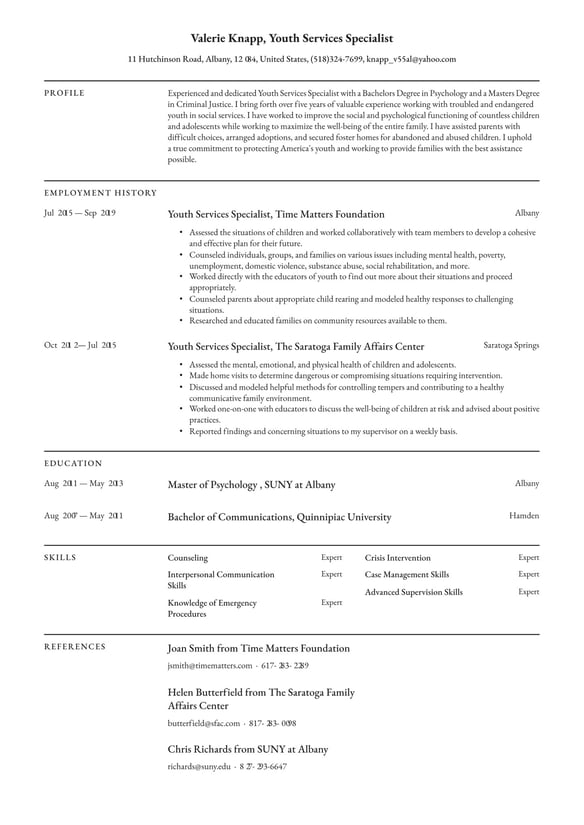
Created for compassionate changemakers, this clean, structured layout highlights your counseling expertise and crisis intervention skills. Its balanced design emphasizes your dedication to youth advocacy, inspiring trust in social services and family-focused organizations.
Child Psychologist resume example
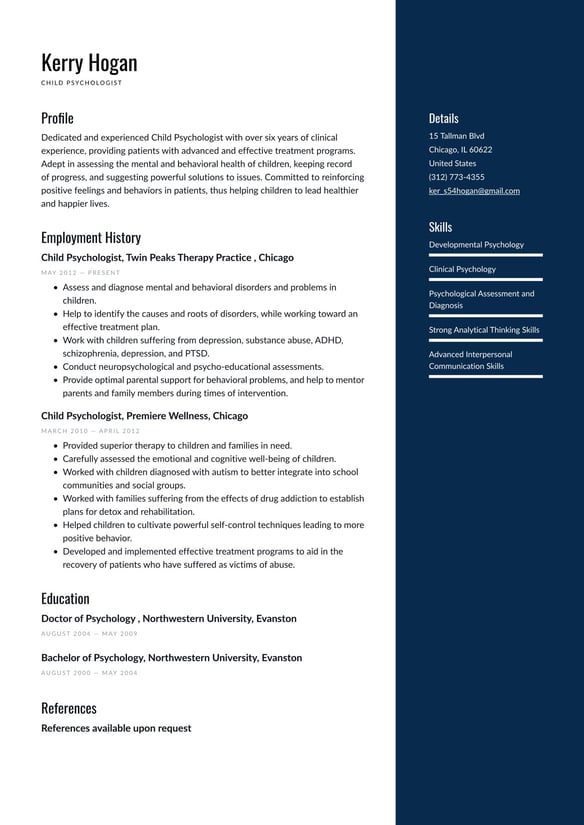
Tuned for compassionate professionals, this template’s clean layout and calming pastel accents highlight your expertise in child psychology. Its structured sections showcase your clinical skills and empathy, connecting you with families and care-focused organizations.
Psychotherapist resume example
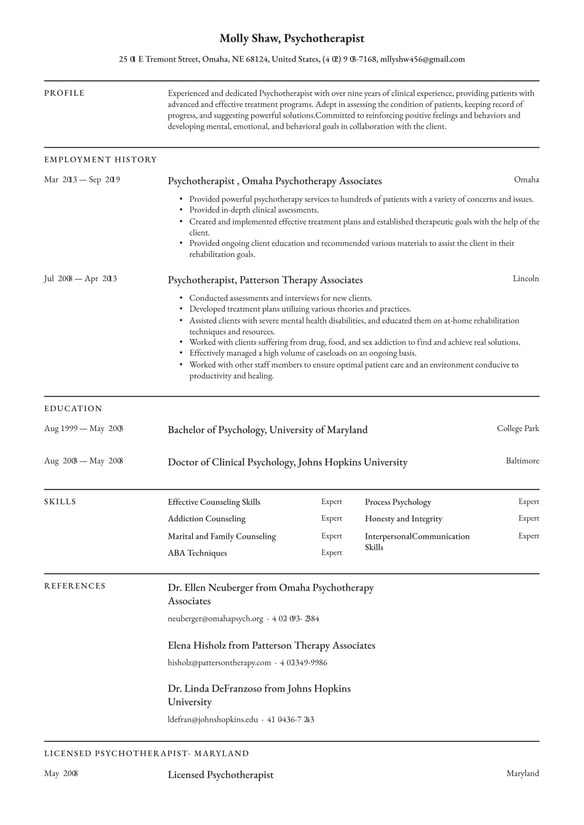
Structured for compassionate professionals, this template highlights your empathy and expertise as a Psychotherapist. Its clean layout and calming color palette emphasize your counseling skills, fostering trust and connection with clients and employers alike.
Art Gallery Manager resume example
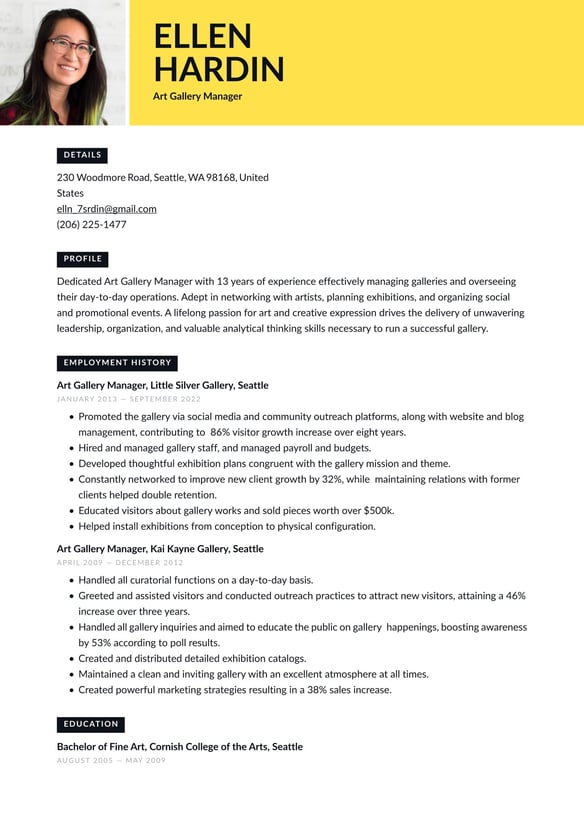
Aligned with the creative sophistication of art professionals, this template’s clean layout and refined typography showcase your leadership, networking, and curatorial expertise. Its elegant structure highlights your achievements, captivating gallery owners and art institutions.
Health Educator resume example
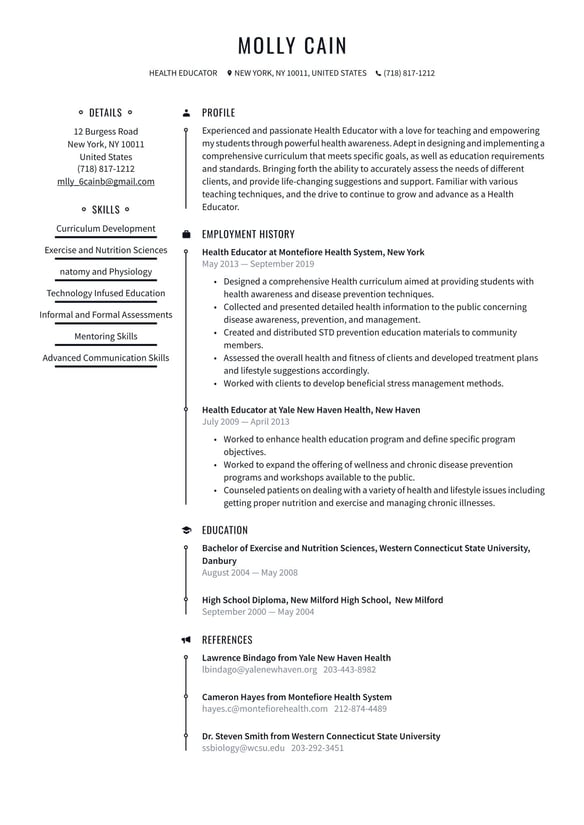
Primed for empowering health advocates, this clean, organized layout spotlights your teaching expertise and communication skills for Health Educator roles. Its balanced structure highlights your curriculum design and client support strengths, inspiring trust in community-focused audiences.
Marriage and Family Therapist resume example
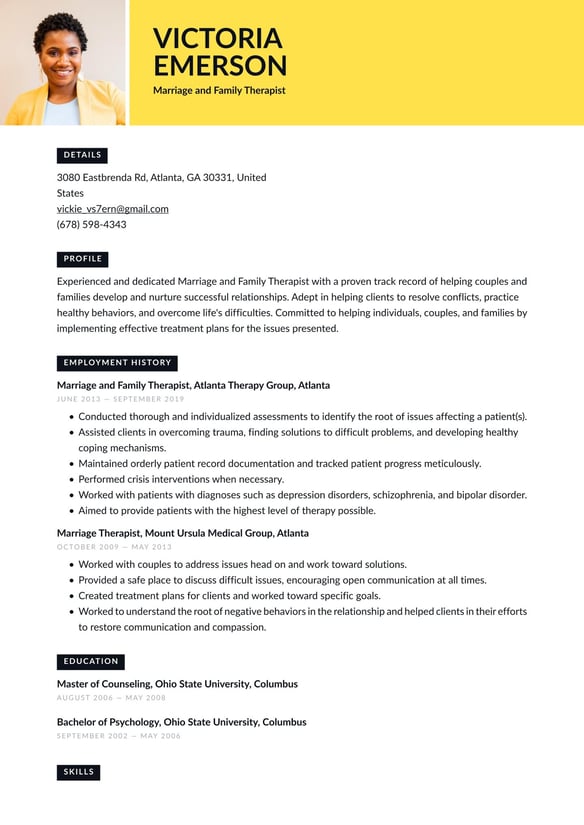
A smart fit for Marriage and Family Therapists, this template’s clean layout and calming color palette reflect empathy and professionalism. Its structured sections highlight your counseling expertise, fostering trust with clients and hiring managers alike.
Behavioral Therapist resume example
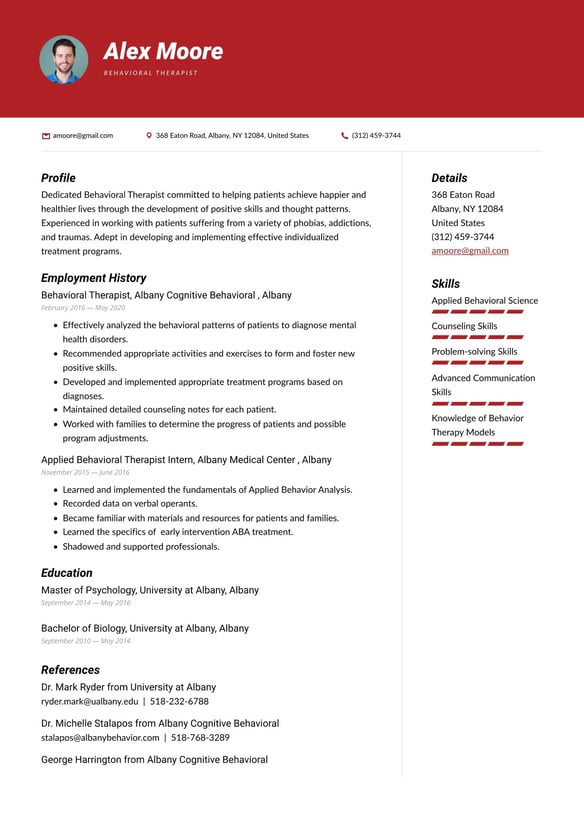
Aligned with the compassionate and structured nature of behavioral therapy, this template’s clean layout and calming color palette highlight your expertise in counseling and treatment planning. Its organized sections showcase your skills and experience with clarity, fostering trust in potential employers.
Creative Director resume example
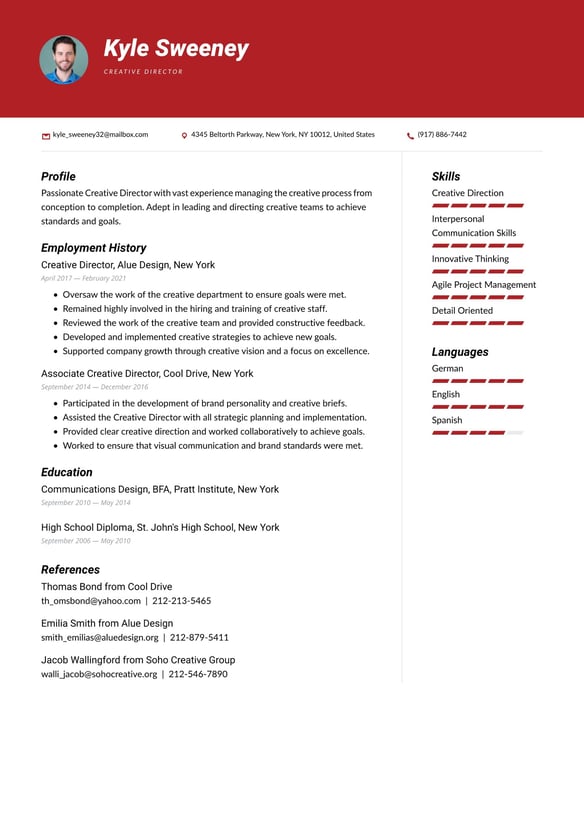
Optimized for bold visionaries, this sleek, modern layout spotlights your leadership and creative expertise as a Creative Director. Its clean structure and strategic use of white space amplify your achievements, inspiring confidence in hiring teams.
Art Teacher resume example
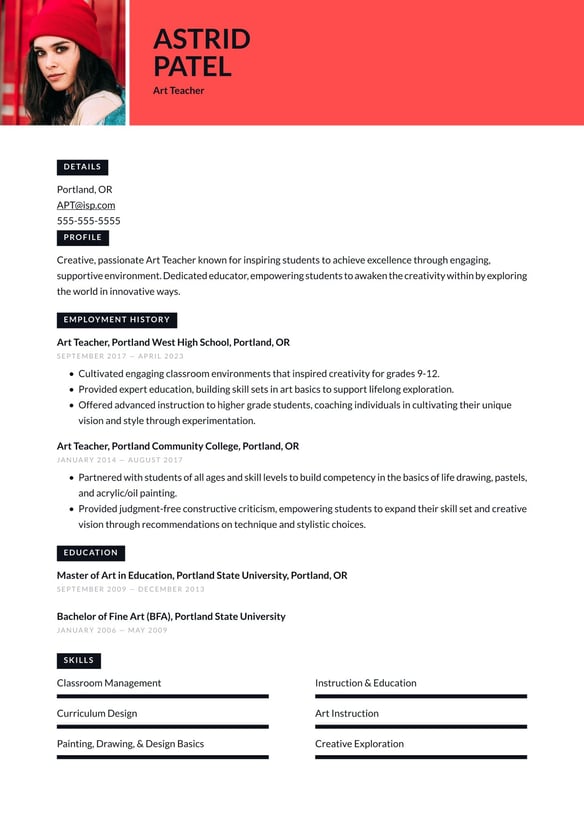
A smart fit for creative educators, this template’s clean, balanced layout spotlights your teaching experience and artistic vision. Its subtle design elements highlight your skills and passion, inspiring confidence in schools and art institutions alike.
Counselor resume example
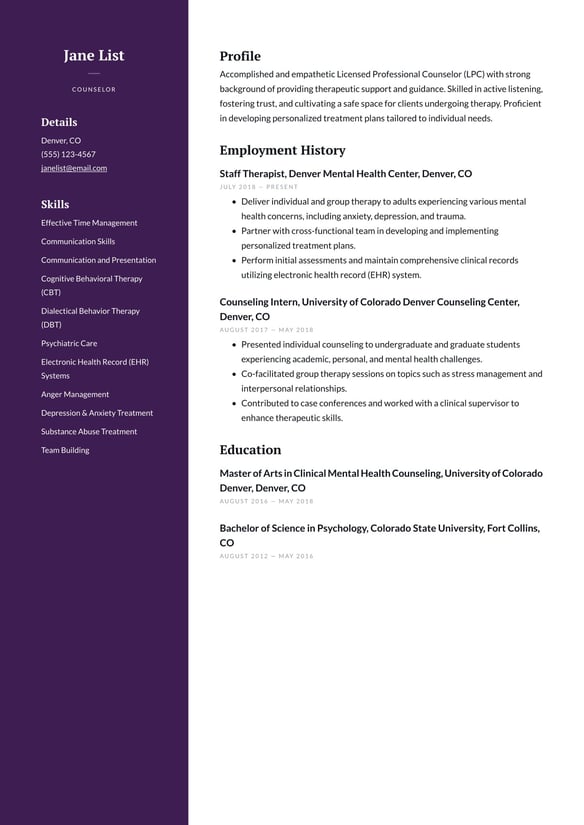
Optimized for compassionate professionals, this clean, calming layout highlights your empathy and expertise as a Counselor. Its structured sections and soft tones showcase your therapeutic skills and experience, building trust with clients and employers alike.
Crafting your resume and your job search are important tasks, but Resume.io can smooth the way, making it much easier. Using your resume samples, design templates, and this guide, you will learn how to:
- Grab the attention of recruiters
- Place the emphasis on your high-level skills
- Paint a picture of professional success
- Use your talent to develop a legible and professional design.
You’re already here, so let’s get you moving toward your dream job!
Profile Summary Example
Highlight your best skills, experiences, and accomplishments here. This section should serve as an influential summary conveying the value you bring as an Art Therapist. Be sure to include any information you do not want a potential employer to miss. See example content below. Summary Example
Your summary section (also known as the profile or personal statement) gives the big picture of your professional life. Here you have the chance to illuminate your personality and biggest successes. You may want to develop this section last, after you have had a chance to really think about your career and attributes.
As an art therapist, you may be working for a healthcare organization in its mental health department or in a separate mental health facility. The art therapy program may occur in an art studio or a more clinical setting. Because the environment for your work may change, be sure you target your resume to the job for which you are applying. That means that you may have to rework your summary to shift the focus for each new application. That approach will also help you beat the Applicant Tracking Systems that process and rank your resume for keywords and phrases before a human being ever sees it.

The summary, is the only section containing full sentences and 3-5 are all you have room for. If you feel you cannot fit in everything you want to include, consider using your cover letter to get the information in. Make them count with strong action verbs and descriptors that tell who you are and how you work with others on your treatment teams. Include an achievement you are proud of — this is not the place to be modest!
See example content below.
Passionate and experienced Art Therapist helping others to express emotion and confront feelings through the gift of art. Adept in art therapy assessments and creating and implementing appropriate art therapy plans accordingly. Bringing forth creativity, patience, and a strong understanding of art therapy interventions.
Employment History Section
Your employment history details the story of your career. You want to showcase your ability to develop and implement effective and appropriate art therapy plans to meet client needs. Think of all the different skills you have developed in your time as an art therapist. Try to include as many of those work experiences as you can in your job descriptions. Instead of simply listing your responsibilities, create an image in words of your style of case management, your successes with art therapy groups, or how you have used art therapy sessions to improve the well-being of your clients.
Consider answering these questions in each bullet item
- What problem did I encounter?
- What steps did I take to solve it?
- What was the result of my action?
Make sure you touch on all your experience. A hiring manager will want to know if you have conducted both individual art therapy and as well as group therapy. Be as detailed as possible. For example, include the populations you worked with.
Remember to use powerful action verbs and describe in detail the type of creative arts you use within your therapy services.
See example content below.
- Provided individual, family, and group sessions.
- Accurately diagnosed patients and designed effective treatment plans to carry out.
- Collaborated with referral sources and outpatient teams.
- Effectively taught patients how to use art to express difficult feelings and emotions.
- Utilized counseling techniques to help patients develop positive coping skills.
Education Section Example
Because art therapists are mental health professionals who need a depth of knowledge about mental illness and therapeutic practices, they are required to earn a master’s degree and complete a practicum. Many art therapists have undergraduate degrees in social work or psychology, but that is not a requirement. You may include your practicum in the employment history section, but all your degrees and certifications should be listed in the education section.
Because you have a bachelor’s degree, you may leave out your High School. If you are a registered art therapist, or ATR, or have advanced to become board certified, you may list those credentials here or create a new resume section.
See resume example content below.
- 2012-2014 NYU, Master of Art Therapy NY, NY
- 2008-2012 Loyola High School, High School Diploma NY, NY
Skills Section
Your skills section gives an overview of your professional abilities. After detailing all the skills you used in your career, you have a chance to highlight the five to ten attributes that recruiters for each job seek. This section should always be carefully tailored to match the requirements in the job listing. If you have expertise in a specific area, such as the creation of treatment programs for substance abuse, make sure to highlight it here.
Think of the top-level skills your employer may be looking for, and list those to differentiate yourself from other candidates. In this section, you should include crucial interpersonal skills such as compassion, strong listening skills, and a talent for problem-solving. These skills are necessary for working with clients, but also make sure hiring managers know that you can work well with the clinical team as well.
Art therapists also need hard skills such a strong working knowledge of art principles and techniques. You also need to be able to safeguard personal data, keep accurate client progress notes, and complete paperwork in a timely and organized fashion.
Try to find a mix of hard and soft skills that will give recruiters an overview of your professional competencies.
See example content below.
- Observational Skills
- Counseling Skills
- Creative Arts Therapy Knowledge
- Advanced Communication Skills
- Problem-solving Skills
Layout and Formatting
As an art professional, how your resume looks is an important part of the overall package. Put yourself in the shoes of a busy recruiter. What do you think they want? Yes, exactly! They want to be able to easily scan your resume to find your contact information, previous job and job title, and your skills. That means, keep your section headings simple and easy to find, use color sparingly, and vary your line lengths to avoid big blocks of type.
Save yourself the time of starting from scratch by using one of our Creative layout templates or for a sleeker look, go Modern. Either way, these recruiter-tested designs will help you make a great first visual impression.
Be careful with your formatting, too. Try using our resume builder tool which incorporates the format and prompts you to save your document as a PDF to avoid errors between word processing programs (we also make sure your edits are safe with online and offline syncing!).
Finally, our spell-checker does most of the heavy lifting in terms of grammar and typos. To be extra safe with style and tone - you can ask a trusted friend or family member to read your resume draft as well. After all that hard work, you don’t want to miss out on the job of your dreams because of a silly mistake.
What are you waiting for? Go ahead and get started on the journey of career advancement with our professional toolkit!
More related resume examples from the medical industry
- Healthcare
- Endodontist
- CNA
- Lactation Consultant
- Epidemiologist
- Marriage and Family Therapist
- Health Care Administration
- Dental Receptionist
- Nursing Student
- Nursing Home
- Occupational Therapist
- Behavioral Therapist
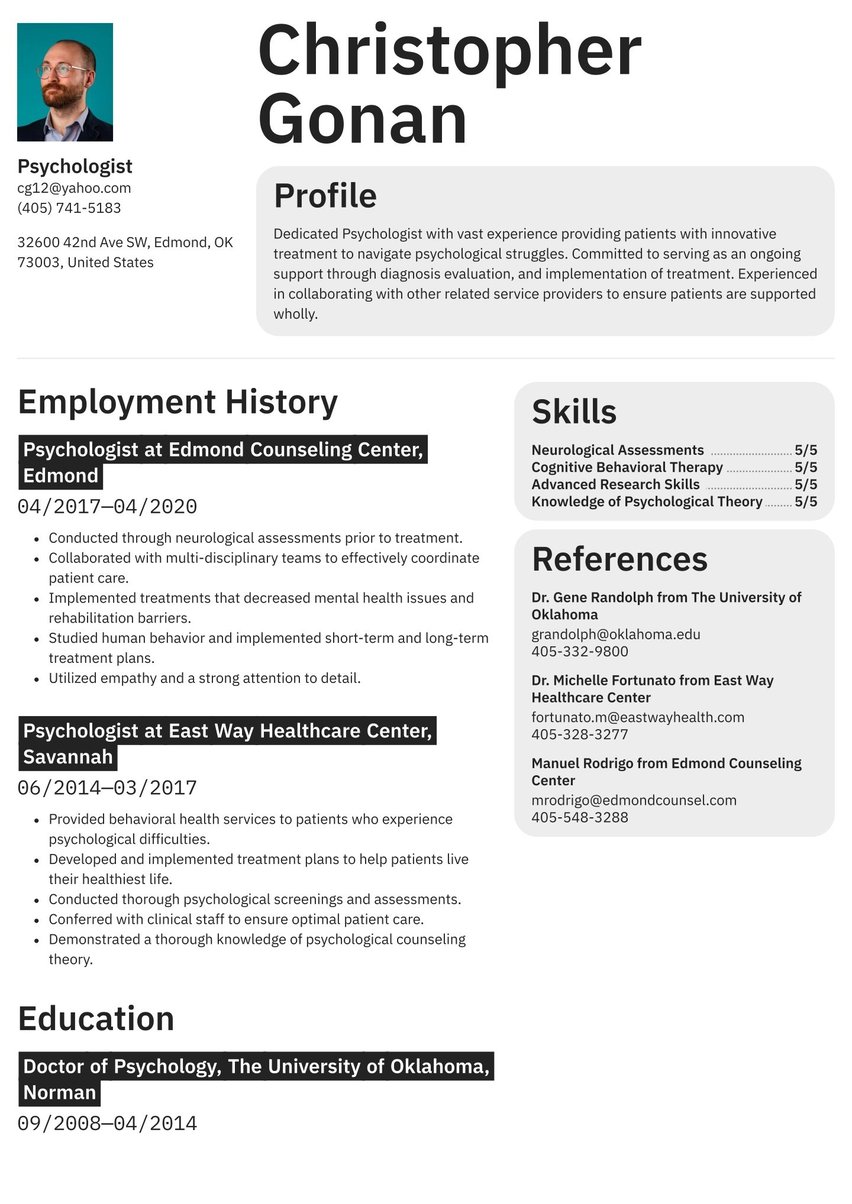
- Psychologist
- Audiologist
- Respiratory Therapist
- Child Psychologist
- Medical Support Assistant
- Medical Social Worker
- Pharmacy Technician
- Physician Assistant
- Clinic Coordinator
- Medical Receptionist
- Optometrist
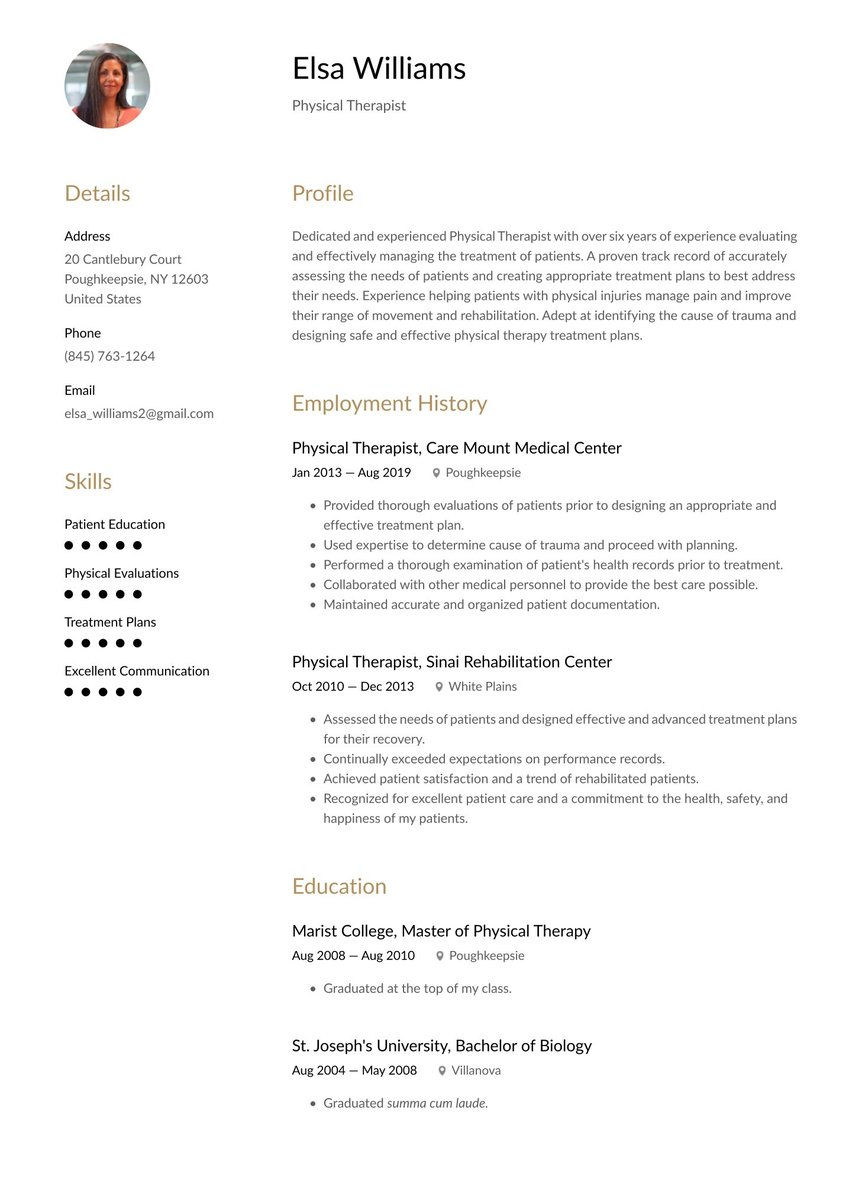
- Physical Therapist
- Pharmaceutical Sales Representative
- Pharmacist
- Dentist
- Sonographer
- Nurse
- Psychotherapist
- Medical Science Liaison
- Dental Assistant
- Paramedic
- Doctor