

01/2015 - 09/2019, Voice Actor, Crystal Clear Studios, Los Angeles
- Recorded and edited fifteen voice-over projects.
- Performed as a Voice Actor, playing multiple parts, in radio plays.
- Worked with other Voice Actors on timing and removing background noise and normalizing volume.
03/2012 - 12/2014, Stage Actor, The Grand Stage, New Paltz
- Acted in several productions over the course of two years.
- Developed and fostered positive relationships with other actors, crew, and producers.
- Used character study and acting techniques to enhance performances.
06/2009 - 11/2014, Audio Narrator, Shepfield Studios, New York
- Recorded and edited over thirty voice-over projects for instructional films, video games, documentaries, and commercials.
- Utilized various tones, accents, and emotions to convey material properly.
08/2005 - 05/2009, Bachelor of Theatre, State University of New York at New Paltz, New Paltz
09/2001 - 05/2005, High School Diploma, Highland Falls High School, Highland Falls
- Highly Trained Voice
- Wide Vocal Range
- Different Dialect Ability
- Effective Communication Skills
Voice Actor Resume Example
Your voice holds many different characters and commands attention. As a voice actor, that is your key to success. But as you seek new voice acting roles, you need to command attention without your voice first.
.jpg)

.jpg)
Related Resume Examples
Actor resume example
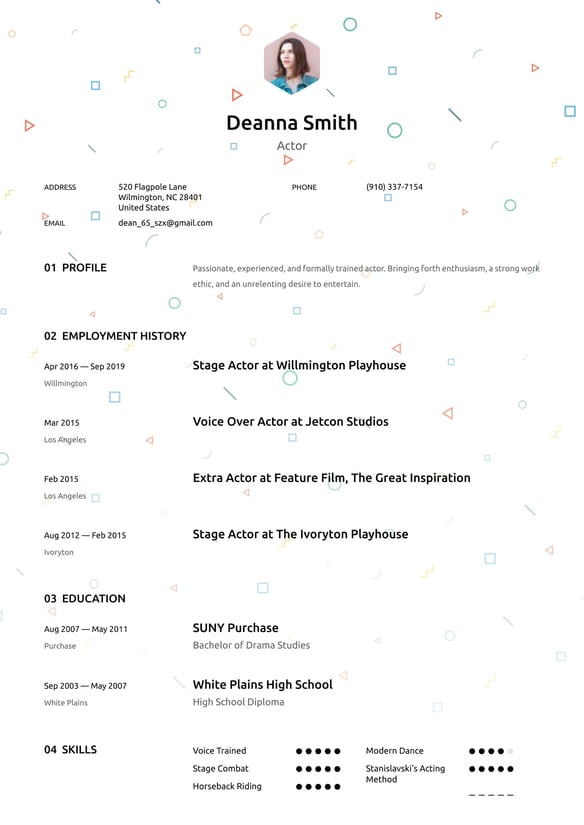
Designed for performers, this bold, visually striking template spotlights your versatility and creative journey as an actor. Its clean layout and elegant typography showcase your roles, training, and unique skills, captivating casting directors effortlessly.
Choreographer resume example
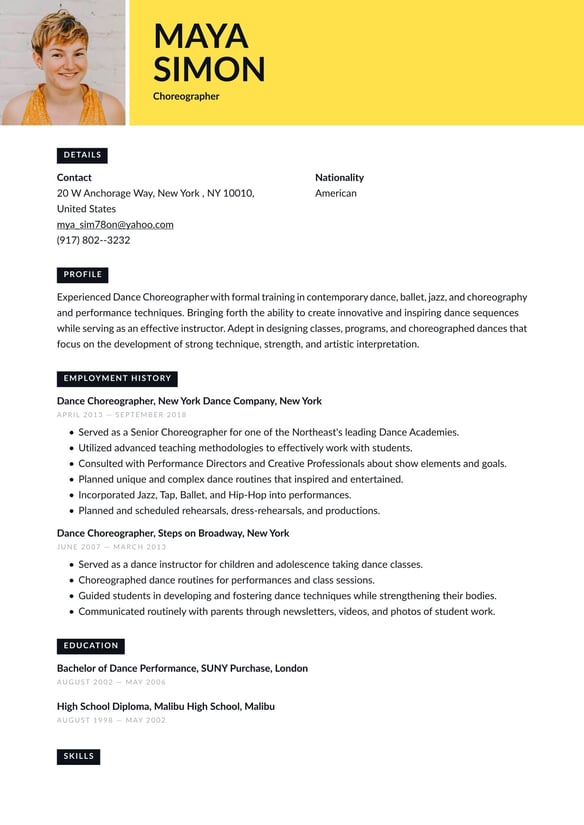
Created for choreographers, this sleek, fluid layout mirrors the artistry of dance. Its clean structure highlights your creative vision and technical expertise, helping you captivate directors and performance teams with ease and elegance.
Cinematographer resume example
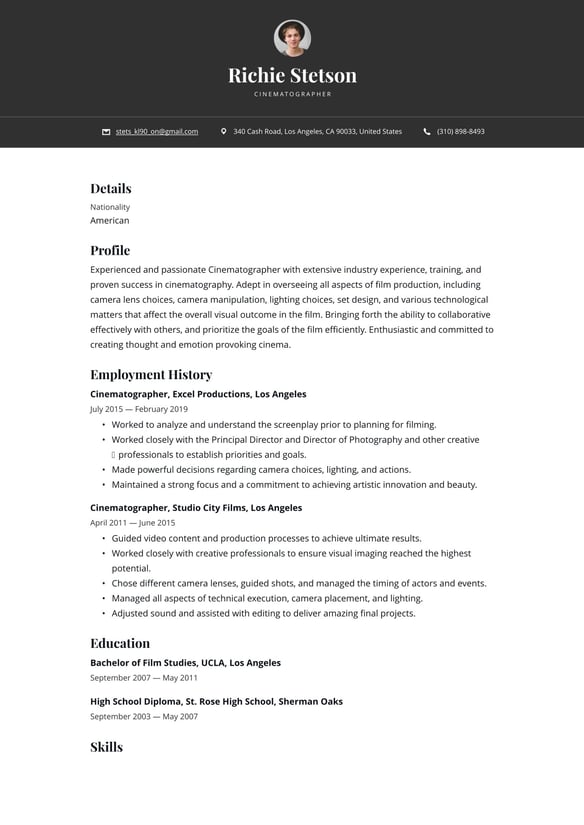
Created for visual storytellers, this sleek, cinematic resume design spotlights your creative expertise with bold headers and clean layouts. Its structured format highlights your technical skills and artistic vision, impressing directors and production teams alike.
Screenwriter resume example
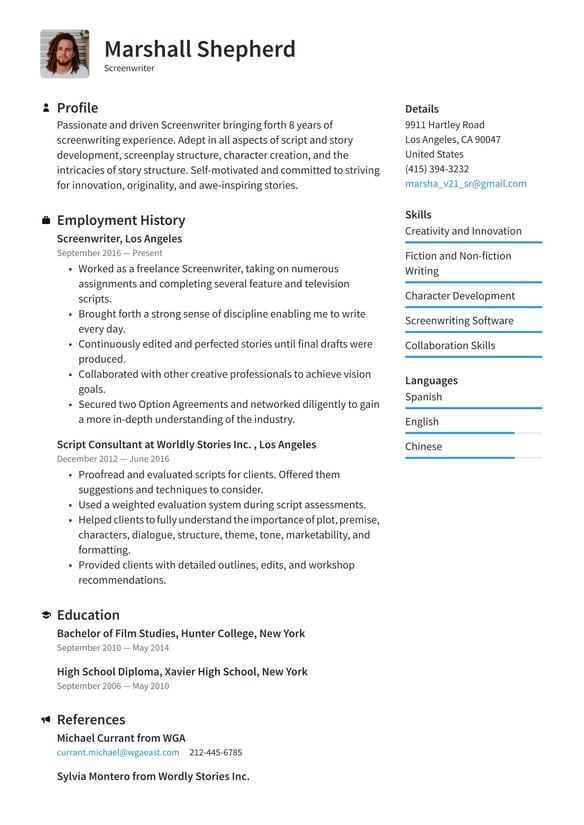
Optimized for creative storytellers, this cinematic resume design spotlights your screenwriting expertise with a clean layout and bold headers. Its structured sections showcase your storytelling, collaboration, and innovation skills, captivating producers and industry insiders alike.
Motion Graphics Artist resume example
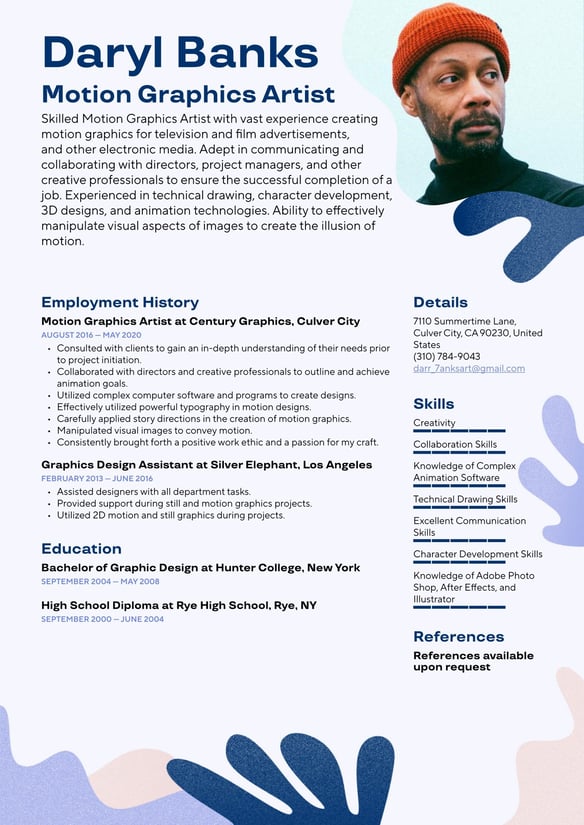
Ideal for Motion Graphics Artists, this sleek, dynamic template mirrors the creativity and precision of your craft. Its bold headers and clean layout spotlight your technical skills and artistic achievements, impressing directors and creative teams alike.
Film and Video Editor resume example
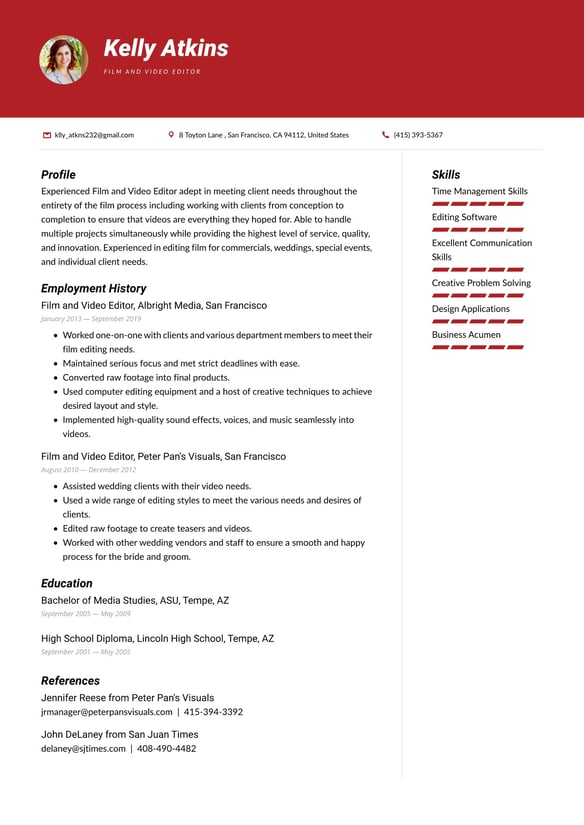
Engineered for creative storytellers, this sleek, cinematic layout spotlights your editing expertise with bold headers and seamless structure. Its clean design highlights your technical skills and artistic vision, captivating clients and production teams alike.
Creative Director resume example
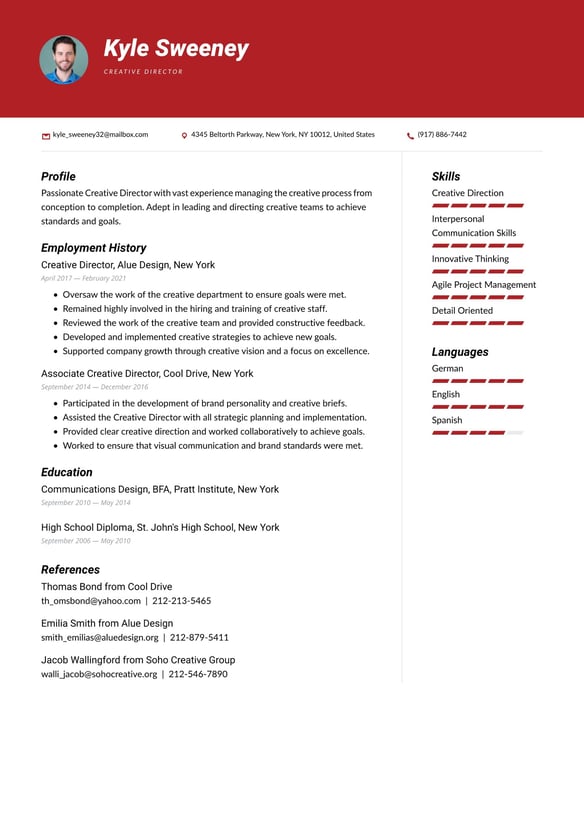
Structured for bold visionaries, this sleek, modern layout spotlights your leadership and creative expertise as a Creative Director. Its clean design and strategic formatting amplify your achievements, ensuring your innovative edge resonates with top-tier employers.
Theatre resume example
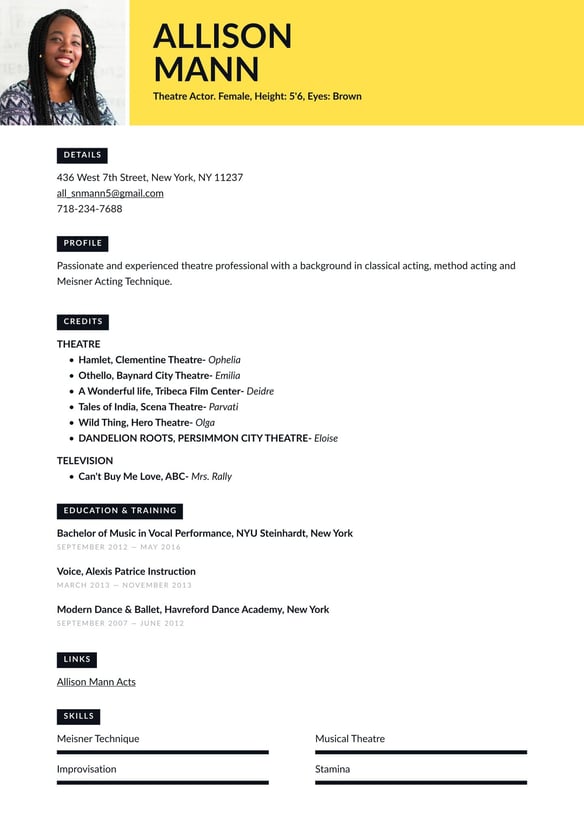
Structured for creative professionals, this elegant resume design spotlights your versatility as a theatre actor. Its clean layout and subtle accents amplify your performances, training, and skills, captivating casting directors and theatre producers alike.
Audio Engineer resume example
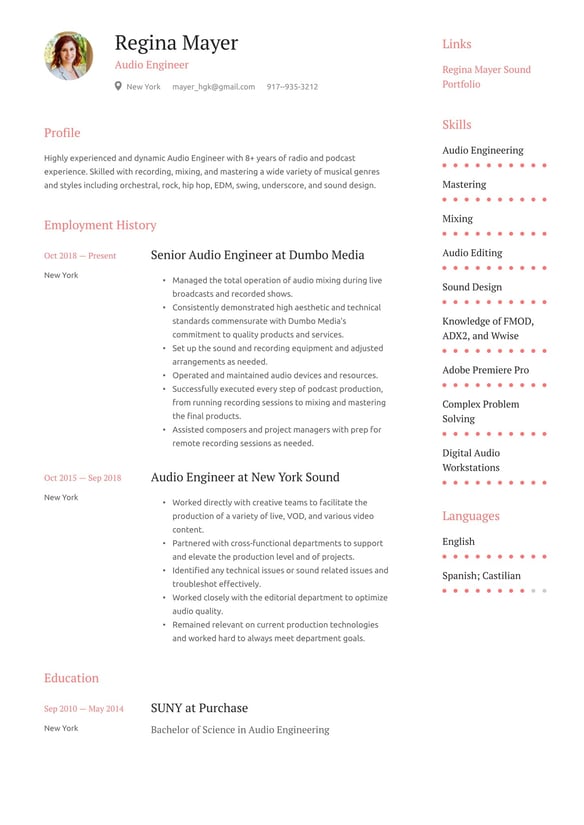
Primed for creative professionals, this sleek, soundwave-inspired layout amplifies your technical expertise and artistic flair as an Audio Engineer. Its clean structure highlights your skills and achievements, resonating with studios and production teams.
You need a great resume! One that clearly demonstrates your ability to perform voice-overs for movies, television shows, commercials, video games, or any other form of media you can imagine.
Just as you have a professional voice in the recording studio, you need a professional voice for your resume. Using one of Resume.io’s expertly-designed resume templates, our online resume builder, and this guide you will end up with a document that:
- Makes your written text as powerful as your acting voice
- Focuses on your career highlights
- Grabs the attention of casting directors
- Looks as great as you sound.
Get started today and soon you’ll be creating a new voice character!
Profile Section
You’re an actor, and as such, you have the talent to get into character. Think about your Profile Section, also known as a Summary, as the character of your career. Here, you have about 100-150 words to describe your voice talent and what makes your voice and approach unique. Do you specialize in sound effects, voiceovers, or a specific type of character voices? Are you a classically trained actor? Highlight that here. You may want to add one or two sentences on a voice-over recording you are particularly proud of and how that came about.
Voice Actors study assigned characters and do their best to accurately portray them with their voices. They can lend their voice to animations, dubbed foreign language films, live events, trailers, audiobooks, toys, games, and more. They attend rehearsals, memorize lines, and collaborate with other acting professionals.
In addition to your talent, you should explain your love of the craft and your working style. Reliability and a strong work ethic are also great qualities to mention. You may have more space to add information in your cover letter, if one is required before auditioning.
Throughout your resume, you should be trying to highlight all these qualities. Leave the creation of your Profile Section to the end of your resume-building to ensure that you are truly summing up and showcasing your professional life.
See example content below.
Formally trained and experienced Actor with a decorated background of diverse and rich Voice Over acting roles in both theater and film. A graduate of The Lee Strasberg Theater and Film Institute, bringing forth enthusiasm, a strong work ethic, and a true passion for acting. Able to respond with real behavior to imaginary stimuli, and collaborate with over Voice Actors to create powerful and riveting projects. Offering vocal techniques that are flexible and colorful, as well as the ability to speak English, French, Italian, Spanish, and utilize different accents.
Employment History Section
How does an actor create an Employment History section? A bit differently from a 9-to-5er would, but this section is still very important. You will likely link your work portfolio to your resume, so you want to make sure that casting directors can quickly see what you’ve done and then choose which work examples to hear.

Your Employment History gives you a chance to show off your acting experience. As a voiceover artist you should highlight your ability to portray different characters, feelings, and events through the use of tones, speaking techniques, and spacing. Use each job you worked to show a different talent. Voiceover recordings are used in many different media, including radio commercials, e-learning, and video games, so make sure you list all in which you have experience to maximize your potential for your next gig.
You can list your acting roles without job descriptions, as typically Actors take on various roles in a short period of time. Focus on being neat, accurate, and orderly. Decide on an organization for your work and stick with it. You can list by different media, in chronological order, or by the projects in which your voice-overrecordings are most prevalent.
See example content below.
- Film: Colorworks (Role: Carol, Lead Production Company: Batarat Films)
- Film: It’s DiGiorno (Role: Diane, Lead Production Company: Lanyard Films
- Commercial: Costco (Role: Busy Mom, Production Company: Clum Creative)
- Commercial: Palmolive Dish Soap (Role: Dirty Sponge, Production Company: Clum Creative
Education Section
You may have a bachelor’s degree in acting, you may have gone directly from high school into your voice acting career, or you may have moved from a different career into acting. In any case, your Education Section is the place to list the acting classes you have taken that have added to your acting skills.

List all degrees and certifications here. If you are an AFTRA or SAG member, you can list them as a subcategory here, or if you also have any acting awards, you may choose to create a separate Awards and Affiliations Section.
See example content below.
- 2001-2005 The Acting Studio, Conservatory Program NY, NY
- 1997-2001 International School of Paris, Baccalauréat Paris, France
Skills Section
Because your Employment History section does not include descriptions, your Skills Section is more important than ever. Consider moving it up if you have unique and alluring skills that will make you stand out as a candidate.
Think in terms of your acting abilities, but also your qualities as an employee and coworker. Even for short-term projects, directors want that you can listen attentively, communicate, and behave professionally whether it be in dubbing during post-production or on a TV commercial set. Then, create a list of your top five to ten skills. Make sure you include your knowledge of different acting techniques, any dialects in which you are adept, and any other talents that will help you land that voiceover work.
See example content below.
- Lee Strasberg Methodologies
- Advanced Communication Skills
- Multilingual
- Adaptable
- Detail-oriented
Layout and Formatting
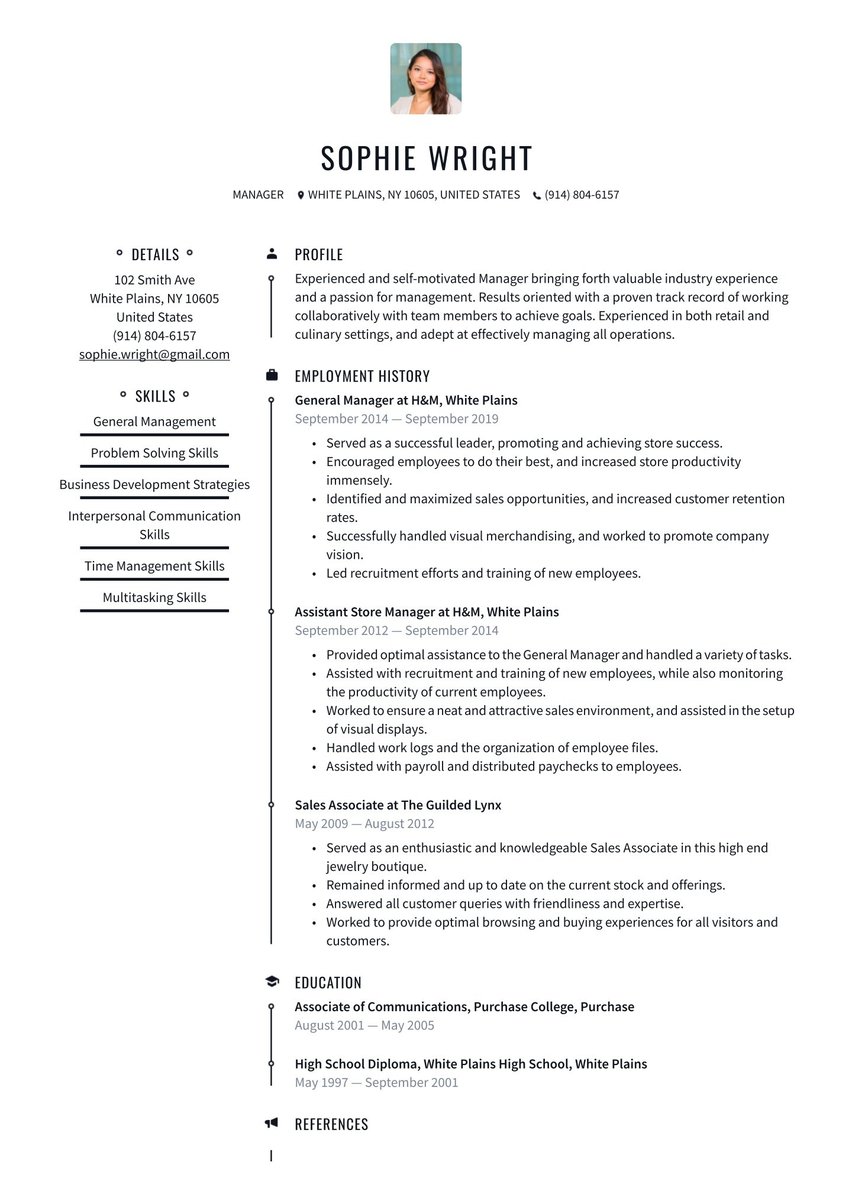
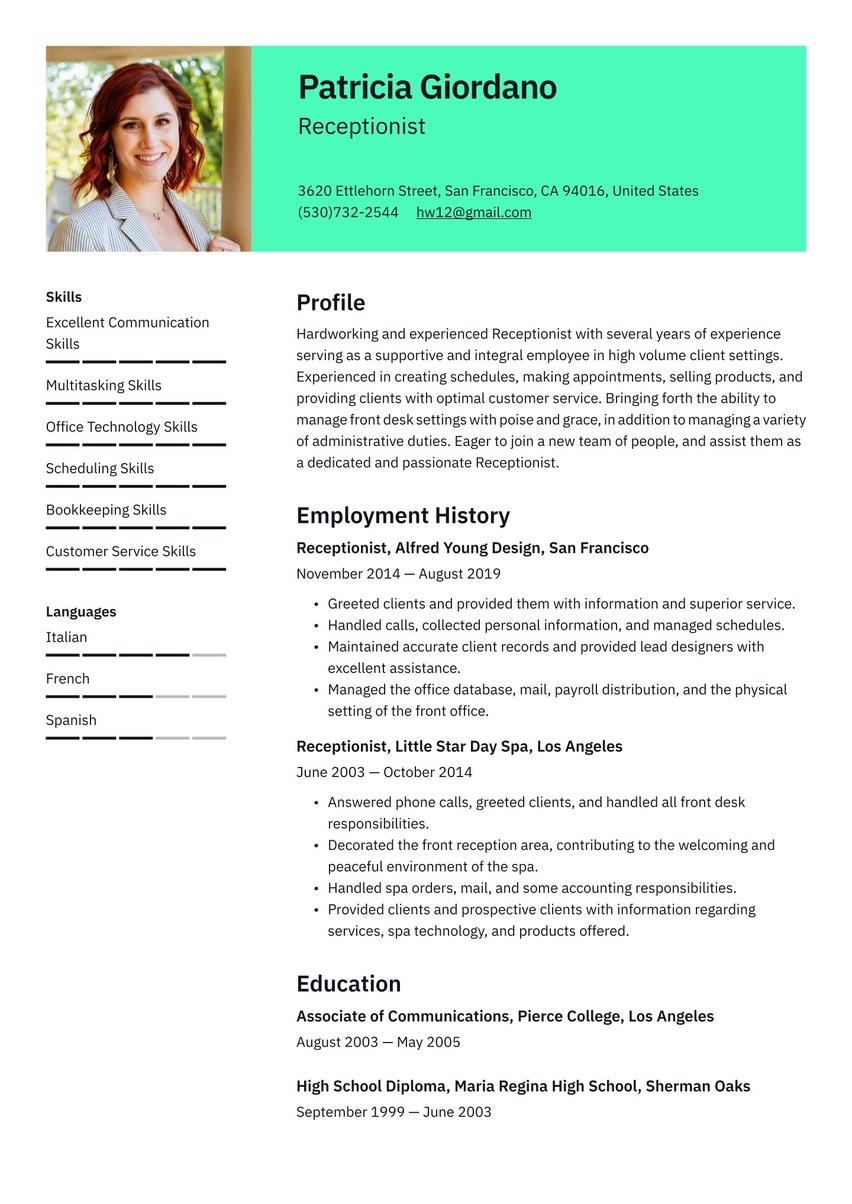
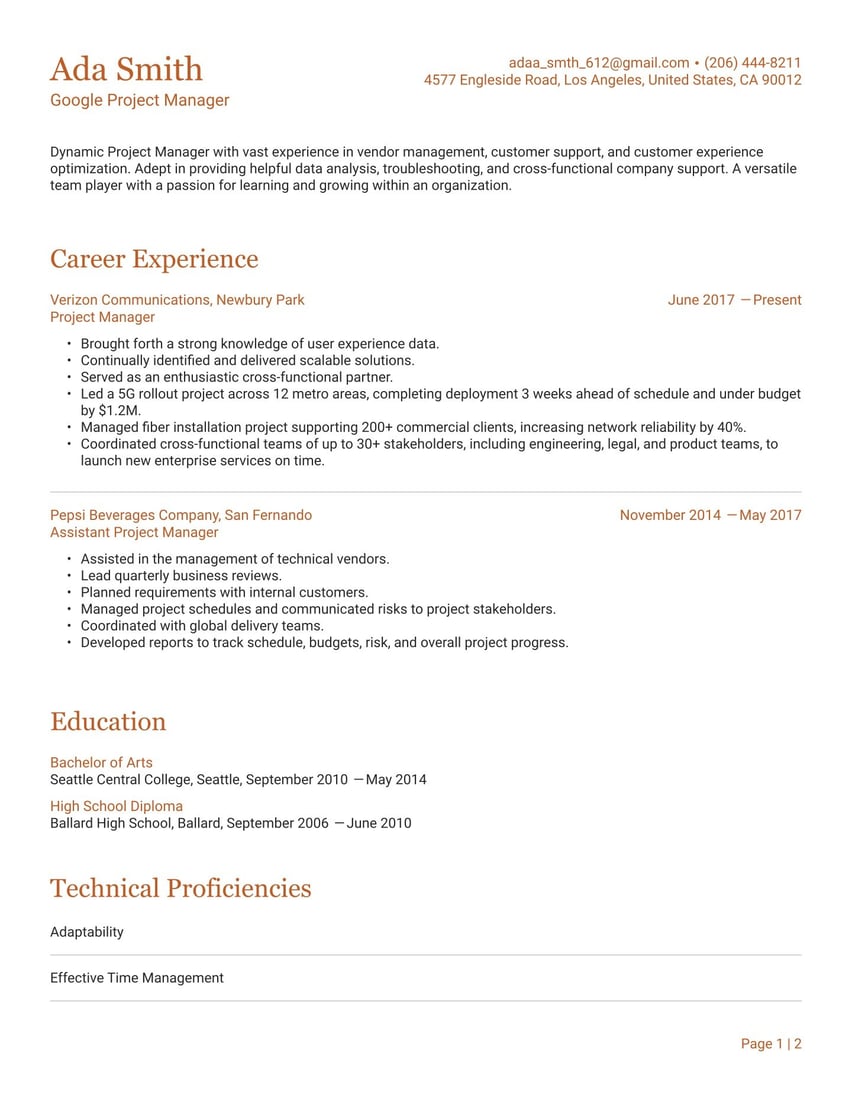
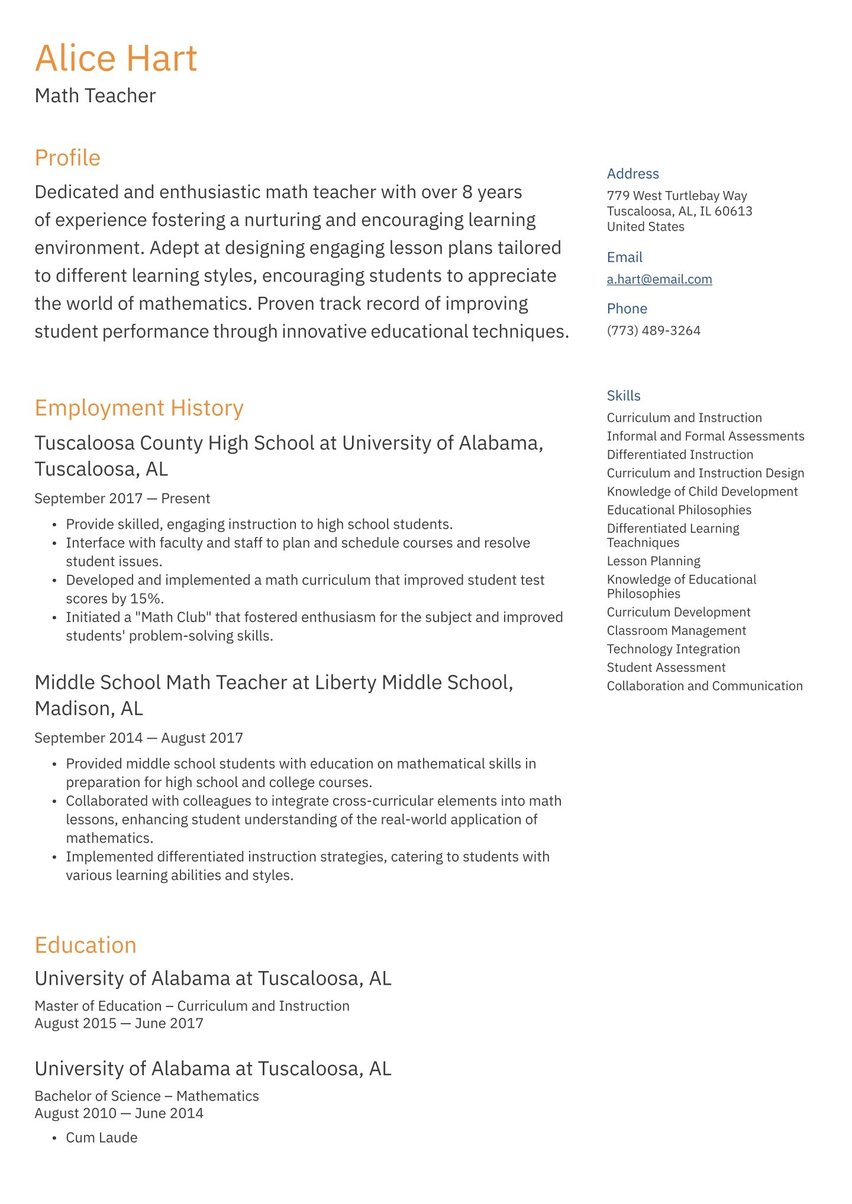
No matter how impressive your experience, you need to make a great first visual impression. That means your resume has to look fabulous to catch the eye of recruiters. Never fear! Using one of our Creative layout templates and following these guidelines will help you to develop a resume that looks as great as it sounds! Additionally, you can consider some options from the Modern or Professional category if you’re applying for a more serious/conservative project.
If you choose to personalize one of our designs, make sure you:
- Leave the margins in place to avoid a cramped look
- Use varying line lengths to add white space
- Limit yourself to a spot of color
- Spellcheck and have a friend or colleague proofread!
Another pointer: Although you are a voice actor, you may still want a headshot on your resume. Creatives are about the only people we recommend do so.
Remember that your goal is to get that casting director to read your career highlights and move on to listening to your portfolio. They won’t get there if your layout is confusing or they can’t find relevant data such as your contact information.
With Resume.io’s online resume builder, you can link your portfolio directly to your resume to give casting directors and other recruiters the full picture.
Don’t wait, jump right in and have your voice heard!