



You have limited space to make a memorable impression on your resume. Maximize this real estate with a statement of qualifications highlighting your best skills, abilities, and achievements that match a job’s requirements. With a notable statement of qualifications, you can quickly show prospective employers why you’re worth their consideration.
In this article, we’ll show you how to write a statement of qualifications with a template and examples you can use for guidance.
What is a statement of qualifications?
A statement of qualifications (SOQ) highlights your top skills and achievements relevant to the position you’re targeting. It’s usually a bulleted list of three to six qualifications that address specific questions or requirements in a job description to show a prospective employer why you’re a good match for the job.
Typically, you put a statement of qualifications at the top of your resume so that recruiters can review your best qualities quickly. You can also label this part of your resume as a “summary of qualifications.”
Statement of qualifications on a resume
- Managed a 14-person software development team for enterprise projects with a 95% on-time completion rate.
- Oversaw project budgets up to $1M and used strong fiscal management skills to reduce costs by an average of 14% each year.
- Improved team productivity by 38% through adoption of Agile methodologies and process automation.
What is a letter of qualifications?
An SOQ is often used interchangeably with a letter of qualifications (LOQ). However, while they serve similar purposes, these are actually two different documents, so it’s important to note which one you will need for your application.
A letter of qualifications is a longer document that is formatted in sections similar to a cover letter, but that specifically addresses each of a job’s requirements with supporting examples like an SOQ. It’s generally written in a more narrative style than the concise, bulleted format of a statement of qualifications.
Why is an employer asking for a separate SOQ?
Some employers, particularly in the government sector, may require you to submit a statement or letter of qualifications separately from your resume. This case usually refers to a longer document that addresses specific questions or criteria outlined in the job posting.
We’ll touch briefly on government SOQs later in this article, but will otherwise focus primarily on the shorter statement of qualifications that goes at the top of your resume.
How to write a statement of qualifications
Follow these five steps if you want to add a statement of qualifications to your resume.
1. Analyze the job description
Before you start writing, go back to the job description and review the employer’s desired skills for the job. Hiring managers will sometimes label these as either “required” or “preferred.” Highlight all of the skills you have that match the employer’s wishlist. These skills give you a good place to start when writing your SOQ.
2. Brainstorm your top achievements
Think about your best career achievements up to this point. If you’re struggling to brainstorm some accomplishments, ask yourself these questions:
- What responsibilities have I willingly taken on in past jobs?
- What projects have I led in my other roles?
- What have other co-workers or supervisors said about my work?
- What am I most proud of doing in my career?
As you answer these questions, make a list of the accomplishments you want to highlight in your statement of qualifications.
3. Include numbers and data
Your statement of qualifications should immediately show a recruiter how you add value in a role. Include quantifiable data to back up your achievements and prove your impact. For example, highlight times when you reduced costs, increased sales, or improved productivity in your other jobs.
4. Write your bullet points
Once you have a list of your skills, achievements, and measurable data, write your bullet points. Keep them short so that recruiters can scan your top qualifications quickly. Use strong verbs, like “managed,” “exceeded,” “achieved,” or “surpassed.” Focus on highlighting outcomes or examples that show how your work has made a difference.
These two examples illustrate a strong SOQ bullet point versus a weak one:
Increased monthly client retention by 24% after implementing a new onboarding process to improve communication.
Developed a new onboarding process for clients.
5. Tailor your SOQ for each job
Each time you apply for a position, you should tweak your resume to fit the targeted role and employer. This includes tailoring your statement of qualifications template by choosing bullet points that most closely align with the job description and employer’s preferred qualifications. Prioritize your most impressive achievements that relate to the role.
Keep a master list of your accomplishments
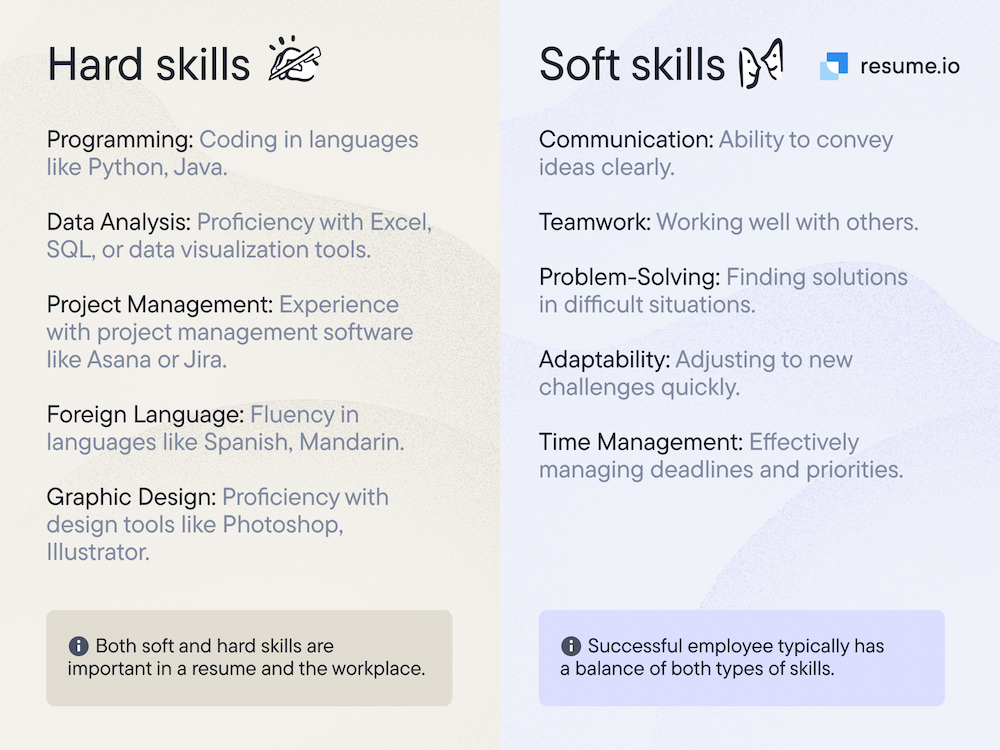
If you’re applying for many jobs, it’s helpful to have a master list of your skills and achievements. To create this list, brainstorm every career success you’ve had, along with all of your hard and soft skills, and the measurable impact of each.
Keep this file on hand to help you customize your resume statement of qualifications template for every role.
Statement of qualifications template
Use this customizable statement of qualifications template to write a summary of qualifications for your resume:
Statement of qualifications template
- [Job title] with [number] years of experience in [industry], specializing in [skill or area of expertise].
- [Action verb] [task or achievement], resulting in [measurable outcome].
- Proven success in [achievement or area of expertise], including [measurable outcome].
- Skilled in [unique skill] with a focus on [outcome or achievement].
Statement of qualifications examples
Want some more inspiration? Check out these SOQ examples for different roles and experience levels:
Statement of qualifications example for an entry-level position
SOQ example for a bookkeeper
- Earned an associate degree in accounting with relevant coursework in financial reporting, bookkeeping principles, QuickBooks, and Microsoft Excel.
- Managed a $5,000 budget for a student accounting group, reconciling monthly statements with 100% accuracy.
- Interned at a local accounting firm to assist with data entry and invoice processing.
Statement of qualifications example for a mid-level role
SOQ example for a high school psychologist
- Advocated for over 50 students with mental health needs to find placements in an outpatient program.
- Acted as a liaison with parents and guardians to ensure quality and continuity of care.
- Applied for and received a $250,000 federal grant to create an outreach and education program for parents and guardians.
- Developed and oversaw an extracurricular social skills program for students with autism.
Statement of qualifications example for a senior-level role
SOQ example for a senior electrical engineer
- As a senior electrical engineer, supervised the design of a LEED-certified electrical system for a 200-bed rural hospital.
- Discovered and corrected a design flaw that could have led to outages, after completing a comprehensive evaluation of the medical center electrical system.
- Mentored eight junior electrical engineers new to the medical construction field.
- Communicated with architects and hospital management to meet all electrical needs efficiently, streamlining workflows by 14% on average.
Statement of qualifications sample for a student
SOQ example for a current college student
- Dedicated student pursuing a Bachelor of Arts degree in marketing with an expected graduation date of May 2026.
- Completed coursework in marketing principles, consumer research, corporate finance, and marketing strategy with a 4.0 GPA.
- Led a student campaign to raise over $10,000 for cancer research while increasing campus attendance by 14% from the previous year.
Statement of qualifications sample for a career changer
SOQ example for a teacher transitioning into human resources
- Former teacher with over seven years of experience in classroom management, leadership, and conflict resolution.
- Completed a professional HR certificate program with a focus on recruitment, talent acquisition, and employee relations.
- Proven record of handling confidential situations in a sensitive manner and building trust through empathetic communication.
- Skilled in organizational management, documentation, and process improvement.
Statement of qualifications for government jobs
If you’re applying for state or federal government jobs, you might need to submit a separate statement of qualifications in addition to your resume and cover letter. A government agency may also refer to this statement as a “letter of qualifications.”
While the format varies slightly from a statement of qualifications on your resume, the goal is similar: to show employers that you have the right skills and experience for the role.
Follow these tips to format a statement of qualifications for a government job:
- Use a standard business letter format, similar to a cover letter.
- In the body, clearly list three to six skills and qualifications, and explain how they match the role’s requirements (sometimes referred to as “duty statements”).
- Provide examples and measurable outcomes to support your skills and achievements.
- Answer any questions an employer has specified for the statement of qualifications.
Statement (or letter) of qualifications example for a government job
Dear Jordan Smith,
I am submitting my statement of qualifications for the office administrator position with the Department of Transportation. With five years of experience in similar administrative roles, I believe that I can make a valuable addition to your front office team.
My skills and experience align closely with the position, as I have outlined here:
- Experience leading office teams. As an office administrator with the Department of Education, I led a four-person office team while overseeing day-to-day administrative tasks. Under my leadership, the team successfully boosted productivity by 18% within two years through cross-functional collaboration and more efficient workflows.
- Data entry and reporting skills. In my previous role, I led a database project to modernize the department’s record-keeping system. This project resulted in a 36% increase in data retrieval times while saving the department an estimated $15,000 per year.
- Strong written communication. Using my writing and editing skills, I created six internal documents to train new and existing staff on office policies and procedures. These documents contributed to a 23% improvement in compliance standards over a three-year period.
With my experience and achievements in office administration, I’m confident that I can make a difference on your team. Thank you for your consideration.
Sincerely,
Haley Jones
FAQs about writing a statement of qualifications
Here are answers to other frequently asked questions about SOQs.
How is a statement of qualifications different from a resume summary?
A statement of qualifications is a bulleted list, while a resume summary is a complete paragraph with three to four sentences. Both go at the top of your resume.
In most cases, you only need one or the other to get an employer’s attention. A statement of qualifications is a good option if you want to highlight your top skills and achievements in a quick, scannable list.
Can I write a statement of qualifications with no experience?
Absolutely! If you’re new to the workforce or changing careers, highlight your education and transferable skills, focusing on those listed in the job description.
You can also include other noteworthy achievements, such as a class project or academic honors, that relate to the job’s requirements.
How long should a statement of qualifications be?
A statement of qualifications is usually between three and six bullet points. Keep these bullets short and concise to catch a recruiter’s eye and encourage them to read the rest of your resume.


