


Your skills are your greatest asset—but how do you highlight them in a way that truly grabs attention? That’s where a skills-based CV comes in handy. Whether you're launching a new career, switching sectors, or looking to refocus your strengths, understanding when and how to use a skills-based CV can make all the difference.
In this comprehensive guide, you’ll learn how to create an effective skills-based CV template, when it works best, and the common mistakes to avoid.
What is a skills-based CV?
A skills-based CV does exactly what it says on the tin—focuses on the skills and education of an applicant rather than their previous work experience. The skills section is the focal point of a skills-based CV (also known as combination or hybrid) format, whereas a chronological CV format revolves around work history.
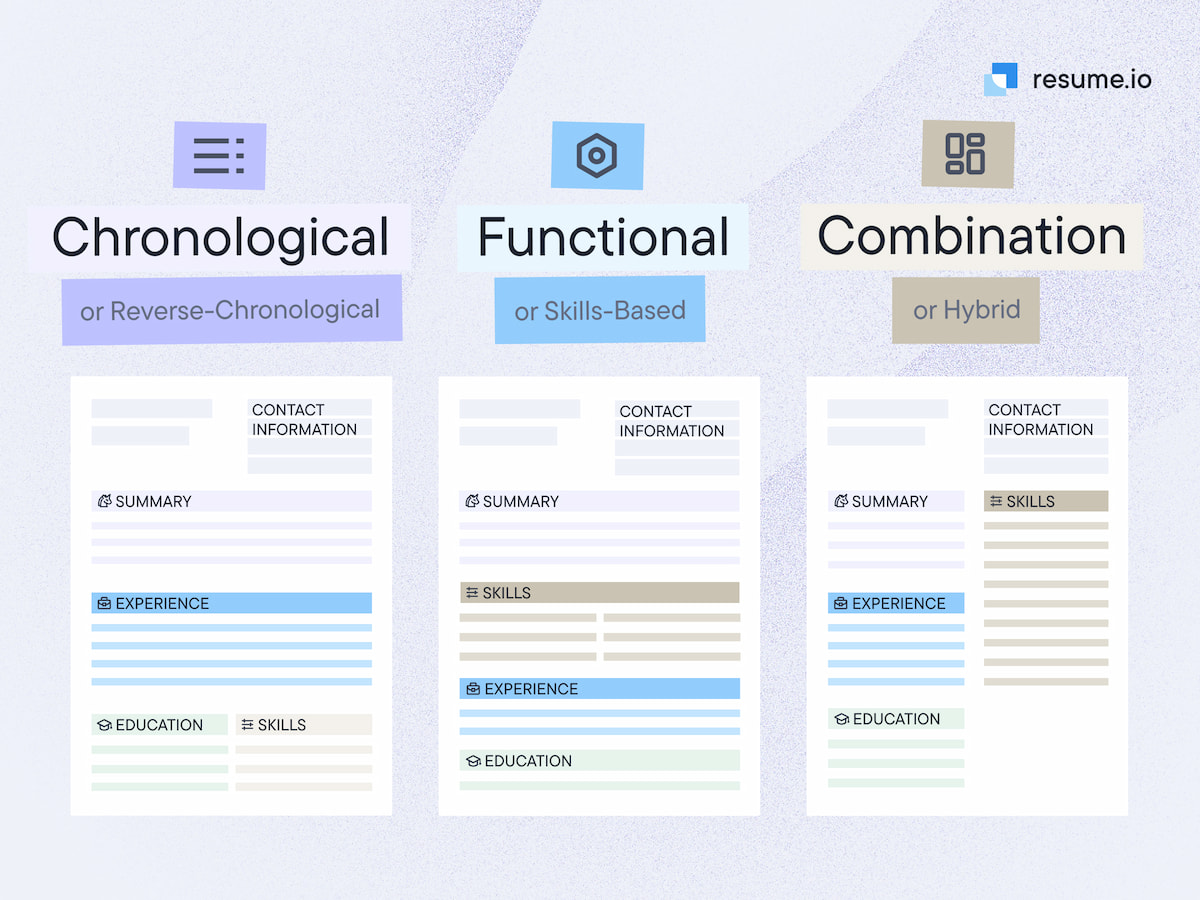
It typically begins with a short personal statement, followed by a breakdown of your key skills. Under each skill, you provide real-life examples showing how you’ve developed and applied that strength—whether through work, education, volunteering, or personal projects.
This CV format puts your most relevant skills front and centre, helping employers quickly see the value you bring.
Who should use a skills-based CV?
When your career doesn’t follow a linear path or you’re looking to pivot into a new role or industry, a skills-based CV can offer the perfect solution.
Consider using a skills-based CV template if any of the following apply to you:
- You’ve held several short-term or temporary positions, or switched jobs frequently.
- There are noticeable gaps in your employment history.
- Your background consists primarily of unpaid or volunteer work.
- You're transitioning into a new field, but lack direct experience.
- You're a recent graduate or student with limited work history.
- You’re looking to turn a personal interest or hobby into a professional path.
- You work in a technical or specialist role where certain abilities (like coding, data analytics, or UX design) matter more than previous employment.
If any of the above situations apply to you, a skills-based CV can be a great way to highlight your strengths—especially when your career path isn’t straightforward. It shifts the focus to your most relevant abilities rather than your job history.
However, if you have a strong, consistent work record with clear progression and relevant experience, a chronological CV will be more effective in showcasing your career growth.
What are the sections of a skills-based CV?
While its focus is on skills, your skills-based CV should still include the usual core sections.
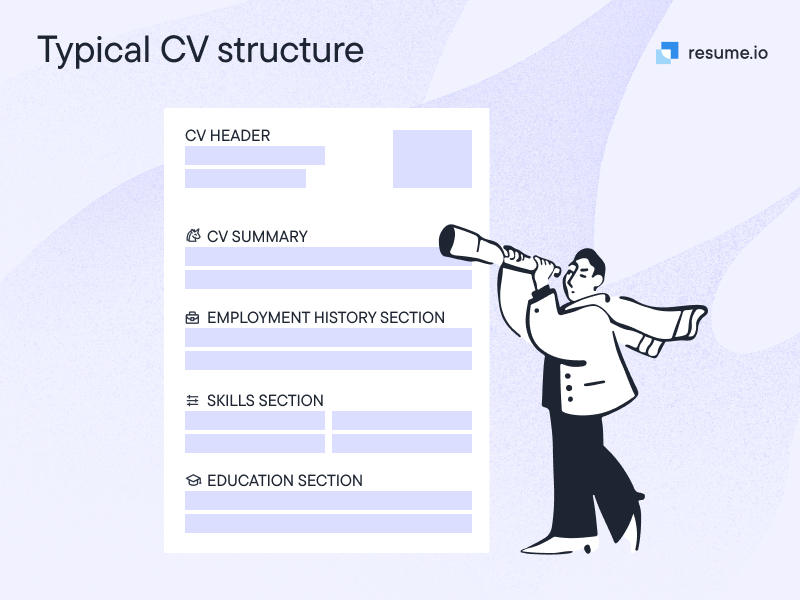
Here's what to include—along with examples to guide you:
CV header
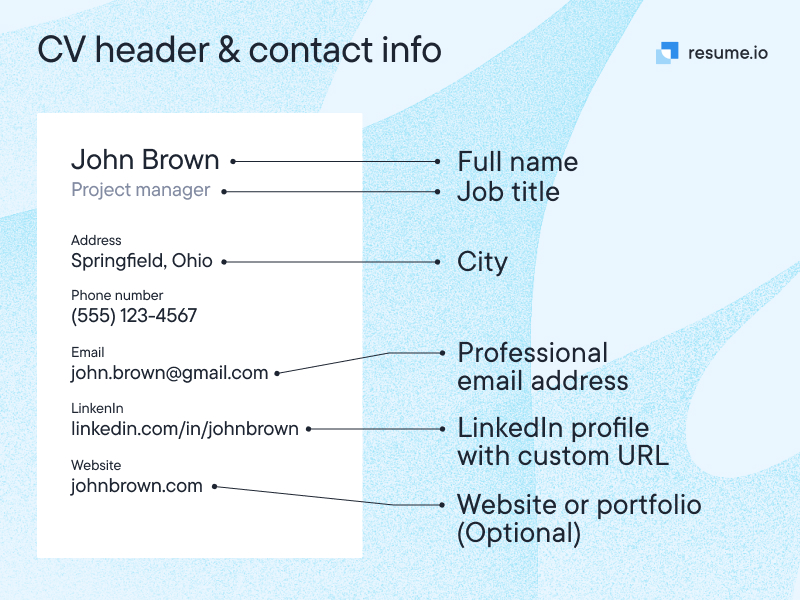
This may seem like a no-brainer, but having a header that presents your essential contact information in a professional and clear format sets the right tone.
Ensure that your skills-based CV header includes your full name, email address, phone number, general location, and LinkedIn URL or portfolio link if relevant.
Professional summary
Write a compelling summary (also known as a personal statement) in two to four sentences at the beginning of your skills-based CV that outlines your professional achievements and career highlights.
Think of this as an elevator pitch that connects your skills and strengths to what the employer is looking for.
Energetic professional with an honours degree in marketing and communications, driven to excel in a dynamic sales career. Proven ability to engage customers and create compelling branding campaigns, resulting in monthly sales increases of over 15%. Eager to apply transferable skills to help Stratton Group achieve its growth objectives.
Skills section
Think of this section as the jewel in the crown of your skills-based CV. Start by identifying the core skills required for the role you’re targeting, using the job description as your guide. Focus on skills that are crucial to the job where you have genuine expertise. These should form the foundation of your key skills section.
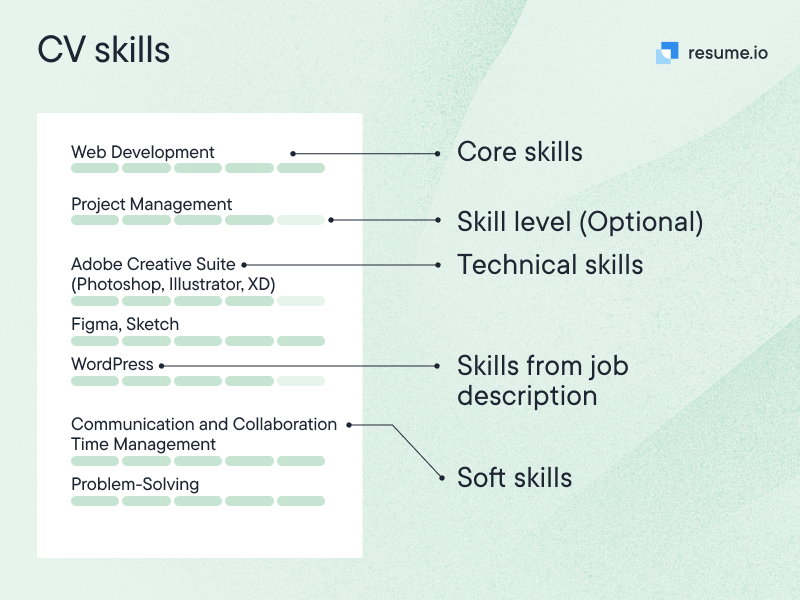
Focus on three to six relevant skills to keep this section clear and impactful. A good approach is to use each skill as a subheading, adding bullet points underneath each with real-world examples of how you’ve used that skill in action. Where possible, include the outcomes of each action—such as improving team performance or delivering measurable results.
If you don’t have concrete examples or results to add in bullet points, it’s also common to use this space to showcase your proficiency levels for each skill. Be sure to mention any specific training, certifications, or years of study that can substantiate those skill levels.
Software Development
- Proficient in Python, Java, and JavaScript, applied extensively in academic projects and a 6-month internship at The Sage Group plc.
- Optimised responsive web applications using HTML, CSS, and React, enhancing client website performance by 15% through improved load times and usability.
Data Analysis & Technical Support
- Applied SQL and Excel skills during academic projects and internship to collect, clean, and analyse datasets.
- Delivered technical support in the university IT lab, resolving software issues and assisting with system updates to ensure smooth operations.
Communication & Team Collaboration
- Presented technical updates and documentation at Sage, supporting decision making across development and product teams.
- Contributed to Agile sprints at Sage and during university projects, taking part in stand-ups, retrospectives, and team planning.
Education
How you present your education depends largely on your experience level and how much emphasis the employer places on academic background. Think of this CV section as a way to reinforce your skills by tailoring the details accordingly.
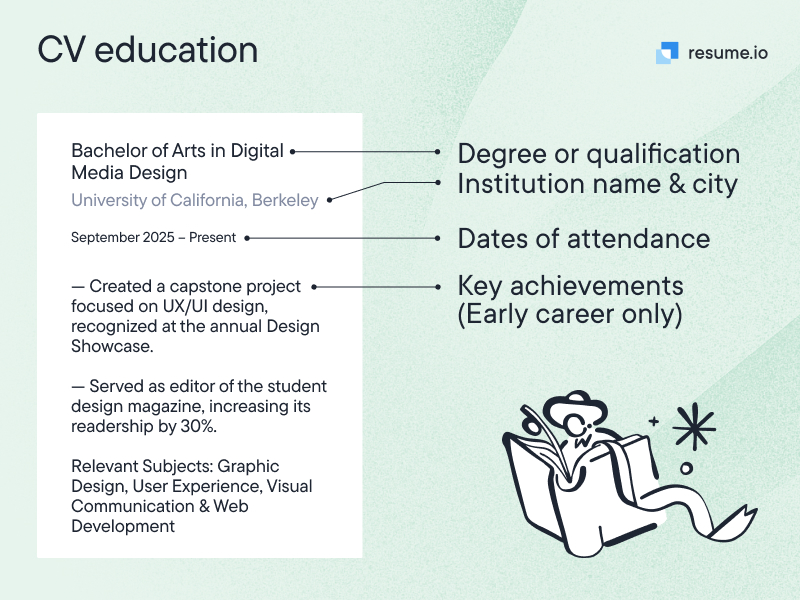
For instance, if you’re a recent graduate with limited work experience, it can be helpful to include relevant modules, subjects, and even predicted grades to show your alignment with the role and its required skills. This helps employers see your potential beyond professional experience.
On the other hand, if your work history is stronger and more directly relevant to the job, there’s no need to go into extensive detail about your education. A brief overview may be all that’s needed.
Here’s an example for a recent graduate:
BSc (Hons) Environmental Science
University of Leeds | 2021–2024 | 2:1
Key modules: Climate Change: Science & Policy, Environmental Impact Assessment, GIS & Remote Sensing, Sustainable Resource Management, Environmental Law
Final project: Assessing Urban Green Spaces and Air Quality in Leeds
- Used GIS to analyse the relationship between green space coverage and air quality data across Leeds, drawing on DEFRA datasets and local council records.
Work experience
Provide a brief overview of your work history, focusing on the roles and achievements most relevant to the position you're applying for. Start with your most recent job first, including your title, the company name, and the dates you worked there.
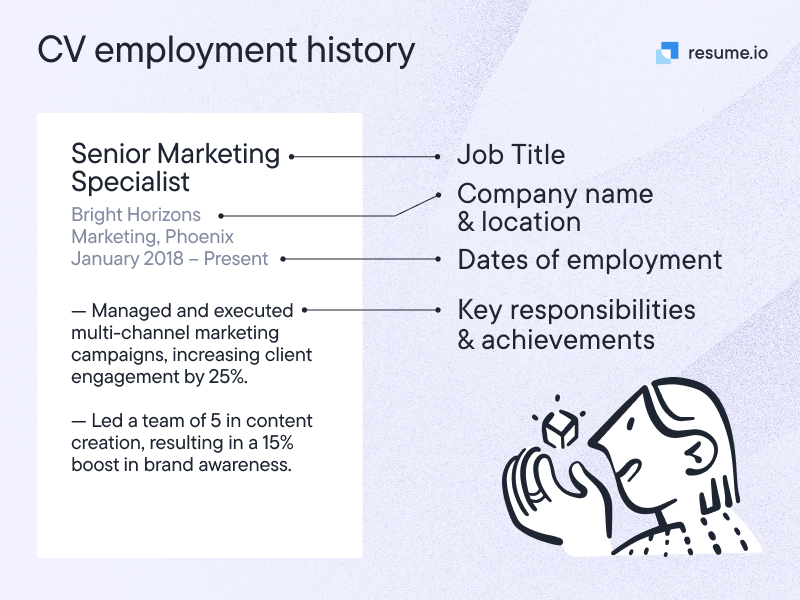
Under each role, use bullet points to highlight key accomplishments. Rather than listing every responsibility you had, focus on what you actually achieved in each role. Use active, engaging language—starting each point with a strong action verb—and try to include concrete results wherever possible so that the hiring manager can see what impact you have achieved.
Don’t forget to weave in keywords that reflect the job you’re targeting. This makes your application more aligned and easier for hiring managers (and applicant tracking systems) to notice.
Front Desk Coordinator
Willowbrook Health Clinic, Leeds
March 2020–February 2024
Served as the first point of contact for patients in a busy GP practice, managing appointments, handling enquiries, and supporting the smooth running of daily operations.
- Introduced staggered appointment slots for routine visits, which reduced patient bottlenecks and cut average wait times by 20%.
- Managed over 100 daily phone and in-person enquiries, maintaining a calm and professional approach during peak hours.
- Trained and supported new reception staff on clinic systems and procedures.
- Resolved appointment conflicts and last-minute cancellations efficiently, improving daily scheduling accuracy and reducing no-shows by 15%.
Skills-based CV template
Wondering where to start? No need to worry—we’ve created a ready-to-use skills-based CV template to guide you and make the process easier:
[CV HEADER:
Full Name
City, State
Phone number
Email address
LinkedIn URL]
[PROFESSIONAL SUMMARY: Write two to four concise sentences that highlight your relevant experience, core skills, or a stand out achievement in your chosen field.]
SKILLS
[Relevant Skill #1]
- [List an achievement(s) and/or experience(s) that demonstrates how you’ve used this skill in action, whether via studies, volunteer work, part-time job, etc.]
[Relevant Skill #2]
- [List an achievement(s) and/or experience(s) that demonstrates how you’ve used this skill in action, whether via studies, volunteer work, part-time job, etc.]
[Relevant Skill #3]
- [List an achievement(s) and/or experience(s) that demonstrates how you’ve used this skill in action, whether via studies, volunteer work, part-time job, etc.]
EDUCATION
[Degree Type, Subject]
[Institution Name, Year(s) of studies or completion (and Month if recent)]
- [Certification], [Certifying Organisation] – [Year earned]
WORK EXPERIENCE
[Job Title]
[Company Name, Location]
[Dates employed]
- [Action verb + what you did in detail + why, the outcome or quantifiable results]
- [Action verb + what you did in detail + why, the outcome or quantifiable results]
[Job Title]
[Company Name, Location]
[Dates employed]
- [Action verb + what you did in detail + why, the outcome or quantifiable results]
- [Action verb + what you did in detail + why, the outcome or quantifiable results]
Skills-based CV examples
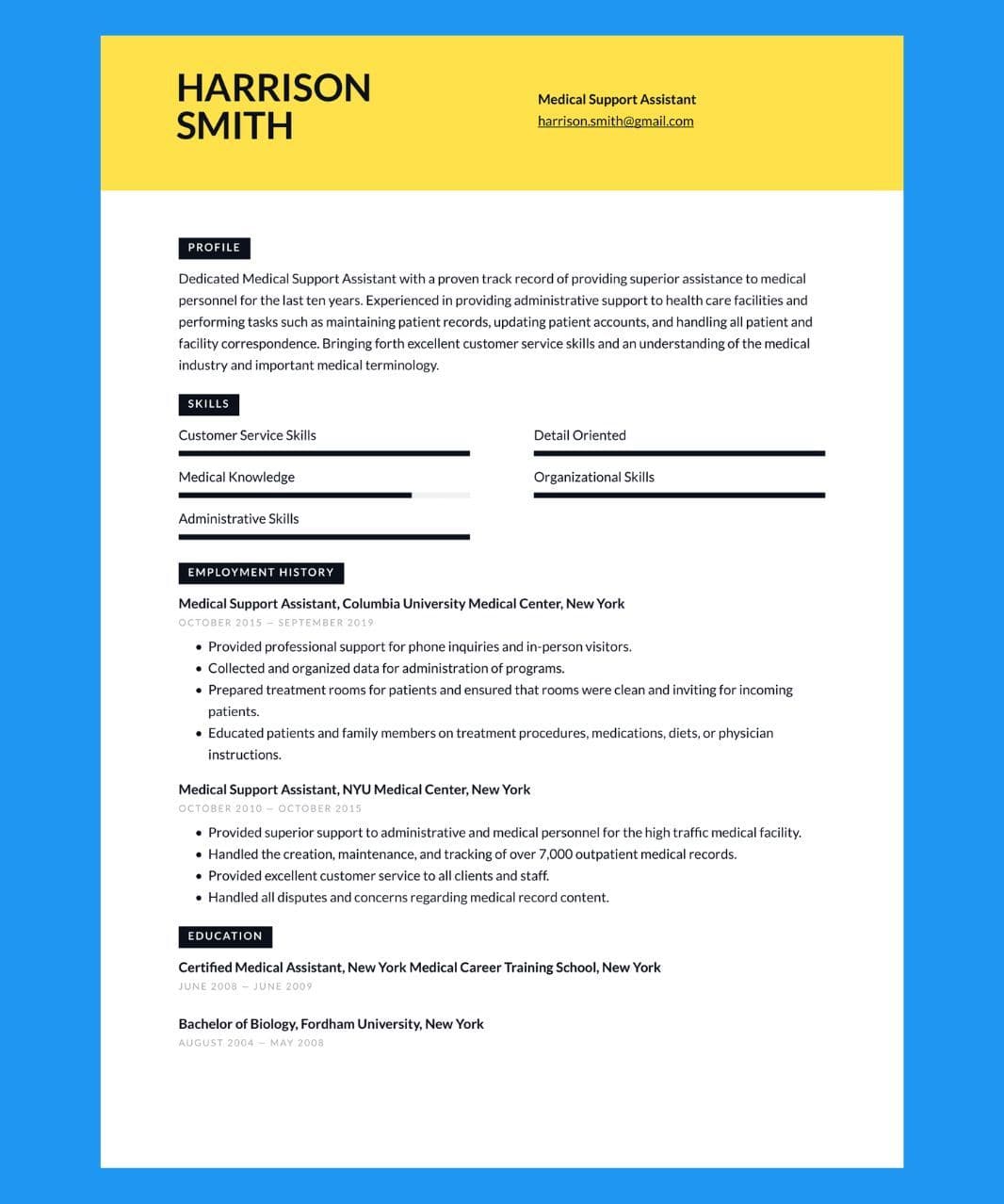
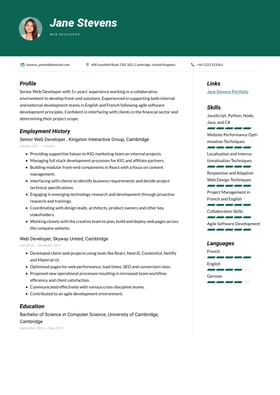
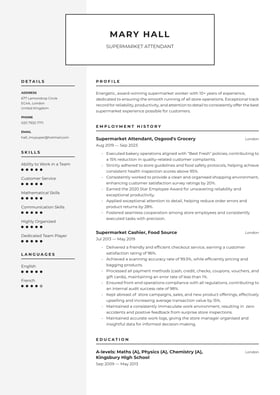
If you need more guidance, here are some skills-based CV examples to give you a little inspiration:
Common mistakes to avoid on a skills-based CV
To make your skills-based CV stand out, watch out for these frequent pitfalls:
- Listing irrelevant skills. Only include skills that are directly aligned with the role you're applying for. Irrelevant abilities can distract from your core strengths.
- Not providing proof or results. Back up your skills with clear evidence, quantifying achievements wherever possible to show real impact.
- Giving too much detail. Avoid overwhelming the reader. Keep your CV focused, relevant, and ideally no more than two pages.
- Failing to tailor your CV: Customise each application. Use keywords from the job description to boost your chances with both recruiters and applicant tracking systems (ATS).
- Overlooking soft skills: Don’t just list technical abilities—employers also look for soft skills and traits like adaptability, teamwork, and leadership. Aim for a balanced skill set.


