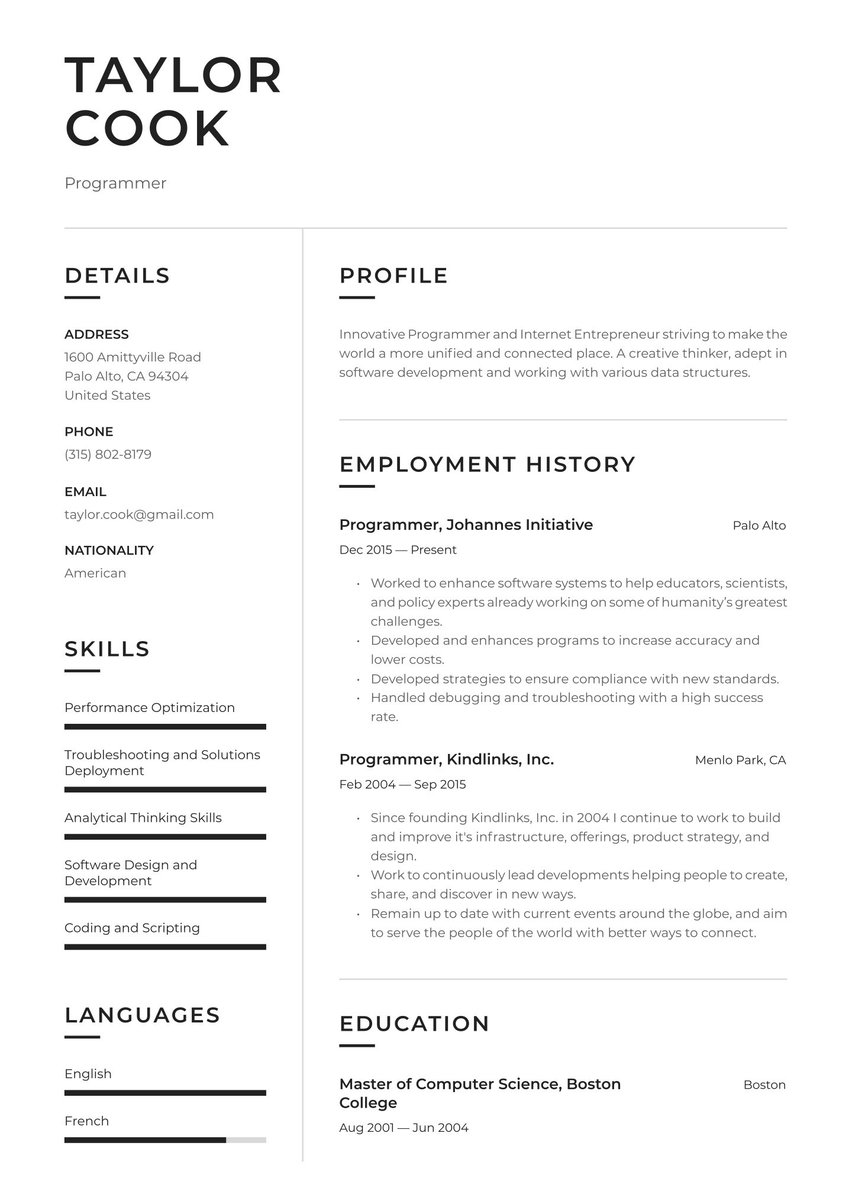


Innovative Programmer and Internet Entrepreneur striving to make the world a more unified and connected place. A creative thinker, adept in software development and working with various data structures.
12/2015 - present, Programmer, Johannes Initiative, Palo Alto
- Worked to enhance software systems to help educators, scientists, and policy experts already working on some of humanity’s greatest challenges.
- Developed and enhances programs to increase accuracy and lower costs.
- Developed strategies to ensure compliance with new standards.
- Handled debugging and troubleshooting with a high success rate.
02/2004 - 09/2015, Programmer, Kindlinks, Inc. , Menlo Park, CA
- Since founding Kindlinks, Inc. in 2004 I continue to work to build and improve it's infrastructure, offerings, product strategy, and design.
- Work to continuously lead developments helping people to create, share, and discover in new ways.
- Remain up to date with current events around the globe, and aim to serve the people of the world with better ways to connect.
08/2001 - 06/2004, Master of Computer Science, Boston College, Boston
- English
- French
- Mandarin
- Latin
- Hebrew
- Ancient Greek
- Performance Optimization
- Troubleshooting and Solutions Deployment
- Analytical Thinking Skills
- Software Design and Development
- Coding and Scripting
You’re a computer programmer ready to move forward in your IT career. Fabulous! You are in a profession that requires you to be focused. Because your job can be done anywhere in the world, your competition is global. On the plus side, your skills are required across many industries since almost every business uses some type of computer program so those great jobs are out there — if you know how to get the attention of hiring personnel. Computer programmers are, in general, detail-oriented workers. As a programmer, you have to be since coding is precision work. But, creating “beautiful” code that does the job well also requires creativity. You may overlook that aspect of your skills, but when you are crafting a programmer resume, you definitely don’t want to overlook any ability that could give you an edge. That’s where Resume.io and this guide come in.
.jpg)

.jpg)
Related Resume Examples
Quality Assurance resume example
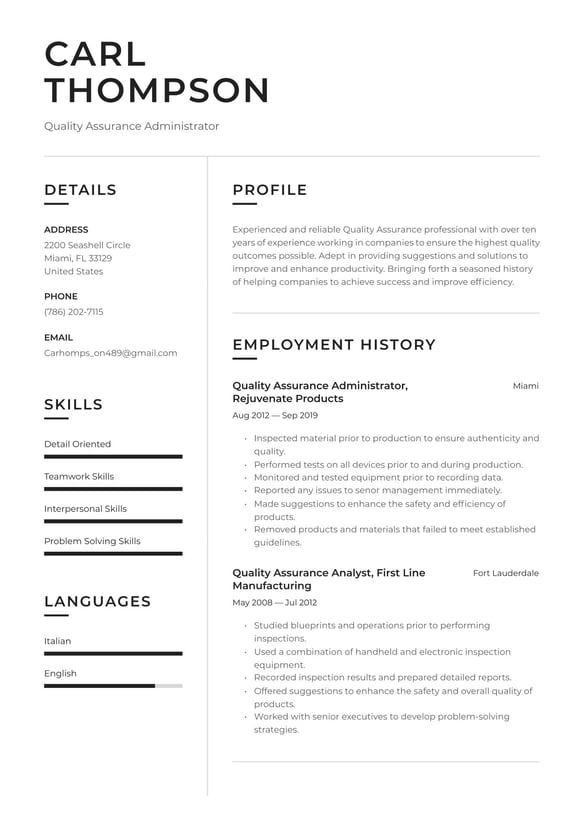
Aligned with precision and structure, this clean, organized template highlights your analytical mindset and attention to detail as a Quality Assurance Administrator. Its balanced layout emphasizes your expertise, ensuring clarity and confidence for hiring managers.
Web Developer resume example
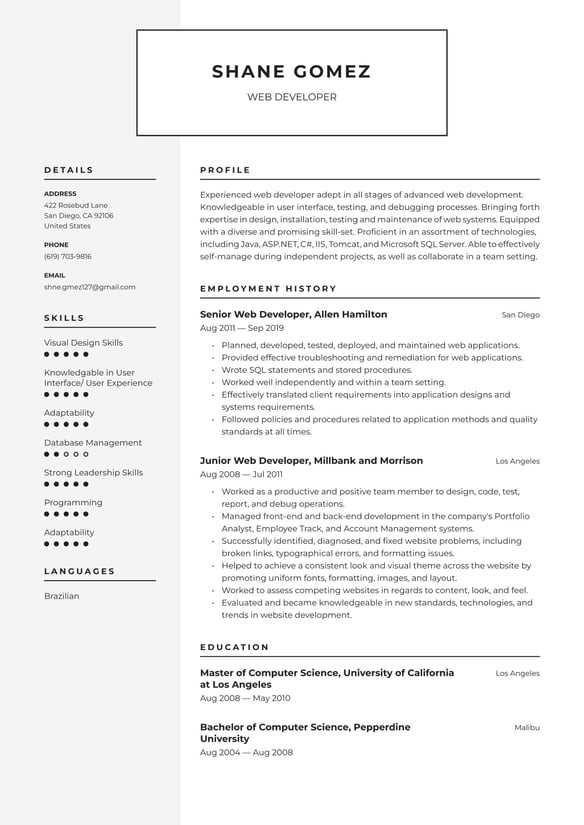
Designed for tech-savvy professionals, this sleek, modern layout spotlights your coding expertise and problem-solving skills as a Web Developer. Its clean structure highlights key achievements, helping you connect with innovative teams and forward-thinking employers.
Software Developer resume example
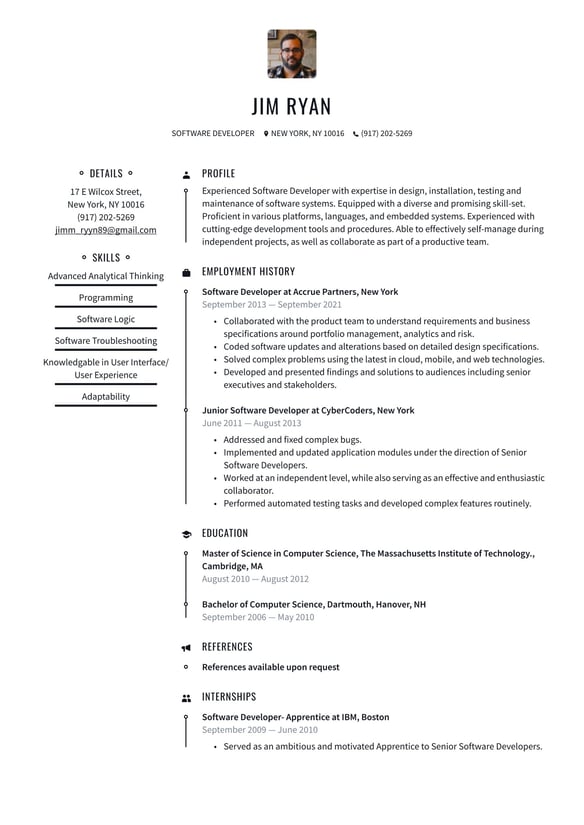
Focused on clean lines and a modern, tech-inspired layout, this template highlights precision and innovation, perfect for Software Developers. Its structured sections emphasize your technical expertise and problem-solving skills, impressing both hiring managers and tech-savvy peers.
Software Engineer resume example
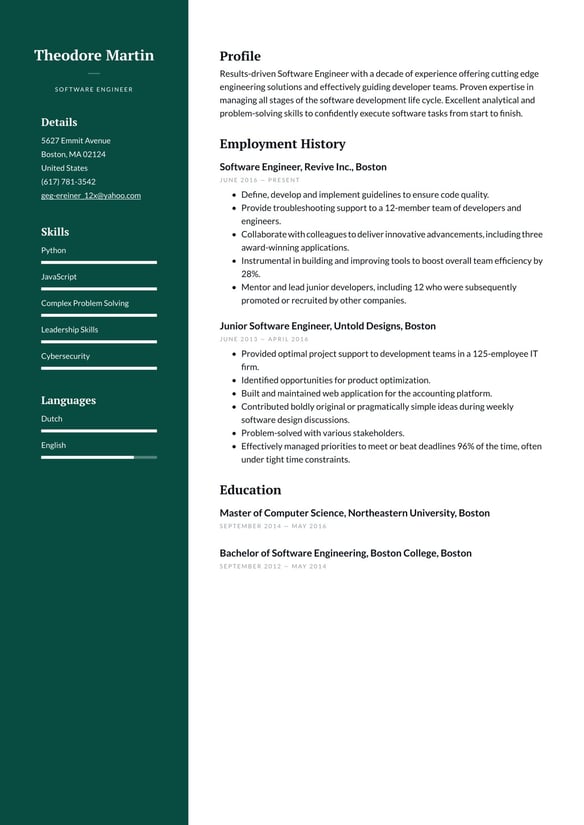
A smart fit for Software Engineers, this sleek, tech-inspired layout highlights your technical expertise and leadership skills. Its clean structure and modern fonts showcase accomplishments with precision, helping you impress hiring managers in fast-paced, innovation-driven environments.
Senior Software Engineer resume example
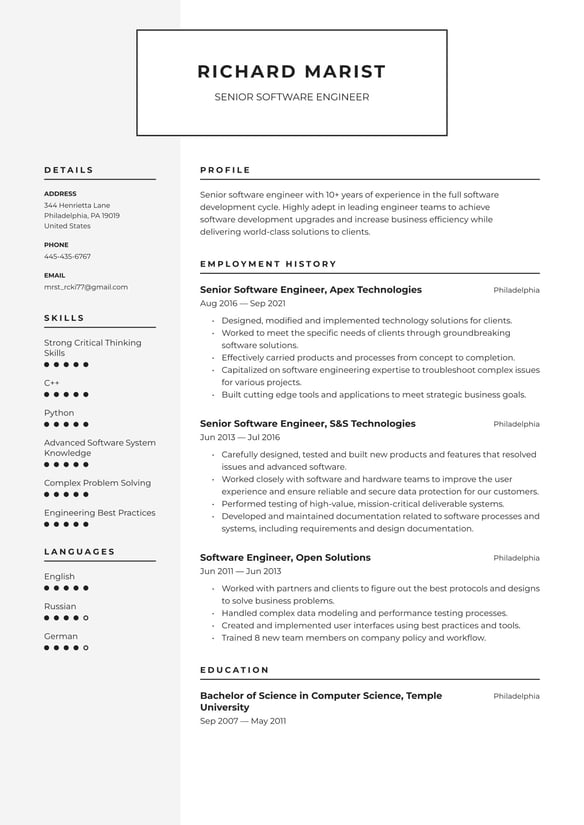
Perfectly suited to highlight technical expertise and leadership, this sleek, modern layout emphasizes structure and clarity, helping Senior Software Engineers showcase their skills, achievements, and problem-solving abilities to impress hiring managers and tech teams alike.
Full Stack Developer resume example
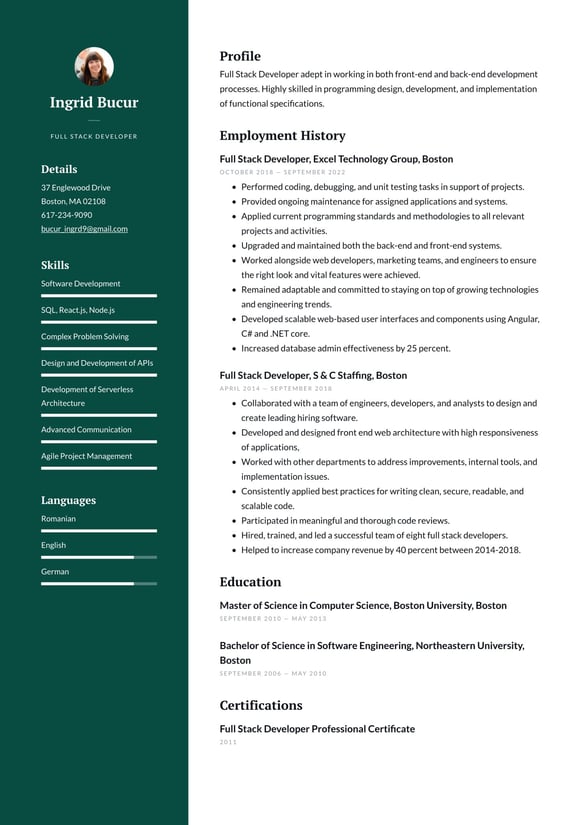
Structured for showcasing technical expertise and adaptability, this sleek, modern layout highlights your dual front-end and back-end skills as a Full Stack Developer. Its clean structure emphasizes achievements, making your expertise shine for hiring managers.
Java Developer resume example
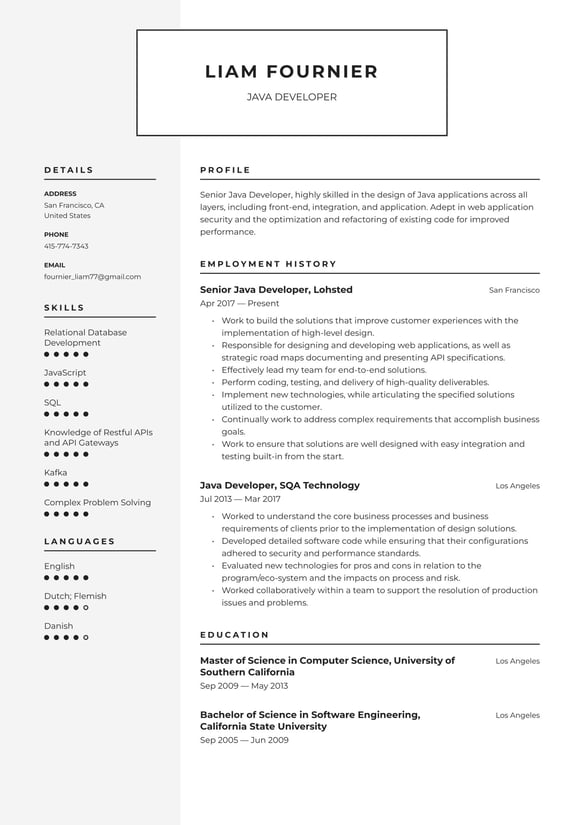
Crafted for Java Developers, this sleek, tech-forward layout spotlights your coding expertise and problem-solving skills with precision. Its clean structure and subtle accents enhance readability, helping you present complex achievements to hiring managers with clarity and impact.
DevOps Engineer resume example
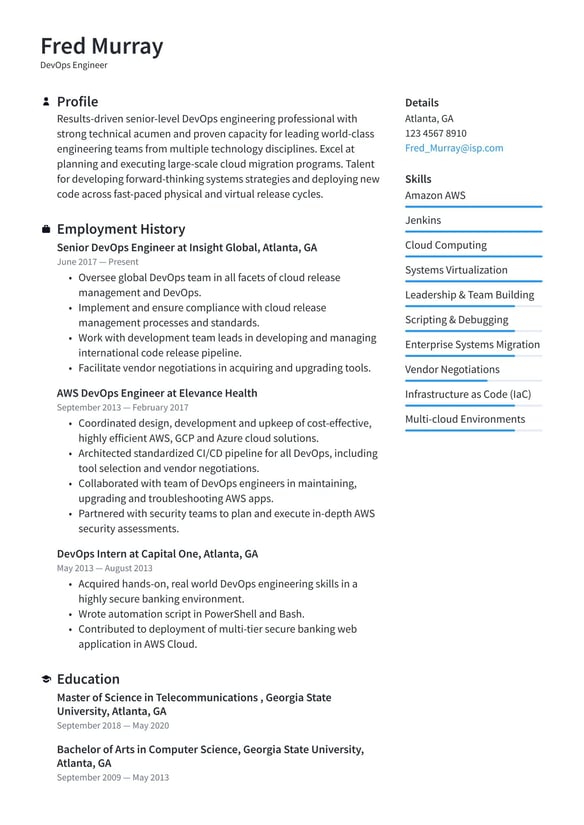
Customized for DevOps Engineers, this sleek, tech-forward layout highlights your cloud expertise, CI/CD mastery, and leadership skills. Its clean structure and modern fonts showcase your technical acumen, impressing hiring managers in fast-paced IT environments.
Python Developer resume example

Aligned with the dynamic needs of Python developers, this sleek, tech-forward template highlights your technical expertise and problem-solving skills. Its clean layout and modern typography showcase your achievements, impressing hiring managers in innovative workplaces.
Software Tester resume example
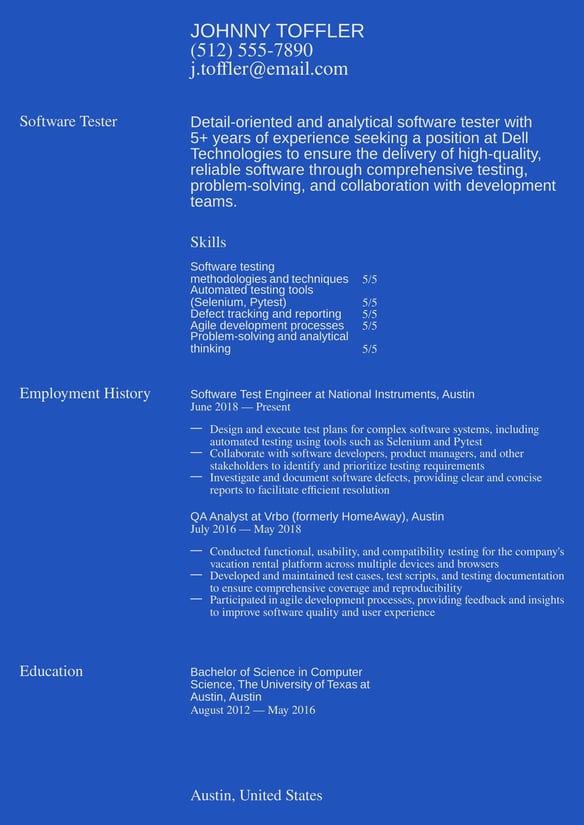
Optimized for precision and clarity, this clean, structured layout highlights your analytical skills and technical expertise as a Software Tester. Its intuitive design emphasizes your problem-solving abilities, ensuring hiring managers see your value instantly.
Take the next 15-20 minutes to learn how to:
- Understand Applicant Tracking Systems and how to use their algorithms to your advantage
- Create a summary that highlights your professional personality and successes
- Develop a career story that shows action and growth
- Emphasize your most desired skills
- Give the best first impression with a clean, legible design ( templates)
- Optimize your chances of securing your dream job!
Your first task is to get a grasp of your options by getting an overview of the market. Read on for just that.
The market for programmers

Computer programmers, also known as coders, provide an important function in the software field. Coding is also a stepping stone to becoming a software developer. Programmers take the designs that software developers create and write and test the code that makes their applications work. They may have to troubleshoot and debug programs that aren’t running properly. The biggest employer of programmers is, unsurprisingly, the computer systems design and services industry, which employs 38 percent of working programmers, according to U.S. labor bureau statistics. The others are:
- Finance and insurance (7 percent)
- Software publishers (7 percent)
- Manufacturing (5 percent)
Another 5 percent of programmers choose to work for themselves. If you work for yourself, you still need a stellar resume to attract new clients! Jobs for programmers in the United States are expected to decline 7 percent through 2028, because of outsourcing, but if you think of this job as your entry into software development, you will be positioning yourself well for the future. Not to mention the fact that IF competition were to rise (due to a decline of job openings), a stellar resume becomes even more vital!
Programmers are computer-savvy individuals that have great knowledge in the IT field. See our related IT resumes here below and get inspired by them:
- Systems Analyst resume sample
- Technical Project Manager resume sample
- Computer Science resume sample
- Network Engineer resume sample
- IT Director resume sample
- Software Engineer resume sample
- Film and Video Editor resume sample
- Motion Graphics Artists resume sample
- Network Systems Analyst resume sample
- 3D Animator resume sample
- Web Developer resume sample
- Data Scientist resume sample
- IT manager resume sample
- Data Analyst resume sample
Breaking the code: Getting past Applicant Tracking Systems
Your goal is to get your resume into the hands of a person. To do that, you have to understand the ATS software designed to screen out resumes that don’t meet employers’ requirements and make the jobs of overworked human resources personnel a little easier. As a computer-savvy professional, you understand algorithms. ATS software uses algorithms to scan and rank your programmer resume and either put you in the hands of a recruiter or send you to the garbage pile. There are more than a hundred systems on the market, so there is no one way to ensure your success, however, there are some tips and tricks you can use to increase your ranking. ATS is designed to make parsing information easier; therefore, you should make your information easily scanned. The top two pieces of advice to remember are:
- Individualize your resume to include the exact keywords and phrases mentioned in the job description, but do not “stuff” your resume with these keywords. Increasingly sophisticated software can reject resumes for repetitive keyword usage. More importantly, even if you get past the ATS, recruiters will not be fooled.
- Don’t use formatting such as tables or put data in headers or footers that some ATS software may not be able to read.
How do you find the most important keywords and phrases? Most likely, they are repeated more than once, are within the first few requirements in the listing or are emphasized with strong wording/ technical terms. However, if you are having a hard time and don’t want to miss a word, try using a word cloud application to help you. If you plug the job listing into wordle.net or wordart.com, you will get a word cloud whose largest words are the ones most often repeated and most likely to be important to your potential employer.
Pay close attention to the exact wording and terminology used in the job requirements. People and companies may use different abbreviations and professional lingo to describe the same things. Due to the ATS scanning for keywords, it’s better to err on the safe side and use the exact wording used by the employer (within reason of course, repeating a typo in the job listing won’t do you much good).
Your programmer resume layout: The first visual impression

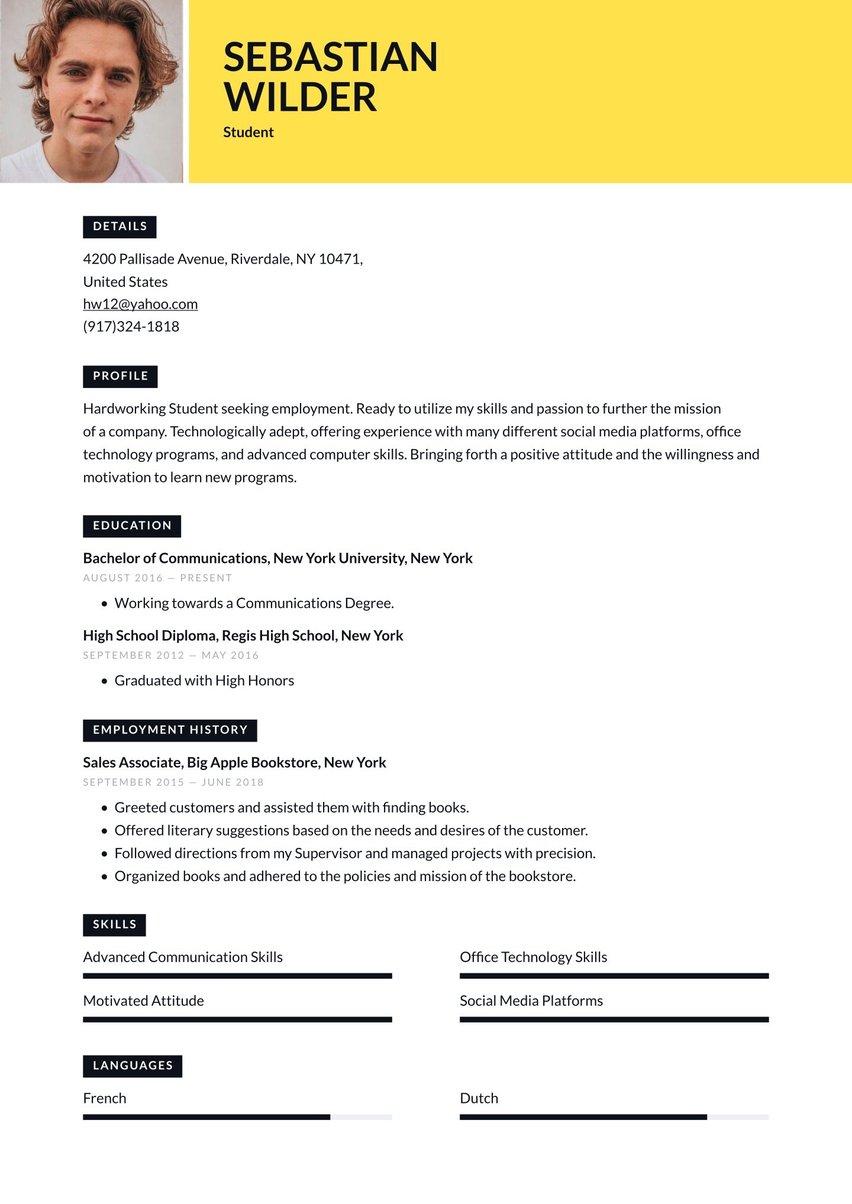
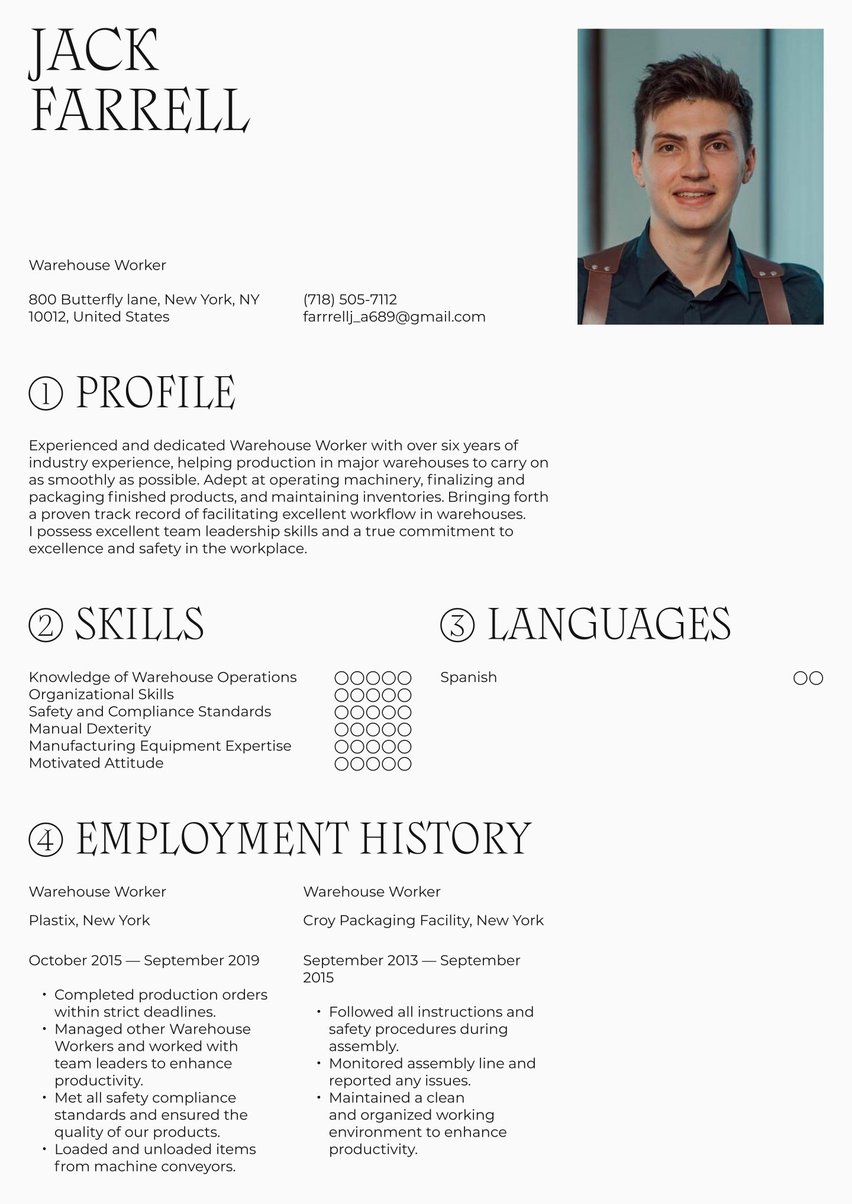
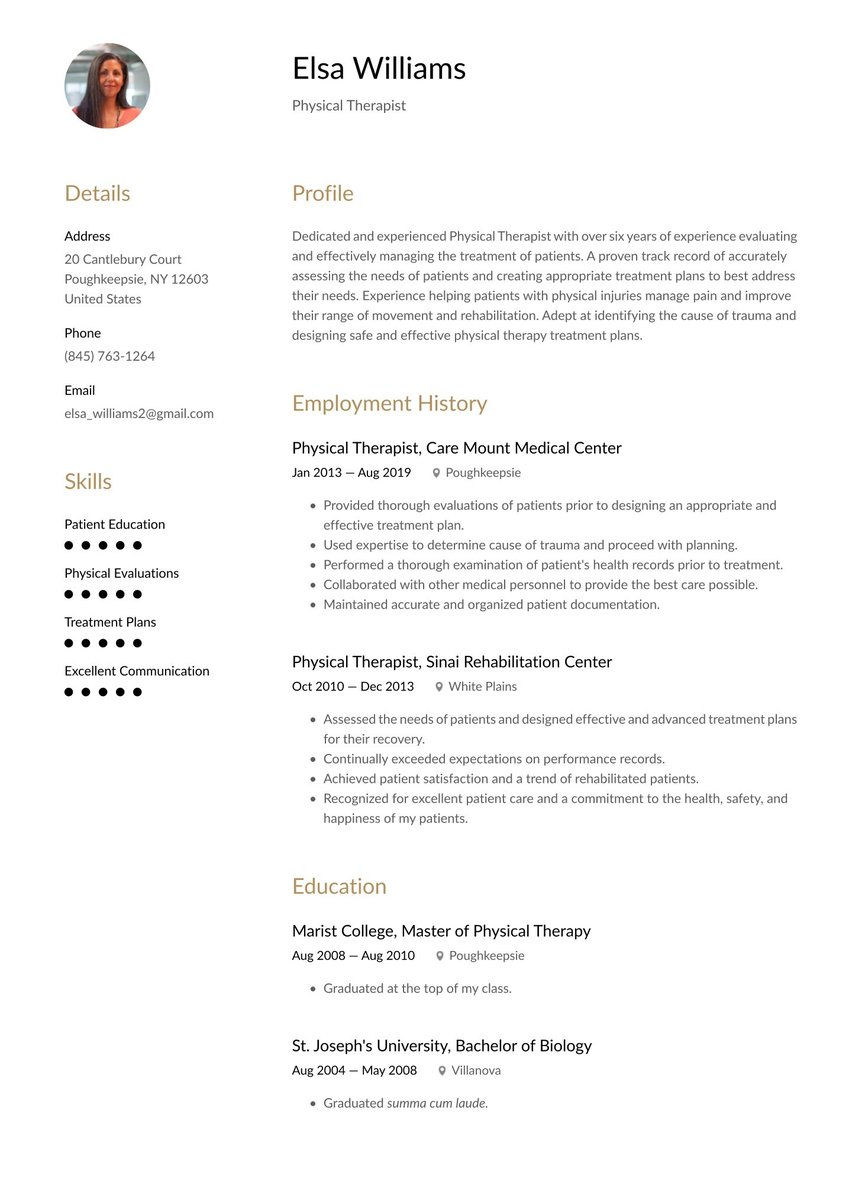
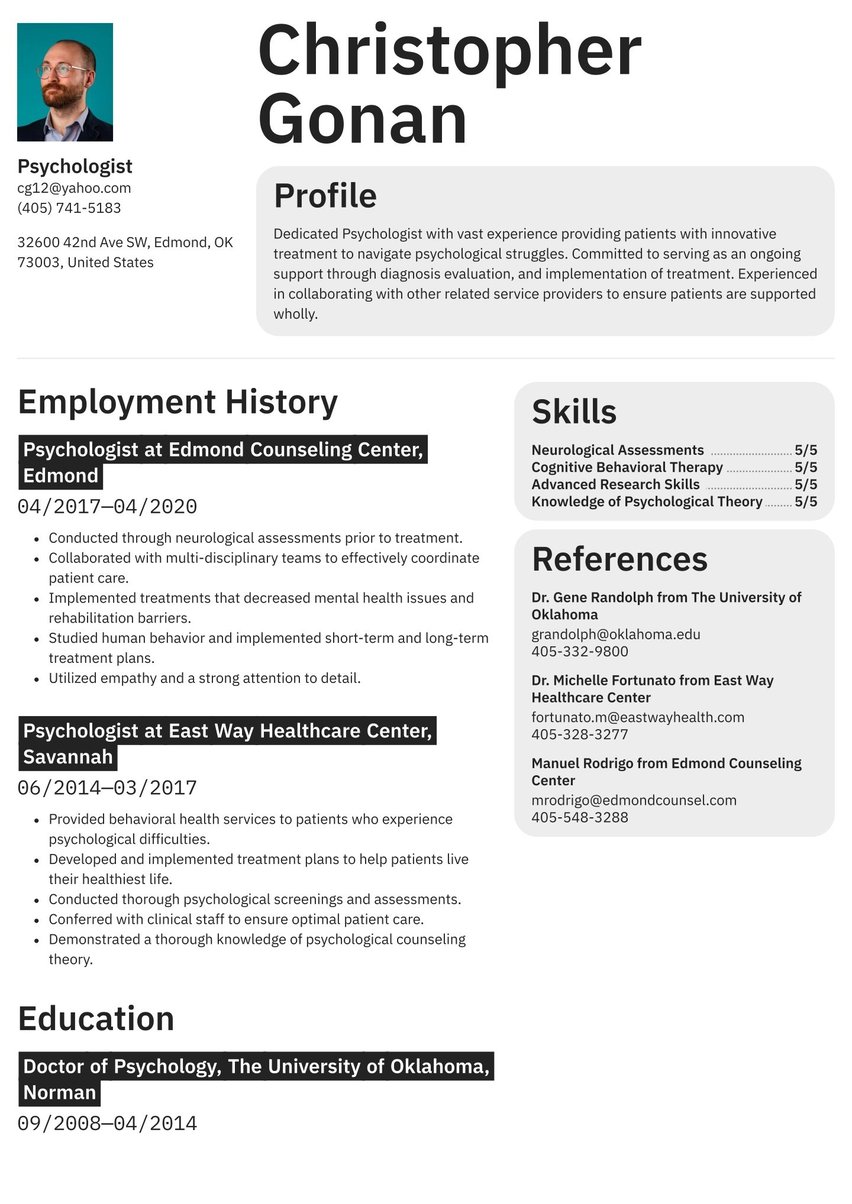
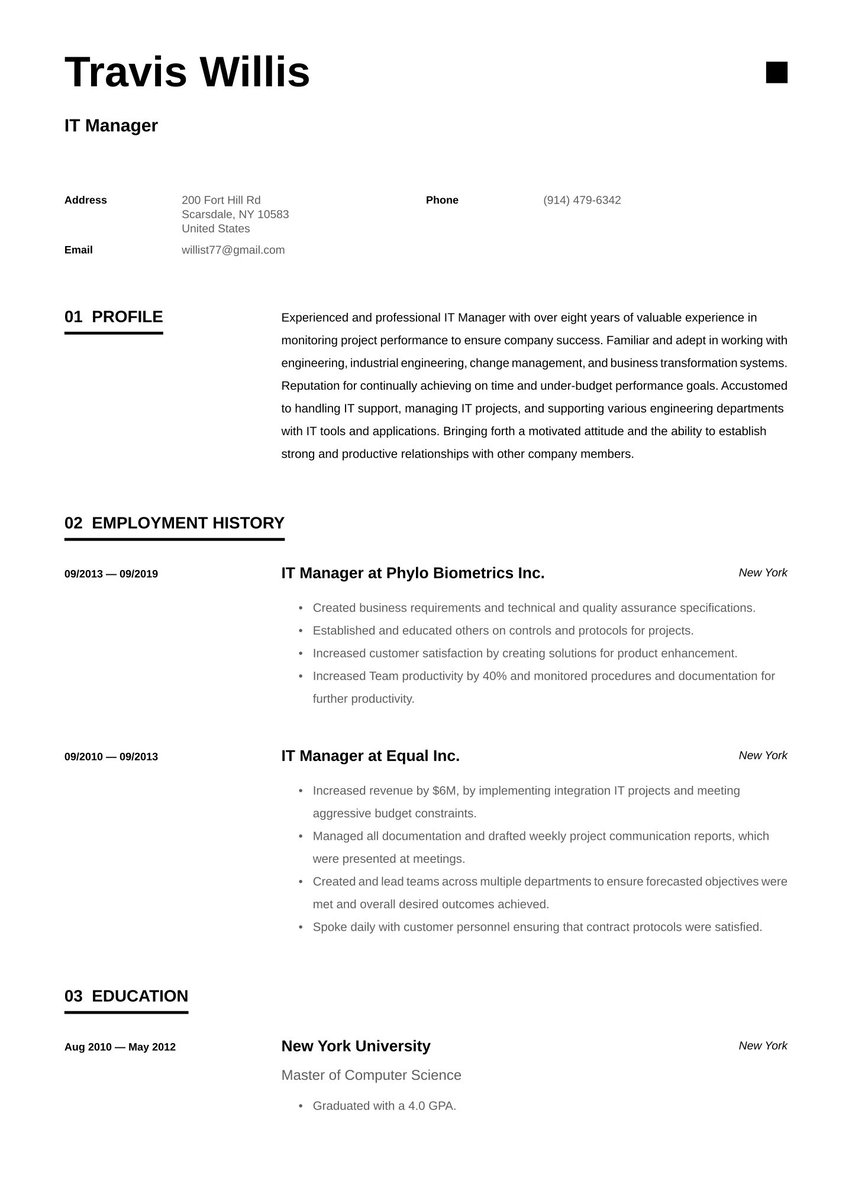
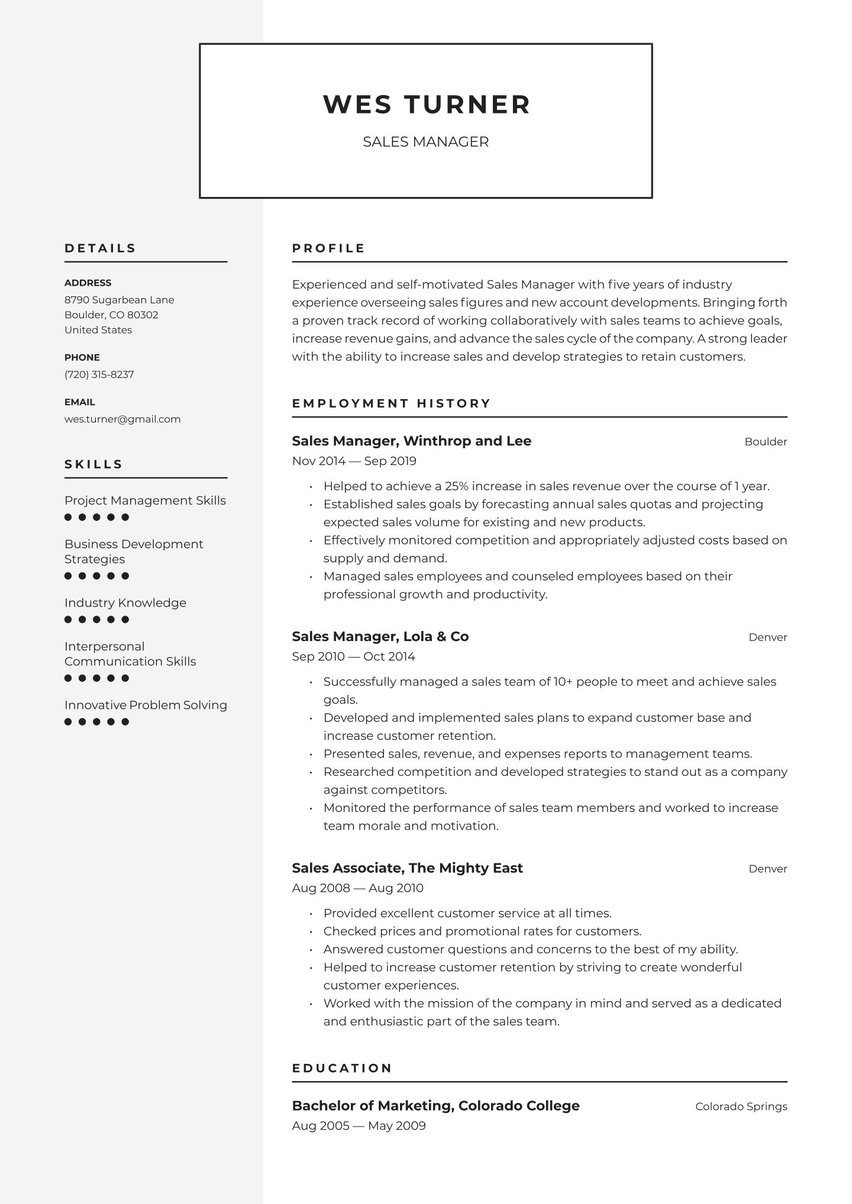
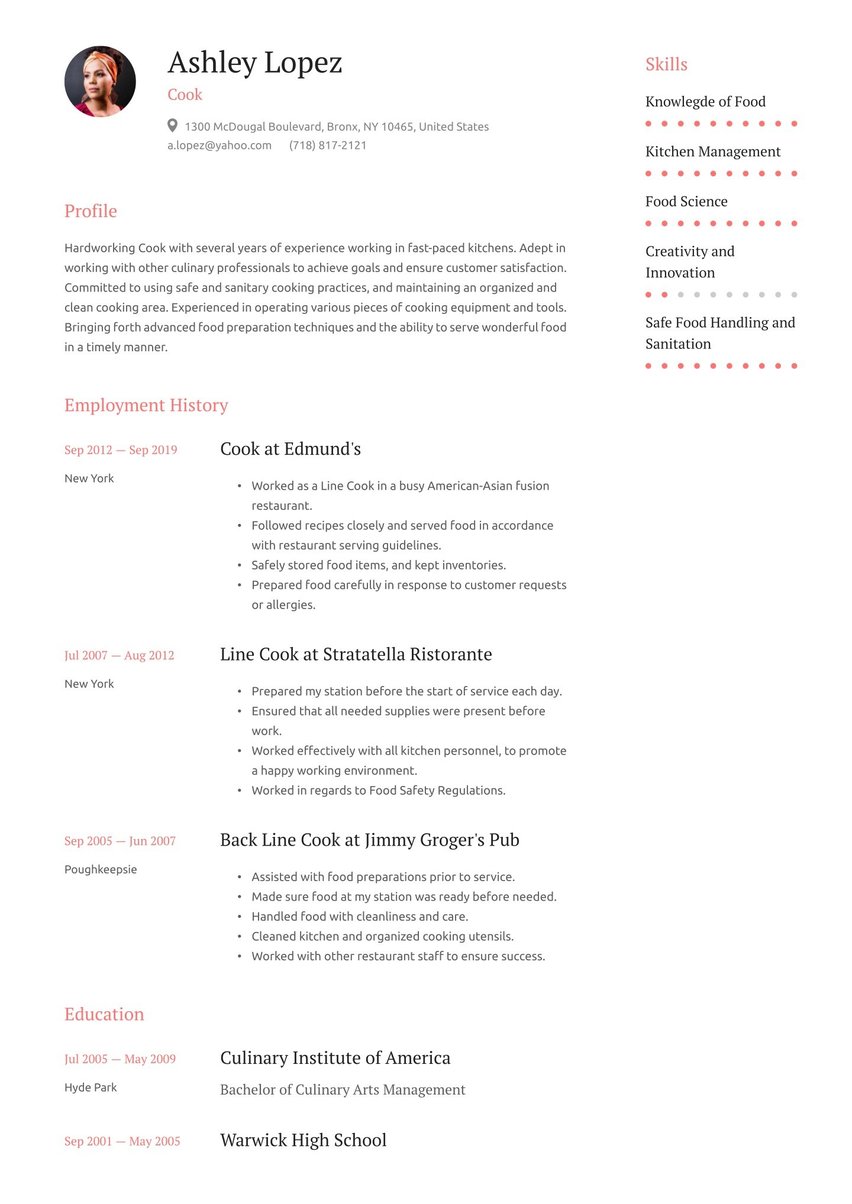
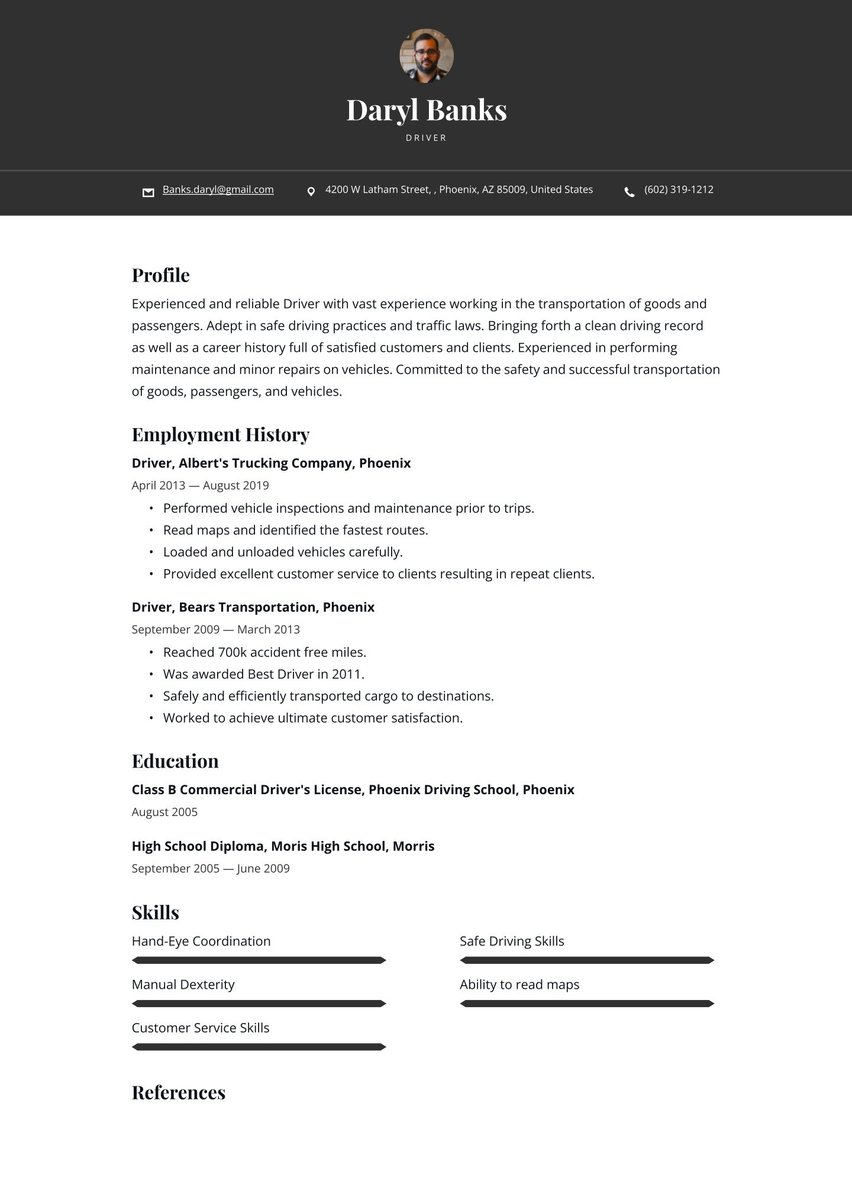
What you say in your programmer resume is vitally important, but if you want to get the attention of recruiters, you have to be equally aware of how you present yourself visually. Using some basic guidelines and an expertly-designed and recruiter-tested layout template from Resume.io, you can find just the right mix of legibility and clean style. Programmers, coders, mathematicians, and others in STEM fields use the words beautiful or elegant to describe equations and code that gets the job done simply and with thought. Use that ideal to design your resume as well. You want it to be streamlined, contain as much information as possible, and be admired by those with the power to grant you an interview. How do you accomplish that?
Understanding recruiters
First, remember that human resources personnel see hundreds of resumes, especially in career sectors that are contracting. They want to be able to quickly scan to find key data. Here is what they are looking for:
- Contact information
- Current job title and company
- Previous job title and company
- Profile or summary
To make this hunt as easy as possible for recruiters, make sure your section headings stand out. Vary your line lengths to avoid big blocks of type and stick to legible fonts. As a programmer, you are aware of the subtle differences in word processing software both between programs and within different versions of programs that can cause misalignments. Avoid that mistake by saving your resume as a PDF. Resume.io offers four categories of layouts to get you started: Professional, Modern, Classic, and Creative.
The most common eye movements people use to scan for content on the web are in an F-shaped pattern, according to UX researchers Nielsen Norman Group. This pattern is also used to scan paper documents. Do your own scan of your resume to see if your most important data falls within the F shape.
Have a friend or colleague proofread your resume. Even editors don’t edit themselves. Alternatively - use an online builder that streamlines the writing process to avoid obvious mistakes.
Skills Section: Give employers what they want

Your skills are the meat of your resume. You will be highlighting them in a variety of ways. Starting by thinking about your skills gives you a foundation to write your resume. First, without limiting yourself at all, come up with as long a list as you can of all your skills—not just the ones you consider relevant to the job. Also list your projects, challenges, and triumphs. Keep this Master List as a reference and add to it as your experience grows.
The Skills Section is an overview of the talents you have that match each job description. Use your word cloud or listing analysis to decide which five to ten skills to add here. This section is easily customized, so don’t neglect to do so every time you apply for a new job. Many employers are looking for soft skills, those interpersonal and organizational skills that workers in all careers need to thrive. GeeksforGeeks lists four must-have soft skills for programmers:
- Patience
- Attention to detail
- Creativity
- Desire to learn
Soft skills also include communication, organization, motivation, and other habits and qualities that enhance your contributions to the team and your employer. While many think of computer programmers and software engineers as lacking in people skills, emotional intelligence (the ability to understand yourself and have empathy for others) can set you apart from the crowd. These skills are especially important because you want recruiters to understand the benefit of in-house or local talent since you are competing with outsourced talent who may be in far-flung time zones and, therefore, difficult to communicate with quickly. As you create your skills list, also consider adding resume examples of how you used these abilities during your past jobs. That will come in handy when you begin your Employment History section. Of course, you should not neglect the hard skills that are required to write elegant code. Dev, a community of software developers, lists these as technical skills every programmer needs:
- Programming language and frameworks
- Databases
- Data structures and algorithms
- Source control
- Testing
Higher-level skills are likely to increase your ranking with the ATS, so focus on those as you customize your list.
Be specific by listing the exact names of programs, frameworks, and any other system you have used. Spell out full names AND use acronyms if space permits. That way you are covered in case the ATS is scanning for only one of them.
The five metropolitan areas where programmers make the most money, according to U.S. News and World Report are:
- Seattle, Washington ($129,290)
- Charlottesville, Virginia ($112,240)
- Vallejo, California ($112,000)
- Olympia, Washington ($107,890)
- Hartford, Connecticut ($106,250).
- Programming
- Product development
- Database management
- Strong Leadership skills

Career Summary: The big picture

With only seconds to impress, you need to communicate quickly what makes you a great candidate for your dream job! Here’s where you start. You’ve already brainstormed your biggest achievements, now you get to say a little about them. For your summary (also known as the profile), you get to do a little bragging. Don’t go so far as to exaggerate but show your pride in your professional achievements. You also have a little leeway to get creative here—the only section in which you can do so. Because creativity is a valued skill in programmers, do show off this skill.
While the profile / summary definitely IS for a bit of free-form writing, remember that brevity and page space are vitally important factors. Each word you use in the summary should be an action verb (describing a specific task or achievement), a powerful noun or adjective or a grammatical structure that you can’t do without. For the sake of power and briefness, you can shorten your sentences, for example omitting intros like “In my previous projects I…” and going straight for the facts “Wrote complex code in 4 different programming languages as part of large development teams in cybersecurity.”
Your goal for this section should be to reveal your professional personality by describing yourself while highlighting the career success or successes that compel recruiters to grant you an interview, all within two to four sentences. And, don’t forget those keywords and phrases!
Experienced and innovative Programmer adept in creating computer codes and effectively maintaining internal software systems. Adept at collaborating with designers and content producers, while creating code to produce multi-threaded server applications. Experienced in testing and documenting software for various applications. Committed to working as a team player and motivated professional.
Programmer work experience

Your first decision here is whether your career achievements are more suited to an Employment History or Project Section. Answer the following questions to help you decide:
- Are you self-employed or beginning your career? Do you contribute to open-source software or other crowdsourced code? If so, lean toward a Project Section where you can expand on the work you have done outside 40-hour-per-week employment.
- Have you spent most of your career working in companies? Even if you have outside projects, you should write an Employment History section.
- Does your career encompass both contract work and full-time employment? You may want to use both sections if you have enough space within design parameters (or incorporate your projects as part of the employment section, if they are fewer but important and complex).
In either case, this section should show recruiters how you have learned and grown as you have done increasingly complex coding projects.
Employment History
If you choose to develop an Employment History section, use Reverse Chronological order with your most recent job first. As you describe each position, stay away from a simple listing of responsibilities. Explain projects you have worked on and how you solved difficult challenges. Google recruiters recommend this format, according to an Inc. interview: “Accomplished [X] as measure by [Y] by doing [Z].” Another way to think about this is to consider what you achieved, how you achieved it, and what data or metric you can provide to show what benefit this had for your employer or client. Use strong action verbs and adjectives that express your best professional traits and organically place keywords and phrases to take advantage of the ATS algorithm. Remember, this is about proving to recruiters that you will bring talent, dedication, and proven results to the team.
Do your best to not leave gaps in your Employment History. If you worked as a freelancer or went to school during those gaps, make sure you explain or list classes by the appropriate dates.
Project Section
If your career development is better suited to a project-based organization, list your proudest achievements first. Be aware that recruiters will still want to see when you worked on these programs, so you should list a current or recently completed project first. Under each project heading, explain your role, whether you worked as part of a team, and follow the same guidelines for writing each bullet item that you would for an Employment History section.
- Worked with designers and content producers to create and maintain effective programs for the company.
- Used my advanced knowledge of software development and programming to lead company initiatives and system goals.
- Worked both independently and as a team member to write code for various applications.
- Debugged and modified software
- Exercised strong written and verbal communication skills to achieve the best results.
Education Section: schooling plus training

Most computer programmers have bachelor’s degrees, but it is possible to get hired with an associate’s degree (or in rare cases - with no formal education at all, but with a super impressive programmer resume + portfolio). Many coders today have attended bootcamps that focus solely on learning to code. Coding is also a skill that requires frequent updating as languages and other tools of the trade change. Include in this section any training seminars, coding classes, or other professional development you have completed.
If you’re looking to move up to a more comprehensive and well-paid role on the career ladder, check out our guide on web-developer resumes, which also has goodies like extra stats, the most in-demand programming languages and skills and other great tips!
If you are changing c areers or just beginning your career, consider breaking out the classes most relevant to the job. Also list any accolades, honors, or certificates you earned. You may also want to move this section above your Projects Section if you have a stellar academic career and are looking for your first job. If you are a midcareer professional, a simple listing of your degrees is sufficient since your work history illustrates your programming abilities.
2001-2004 NYU, Bachelor of Computer Science, NY, NY
2004-2006 UCLA, Master of Computer Science, Los Angeles, CA
Key takeaways
- The market for programmers is competitive because of the prevalence of outsourcing
- You need to make a great first impression, so keep your layout legible and clean
- Focus on high-level abilities and customize your Skills Section
- Brag a little and show off your professional attributes in your Summary
- Choose an Employment History, Projects Section, or include both
- Pump up your Education Section if you are looking for your first job or changing careers
Use the resources of Resume.io: the builder-tool, layout resume templates, and this guide to land your next great job!