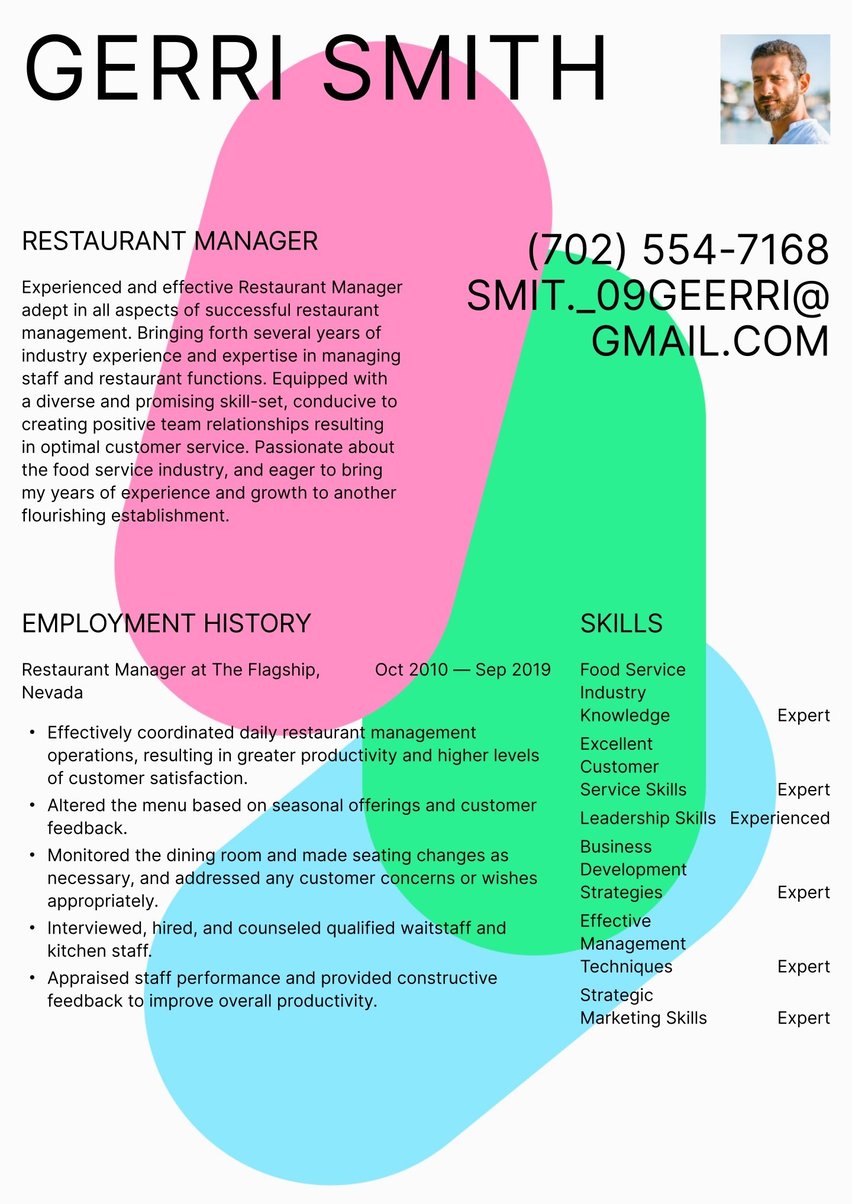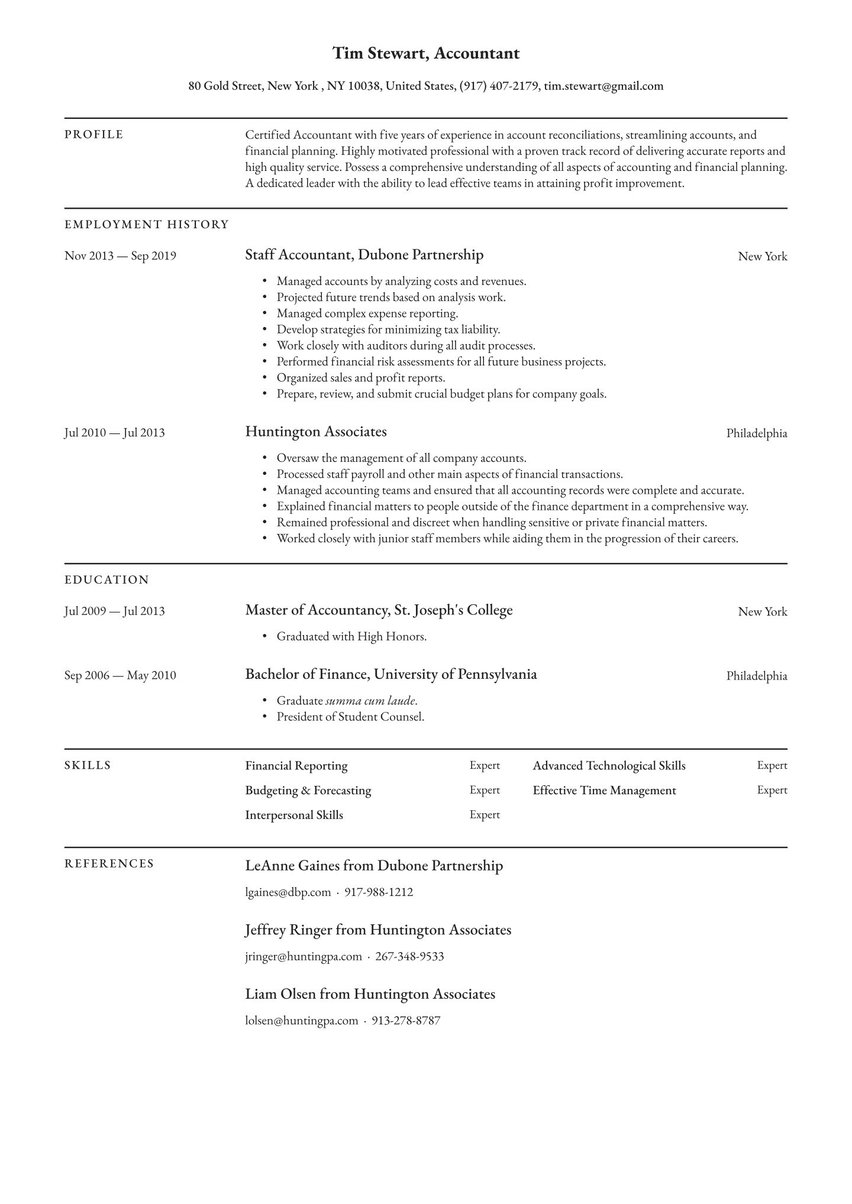


Highly skilled and dynamic Network Systems Analyst, manages and oversees optimal network services for organizations. Adept in setting up administrator and server accounts and experienced in managing the functionality of systems. Resourceful, and committed to continually advancing my knowledge of relevant technologies.
04/2016 - 09/2019, Network Systems Analyst, Seattle Information Technology, Seattle
- Maintain optimal network performance by conducting network monitoring and analysis.
- Ensure network security by developing network access, monitoring, control, and performing evaluations.
- Work to maintain the confidentiality of information and network data.
- Perform troubleshooting to system failures and work to find long-lasting solutions.
- Test and accurately configure software and maintained high functioning hardware.
03/2015 - 03/2016, Network Systems Analyst, Skilljar, Seattle
- Provided outstanding technical support to clients.
- Performed regular data backups to protect information.
- Performed scheduled updates, routine maintenance calls, and made repairs when necessary.
- Collaborated with the IT team to ensure that security software was properly installed on all employee computers.
09/2010 - 05/2014, Bachelor of Computer Information Systems, University of Connecticut, Storrs
09/2006 - 05/2010, High School Diploma, Glastonbury High School, Glastonbury
- German
- English
- Knowledgeable about Hardware
- Software
- and Programming
- Advanced Project Management
- Strong Analytical Thinking
- Complex Problem Solving Skills
- Dedicated Team Player
As a network systems analyst, you are great at monitoring and maintaining computer systems. You also have excellent problem-solving skills. Now, you’re ready for the next move in your information technology career so you will need to turn your professional analytical skills to work for you!
.jpg)

.jpg)
Related Resume Examples
Data Analyst resume example
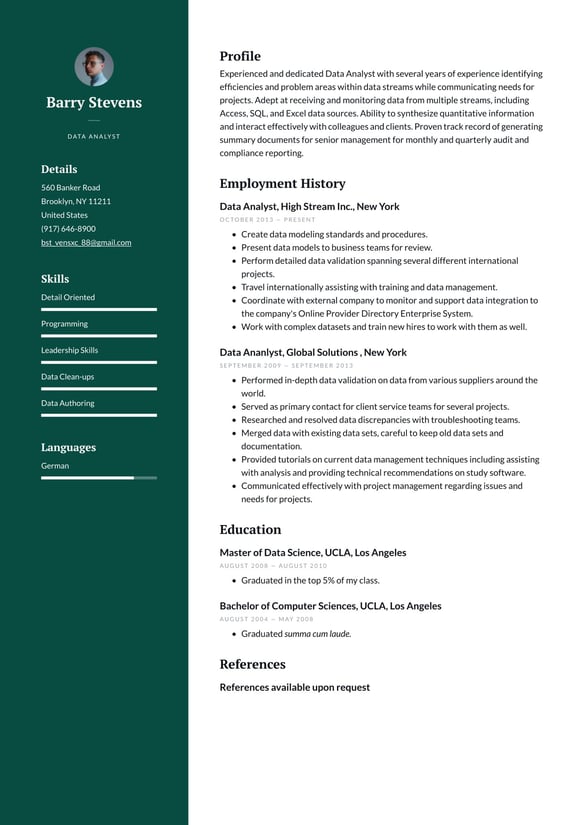
Tuned for precision and clarity, this streamlined template highlights your analytical expertise and technical skills as a Data Analyst. Its clean layout and structured sections emphasize your data-driven achievements, impressing both technical teams and decision-makers.
Software Engineer resume example
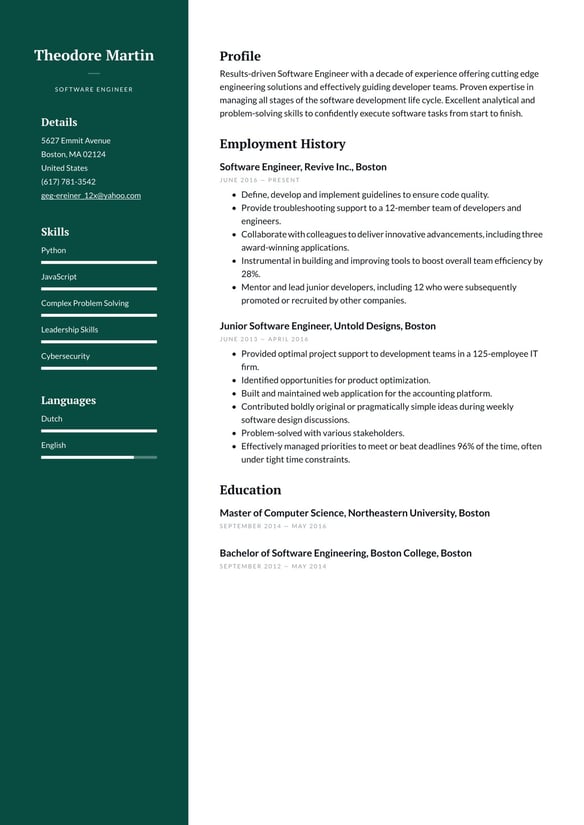
Crafted for software engineers, this sleek, modern layout spotlights your technical expertise and leadership skills. Its clean structure and strategic formatting highlight accomplishments, ensuring your problem-solving prowess stands out to hiring managers and tech teams alike.
Network Engineer resume example
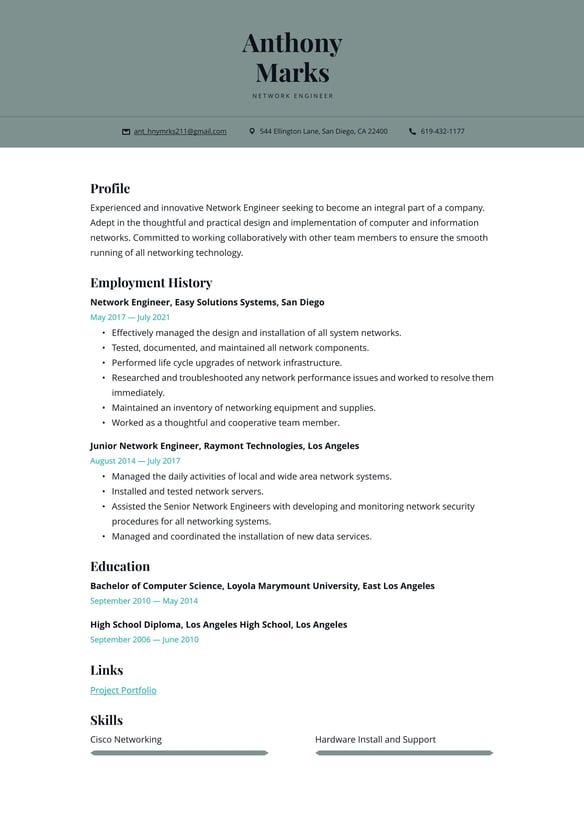
Crafted for Network Engineers, this sleek, tech-forward layout highlights your expertise in Cisco networking, LAN switching, and problem-solving. Its clean structure and modern design showcase your technical skills and teamwork for hiring managers in IT-driven environments.
Technical Project Manager resume example
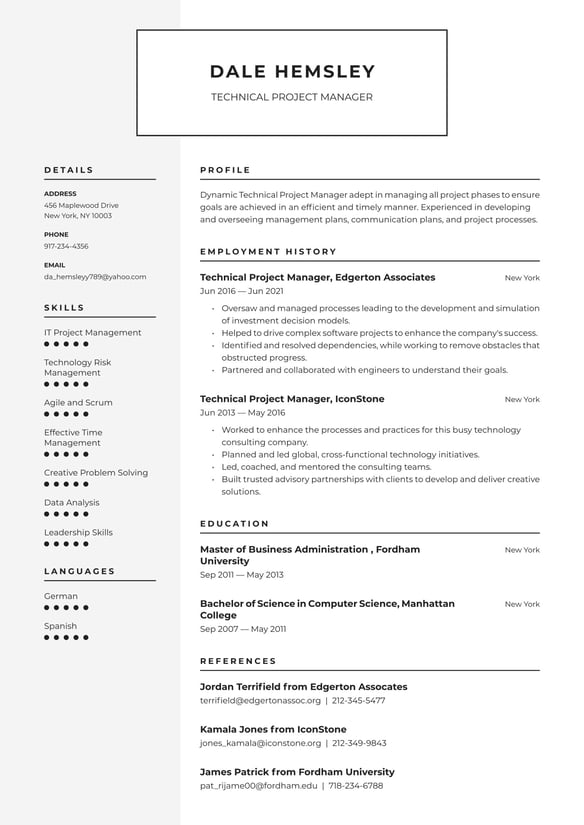
Focused on clean lines and a structured layout, this template highlights your leadership and technical expertise as a Technical Project Manager. Its balanced design emphasizes key achievements, helping you connect with decision-makers in tech-driven environments.
Systems Analyst resume example
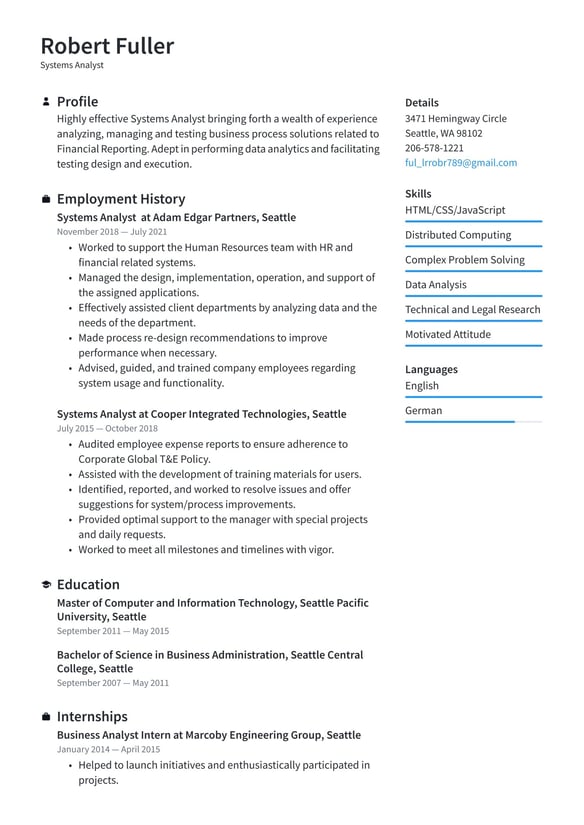
Tuned for precision and clarity, this template’s clean, structured layout highlights your analytical expertise and technical skills, perfectly aligning with Systems Analyst roles. Its balanced design showcases your problem-solving abilities for decision-makers at a glance.
IT Specialist resume example
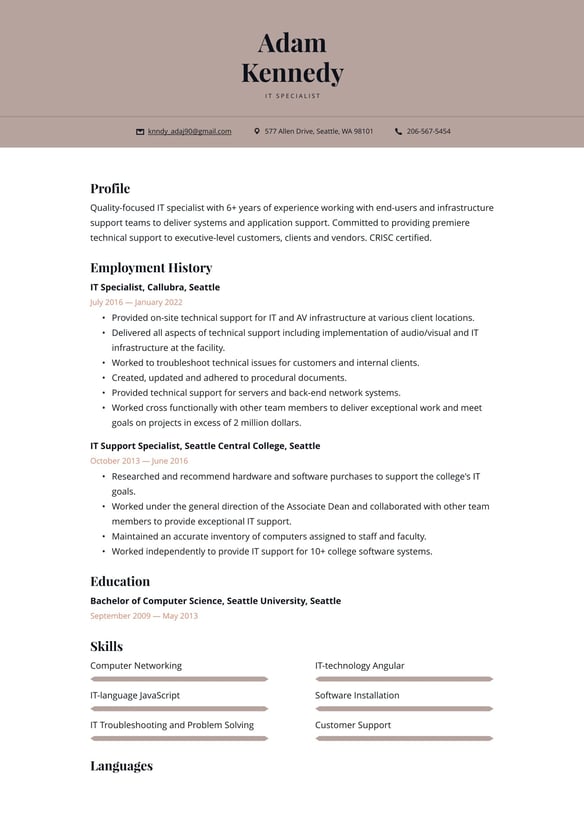
Aligned with the precision and structure IT roles demand, this template’s clean layout spotlights your technical expertise and certifications. Its modern design highlights problem-solving skills, ensuring your qualifications resonate with tech-driven employers.
Cyber Security resume example
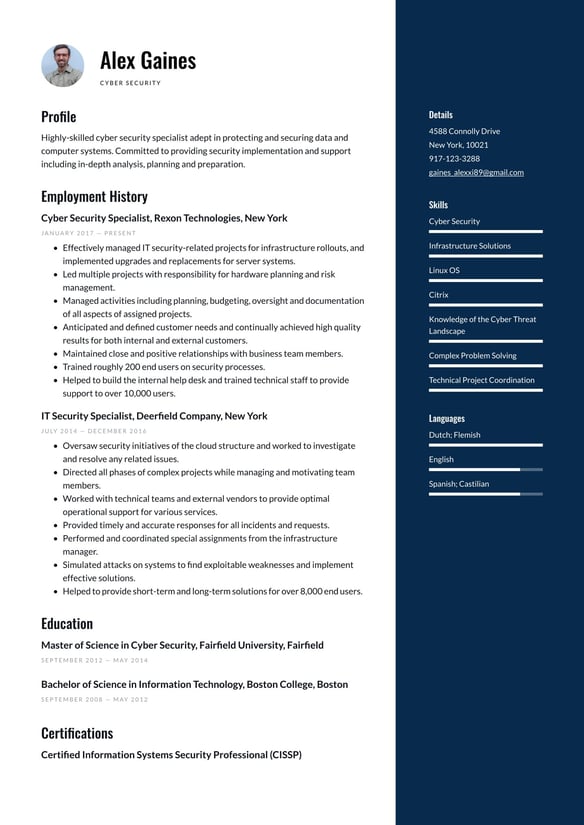
Aligned with the precision and structure demanded in cyber security, this sleek, modern template spotlights your technical expertise and leadership. Its clean layout and bold headers emphasize skills and achievements, impressing tech-savvy recruiters and decision-makers.
Data Engineer resume example
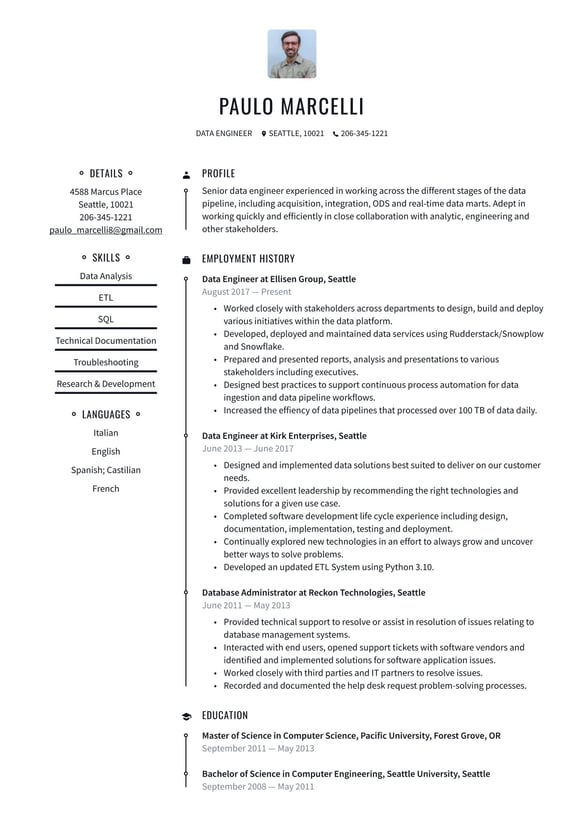
Focused on clean, structured layouts that highlight technical expertise, this template empowers data engineers to showcase complex skills like ETL, SQL, and pipeline optimization. Its modern design ensures clarity and impact for technical audiences.
Systems Engineer resume example
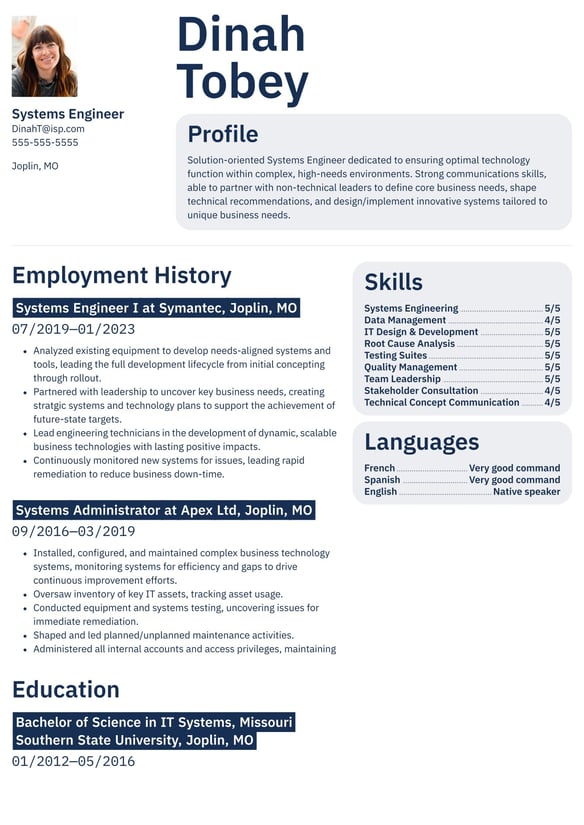
Ready-made for showcasing technical precision and strategic problem-solving, this clean, modern layout highlights your expertise as a Systems Engineer. Its structured sections and subtle accents emphasize your skills, leadership, and innovation for tech-driven audiences.
DevOps Engineer resume example
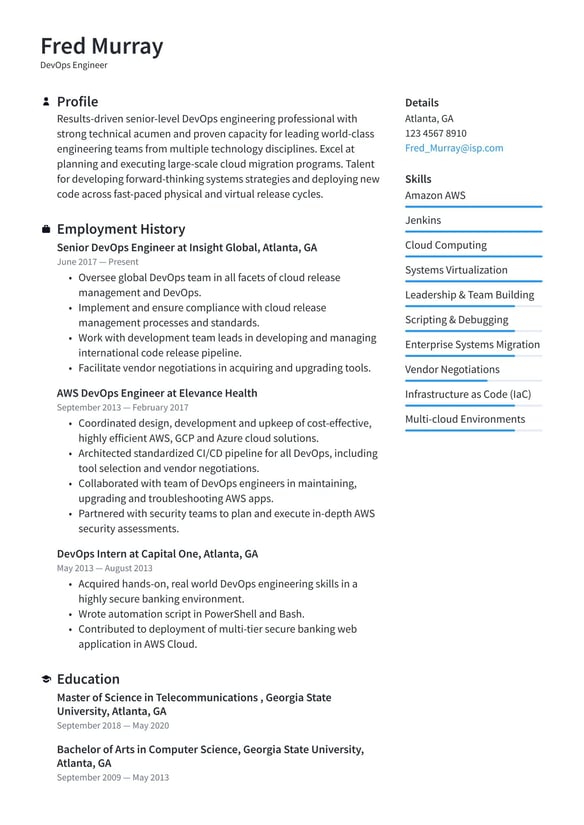
Structured for precision and adaptability, this template spotlights your technical expertise with a clean, modular layout tailored to DevOps Engineers. Its strategic formatting highlights cloud skills and leadership, empowering you to impress tech-driven teams.
But don’t worry. You don’t have to do it alone. At Resume.io, we have an online resume maker, free resume templates, and expert tips to help you create a resume that really stands out.
With about 15 minutes of your time, you will learn how to:
- Turn your style and achievements into a Profile that gets noticed
- Use your work experience to tell a story of success
- Improve your odds against Applicant Tracking Systems (ATS)
- Choose a resume template that complements your skills.
Let’s get you on your way to your next great job!
Profile Section Example
Your Profile is more than a recounting of your career. You can think of it as a high-level summary that puts a laser focus on your greatest achievement, but also gives recruiters an idea of who you are as an employee. It’s great that you can set up a computer network in no time, but employers also want to know if you will fit in with the team and the company’s culture. This is the only place in your resume where you can get a little creative with adjectives that describe your style, so make sure you do so.
This section should be about 100-200 words, depending on space and how rich your career history is (in terms of achievements, key skills and milestones). Make sure you mention any specialized knowledge you have as a programmer, systems analyst, or any other IT skill that the job listing mentions.
Clearly outline your greatest attributes, career accomplishments, and unique abilities as a Network Systems Analyst. You will have space within your cover letter to include additional information, but remember that hiring managers may make a decision about granting you an interview based on your resume first.
See example content for a Profile / Summary section below.
Highly skilled and dynamic Network Systems Analyst, bringing forth the ability to effectively manage and oversee optimal network services for organizations. Adept in setting up administrator and server accounts, and experienced in managing the functionality of systems. Resourceful, and committed to continually advancing my knowledge of relevant technologies.
Network Systems Analysts often have specialized knowledge in the IT field. See other IT professionals resumes here below and get inspired by them:
- Systems Analyst resume sample
- Technical Project Manager resume sample
- Computer Science resume sample
- Network Engineer resume sample
- IT Director resume sample
- Software Engineer resume sample
- Film and Video Editor resume sample
- Motion Graphics Artists resume sample
- 3D Animator resume sample
- Software Developer resume sample
- Web Developer resume sample
- Programmer resume sample
- Data Scientist resume sample
- IT manager resume sample
- Data Analyst resume sample
- IT Project manager resume sample
Employment History Example
Your Employment History section should make clear the growth you have made during your years of experience. Perhaps you started out working as technical support on a help desk and advanced to configuring local area networks or anticipating business needs and building out networks to meet those needs. Recruiters want to see that you have the ability to take on new challenges, so be sure you show that you have learned and grown on the job. That is why the reverse chronological order resume format works so well.
You should also highlight any computer knowledge you have of computer languages such as Linux or directory services such as Microsoft Active Directory. If you have worked as a programmer, name which languages and tell your level of skill in each. It is especially important to analyze each job listing and include the specific skills your prospective employer seeks. This will help you pass the ATS (which uses algorithms that include keywords and phrases) and it will show recruiters that you understand the requirements of the position.
Your goal in this section is to include as many of the skills the hiring manager wants, but also to show that you have the ability to manage the complex work of designing, maintaining, and repairing network systems. Use strong, active verbs. For example:
Say: Developed and implemented process improvements with input from key network operations team members
Say: Made process improvements
Be sure you name the systems, software, hardware, and languages you are adept at using. List only your professional experience. If you do work related to network systems analysis outside your formal job, you may consider adding a section for Special Experience.
Check out the Employment History resume sample content below.
- Maintained optimal network performance and connectivity by performing network monitoring and analysis.
- Ensured network security by developing network access, monitoring, control, and performing evaluations on firewalls.
- Worked to maintain the confidentiality of end-user information and network data.
- Performed troubleshooting to system failures and worked to find long-lasting solutions to improve functionality.
- Tested and accurately configured software and maintained high functioning hardware.
Education Section Sample
Employers typically look for network systems analysts who have at least a bachelor’s degree in computer science, programming, information systems, or a related field. Some jobs may require a higher degree such as an MBA. That’s because you may at times be asked to function as a business analyst giving advice on what enhancements to the network would best meet business requirements.
This section is a simple listing of your degrees, but as an IT professional, you may have completed Microsoft, Oracle, or other certification programs. You can list those here or create a separate Certifications section if you have space and more than one or two. If you hold a degree higher than a bachelor’s degree, you may leave out your high school.
Here is an example of an Education Section format.
- 2003-2007 NYU, Bachelor of Computer Information Systems NY, NY
- 1999-2003 Staples High School, High School Diploma Westport CT
Skills Section Example
Recruiters are busy people, so it is important to create a Skills Section that allows them to quickly scan to see that you are a great match for their job. Your technical skills should be emphasized, but you should also include soft skills or the problem-solving and interpersonal skills that help you understand business needs.
You may choose to create categories for software, hardware, and soft skills so recruiters can easily see if you are an HTML or javascript expert, or have experience with IOS or PC operating systems. Make sure you include all the skills you have that are listed in the job description. That means you will have to customize your systems analyst resume for every job.
See example content below.
- Knowledgeable about Hardware, Software, and Programming
- Advanced Project Management Skills
- Strong Data Analysis Skills
- Complex Problem-Solving Skills
- Dedicated Team Player
Resume Design and Layout
The way your resume looks may be as important as what you say. That’s because it offers hiring managers their first visual impression of you. Are you organized? Precise? If your design is too busy or crammed with text, they are unlikely to think so.
Just as you want to configure network systems in streamlined ways, you want to keep the look of your resume streamlined. Recruiters will be quickly scanning for your contact information, current and last job, job titles, and your employers, and the skills they seek, and your job is to make it as simple for them as possible. Keep your section headings obvious so all your information is easy to find.
We take the guesswork out of the process for you with our resume layout templates. Try our Professional or Simple categories with cover letter templates to match.
One last piece of advice: Always have someone else proofreader. You’re in a career that requires precision, so errors could cost you that coveted interview.
You’re ready to use your analytic skills to target your dream job, so get started now!