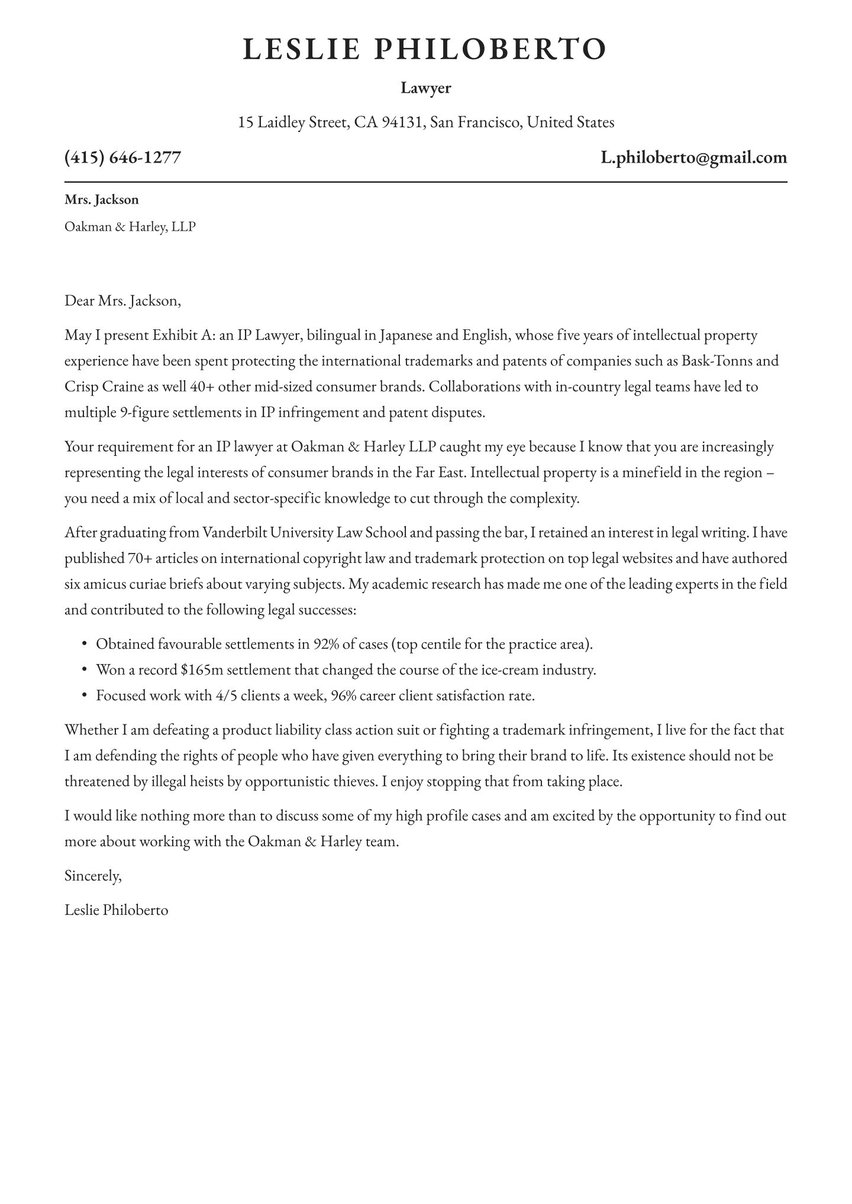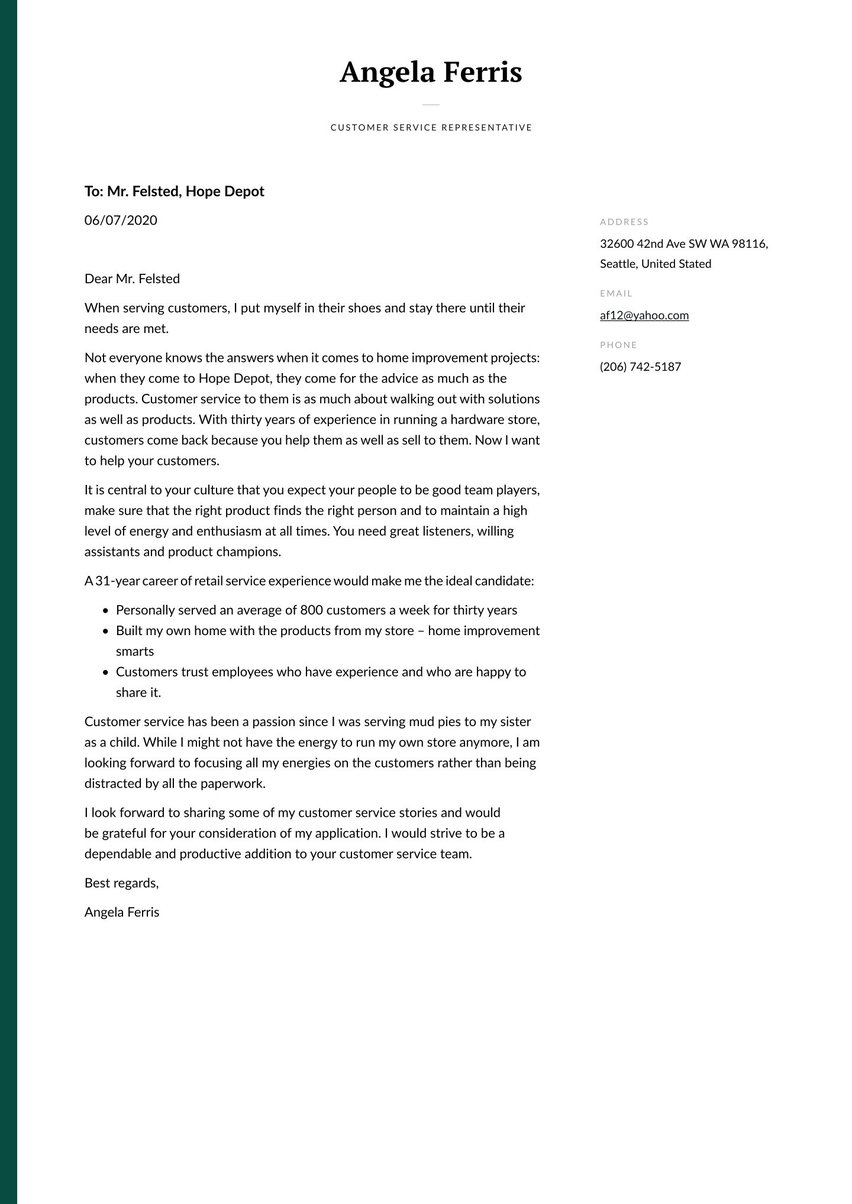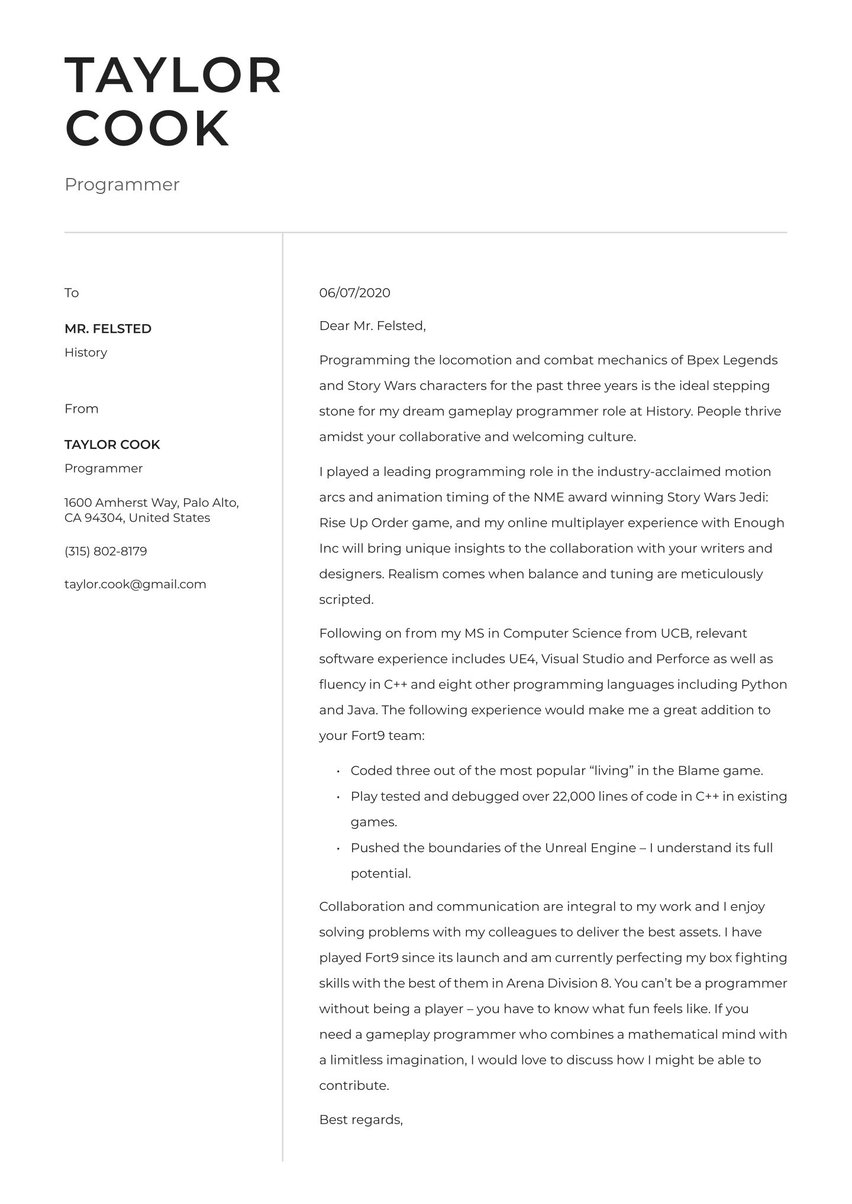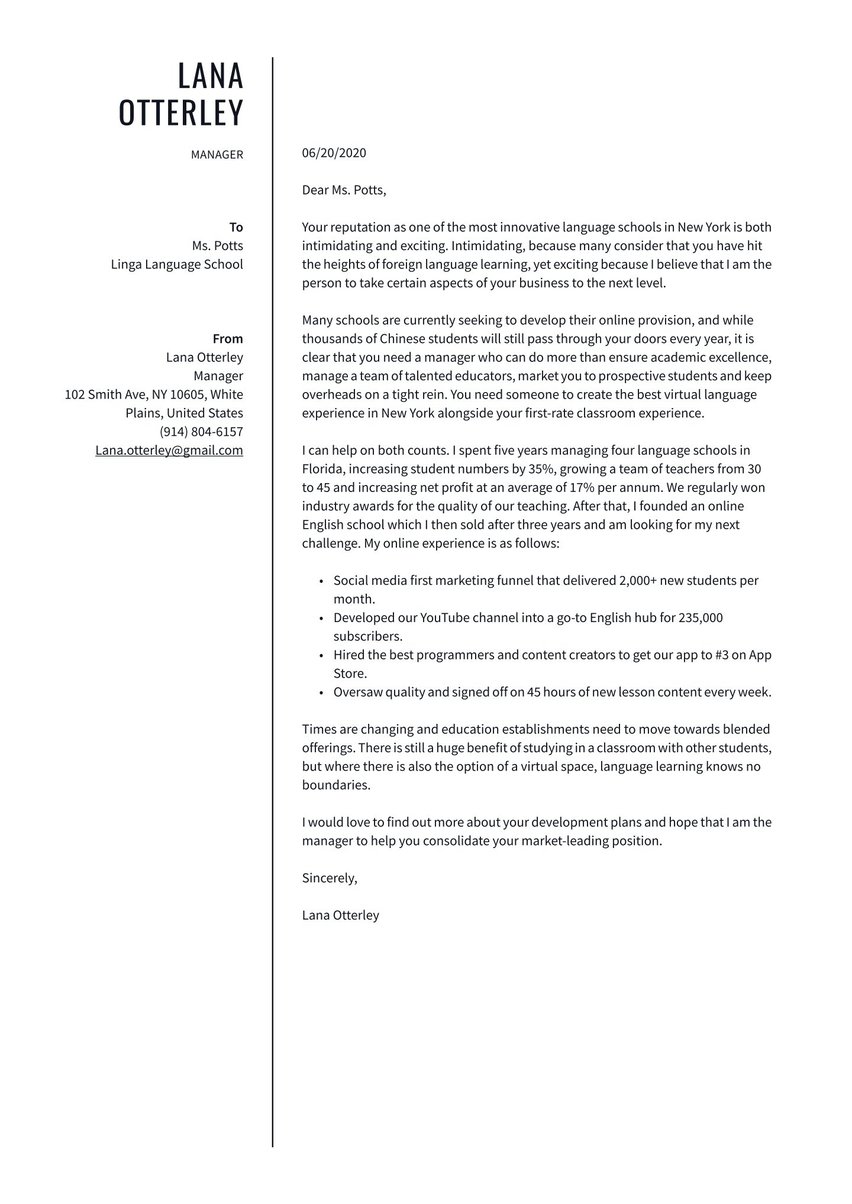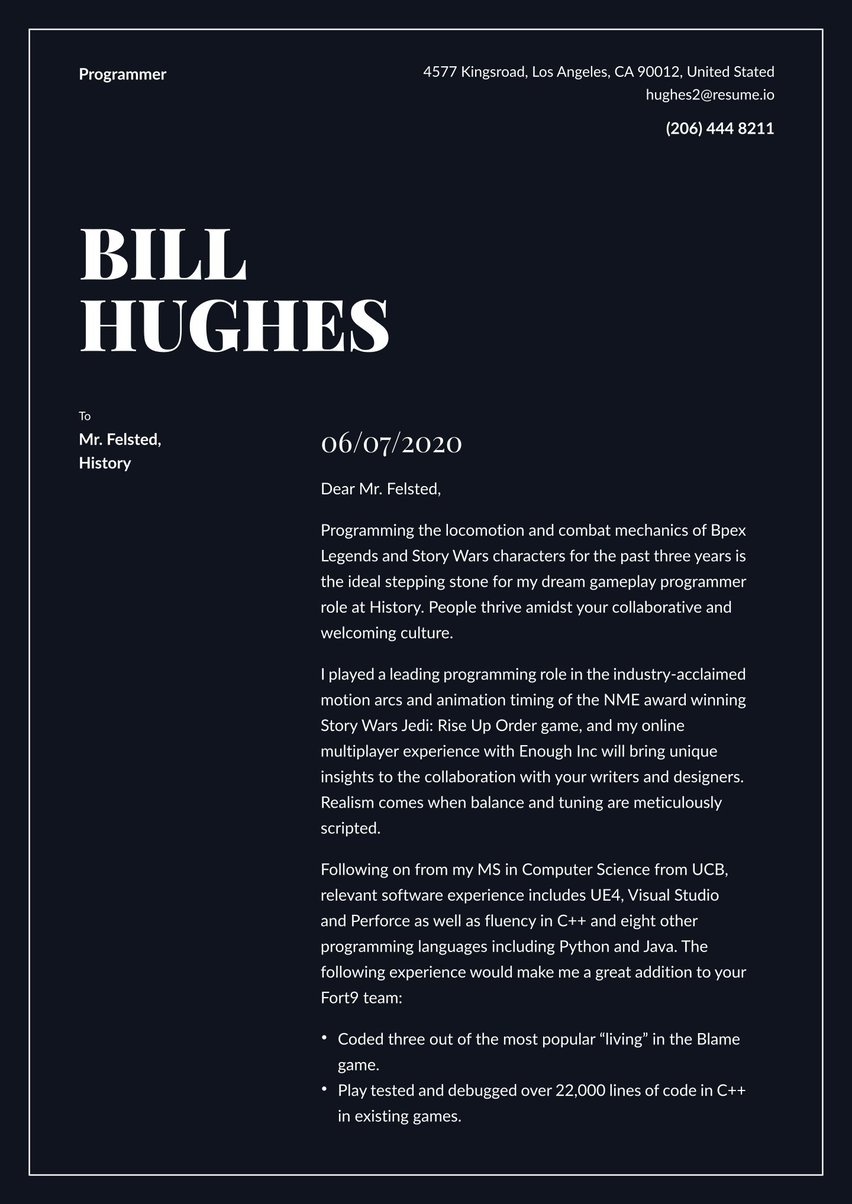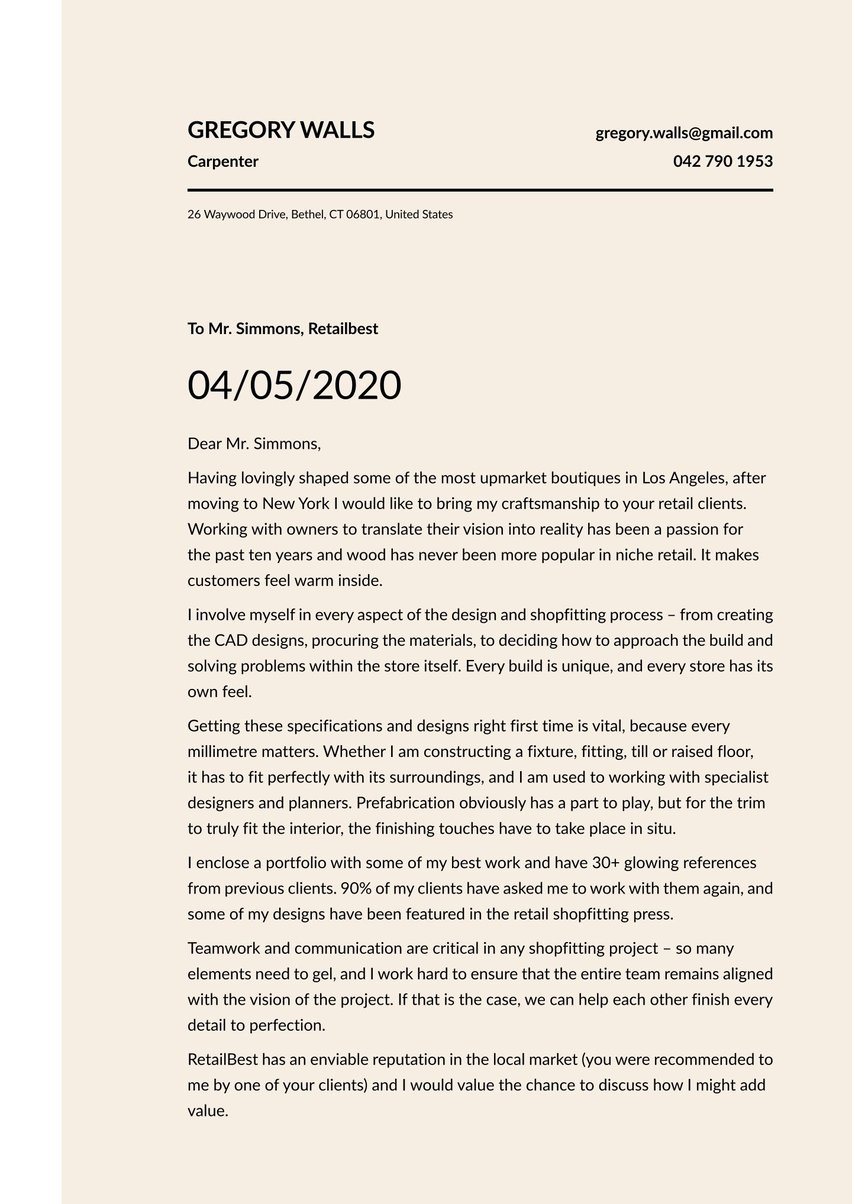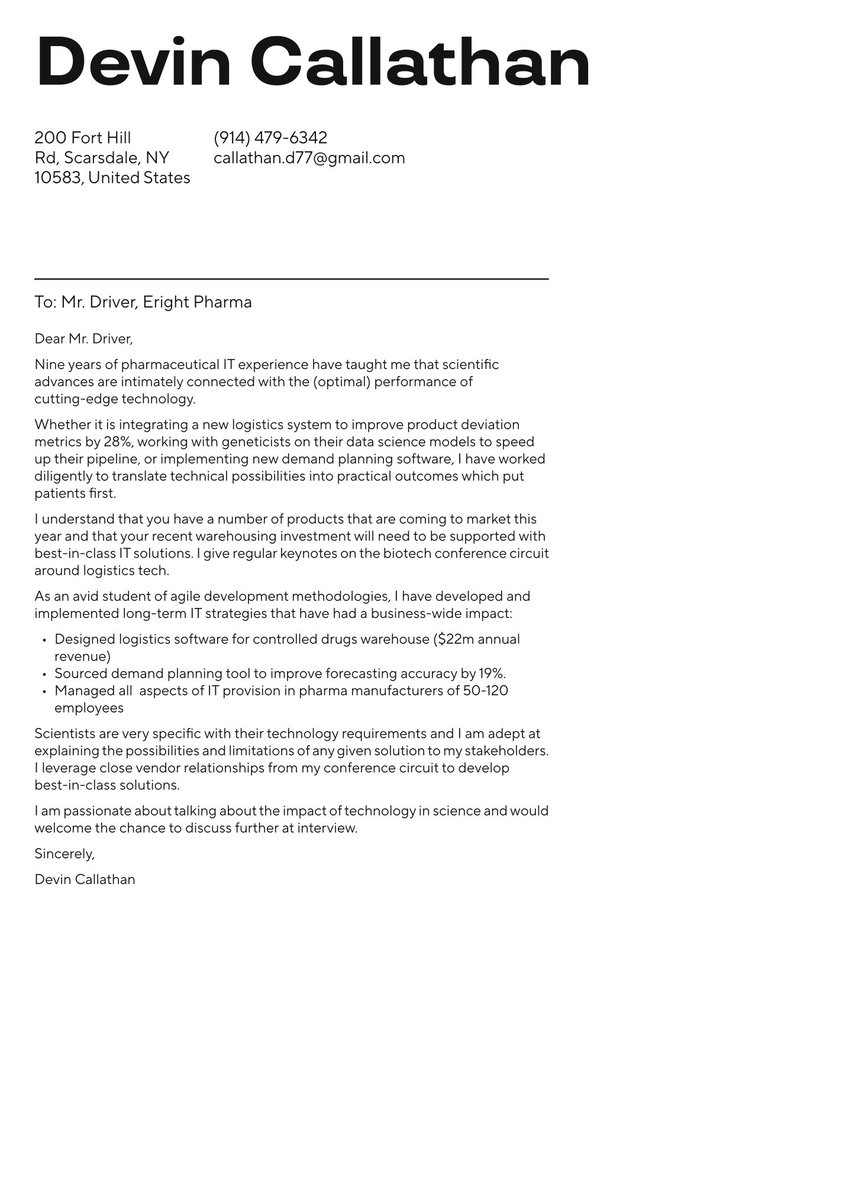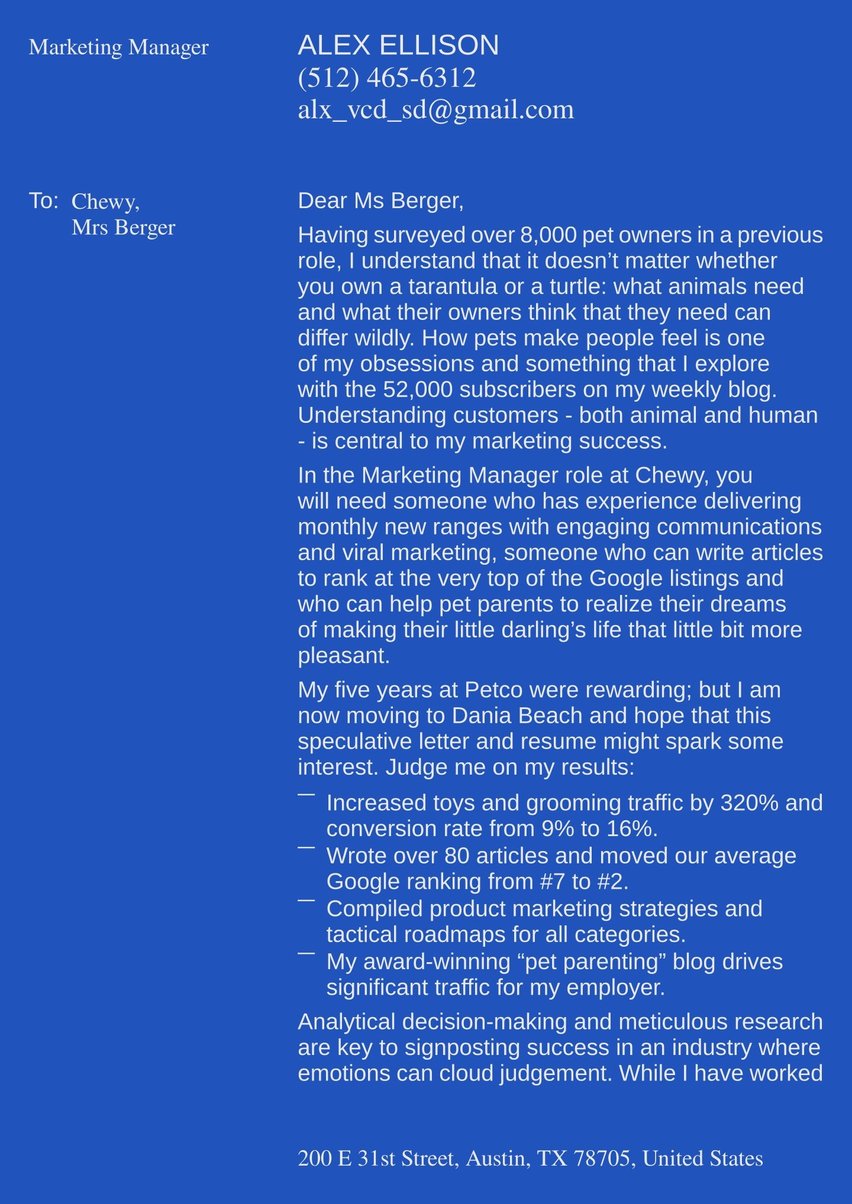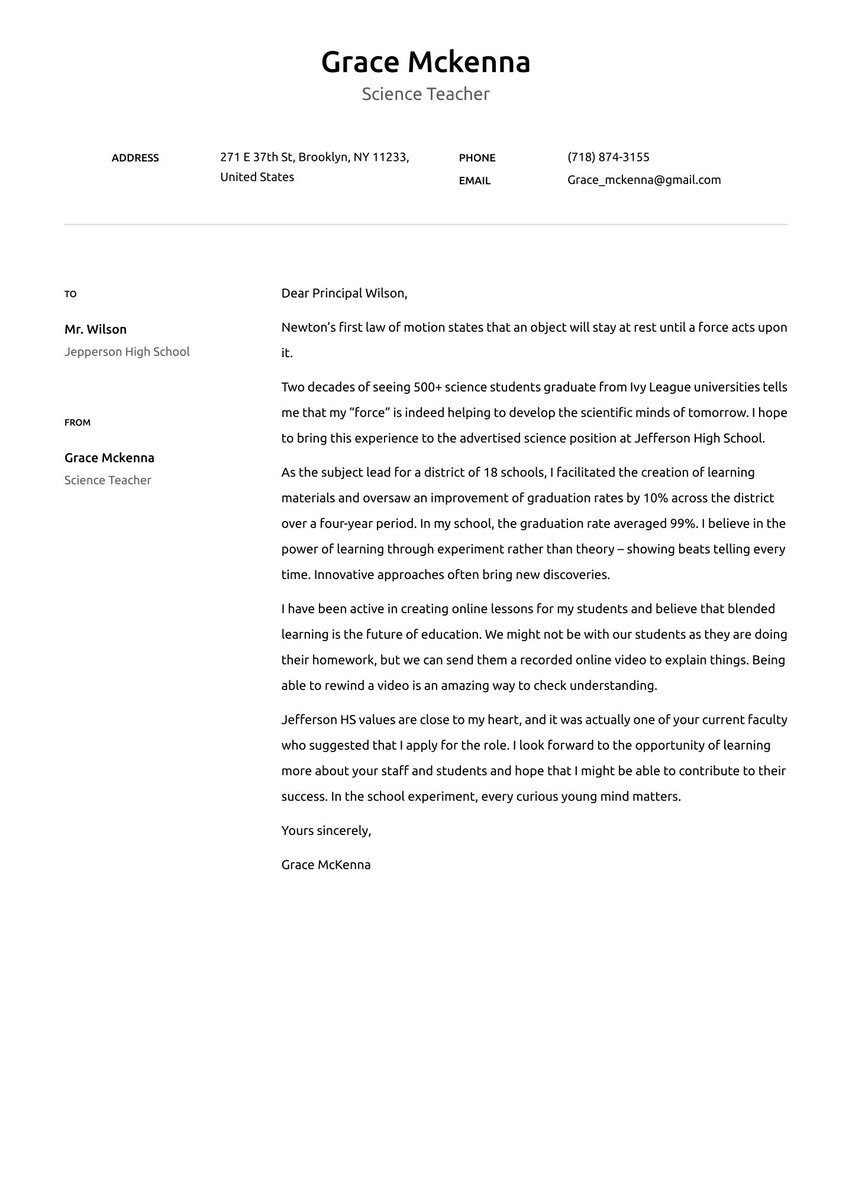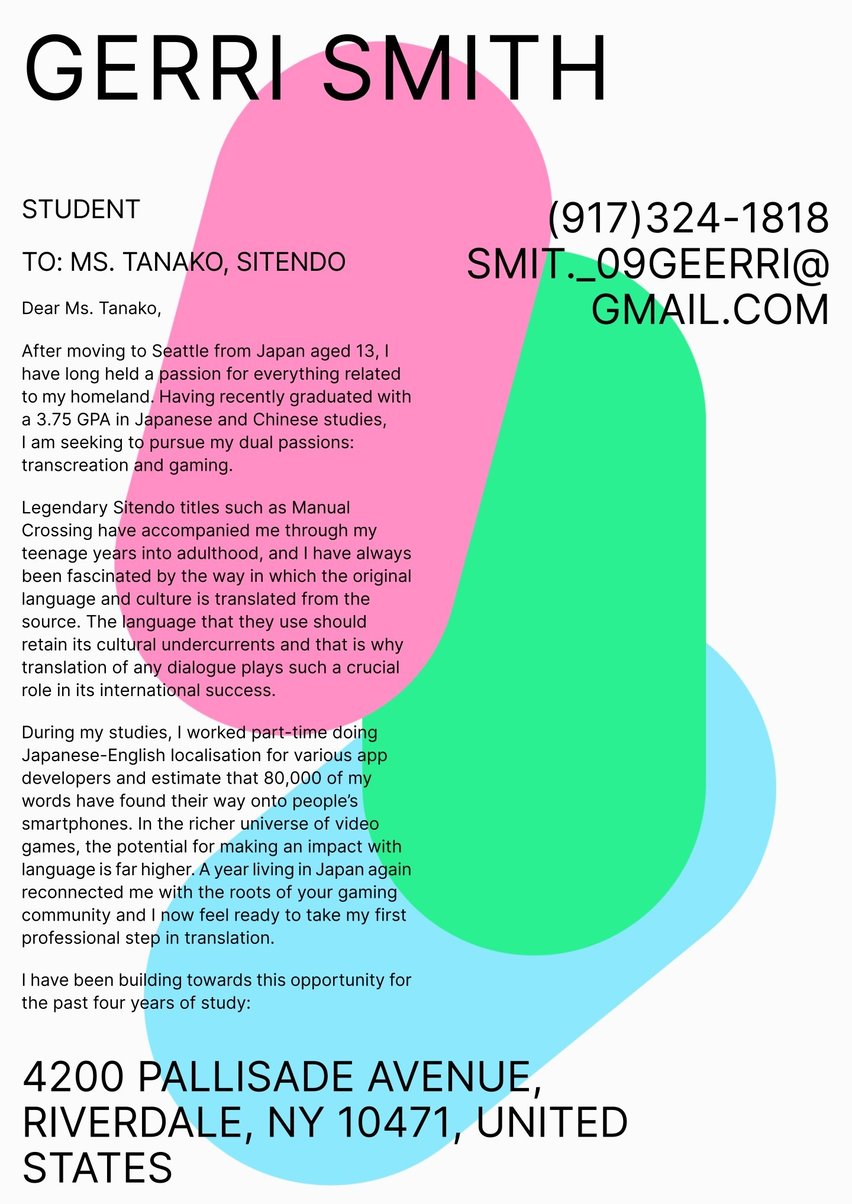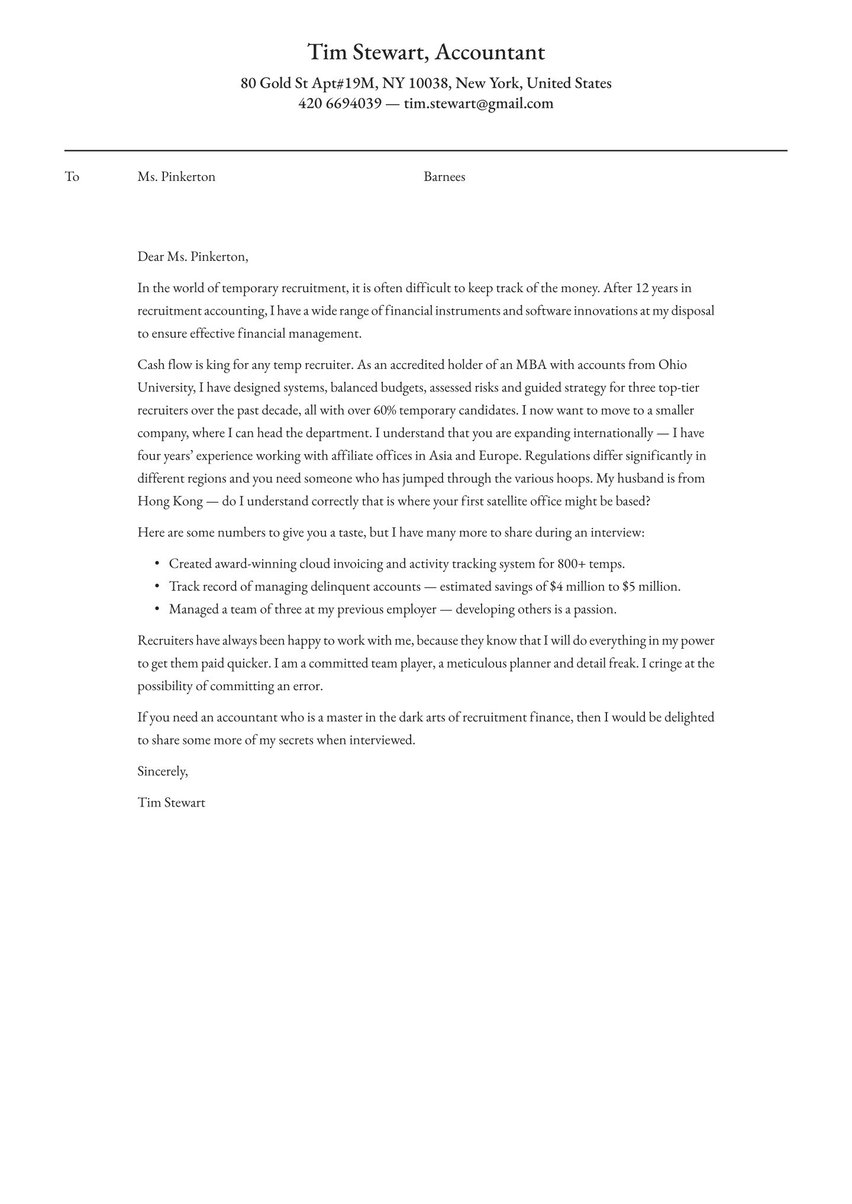


Jobs for lawyers are growing and are likely to keep growing, but that doesn’t mean they’re easy to get. To rise above the intense competition for desirable positions, you’ll need an outstanding lawyer cover letter, in addition to your resume, showcasing your job experience, skills and other qualifications.
Related Cover Letter Examples
Paralegal cover letter example
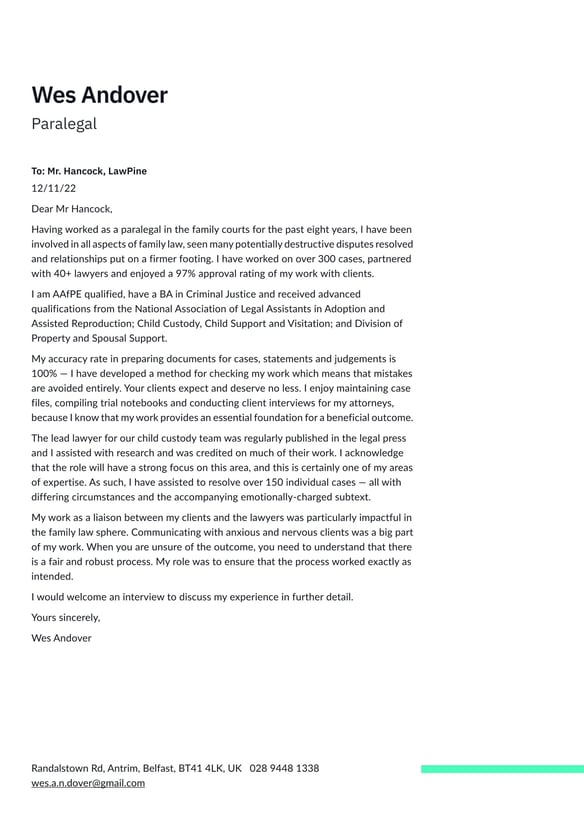
Tailored for paralegal roles, this clean, professional template emphasizes precision and clarity. Its structured layout and ample white space highlight your expertise and attention to detail, resonating with legal professionals and hiring managers alike.
Legal Assistant cover letter example
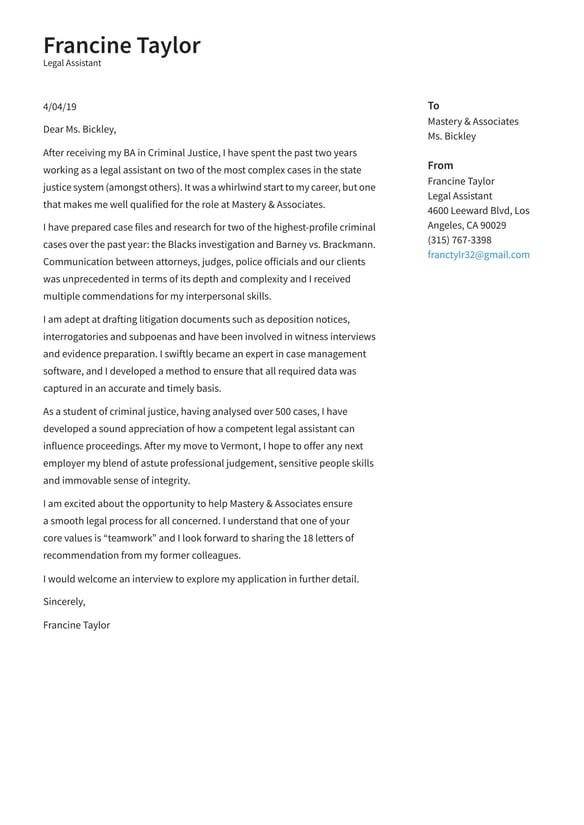
This clean, professional template mirrors the precision and structure valued in legal assistant roles. Its balanced white space and polished header styling emphasize clarity, helping you showcase your organizational skills and attention to detail to hiring attorneys.
Attorney cover letter example
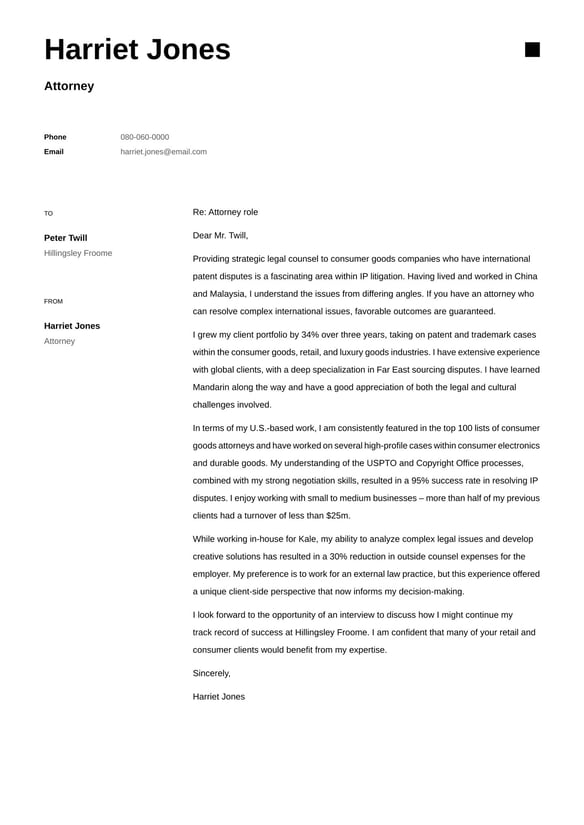
This clean, professional template mirrors the precision and structure expected in attorney roles. Its balanced white space and clear header styling amplify your expertise, showcasing your legal acumen and strategic thinking to discerning law firms.
At resume.io, we specialize in providing templates for both resumes and cover letters, as well as occupation-specific guidance on how to prepare them properly.
For the resume, consult our step-by-step resume guide for lawyers. The guide you’re reading now will address the special considerations of writing a winning cover letter to send with that resume.
What this guide will address:
- Why a cover letter is a critical part of a job application
- How a cover letter should be structured
- How a cover letter should be designed
In the United States, there were 1.35 million active lawyers as of 2019, according to the American Bar Association. Lawyers earned a median salary of $122,960 in 2019, according to the Bureau of Labor Statistics. And job growth of 4% is expected from 2019 through 2029 in the U.S., which leads the world by far in the number of lawyers.
Yet despite this bounty of jobs, the BLS says the job market for lawyers remains highly competitive because every year there are more new law school graduates than lawyer jobs.
Why a lawyer needs a cover letter
Although your resume should cover your job experience, education and other qualifications for the job, a cover letter is important because it establishes a personal connection to a hiring manager. Your resume may end up in a stack of others, but the cover letter is your way of introducing yourself and making a positive first impression on a person who has the power to offer you a job.
And while a resume can be a bit cold and impersonal, a cover letter allows you to showcase your personality, passion and likability. Surveys have shown that the failure to include a cover letter is one of the top reasons resumes are rejected. Always include a cover letter unless you’re specifically asked not to.
Best format for a cover letter example
In most cases, a cover letter should be one page, a maximum of 400 words, structured as follows:
- Header
- Greeting
- Introduction
- Body
- Conclusion
- Signature
Cover letter header
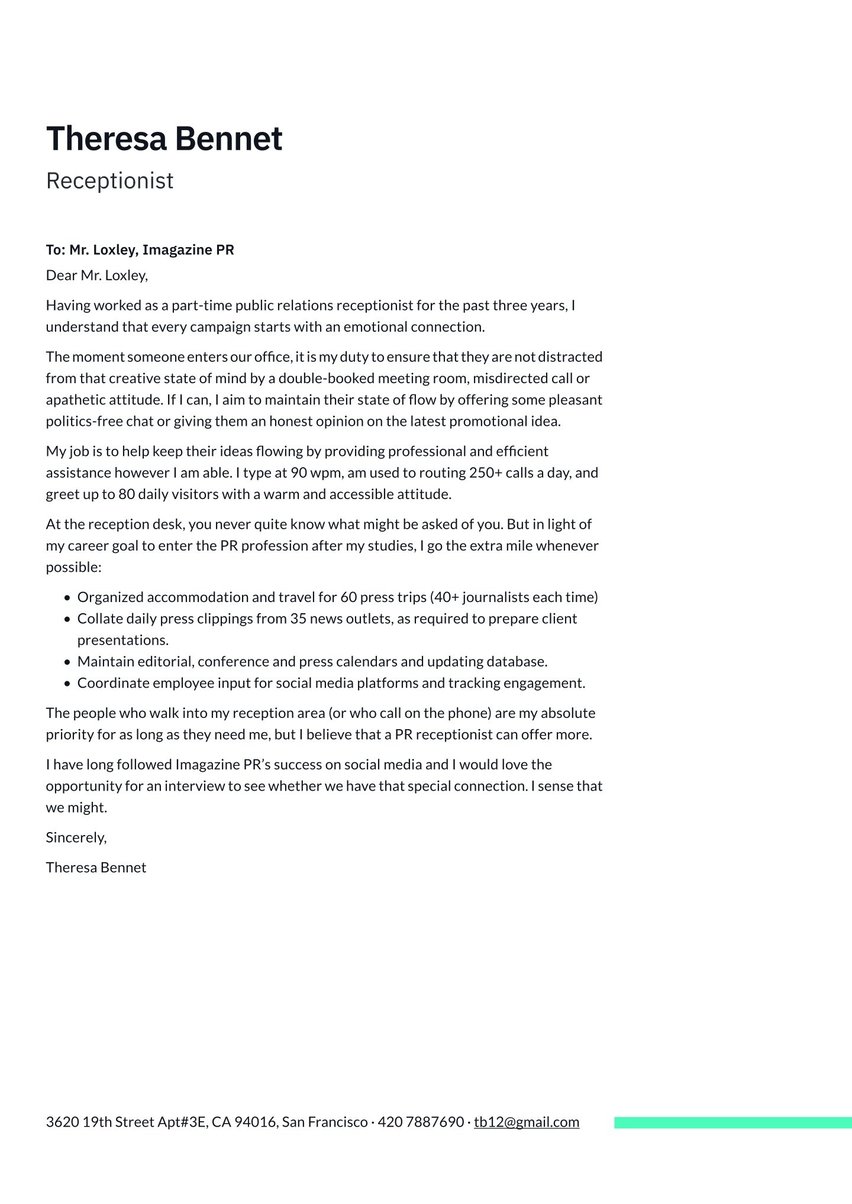
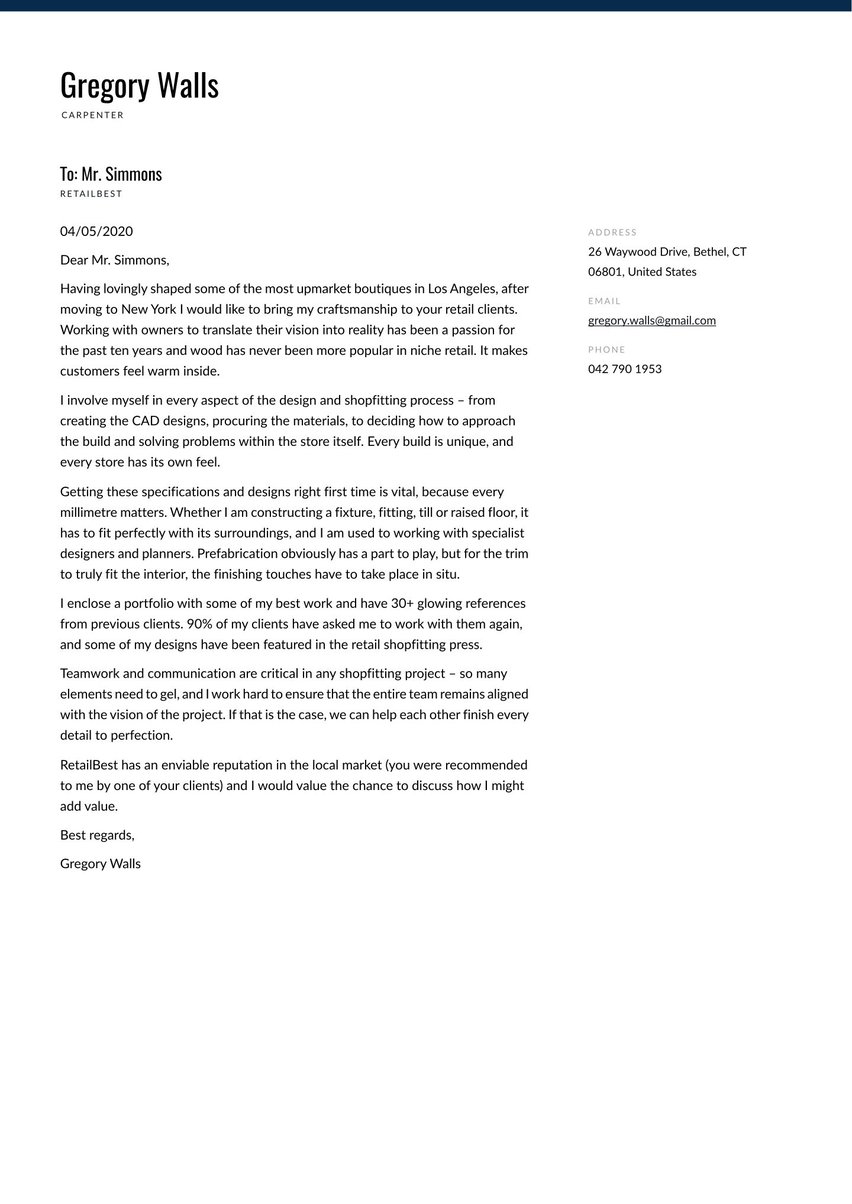
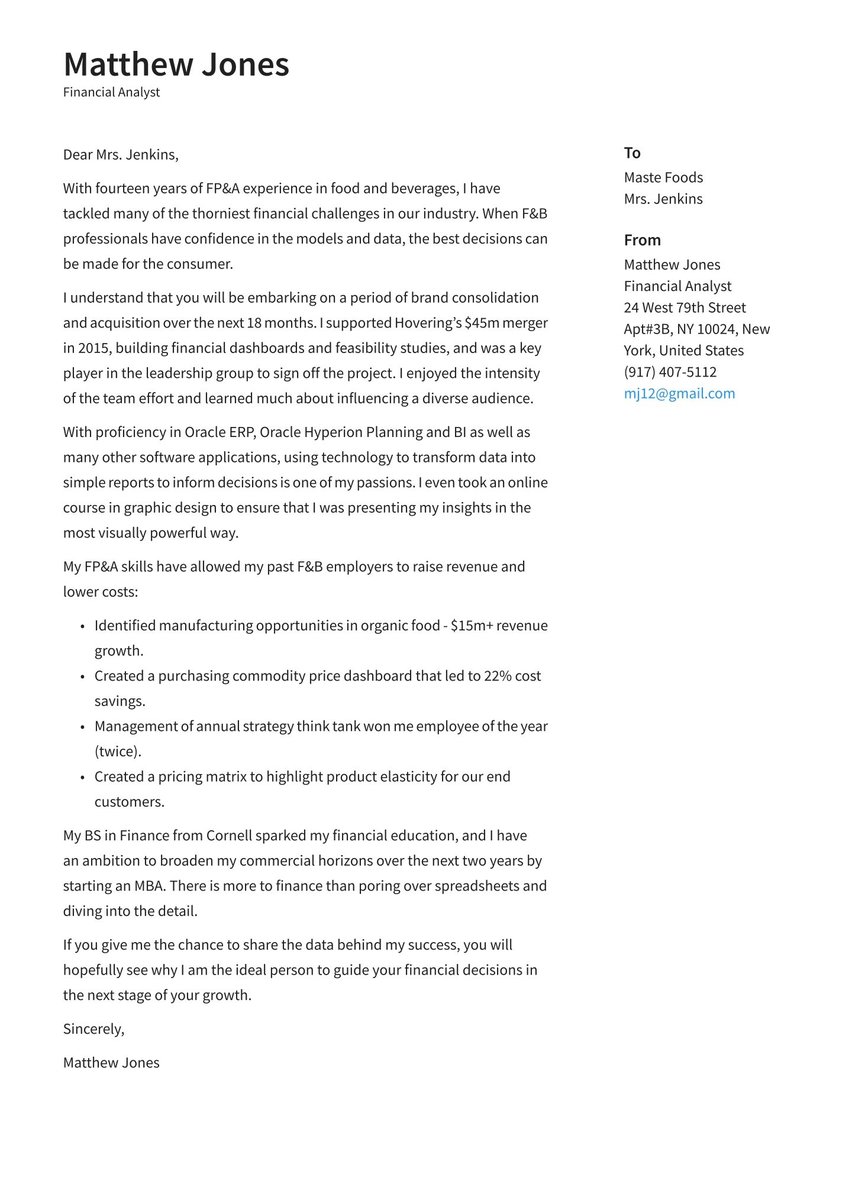
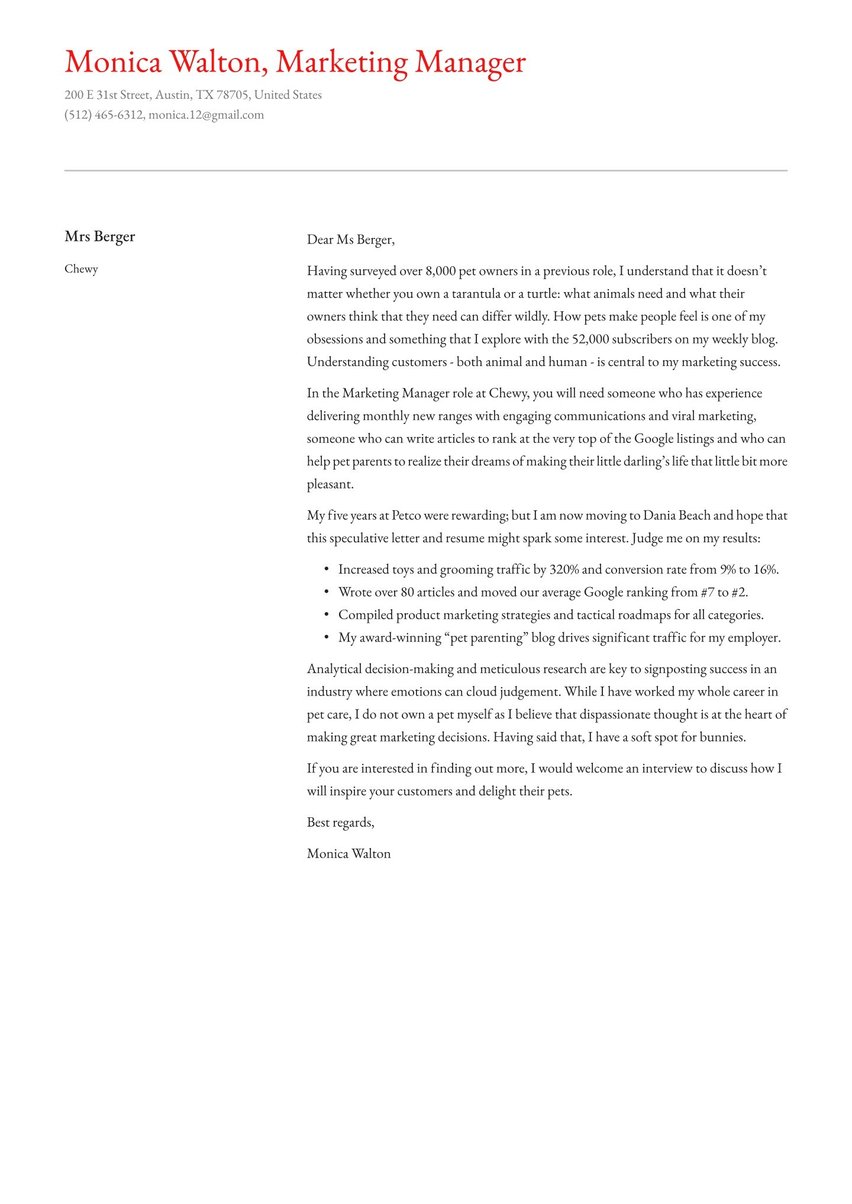
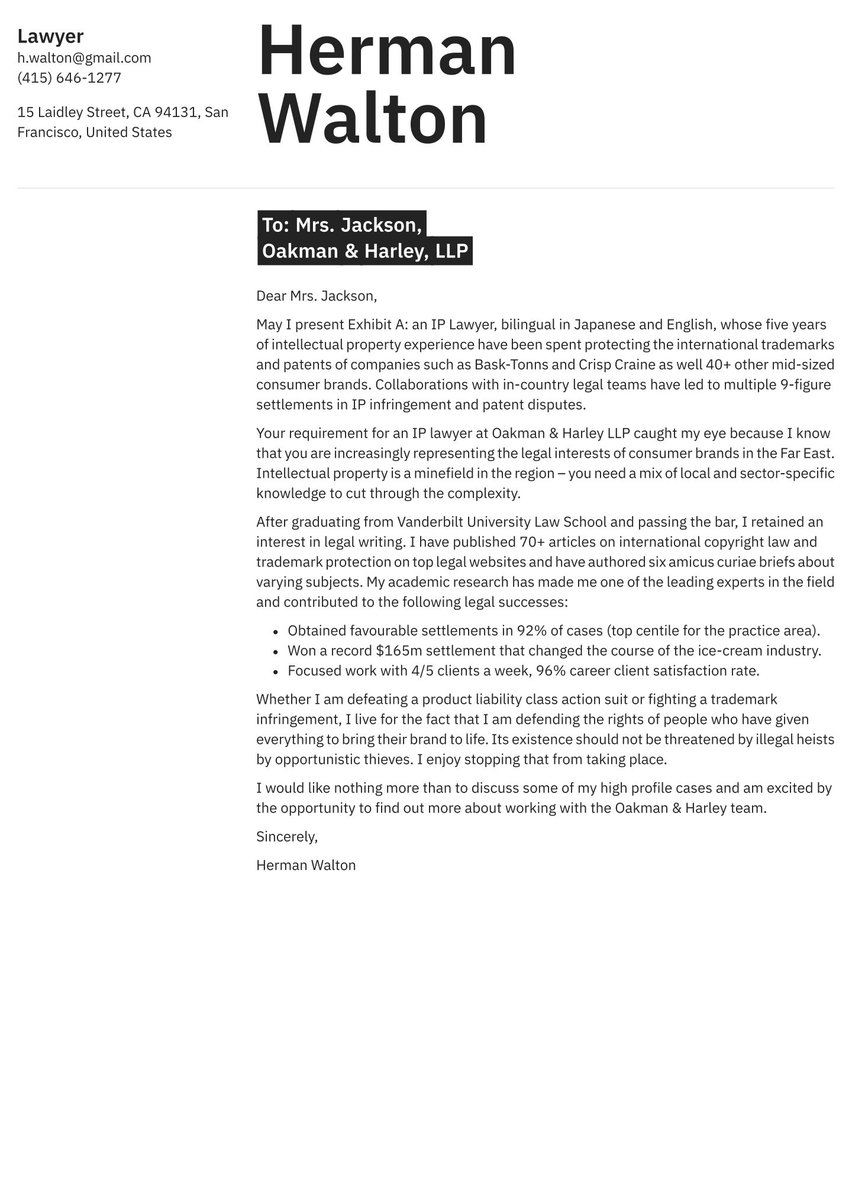
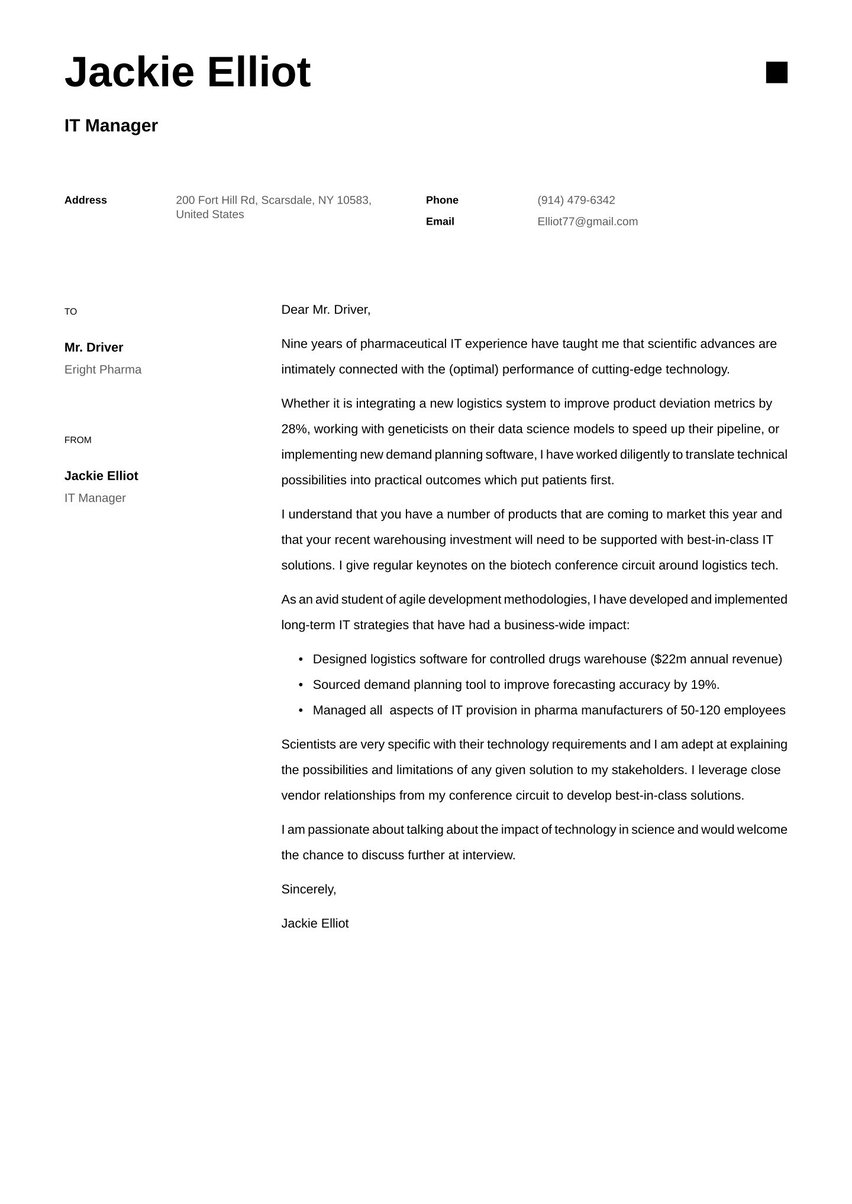
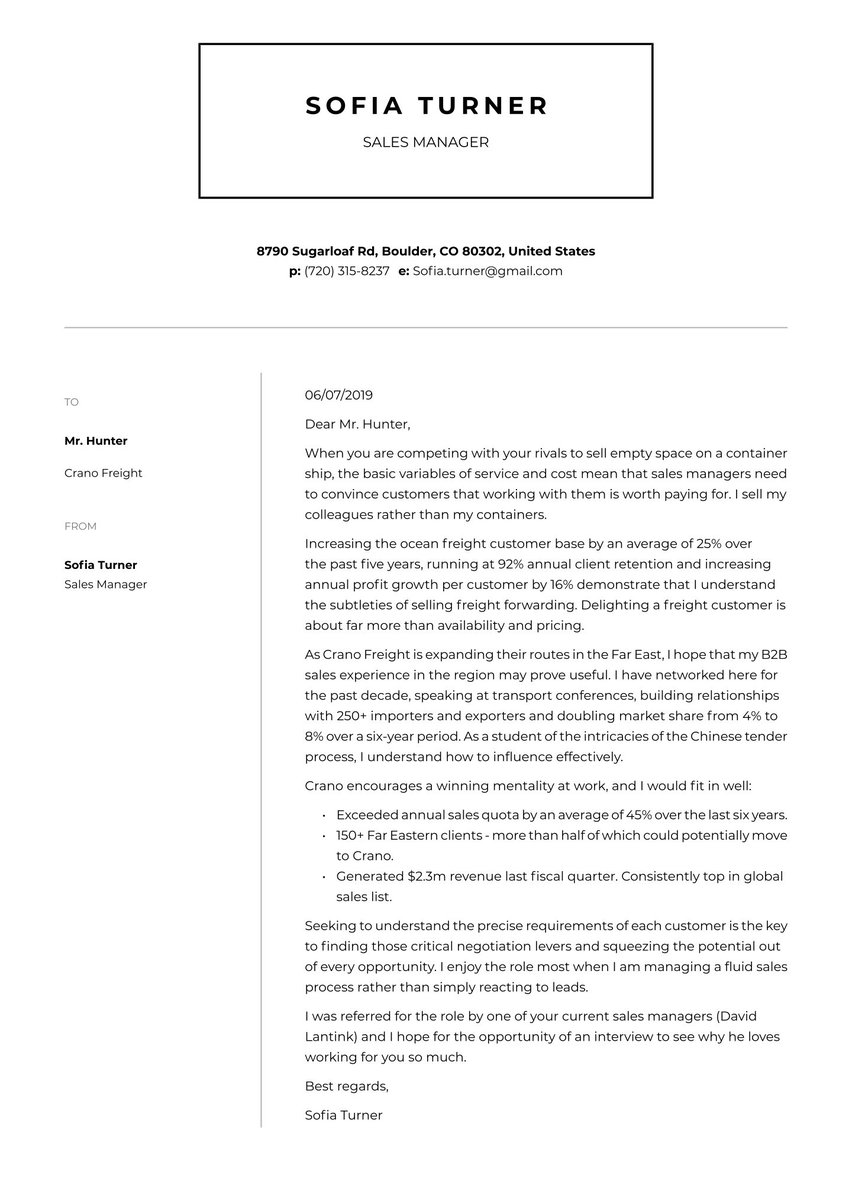
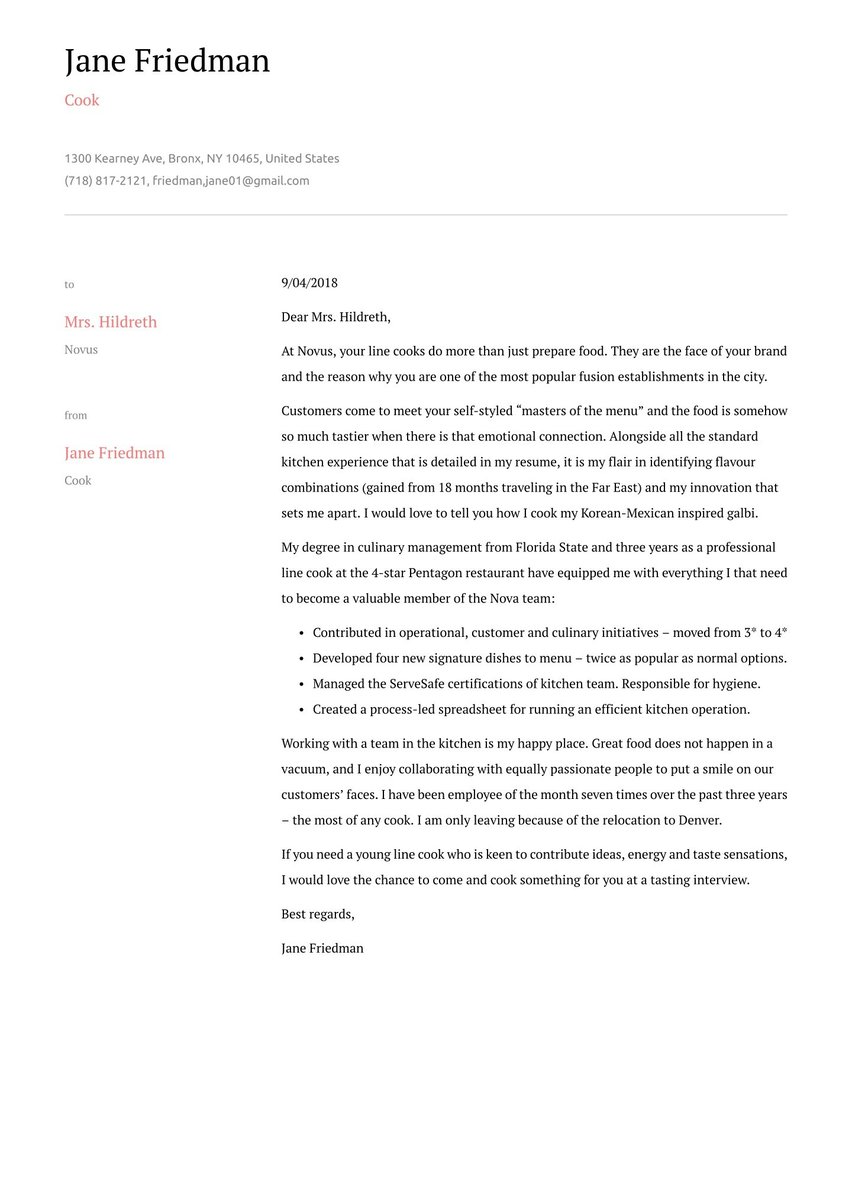
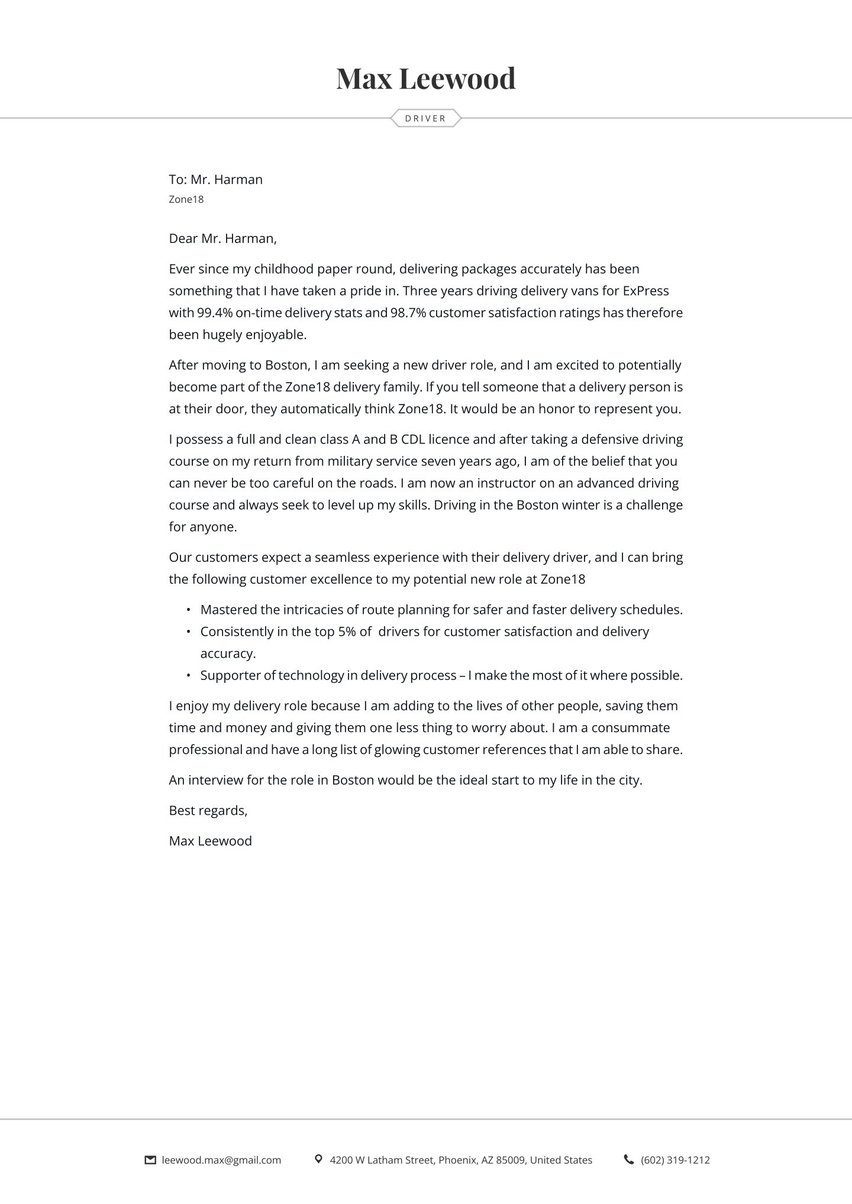
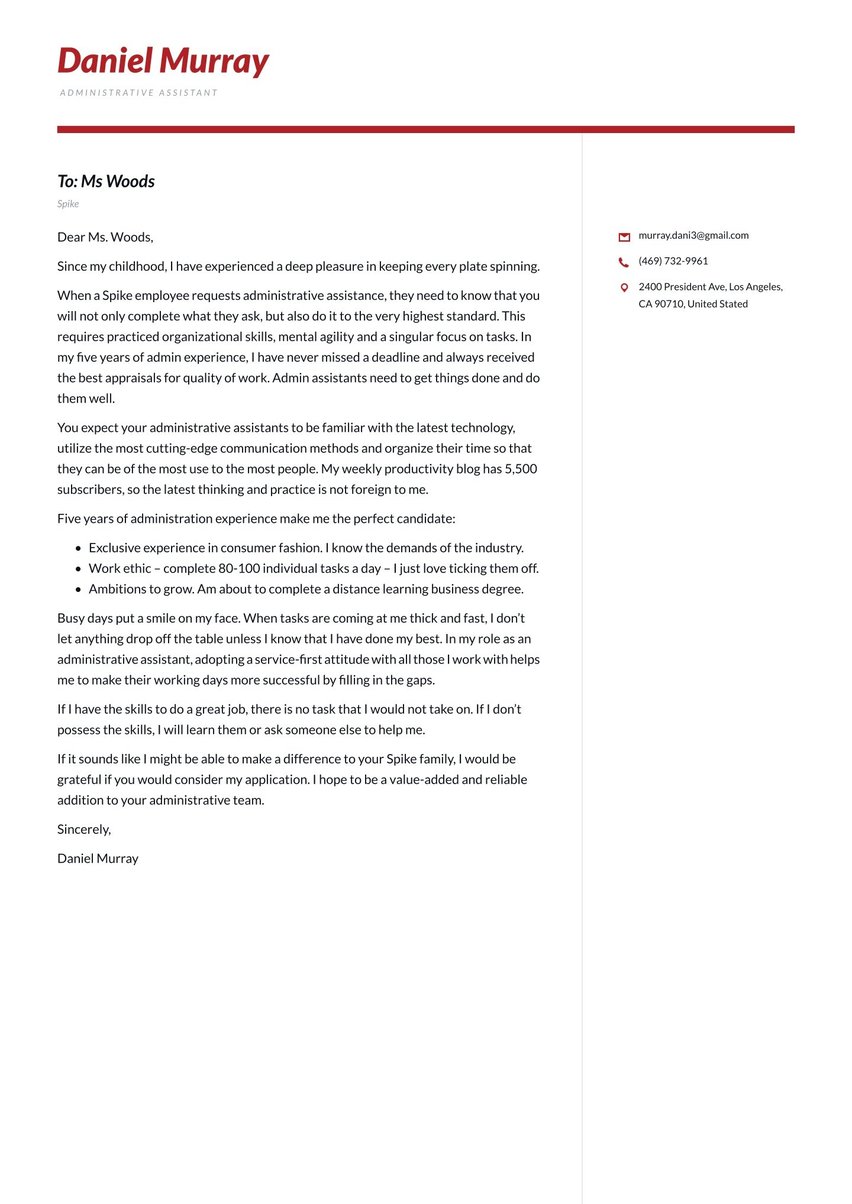
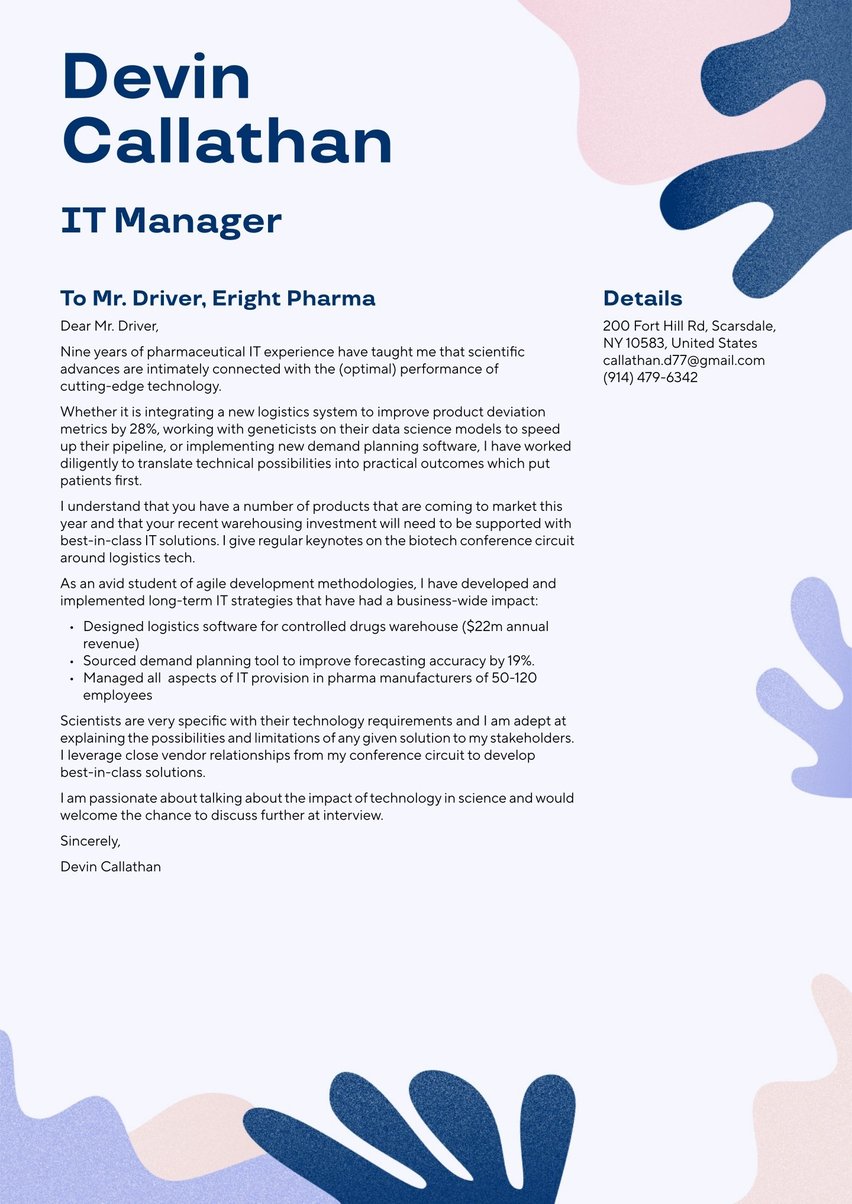
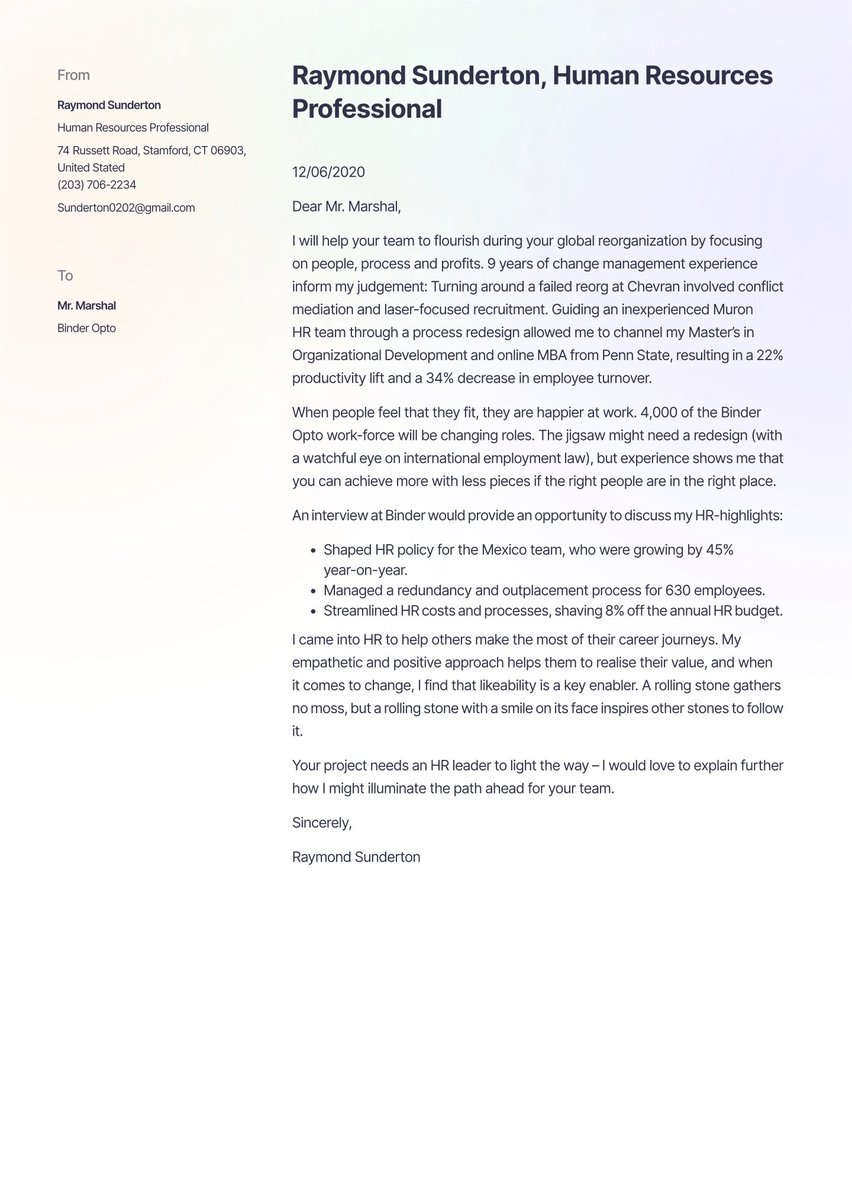
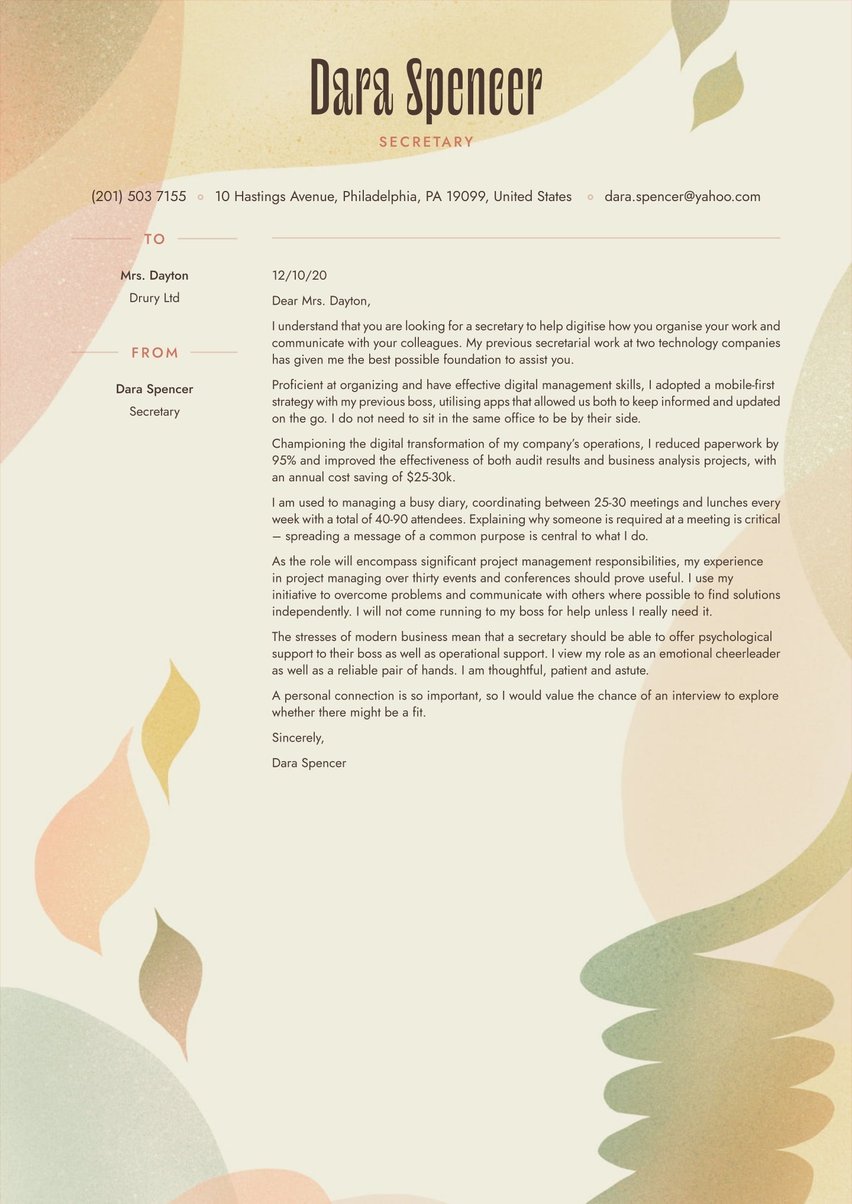
The header contains your name, occupation, address, phone number and email. The header also serves as an eye-pleasing design element on the page, allowing for an appropriate use of white space and perhaps a splash of color. To see some examples of good headers, go to resume.io and review the free cover letter templates.
Align document styles
A resume and cover letter are a matching set, so it’s important to use the same fonts, font sizes and formatting styles in both. The header on the two should also match, so that a recruiter can see at a glance that these two documents came from the same person.
A jumble of different fonts and styles creates an unattractive, disorganized appearance. Demonstrate your attention to detail by developing a cohesive style.
Goal of the cover letter header: Readily identify the cover letter as belonging to you in a visually impressive manner that reflects your regard for detail and professionalism.
Cover letter greeting
“Dear Mr. (or Ms.) (Last Name):” is the traditional, time-honored greeting in any business letter, and you can’t go wrong with this proven formula. Avoid using a hiring manager’s first name unless you already know this person.
Law is one of the most formal of professions, so beware of being too familiar here or anywhere in your letter. You do want your letter to be written with a personal touch, but you don’t want it to be too casual or laid-back.
Always endeavor to address your letter to a specific person, whoever is responsible for hiring at the firm you are targeting. If a job listing doesn’t provide the name of a contact, consider calling the company to find out. It shows good initiative on your part if you’ve done your homework and found out who you need to be talking to.
Goal of the cover letter greeting: Start the cover letter off on a professional note by making an immediate, direct connection with the law firm recruiter.
Cover letter introduction
In energetic, provocative language, your opening paragraph should both identify the job you’re seeking and provide a preview of your qualifications. It should get readers’ attention and make them want to read on.
You need to find the right tone of voice, one that is professional yet lively, never bland or boring. Steer clear of hackneyed phrases, HR-speak and fluff. Think of the introduction like the opening statement in a trial — you want the jury to be riveted.
Goal of the cover letter introduction: instantly stand out from the crowd of other job candidates by owning your opening message and language.
Cover letter middle part (body)
The body of your letter is where you must make the case that you are eminently qualified for this job. If you have years of experience in law, that would be the first thing to mention.
Your resume should already mention your past jobs, with bullet points highlighting your achievements at those jobs. But your cover letter allows you to expand on this, for example by relating an anecdote about a major job challenge you once faced and how you surmounted it. Be specific about your job-related accomplishments, and use facts and figures wherever possible.
If you’re just finishing law school and your work experience is thin, mention any internships or legal volunteer work you’ve done. Emphasize your academic experience, your involvement in mock trial or anything else that portrays you as a strong job candidate. The body of your letter can also be used to discuss your specialized skills, talents, passions and professional aspirations.
Goal of the cover letter body: argue your case for being the strongest job contender with supporting evidence.
How to close a lawyer cover letter
These are your closing arguments. The last paragraph of your letter should be a brief, energetic recap as well as an optimistic call to action. You may ask if you could call in a week or two to see about arranging an interview.
At the very least, leave the reader with the impression that you are eager to hear back. Plant the thought that your reader should do something as a result of this letter and not just set it aside.
Goal of the cover letter conclusion: wrap up your submission while confidently asserting that the next move is up to the recruiter.
Cover letter signature
Close with a “Sincerely” or the equivalent, followed by your typed name.
Layout and design of your cover letter
How your letter looks is almost as important as what it says. Law offices send a lot of letters, and they tend to have a professional, formal yet attractive appearance.
Use a modern, easy-to-read font in a font size of 10 to 12 points. If you’re finding it hard to fit your text on one page, trim your text before trying to reduce font size. Leave a one-inch margin on the top, bottom, left and right. Leave a space between paragraphs, and don’t make the paragraphs too long. Use text that’s aligned left, not justified from margin to margin.
Following these guidelines will give your letter the right amount of white space — the parts of the page that contain nothing at all. Designers will tell you that a judicious use of white space is crucial to good design.
Finally, in most cases you want to save your cover letter as a PDF, a file type that will preserve all your formatting so that it looks the same on anyone’s computer. A few employers prefer Word files or some other format, and of course you should follow their wishes. But otherwise the PDF should be your go-to file type.
Note that a professionally designed cover letter template from resume.io will take care of all these design and formatting issues for you. All you have to do is write the letter.
Psychology, tactics and tips
DO:
- Make every cover letter unique, targeted to a specific employer.
- Find the right tone of voice, one that matches the company’s style and culture and takes into account your position relative to the company.
- Put yourself in the seat of the person you’re writing to and try to imagine how the content and tone will be perceived.
DON’T:
- Make any mistakes in spelling, grammar or punctuation. Basic English errors are among the most common reason resumes and cover letters are rejected.
- Send the same letter to every employer.
- Mention irrelevant hobbies or skills.
- Fill your letter with clichés, HR jargon or fluff.
- Underestimate the importance of good use of fonts, formatting and white space.
Some common mistakes
Here are some of the pitfalls to avoid when writing your cover letter:
- Typos, misspelled words and bad grammar can be an instant disqualifier. Unless you are an ace in English, find an editor to proofread and revise your letter.
- Recycled cover letters that aren’t targeted to a specific employer will not pass the smell test. Every cover letter you write should be unique and should address the needs of the company you’re targeting.
- Irrelevant info about your hobbies or special interests will take up valuable space that you should instead dedicate to your job-related skills and achievements.
- Clichés, HR-speak and uninformative “fluff” — search, destroy and replace.
- Bad fonts and formatting, an unattractive header or a page that’s too densely packed can all be major turnoffs.
Key takeaways for a lawyer cover letter
- Although the outlook for lawyer jobs is good, there are more new law graduates today than jobs. The competitiveness of this high-paying field makes it essential that you prepare a superior resume and cover letter.
- A cover letter is your way to introduce yourself and establish a personal connection with a hiring manager. Always include a cover letter in a job application unless you’re specifically asked not to.
- From the header to the signature, adhere to proper cover letter structure to make a compelling case in a small amount of space.
- Looks matter, and you must adhere to formatting and design guidelines that will give your letter an eye-pleasing appearance.
- The surest way to avoid any missteps is to use a professionally designed template from resume.io. We’ve taken care of all the formatting for you, and all you have to do is write the letter.
Visit “ Free Cover Letter Templates,” choose a style you like, and use our builder tool to make this letter your own. You’ll be building on a proven formula.
Looking for more cover letter ideas and samples? Check out our related legal cover letter examples: