



The numbers show clear regional patterns, but also some revealing attitudes about ethics, trust, and nerves.
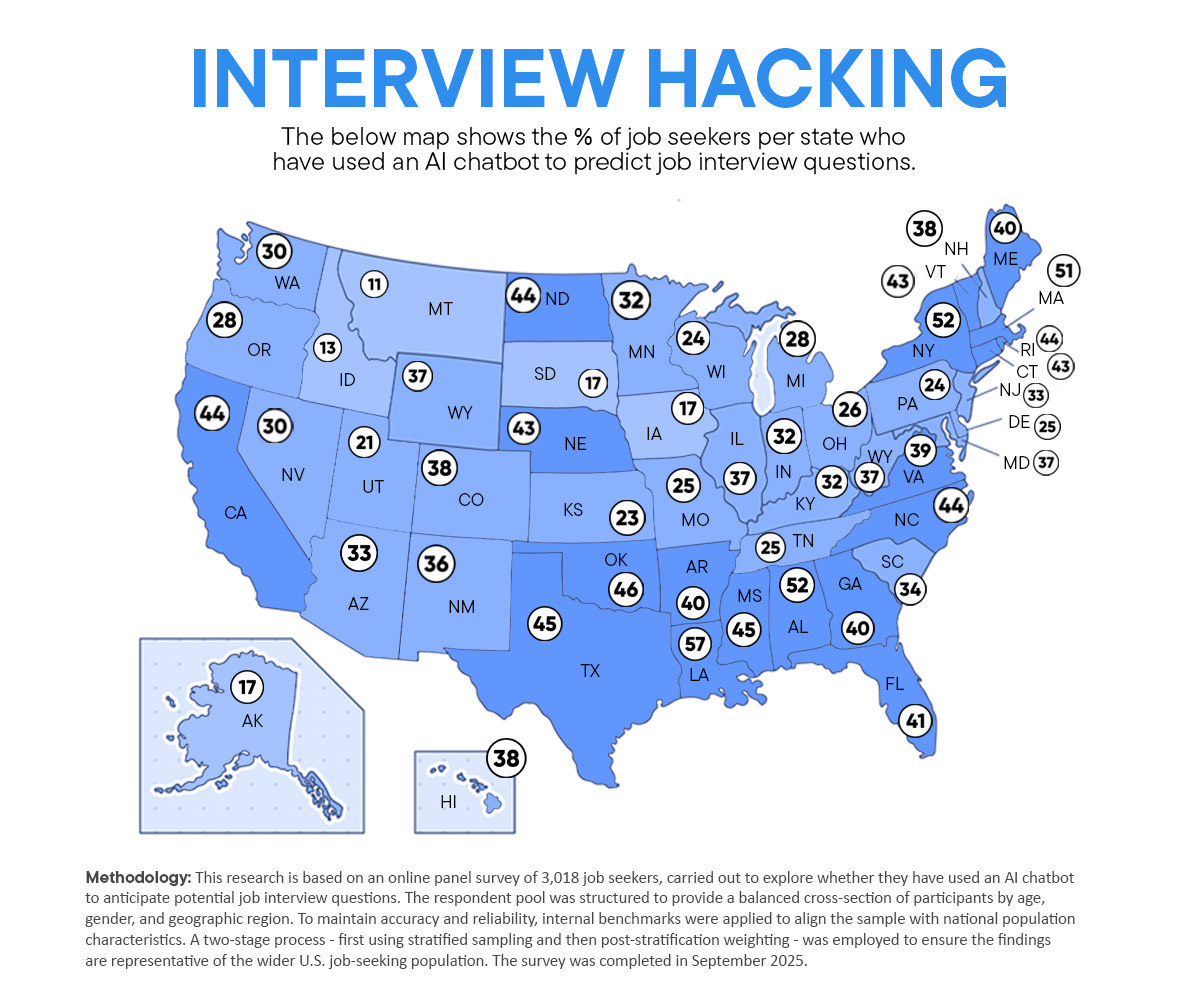
Here are the full rankings.
Key findings
Louisiana and New York lead the pack
In both states, more than half of respondents admitted using AI scraping as part of their prep (57% and 52% respectively). That’s significantly above the national average.
Skepticism runs high in the Midwest
States like Ohio (26%), Wisconsin (24%), and Pennsylvania (24%) report some of the lowest numbers. These areas may lean more toward traditional preparation — or simply see AI as overkill.
Rural and small-population states lag behind
Montana (11%) and Idaho (13%) were bottom of the list, with South Dakota (17%) not far ahead. Limited exposure to big corporate hiring processes may partly explain the lower uptake.
Does it actually help?
About 37% of respondents said AI rehearsal made them perform better in interviews. A clear majority (63%) disagreed–a reminder that confidence doesn’t always translate into results.
Cheating or just clever prep?
This one was a coin toss. Nearly half (47%) see AI prep as cheating, while 53% call it smart preparation. That divide tells us AI is already reshaping what people consider “fair play” in hiring.
Trust issues
Only 40% believe AI can reliably predict interview questions, while 60% think humans remain too unpredictable. Even among users, there’s caution about over-reliance.
Would you pay for it?
Just over a third (34%) said they would buy a premium service for better interview simulations, showing a willingness to invest if the payoff feels real.
Moral hangover?
Not really. 72% said they wouldn’t feel guilty landing a job with AI-scripted answers. The minority who admitted guilt (28%) suggest a lingering discomfort, but not enough to stop most people from trying.
The whisper test
When asked if they would use AI to feed them answers live, 52% said yes. That number alone shows how blurred the line between assistance and outright substitution could get.
Nerves tell the story
44% of job seekers admitted they would be more nervous skipping AI practice than skipping company research altogether. That says everything about how quickly this tech has embedded itself into the psychology of job hunting.
Final thoughts
The numbers paint a picture of job seekers who are curious, pragmatic, and sometimes a little shameless about using AI to get ahead. Regional quirks matter–Louisiana’s sky-high adoption looks very different from Montana’s near-silence–but the broader story is one of normalization.


