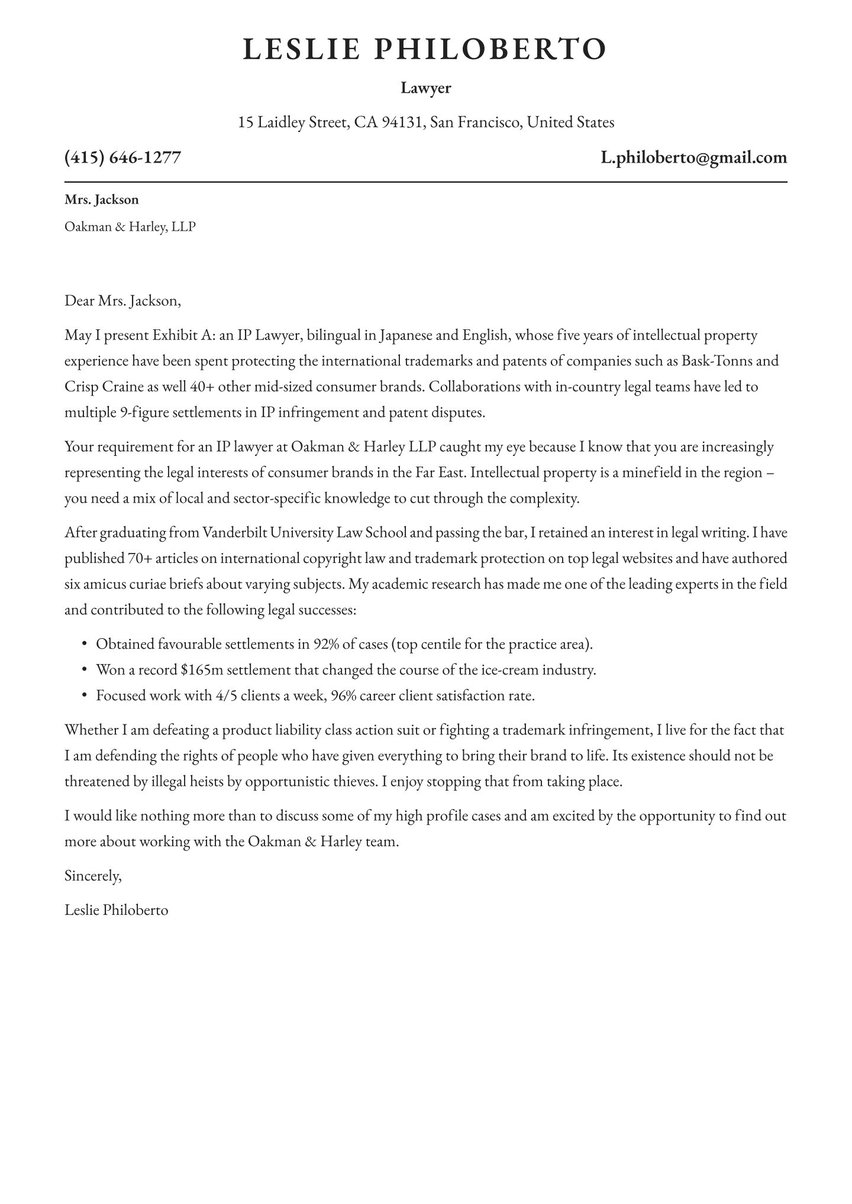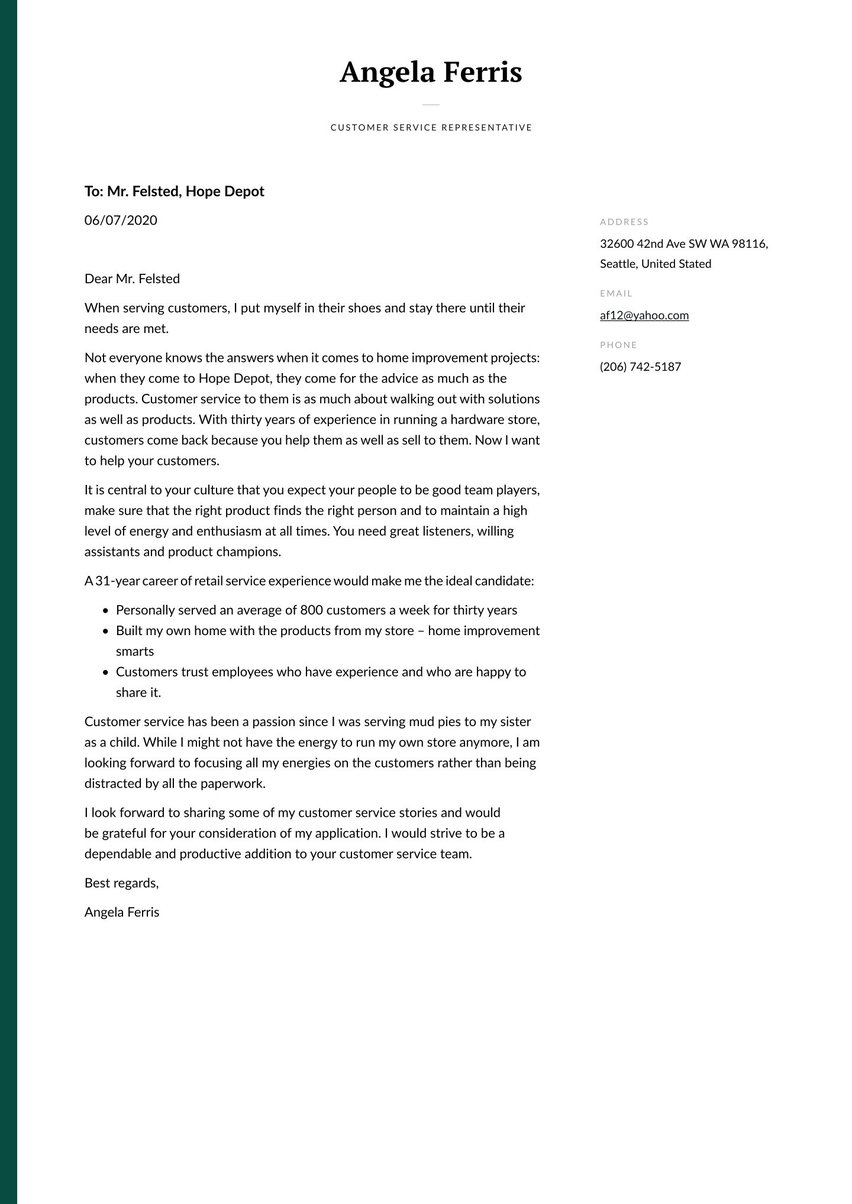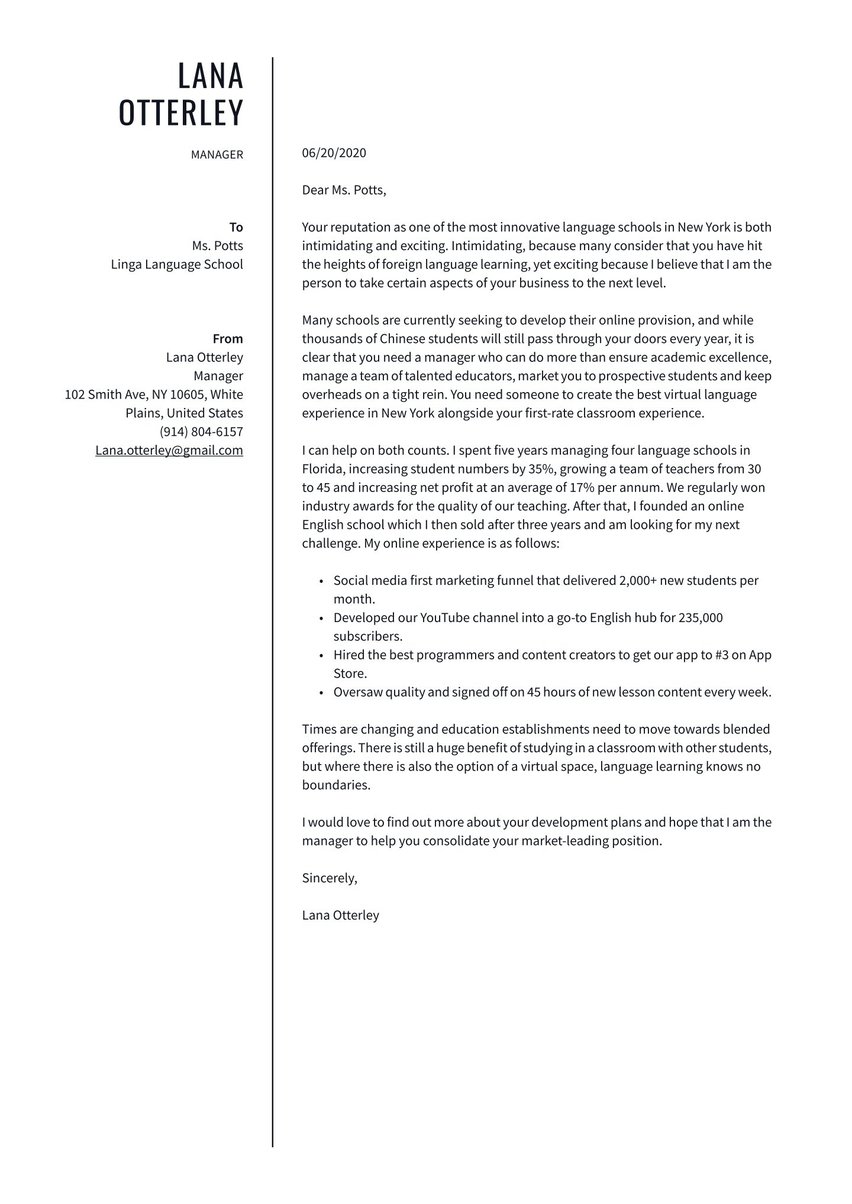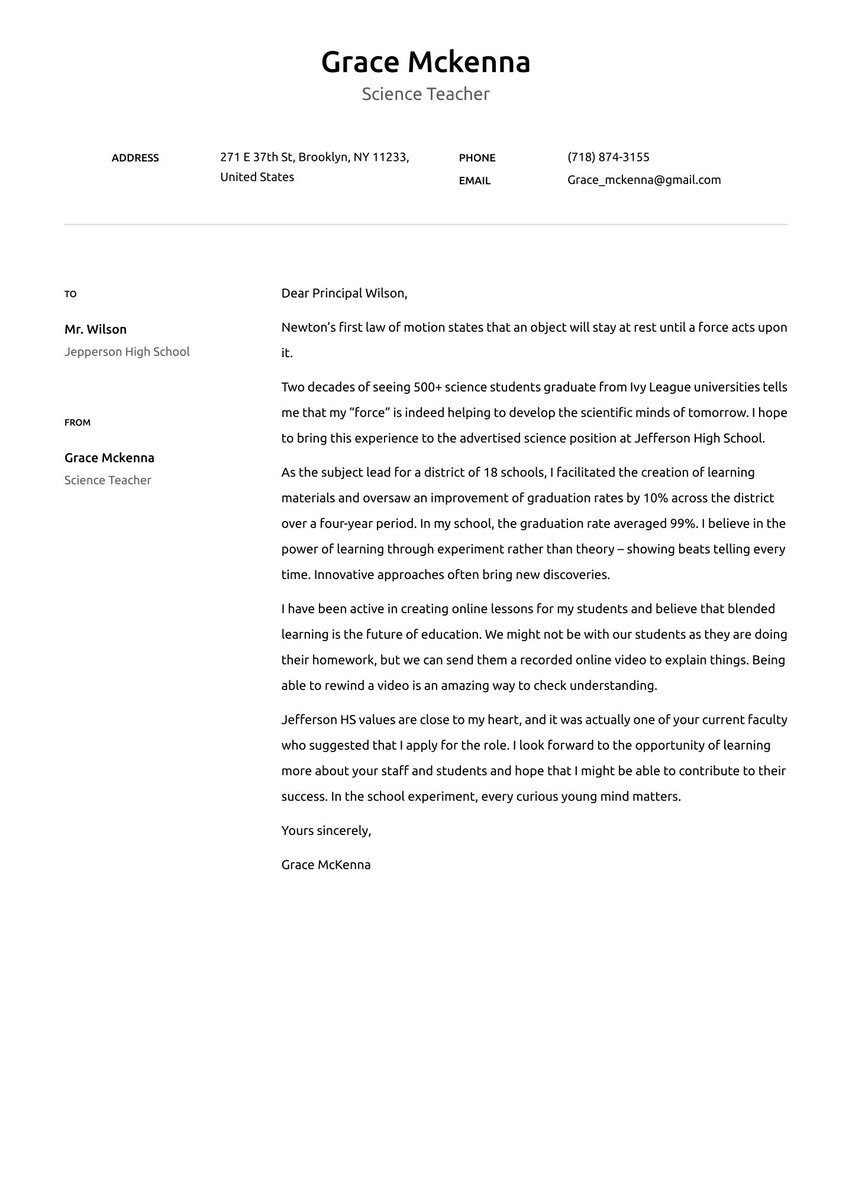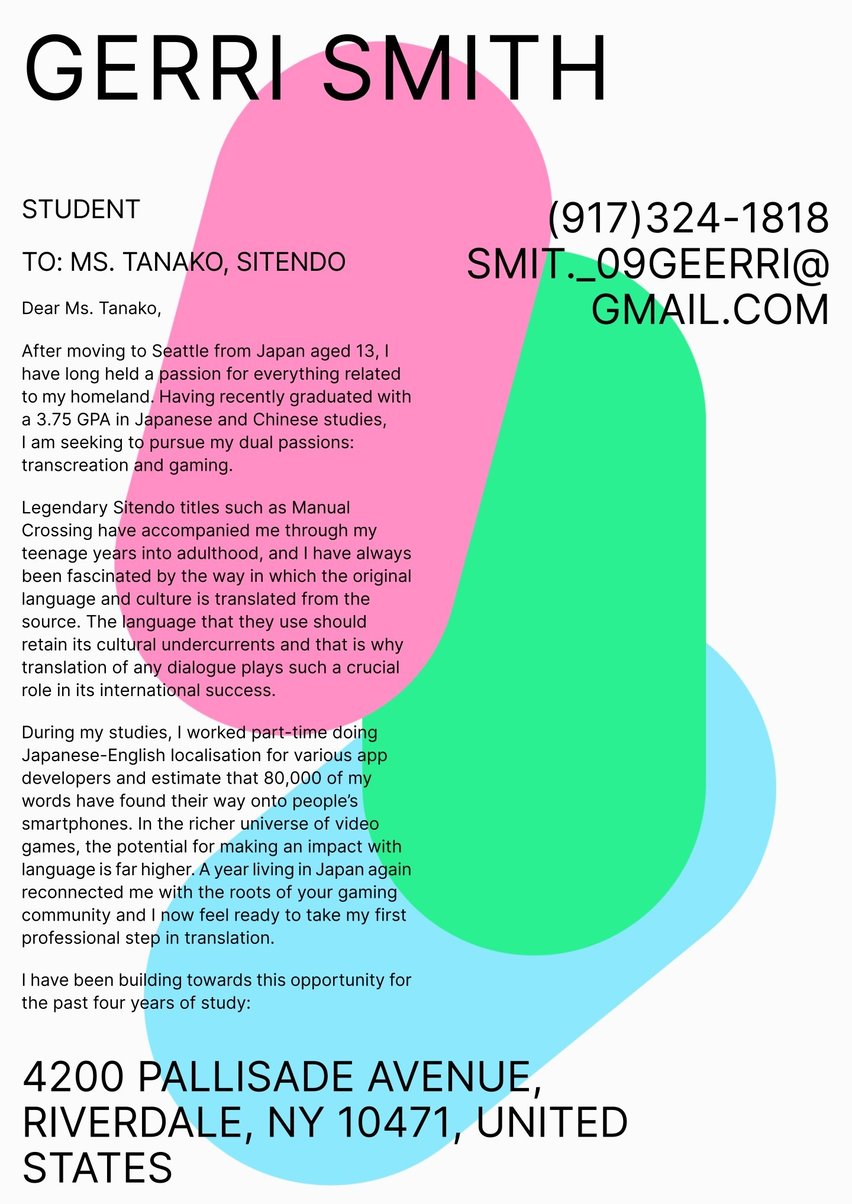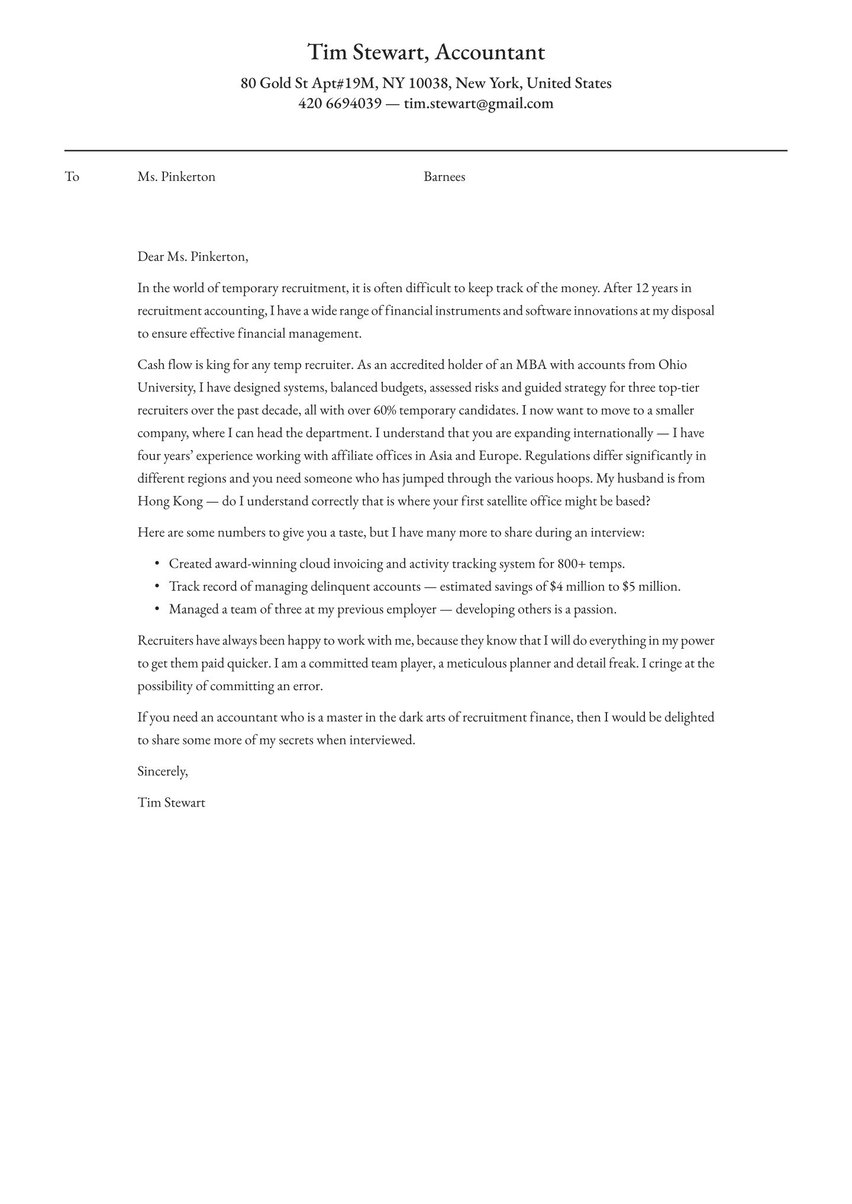


The world of IT is vast, ever-changing and an integral part of today’s business and commerce. As a job seeker in the field, you’re in high demand. IT jobs can come with attractive salaries, growth opportunities and even flexible hours. And in such a rapidly expanding industry, there’s plenty of room to learn new things and improve your skills. CompTIA lists 17 skills employers in demand now.
Related Cover Letter Examples
Software Engineer cover letter example
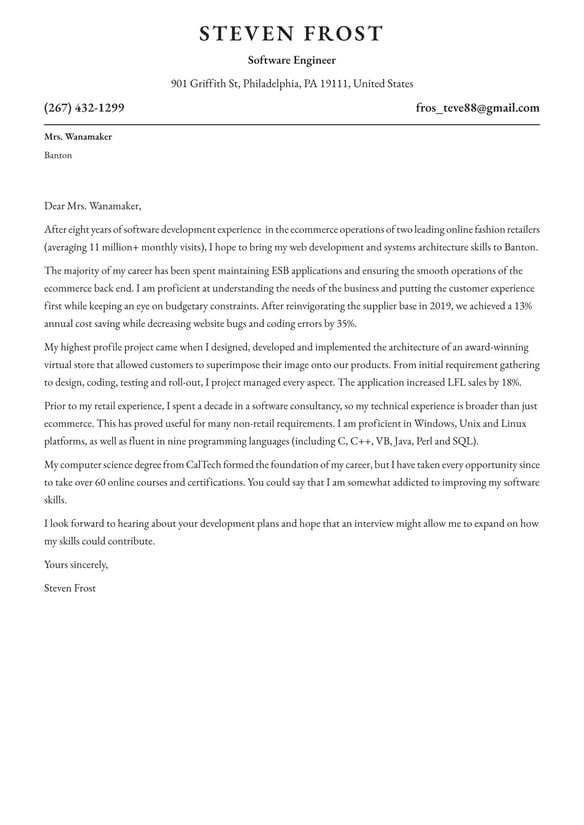
This clean, modern template highlights your technical expertise and problem-solving skills with a structured layout that mirrors the precision expected in Software Engineer roles. Its balanced white space and clear headers emphasize your accomplishments, ensuring they resonate with hiring managers.
Software Developer cover letter example
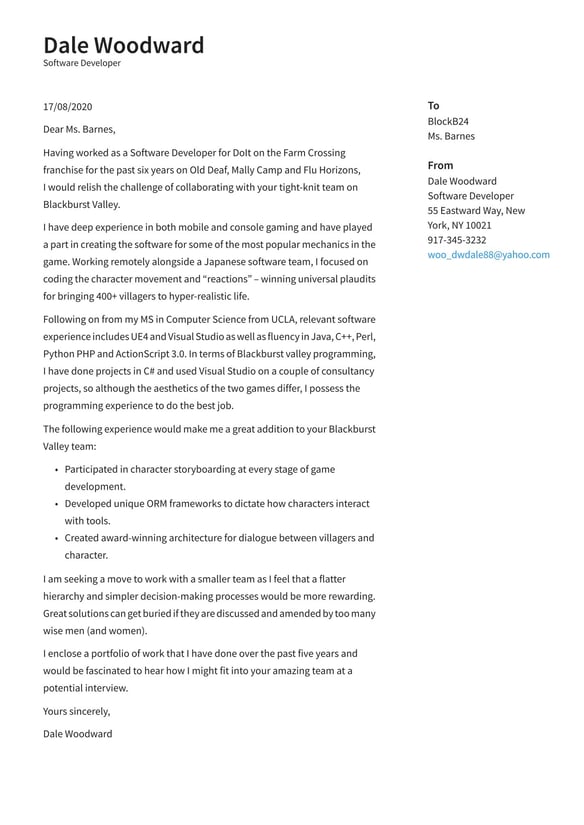
Perfect for Software Developer roles, this clean, structured template highlights your technical expertise and collaborative mindset. Its balanced white space and modern header styling emphasize clarity, professionalism, and adaptability for tech-driven teams.
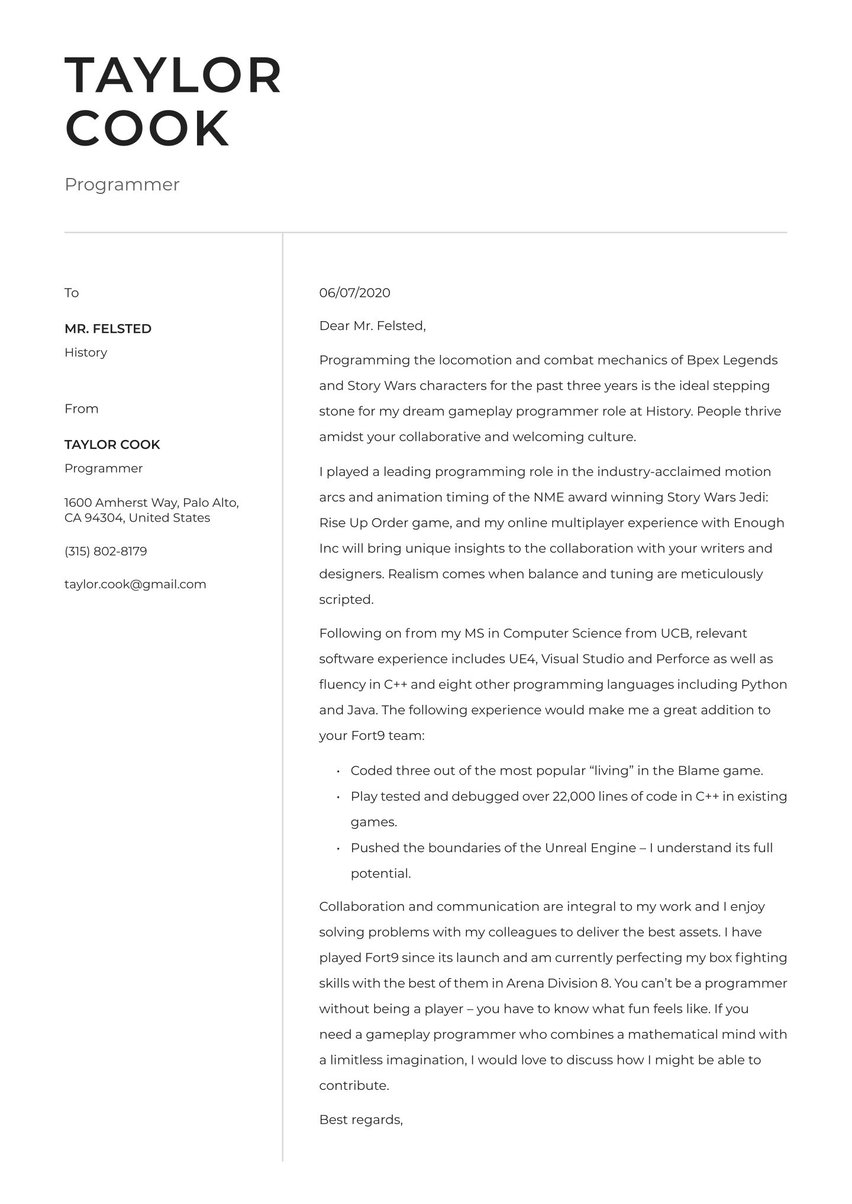
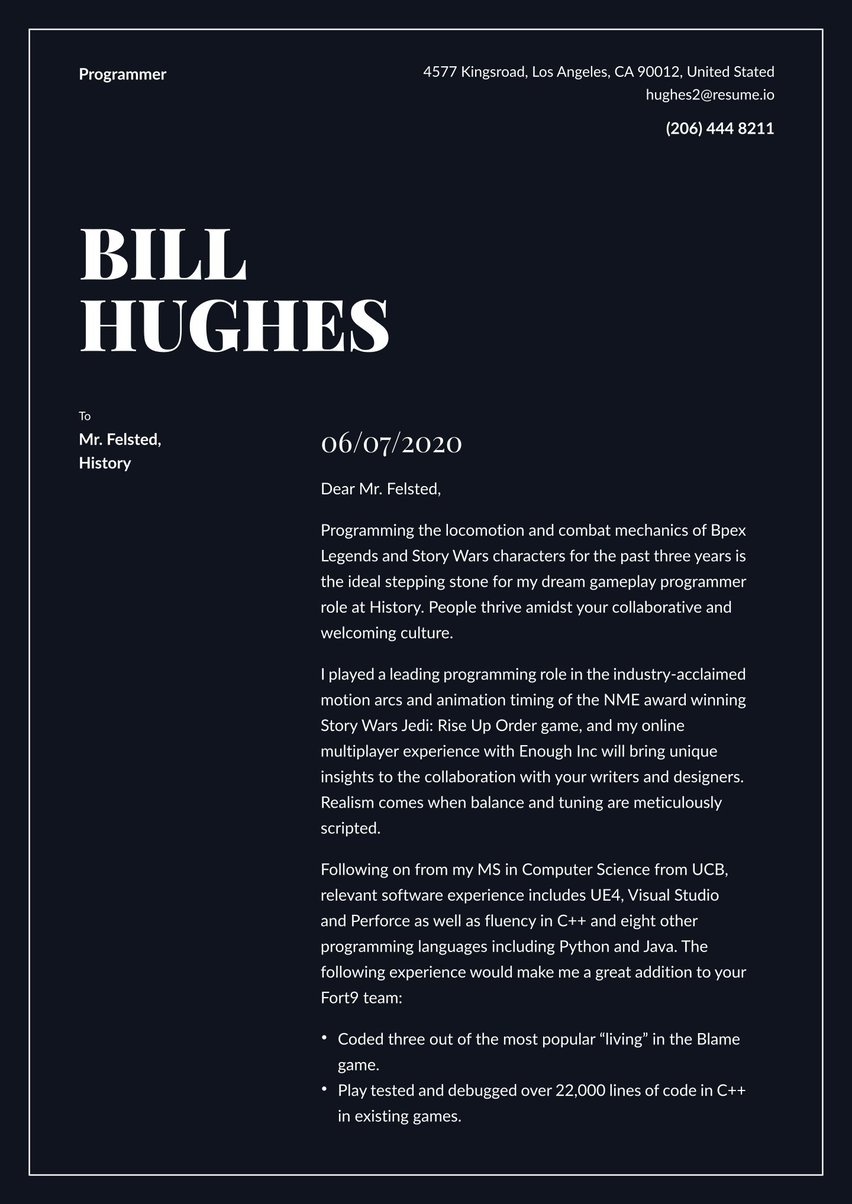
Programmer cover letter example
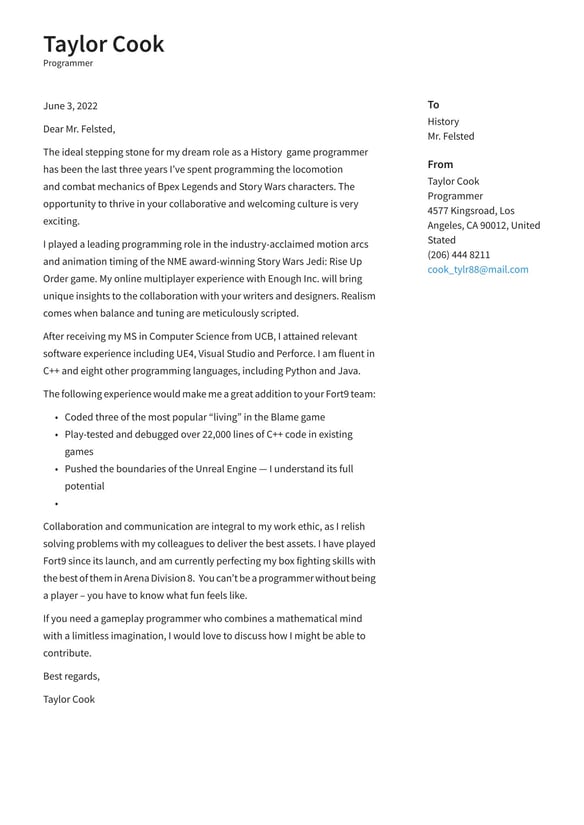
Perfect for programmers, this sleek, structured template highlights precision and clarity, mirroring the logical mindset of coding professionals. Its clean layout and ample white space emphasize your technical skills and collaborative strengths to hiring managers.
Network Engineer cover letter example
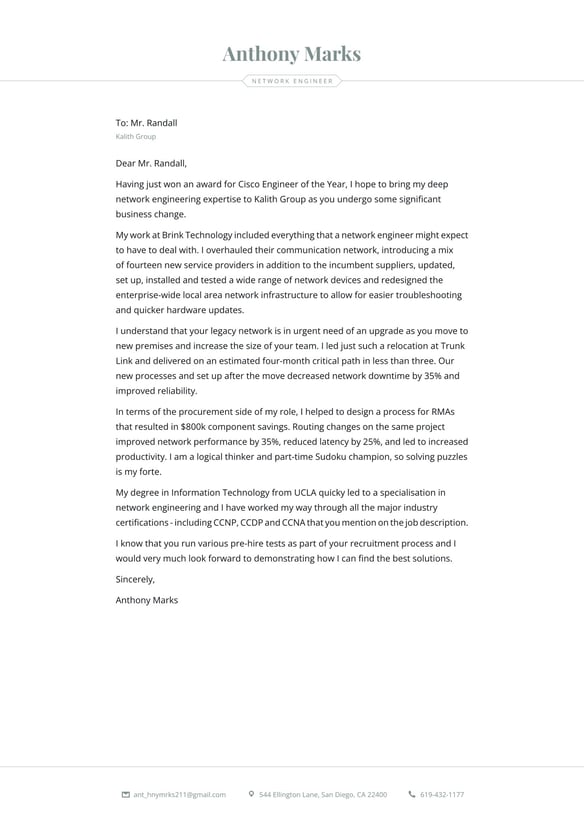
Perfect for Network Engineer roles, this structured, clean design highlights your technical expertise and problem-solving skills. Its balanced white space and professional tone ensure your achievements resonate with hiring managers in tech-driven environments.
System Administrator cover letter example
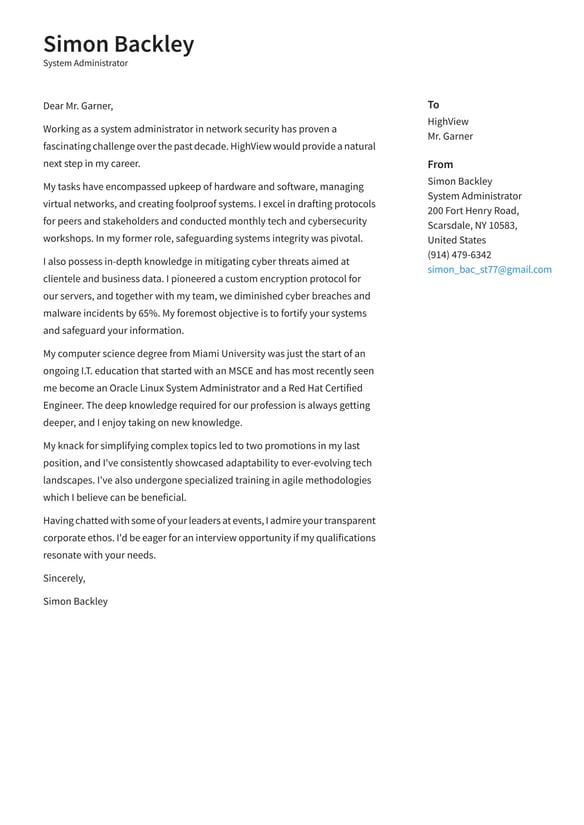
This clean, professional template highlights your technical expertise and problem-solving skills, perfect for System Administrator roles. Its structured layout and ample white space emphasize clarity, helping you communicate complex achievements to IT managers with ease.
Full Stack Developer cover letter example
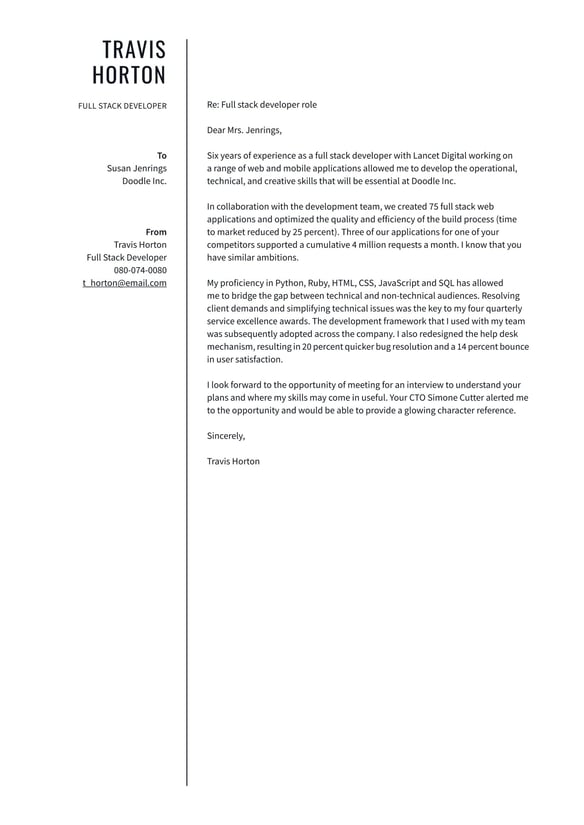
Perfect for Full Stack Developer roles, this template’s clean structure and balanced white space highlight technical expertise and problem-solving skills. Its modern header styling and clear formatting convey innovation and professionalism to hiring managers.
DevOps Engineer cover letter example
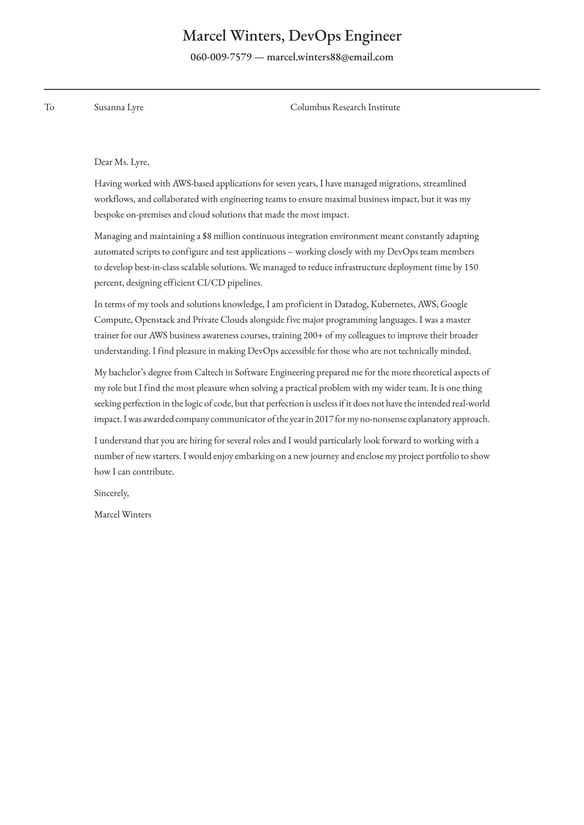
Perfect for DevOps Engineers, this clean, structured template highlights technical expertise and collaboration skills. With ample white space and bold headers, it emphasizes clarity and precision—qualities essential for engineering-focused roles and hiring managers.
Systems Engineer cover letter example
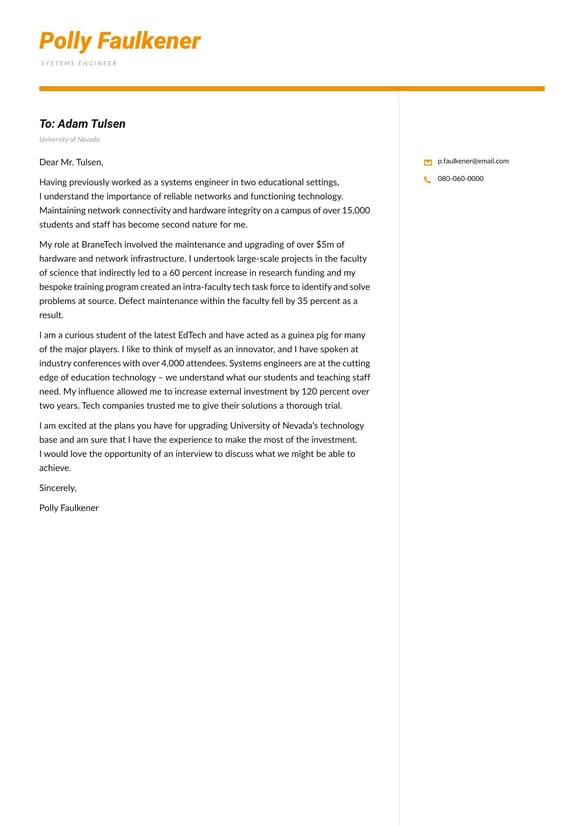
This clean, professional template highlights your technical expertise and problem-solving skills, perfect for systems engineer roles. Its structured layout and ample white space emphasize clarity, helping you communicate your impact to decision-makers with ease.
Cyber Security cover letter example
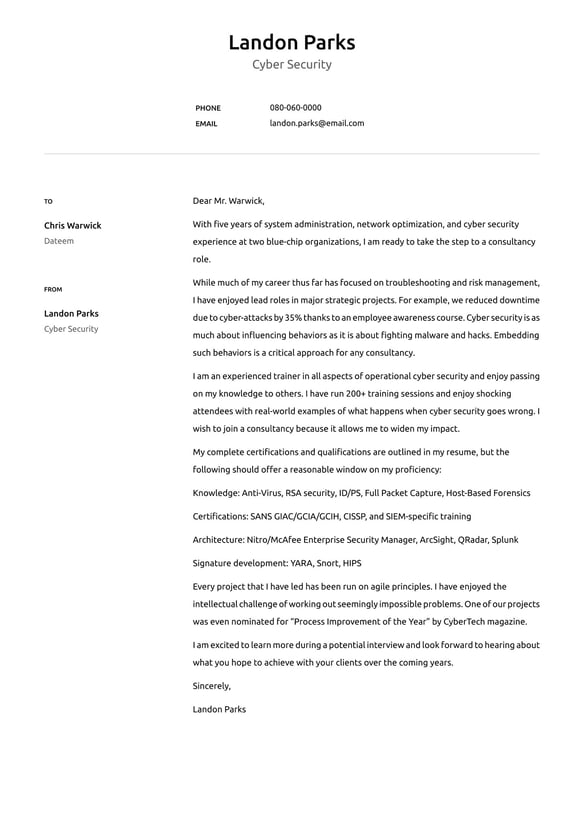
Perfect for cyber security professionals, this sleek, structured template highlights precision and clarity—key traits in the field. Its clean layout and bold headers emphasize your technical expertise and leadership, impressing detail-oriented hiring managers.
Front-End Developer cover letter example
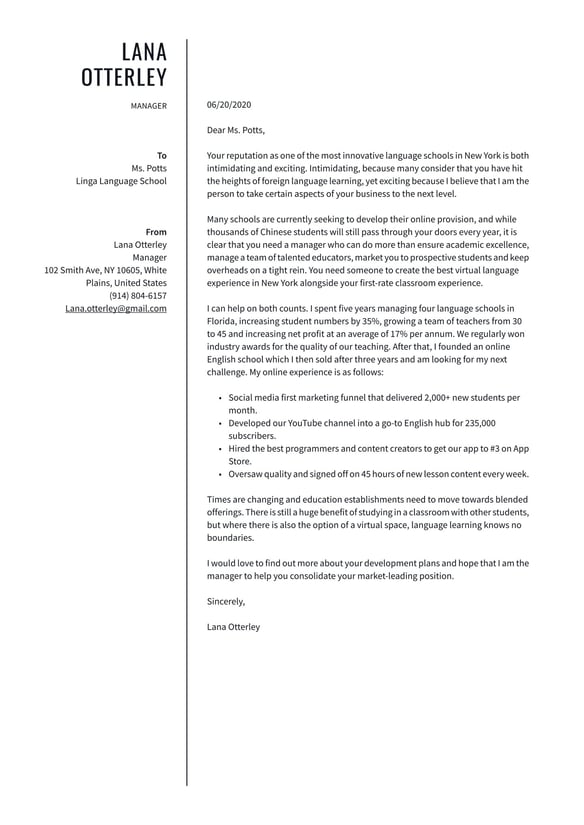
This sleek, modern template highlights clean structure and ample white space, perfectly complementing the clarity and precision expected in Front End Developer roles. Its bold headers and organized layout showcase your technical expertise and creative problem-solving to hiring managers.
So how do you land your IT dream job and put yourself on the path to success?
A great cover letter can set you apart from dozens of candidates with the same degree and skills. You probably already know that a resume is an essential part of any application, but a cover letter can be almost equally important in convincing an employer that you have the passion and drive to be the right fit for their company.
There’s nothing to fear when it comes to writing a great cover letter. With Resume.io’s collection of tools, tips and cover letter samples and templates, you can create the perfect cover letter with professional formatting in just a matter of minutes.
This guide, along with our IT cover letter example will:
- Explain the purpose and advantage of a cover letter for any IT position
- Break down the cover letter format with free examples, samples and templates
- Dive into the most important writing tips specifically for IT professionals
- Help ANY job application stand out, empower your resume and impress the employer!
Before jumping into the details of crafting the perfect cover letter, it’s worth taking a moment to make sure your resume is spot-on. Check out our resume templates, general resume writing guide and IT resume examples with job-specific advice for a variety of professions.
Now let’s take a look at how writing a great cover letter directly increases your chances of landing your desired position.IT cover letter sample and general writing tips
Primary purpose
A cover letter is one of the best ways to convince a hiring manager to give you a chance. This one page document (roughly 200 to 400 words) allows you to make the best case for yourself by focusing on your most impressive achievements and relevant qualifications.
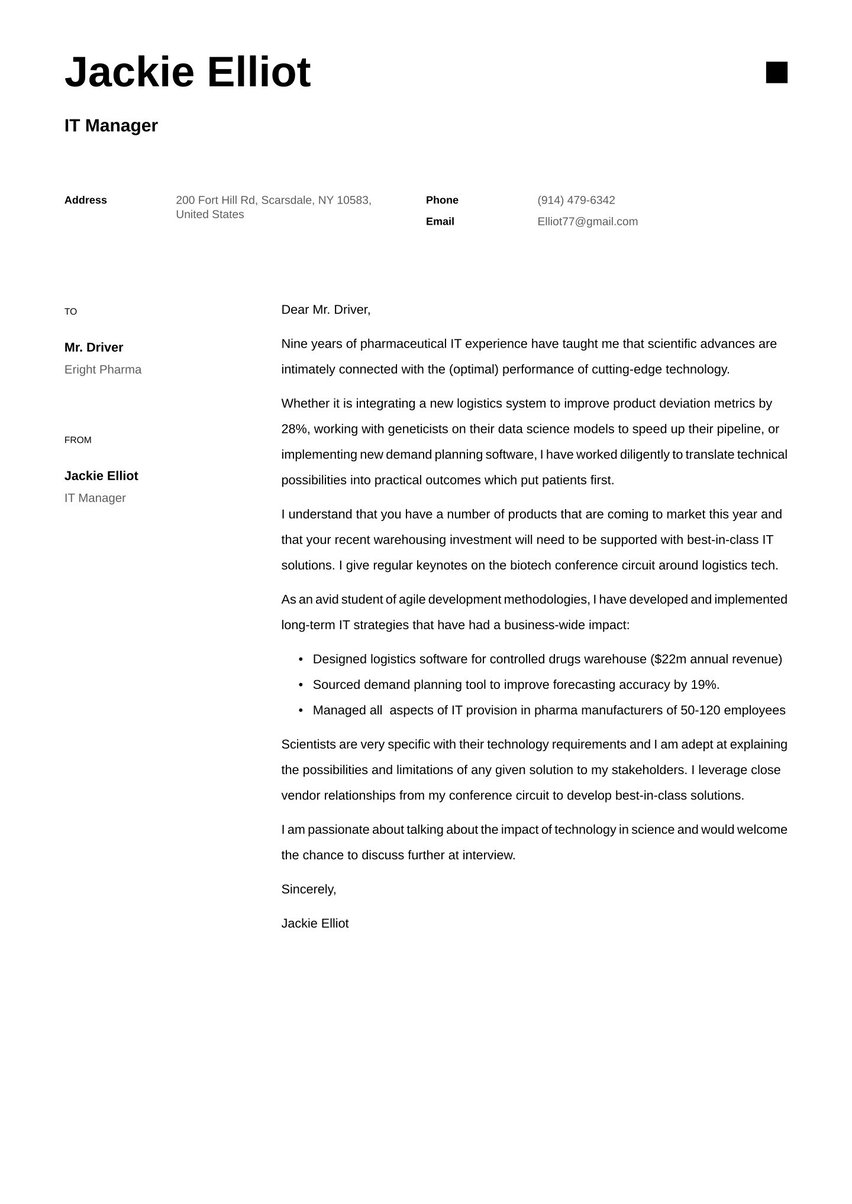
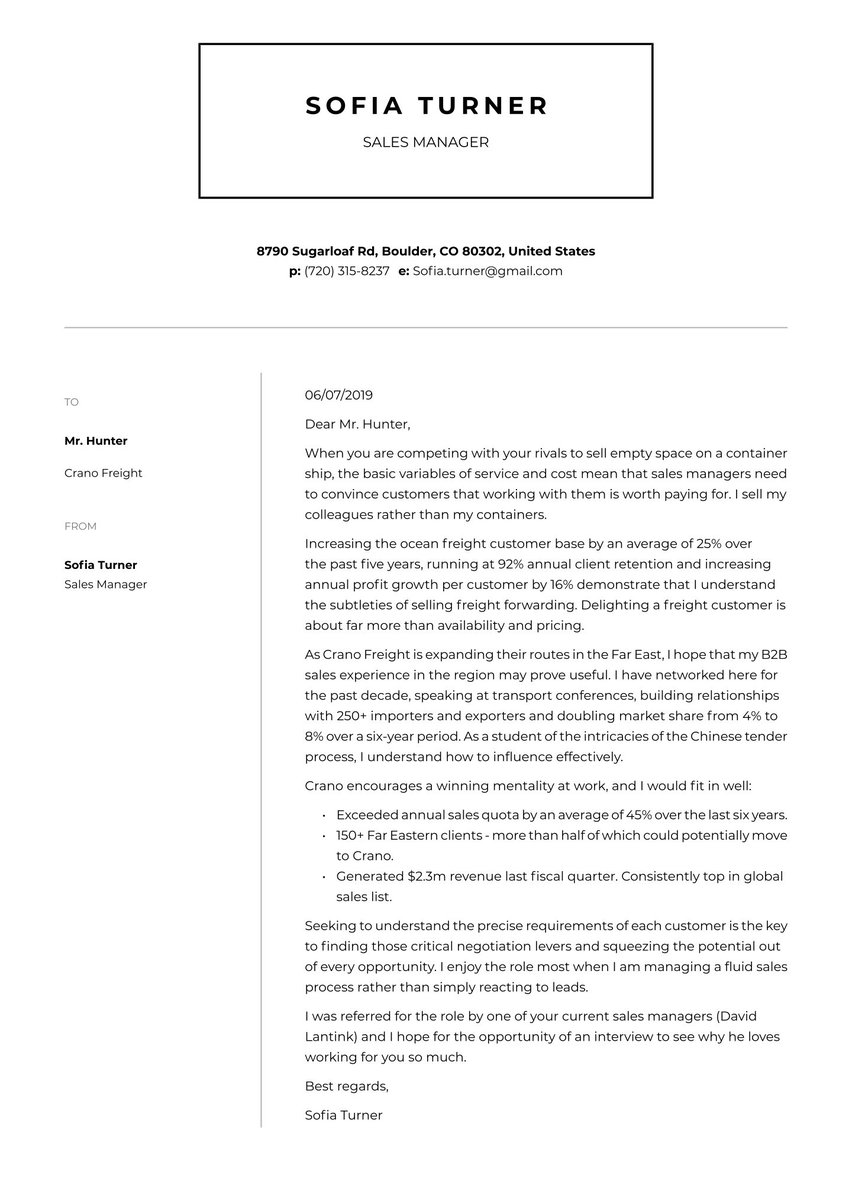
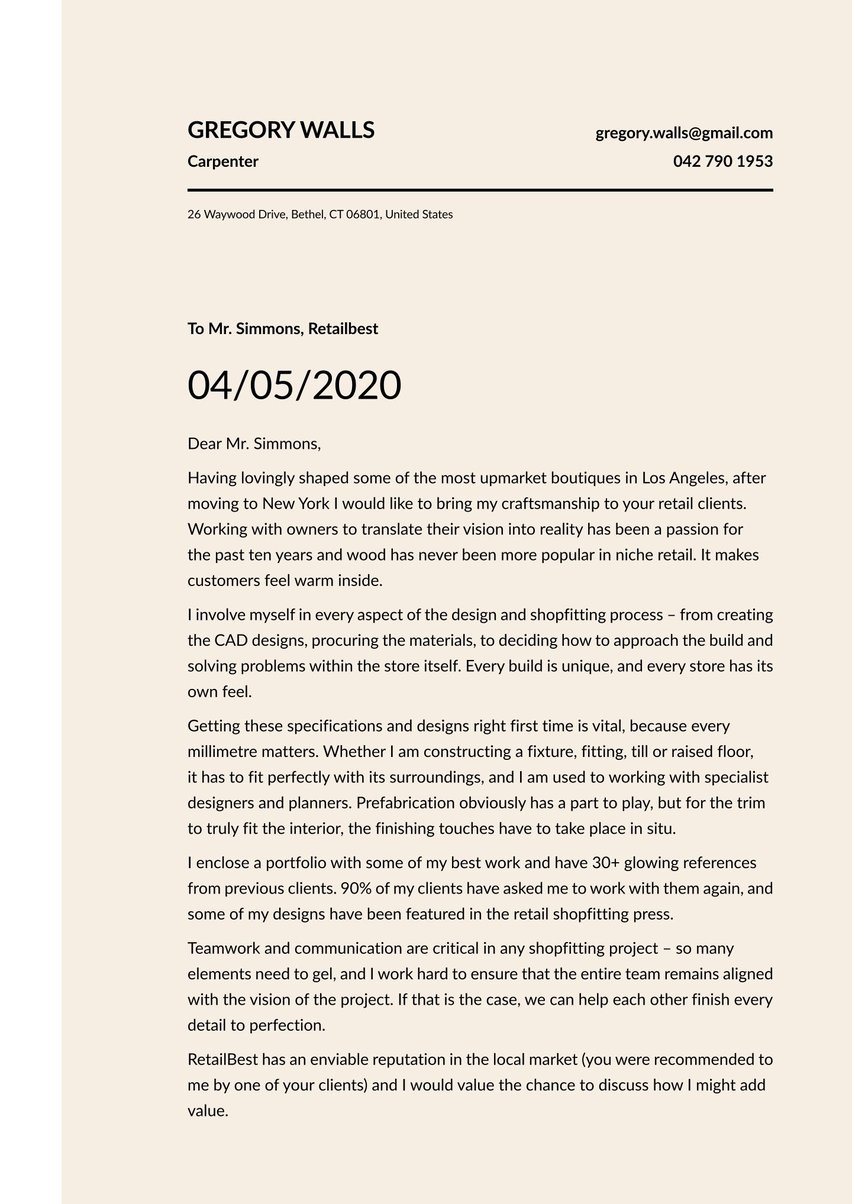
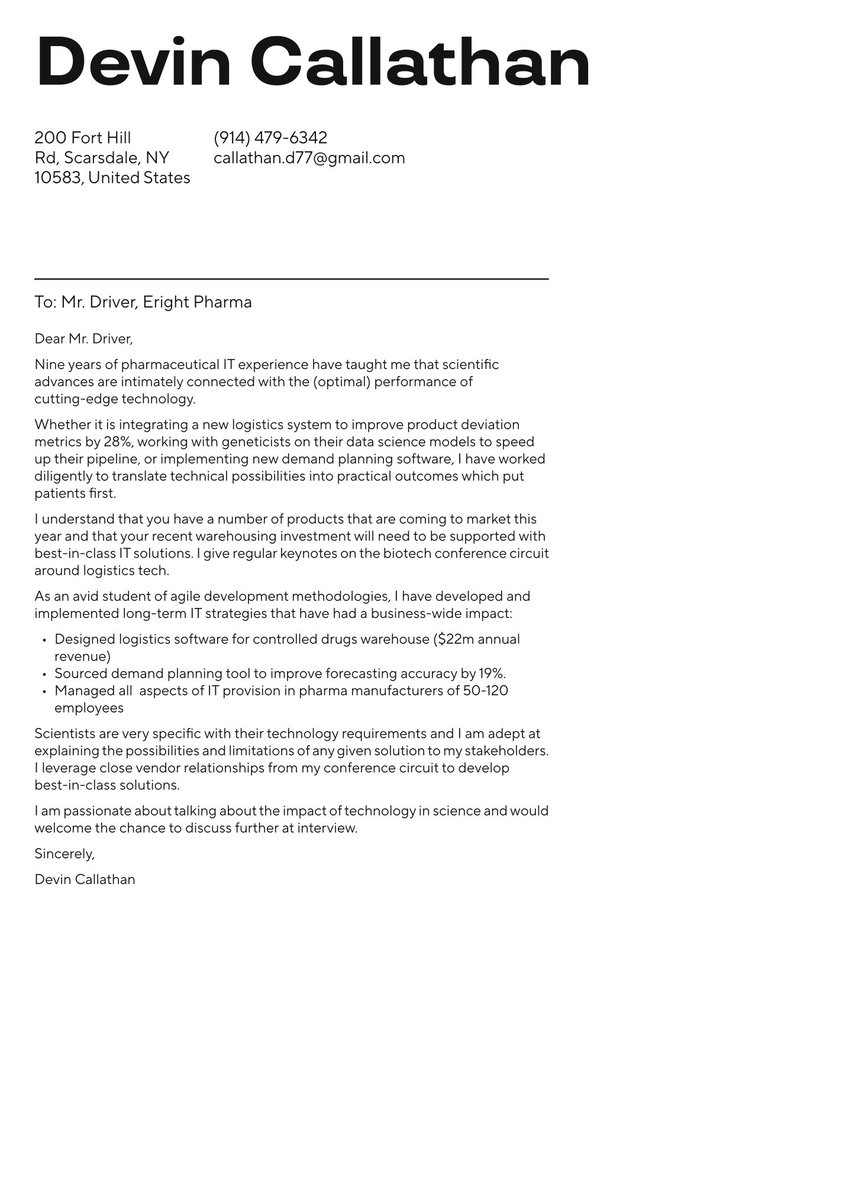
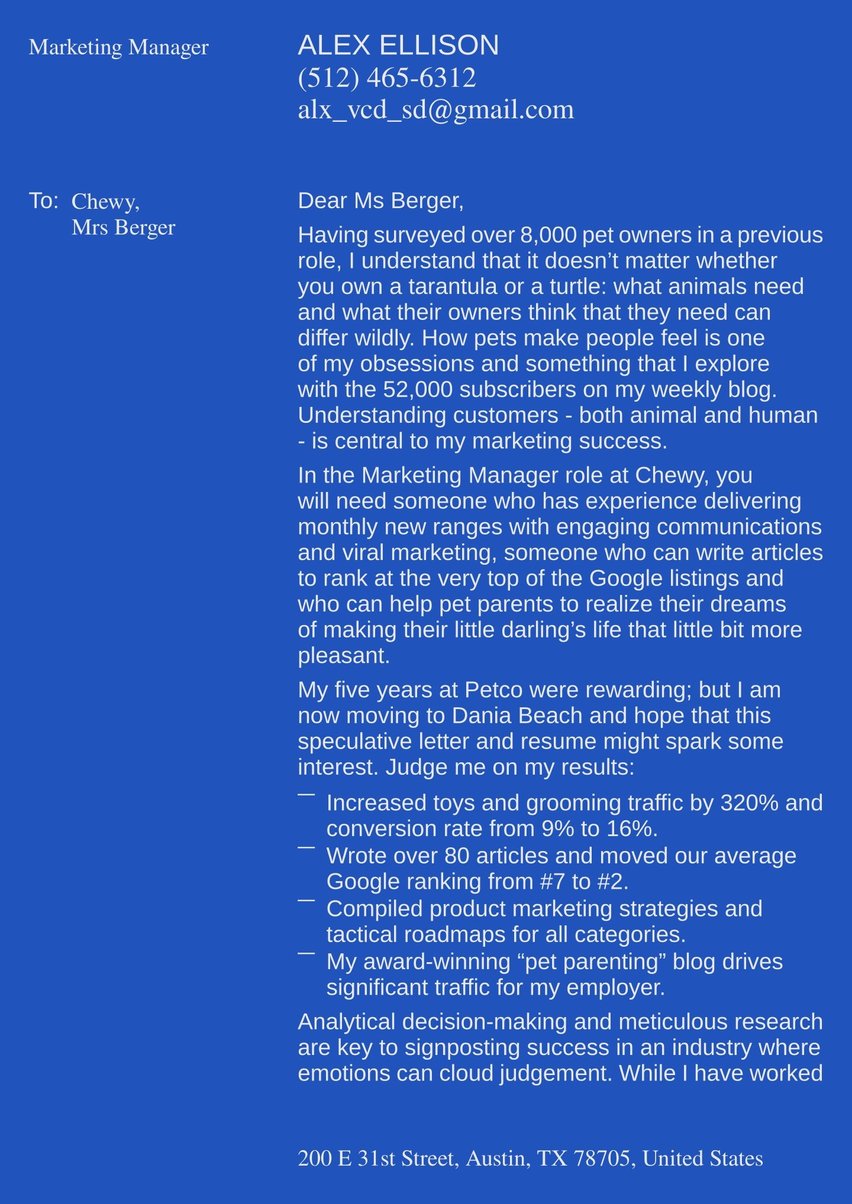
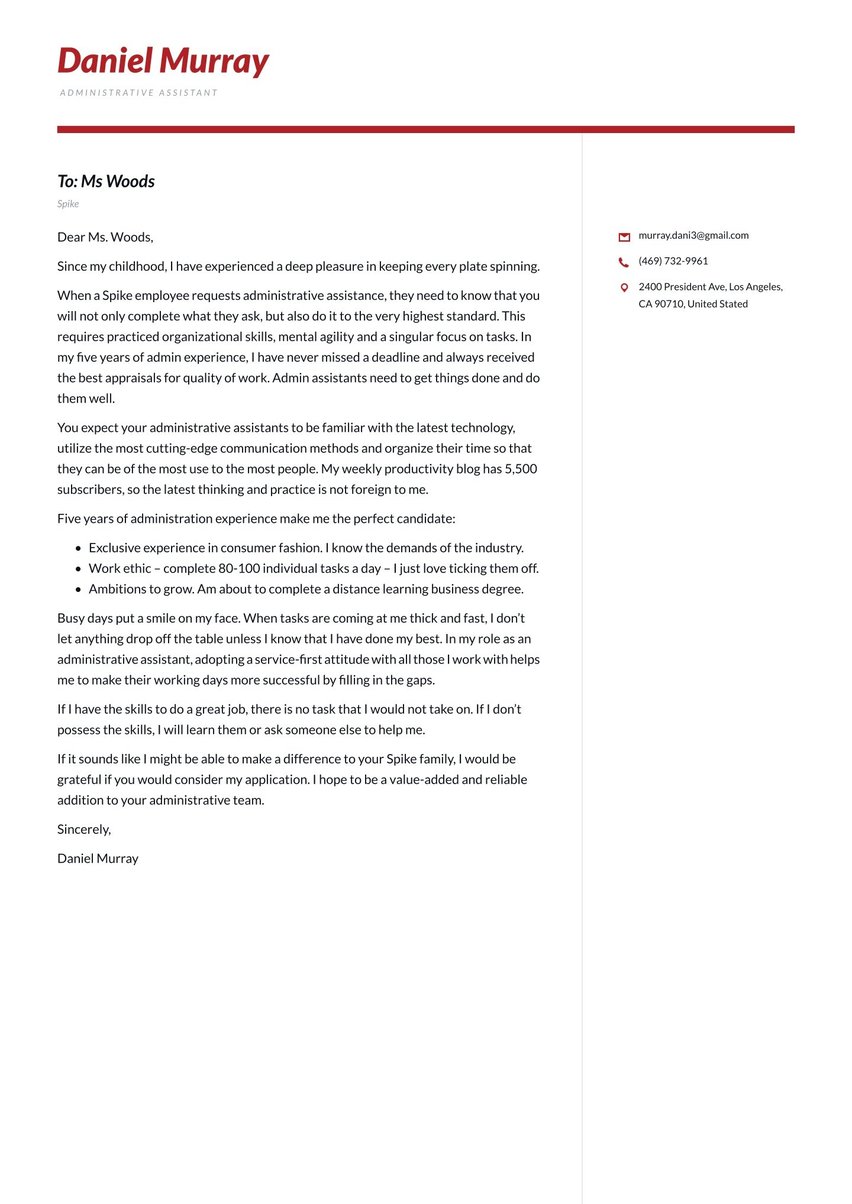
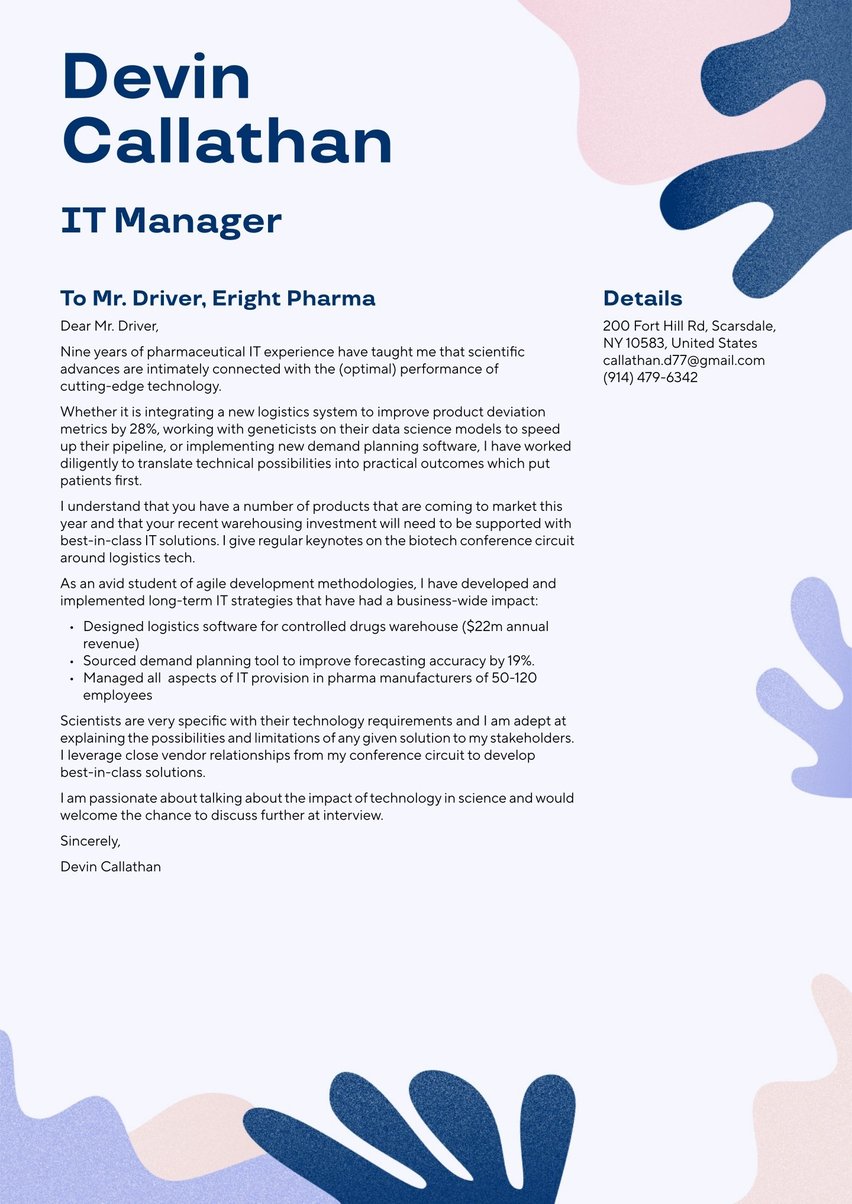
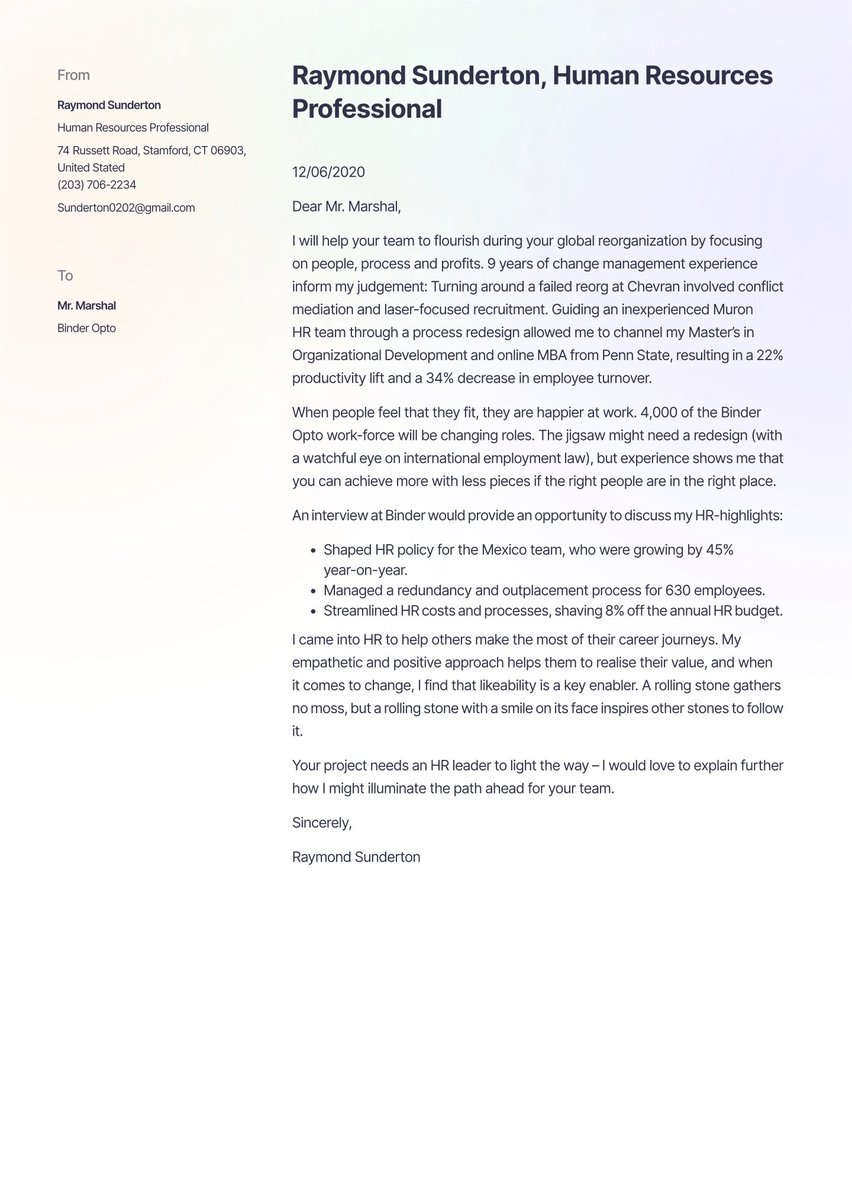
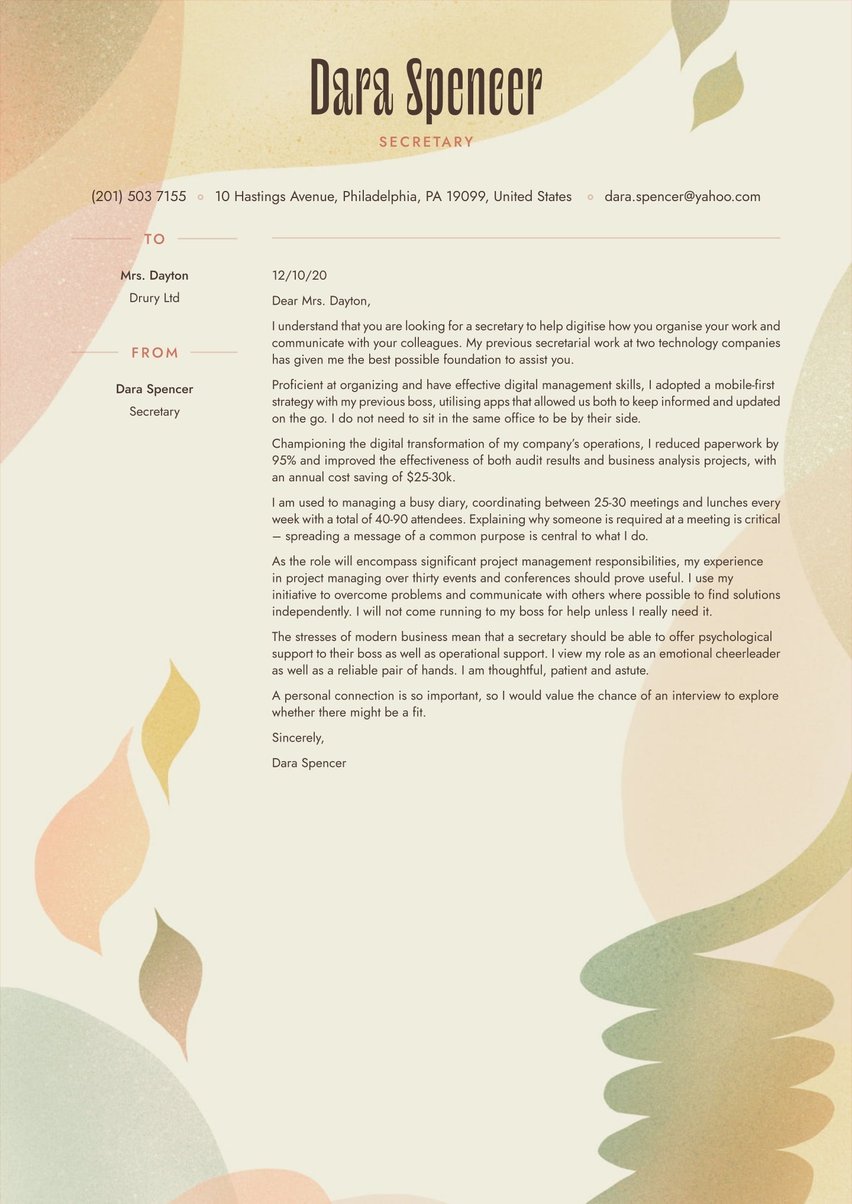
Many applicants feel that a cover letter for a tech position isn’t all that necessary since the majority of the daily work is based on skills like programming languages, softwares and procedures. However, this couldn’t be further from the truth. Whether you’re a web developer, programmer, software engineer, this document allows you to focus on what makes you different from other candidates with the same technical skills. To get a clear understanding of how this works, check out our cover letter examples.
The cover letter covers all the gaps that a resume has by definition. It answers the unanswered questions. It reminds the employer that you’re a real person and not just a “wall of text” regarding your tech skills. It establishes an emotional connection with the hiring decision-maker- an extremely necessary advantage when there’s dozens or hundreds of resumes on the recruiter’s desk.
What if the job application doesn’t mention a cover letter?
Sometimes a job posting lists a cover letter as “optional” – or fails to mention whether one is required at all. So what should you do? Is this a free pass to save yourself the effort and submit an application without a cover letter?
While there might be some candidates who take that path, they are severely reducing the chances of getting the job. If you’re serious about the position, then it’s a smart idea to always write and send a cover letter – unless the job posting specifically asks you NOT to. This is your chance to make a great impression and show off your attention to detail – why waste such a big opportunity?
While good writing is one important component of an effective cover letter, you’ll also need great formatting to make a good first impression and leave a recruiter or hiring manager with a position opinion of your application.
In general, fonts like Georgia, Arial, Verdana, Open Sans or Helvetica (and some others) with a size of roughly 11 point are universally recommended by design experts for readability, laconic style and avoiding reader fatigue. For more specific formatting tips, check out our overall guide on cover letters.
Secondary purpose
You probably noticed your resume is great at conveying certain pieces of information about your qualifications and work experiences – namely dates, grades and the names of businesses where you’ve worked or interned.
While on the job search, there’s likely to be other applicants with the same degree, technical skills and knowledge. There might even be candidates with more or better experience than you’ve had.
Luckily, an IT job isn’t only about your technical skillset. Believe it or not, proven soft skills like communication, leadership and the ability to focus and immerse yourself in long-form tasks can actually make you a more desirable candidate than someone with years of experience who isn’t willing to be part of a team or see a project to its end.
Personality counts!
In a survey of a range of hiring professionals, almost 80 of respondents listed “personality” as their most sought-after trait for potential hires. While your skills are important, especially in a field like IT (whether it’s coding, web development or machine learning), don’t underestimate the importance of conveying energy, charisma and passion in your cover letter.
Your cover letter is the best place to convey all of these traits and to actually show an employer how you’ve implemented them in previous positions. By doing this, you can effectively level the playing field and give yourself a better chance of landing your dream position, even against more qualified candidates.
A great cover letter is all about maximising your chances – don’t let the opportunity go to waste!

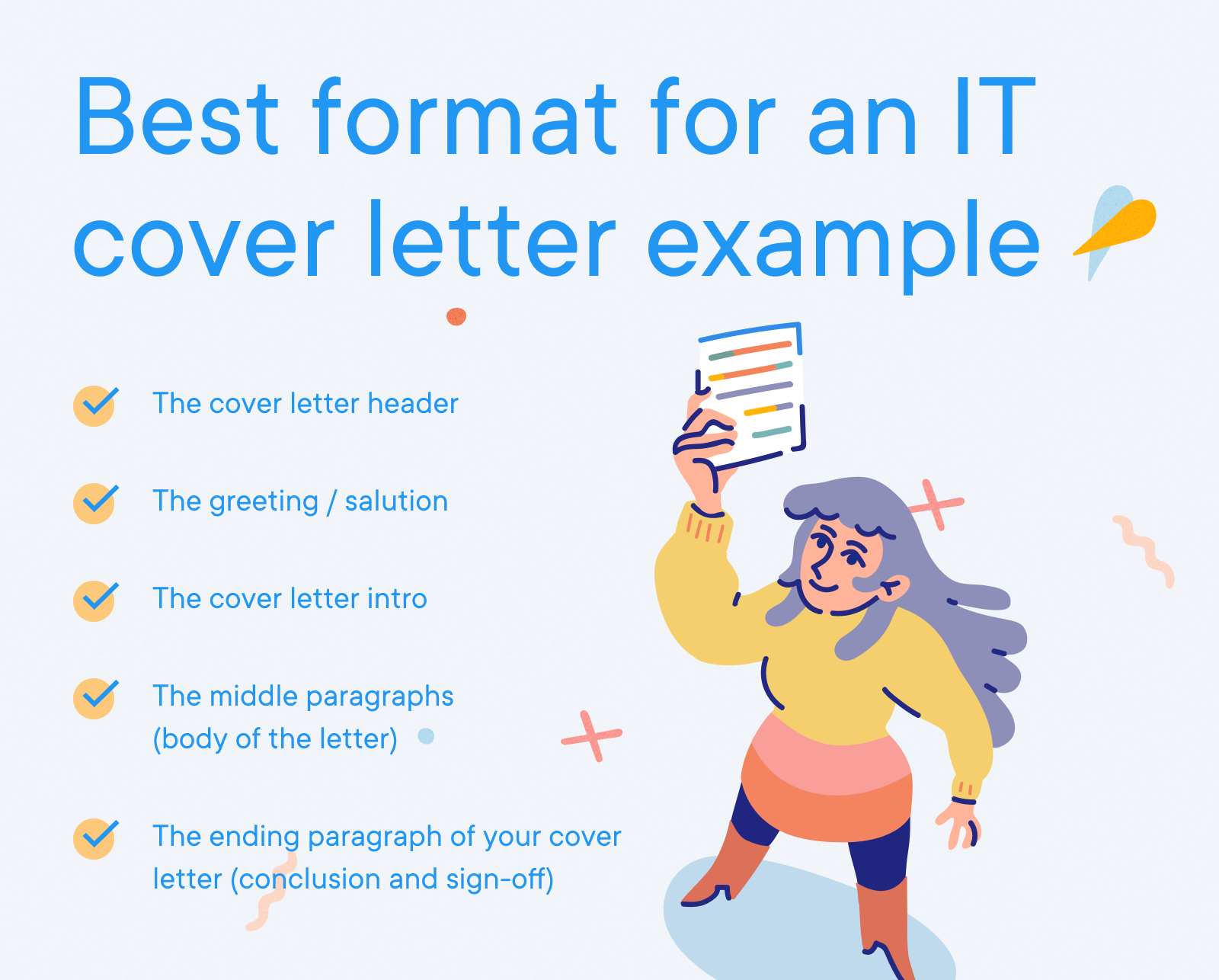
Best format for an IT cover letter example
No matter where you fall in the spectrum of IT jobs, the good news is cover letter format remains relatively unchanged between positions or fields.
The format of an IT cover letter should contain the following elements:
- The cover letter header
- The greeting / salutation
- The cover letter intro
- The middle paragraphs (body of the letter)
- The ending paragraph of your cover letter (conclusion and sign-off)
Some applicants fear the cover letter writing process because they think it lacks structure. Luckily, this doesn’t have to be you. In this section, we’ll break down each part of the document into manageable steps.
The comprehensive cover letter guide, which includes cover letter samples, offers more general advice about how to go about compiling cover letters, but below you will find specific advice on how to maximize the effectiveness of each specific letter paragraph and section.
Cover letter header
Your cover letter header serves two main purposes. The first is to help identify the document as belonging to you. In medium to large companies, hiring is often taken care of by a team of HR professionals. That means there’s a good chance your cover letter will float from desk to desk while multiple people review it. Your cover letter heading makes sure the necessary information like your phone number, social media, phone number or LinkedIn is at the hiring manager’s fingertips in case they want to schedule a job interview.
The second purpose of your header is to improve your letter’s readability and style with interesting or creative formatting. Since this is the section that will most likely catch the reader’s eye first, it’s worth putting some effort into creating an attractive format.
The goal of this section: Label the document as yours and keep your contact information handy, create attractive and practical formatting. Above all - be memorable and identifiable to recruiters and hiring managers.
One way you can create an application that’s extra polished and professional is by aligning the document styles of your cover letter and resume. A cover letter template can make this process much easier by allowing you to choose a style that matches the presentation of your potential employer.
Since tech jobs can vary widely depending on the company and your specific role, it’s a good idea to check out your potential employer’s branding and image before deciding on a template or design. If the company prefers a colorful, youthful vide, a modern template might be in order. For more formal industries, neutral color palates and a professional design might make a better impression.
Cover letter greeting
Your cover letter greeting may only contain a few words, but it’s instrumental in establishing a personal connection and respectful tone right from the start of your letter. In general, “Dear” followed by the correct salutation and the HR manager’s last name works for a variety of positions. If you already know the hiring manager or the company has an informal workplace culture, “Hi” or “Hello” and a first name might be more appropriate.
The goal of this section: Address the letter recipient by name to set the tone and immediately create a personal connection.
Using the hiring manager’s name in your cover letter greeting is one of the most important things you can do to prove your attention to detail and start things off on the right note. In fact, studies have actually shown that our brains release a positive chemical reaction upon hearing our own names.
However, when applying for positions in some large companies it might be near impossible to find the exact name of the hiring manager responsible for reading your letter. If this is the case, there’s no need to go to extreme lengths to find a name. A collective noun like “Dear (Company Name) Hiring Manager” or “hiring team” can also work better than the impersonal “To Whom It May Concern.”
Cover letter introduction
Recruiters can receive dozens (sometimes - hundreds in large companies) of applications for any given tech job, and they only have so much time to spend on each one. You can maximize the chances of a hiring manager making it through your whole letter by creating an exciting introduction. No need to be presumptive or eclectic, but an interesting anecdote, relevant fact or even a statistic can help hook a reader and encourage them to continue into the body section.
The goal of the cover letter intro: Grab the hiring manager’s attention with an exciting, interesting and relevant piece of information that flows into your body paragraphs.
Cover letter middle part (body)
The body section is where you’re finally able to jump into all your most relevant skills, achievements and milestones that make you the ideal candidate for the job. Since this is the largest section of the letter, you can make things easier by dividing it into two parts.
In the first paragraph, you can use the STAR method to describe a Situation, the required Task, your Actions and the positive Result that followed. Make sure to choose anecdotes that demonstrate the most relevant skills for your potential position – and you can use the job description to help narrow those down.
In the second paragraph, discuss your most pertinent competences, both hard skills and personality traits, and how you could use those to contribute to this new position.
The goal of the body of your cover letter: Use the STAR method to formulate relevant anecdotes from past experiences, explain your strengths and potential contributions.
How to close an IT cover letter (conclusion and sign-off)
Now that you’ve laid out the best case for yourself, it’s time to close out your letter with an effective conclusion. One of the best methods is to create a Call to Action. This sentence expresses your enthusiasm for the position and invites a hiring manager to get in touch. You may also leave your contact information again here, space permitting.
Then, close out your letter with a cordial signature. Cover letter examples of salutations are “Best regards,” “Sincerely” or “Thank you” can all work well depending on the tone of your letter.
The goal of this part: Finish your letter with an effective call to action that encourages a hiring manager to contact you.
Writing psychology, career change tools and strategies
As an IT professional, there are a few key qualities you’ll want to convey in your cover letter regardless of your area of expertise.
- Problem-solving: A big part of any technology job is your ability to analyze tricky situations, come up with a potential solution and put it into place. Examples of times you made a difference through clever troubleshooting or worked tirelessly on a difficult problem can help show your commitment to a job well done.
- Willingness to learn: Technology is always changing so the ability to learn new skills and update your knowledge is essential to thrive in the field. Instead of resting on your laurels, try to show an employer how you adapt to new situations and fresh technology to improve yourself and the workplace.
- Initiative: When a problem arises, IT professionals are required to rise to the challenge – often with limited time to fix the problem. By demonstrating initiative and passion in your cover letter, you can show how you’ll quickly and efficiently handle any IT crisis.
- Teamwork: IT may seem like a solitary job, but the truth is tech professionals rarely work alone. Some are responsible for managing company systems and assisting other employees, while others solve customer problems. Even independent positions often require collaboration with other IT professionals. Demonstrating your ability to work in a team can set you apart.
Tailor your letter for success
The information technology label covers a variety of job titles and duties. So far, we’ve covered general advice that will allow you to strengthen any cover letter for an IT position. Now, it’s time to talk about the specifics.
One of the best things you can do to improve your chances of landing any given IT job is to tailor your cover letter for each and every position that you apply to – not only for your specific IT field but also for the needs and style of every employer. Write a basic cover letter example you can draw from, but then alter it to suit each job.
Writing for hiring managers
Here’s an important thing to remember when writing your cover letter: most hiring managers are not IT experts. They understand the basic terminology if they only recruit IT specialists, but don’t expect them to know every abbreviation and coding language. If a friend who is not an IT expert has some difficulty understanding your letter, it’s possible a hiring manager will as well. Focusing on soft skills and strengths from the job description are your best bet when it comes to making sure your letter will be fully understood.
IT cover letter with no experience
If this new job will be your first IT position, your best strategy is to highlight relevant abilities from previous jobs, even if they weren’t IT related. Luckily your cover letter focuses more on soft skills than your resume, so you should have examples of teamwork, customer service, problem-solving or adaptability to choose from. Hiring managers looking to fill entry-level IT positions will be looking for these skills.
You can also explain where you find your passion for IT and why you were motivated to make a career change. And don’t forget that your cover letter is a great place to answer any potential questions arising from your resume.
Tailoring your cover letter means choosing only the most relevant examples and achievements for your potential position. The job description is a great place to start when it comes to identifying the most pertinent skills and qualities for the job. Since your resume is a great place for listing hard skills like programming languages and software knowledge, you can keep your cover letter focused mainly on your soft skills like leadership, motivation, passion and willingness to learn.
When writing anecdotes, make sure to include the necessary details so that the letter reader can imagine the situation and see how you were effective in your former roles. No need to weigh the letter down with too many specifics, but a few well-placed numbers, facts or statistics can make your accomplishments stand out in a hiring manager’s mind.
In case of a career change
If this new job will be your first IT position, your best strategy is to highlight relevant abilities from previous jobs, even if they weren’t IT related. Luckily your cover letter focuses more on soft skills than your resume, so you should have examples of teamwork, customer service, problem-solving or adaptability to choose from.
You can also explain where you find your passion for IT and why you were motivated to make a career change. And don’t forget that your cover letter is a great place to answer any potential questions arising from your resume.
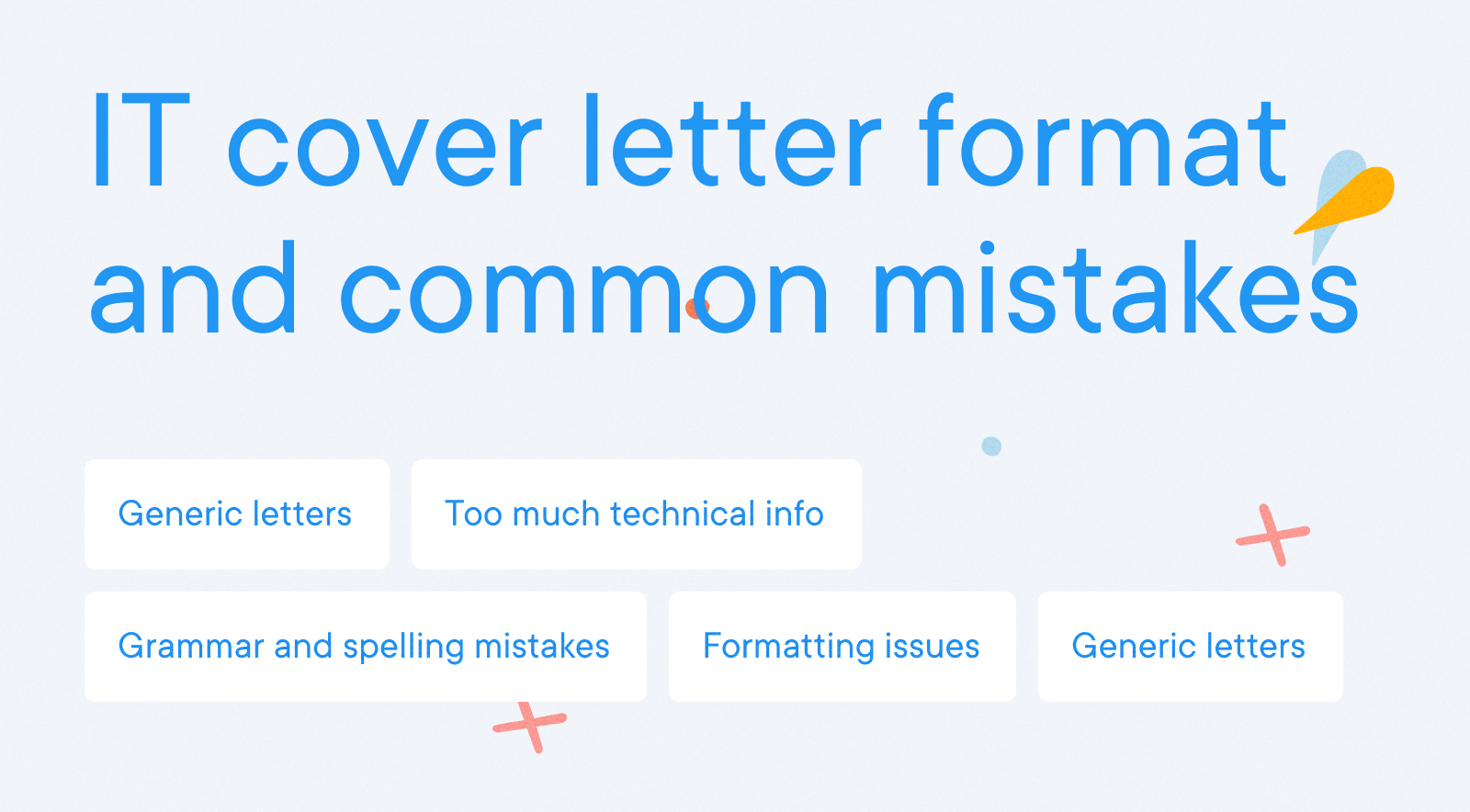
IT cover letter format and common mistakes
- Generic letters: As previously discussed, a tailored letter can make all the difference when it comes to conveying your interest for the position and your passion for IT. A copy-paste letter may seem like the easy option, but hiring managers will quickly notice a lack of effort.
- Too much technical info: If your letter isn’t clear for the average person, it’s likely a hiring manager won’t understand it either. This is especially relevant if you’re applying for a company that’s not exclusively tech-oriented (since all kinds of businesses have IT departments nowadays). Consider focusing on common skills and scenarios which show how you’d make a great team player and a perfect fit for the potential employer.
- Grammar and spelling mistakes: Typos and overly complicated grammar give the impression you don’t have great communication skills. You can quickly fix these errors by asking a friend to proofread your letter OR using an online cover letter builder with a spell-check function.
- Formatting issues: Believe it or not, good presentation is one of the key components of a professional cover letter. If you’re not confident in your graphic design skills, a cover letter template like one from Resume.io can make the process much easier.IT cover letter format and common mistakes
- Generic letters: As previously discussed, a tailored letter can make all the difference when it comes to conveying your interest for the position and your passion for IT. A copy-paste letter may seem like the easy option, but hiring managers will quickly notice a lack of effort.
- Too much technical info: If your letter isn’t clear for the average person, it’s likely a hiring manager won’t understand it either. This is especially relevant if you’re applying for a company that’s not exclusively tech-oriented (since all kinds of businesses have IT departments nowadays). Consider focusing on common skills and scenarios which show how you’d make a great team player and a perfect fit for the potential employer.
- Grammar and spelling mistakes: Typos and overly complicated grammar give the impression you don’t have great communication skills. You can quickly fix these errors by asking a friend to proofread your letter OR using an online cover letter builder with a spell-check function.
- Formatting issues: Believe it or not, good presentation is one of the key components of a professional cover letter. If you’re not confident in your graphic design skills, a cover letter template like one from Resume.io can make the process much easier.
Key takeaways
- A cover letter is an essential part of any complete application. Unless a job posting asks you NOT to submit one, it’s always a smart idea to include a thoughtful letter in your application.
- Make the writing process much easier by including the standard cover letter sections and tailoring each one to your needs.
- A great cover letter should include numbers, facts and specific information to clearly illustrate your potential contributions to the position.
- Don’t forget that most hiring managers are not IT specialists. Keep your letter comprehensible for someone without a tech background.
- Formatting errors can really dash your chances of making a great first impression. Use a cover letter builder and/or a template to make sure you achieve the right balance.
With resume.io, you can create a perfect cover letter in just a few minutes. Click on one of our ready-made cover letter example formats and type away. Go and get your dream job now!
If you’re looking for additional inspiration for cover letter writing, you can check out our related IT cover letter examples: