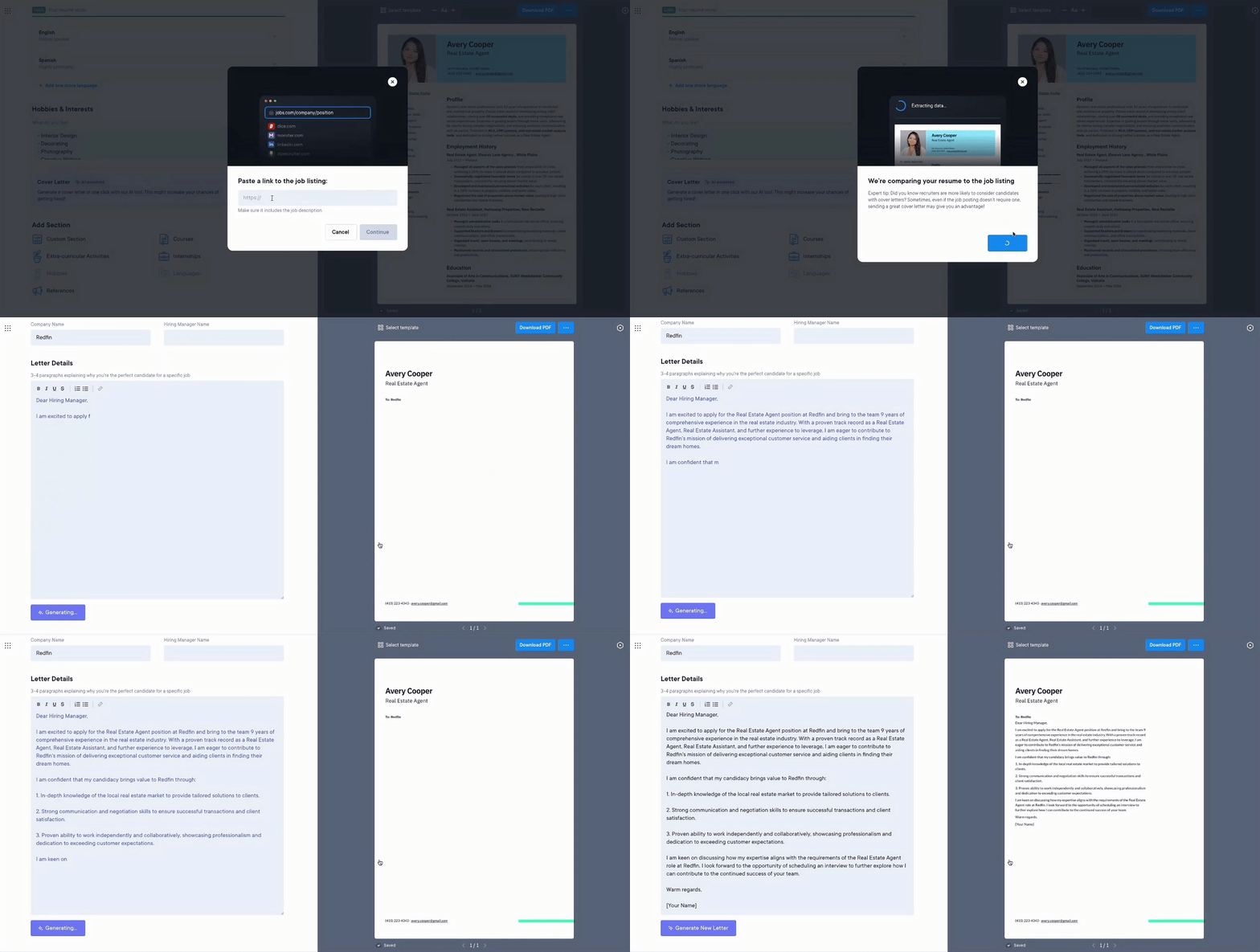
Before hiring managers even glance at your CV, they often read your cover letter to get a sense of who you are and whether you could be a good fit for the role. A well-written cover letter can capture attention, spark interest in your CV, and set the stage for an interview.
As recruiters are often time-pressed, it’s crucial to be concise in your cover letter length and focus on your most relevant qualifications. Short and snappy is the goal.
How long should a cover letter be?
So how long should a cover letter be? For most applications, the ideal cover letter length is about half to one page of A4 size, and the ideal cover letter word count is between 250 to 400 words.
The purpose of a cover letter is not to summarise your entire career, but rather to motivate a hiring manager to look at your CV and get you one step nearer to an interview. Making your cover letter too long risks losing the reader’s attention.
Focus on three to four paragraphs, alongside your contact details and any useful links in the header. Be concise and engaging, providing just enough information to spark the hiring manager's interest.
What do you need to include in your cover letter?
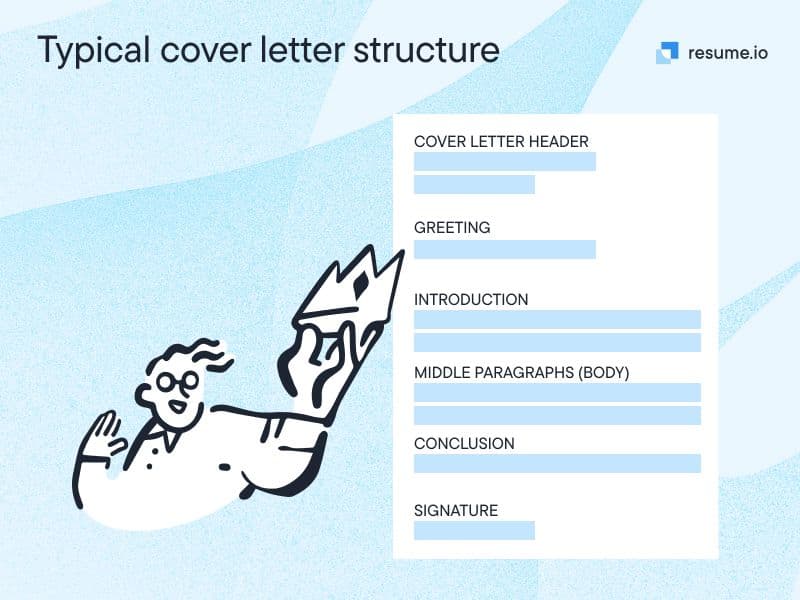
Every cover letter follows the same basic structure, but how you bring it to life makes all the difference. Think of it as your chance to guide the hiring manager through who you are, why you’re interested, and what you can offer.
Here are the key cover letter sections:
1. Header
Begin with the essentials: your name, location (no need to include your full address), email, and phone number. Add the date of application, then the employer’s name and company address.
The cover letter header is straightforward, but ensuring that it is professional will help set the right tone.
2. Greeting or salutation
Getting the cover letter greeting right matters more than you might think. If you can, address the hiring manager by name (e.g. Dear Mr. Gray). You might spot it in the job advert, on the company website, or by giving HR a quick call.
If that’s not possible, “Dear Hiring Manager” is perfectly fine. Just avoid tired lines like “Dear Sir or Madam” or “To Whom It May Concern,” which can feel outdated, impersonal, and even lazy.
3. Introduction
The opening paragraph is your hook. Keep it short, about 50 to 75 words, but make it punchy. State the role you’re applying for, then immediately share a key skill, achievement, or reason why you’re excited about this opportunity.
If you were referred by someone in the company, this is the place to mention it. Show enthusiasm and make the reader want to learn more about you.
Check the job advert carefully for any specific instructions, including recommended covering letter length. Some employers may also ask you to respond to a particular question or submit a specific file format (e.g., PDF).
Following these directions shows attention to detail and ensures that your cover letter matches the employer’s expectations.
4. Body paragraphs
Now it’s time to back up your introduction with some substance. In your first body paragraph, showcase your most relevant experience and connect it directly to the role. Use clear sentences and, wherever possible, include measurable results.
For example, instead of just saying that you managed a project, say that you delivered it three weeks ahead of schedule and 15% under budget.
For senior-level or more competitive roles, a second body paragraph can add real value. Here you can highlight your motivation for joining the company and explain how you’d fit into its culture. Mention what you admire about the organisation and how your approach aligns with its values. Keep both body paragraphs within 150 to 200 words.
5. Closing paragraph
Your final paragraph ties everything together. Thank the hiring manager for their time, then briefly restate why you’d be a strong fit. If you need to clarify anything, such as a gap in employment, do it here, but keep it brief and positive.
End with a confident call to action, such as expressing your eagerness to discuss the role further. Aim for around 50 to 75 words for this closing section.
6. Sign-off
Finish your cover letter with a professional but approachable sign-off. Options like “Sincerely,” “Regards,” “Best,” or “Thank you” strike the right balance. Avoid overly casual phrases such as “Cheers.”
If you’re submitting a printed copy of your cover letter, don’t forget to sign above your typed name for a polished touch.
Cover letter template
Now let’s combine these key sections together in the ideal cover letter length. Below is a copyable cover letter template that you can customise to your specific situation.
[Your Full Name]
[Your Job Title]
[Location]
[Phone number]
[Email address]
[LinkedIn profile URL]
[Date]
Dear [Hiring Manager’s Name],
I am writing to express my interest in the position of [Job Title]. With [X years] of experience in [industry or field], I’ve developed expertise in [key skill or achievement], and am particularly drawn to this opportunity because [reason you’re motivated, such as admiration for the company’s mission, innovative projects, or industry leadership].
In my [current/most recent] role as [Job Title], I led [relevant project or initiative] involving [size and scope, such as a £1.5M project or 30-member cross-functional team]. By [specific action, such as streamlining processes via technology], I delivered the project [on time/ahead of schedule/under budget/etc.], generating [specific result, such as cost savings of £X or efficiency gains of Y%]. I thrive when [align skills with job requirements, such as managing complex projects with an agile approach], which I understand is a key requirement of the advertised role.
What impresses me most about [Company Name] is [something specific about the organisation, such as its values, projects, or reputation]. I’m confident that my background in [relevant area] combined with my commitment to [matching attribute, such as quality, innovation, or collaboration] would allow me to make a meaningful contribution to your team.
Thank you for considering my application. I would welcome the opportunity to discuss how my skills and experiences could contribute to the continued success of [Company Name]. Please let me know a convenient time for us to connect.
Best regards,
[Your Name]
Cover letter example
Here’s a fully written cover letter example to illustrate how long a cover letter should be. Use this as additional inspiration to craft your own concise and compelling cover letter.
Dear Hiring Manager,
Re: Application for Office Administrator Position
I am writing to express my interest in the Office Administrator position at your company. With my strong organisational skills, attention to detail, and experience in administrative roles, I believe I would be an excellent fit for this position.
In my previous role at Morgan Stanley's Birmingham office, I managed a range of administrative duties including reception, diary management, and document preparation. I developed proficiency in Microsoft Office applications and various administrative systems, allowing me to streamline office procedures and improve efficiency.
I am particularly skilled in:
- Coordinating schedules and managing calendars
- Processing correspondence and maintaining filing systems
- Supporting teams with administrative tasks and projects
- Communicating professionally with clients and colleagues
- Managing office supplies and equipment
I am known for my reliability, discretion with confidential information, and ability to prioritise tasks effectively in a busy environment. I am comfortable working independently or as part of a team and adapt quickly to new systems and procedures.
I am excited about the opportunity to bring my administrative expertise to your organisation and would welcome the chance to discuss how my skills could benefit your team.
Thank you for considering my application. I look forward to the possibility of speaking with you further.
Yours sincerely,
Daniel Roberts
How to tailor your cover letter to different situations
Cover letters aren’t one-size-fits-all. Depending on your situation, you may need to adjust your cover letter length, tone, or focus to make the best impression.
Let’s explore how to approach some of the most common scenarios.
Career changers
Switching industries or roles can feel daunting, but your cover letter is the perfect place to show how your skills will transfer:
- Highlight achievements that prove adaptability and relevant strengths.
- Reframe your past experience to demonstrate value in the new role.
- Briefly address any concerns, e.g., “While my background is in marketing, my project management skills equip me for this operations role.”
Entry-level vs. senior-level roles
Your cover letter length and focus can vary depending on the stage of your career:
- Entry-level. No experience? Emphasise relevant education, internships, part-time jobs, and projects. Around 200 to 250 words works well.
- Senior-level. Showcase leadership, extensive experience, and measurable achievements in no more than 400 words.
Employment gaps
Wondering how to explain an employment gap? Your cover letter offers the perfect opportunity to explain any career breaks:
- Don’t go into the weeds about your employment gap. Usually a brief, one sentence explanation is fine in your closing paragraph.
- Focus on what you did during the gap, such as volunteering, training, or developing new skills relevant to your target role.
Tips on sticking to a short cover letter length
Worried about sticking to the 400-word limit? Don’t panic. While it may seem difficult to get your point across in only how many words a cover letter should be, there are tricks that can help.
Here are some tips you can use to keep your cover letter length in check:
- Cut out the waffle. You don’t need to add a big lead-up to every point you put across. Read your cover letter back to see whether every word or sentence is necessary to add value.
- Don’t try to cover everything. Persuasive cover letters stay focused on the most important information. If you’re unsure whether a particular point makes the grade, ask yourself whether it will help to convince the hiring manager of your fit for the specific role.
- Keep the layout professional. First impressions count. Ensure that your cover letter is formatted correctly, with a professional font and proper spacing.
- Edit, edit, and then edit some more. The final thing you need to do is edit your cover letter. Once you’ve written your first draft, go back and read it through in its entirety. Which bits stand out to you and which could you cut?
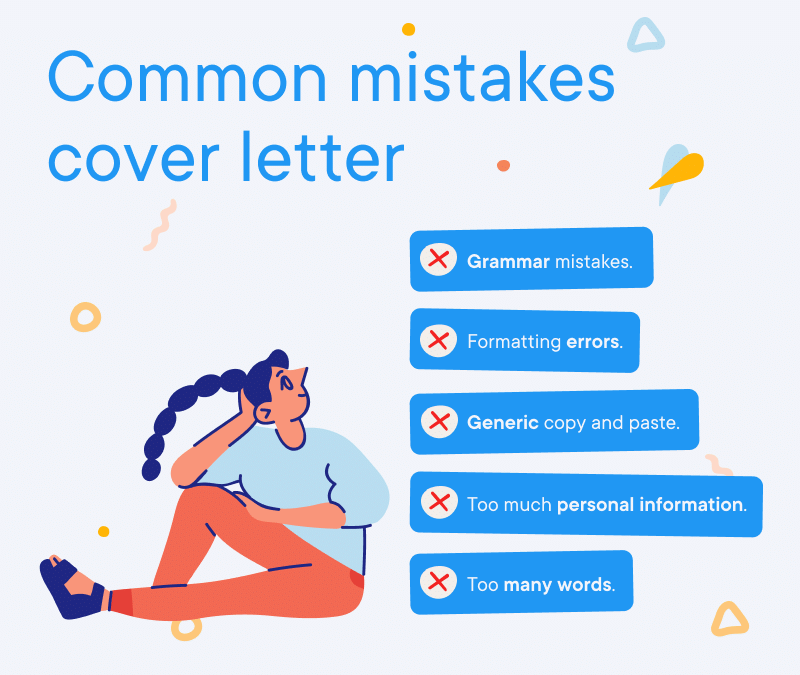
Using the above tips should help you keep your cover letter word count on point. If you need some extra help, you can also ask a friend or family member to read it. Their feedback may help you to create a cover letter that is more impactful and successful.
What is the point of a cover letter anyway?
Adding a cover letter to your application can strengthen it. Here are some of the reasons that you should include this document:
- Showcase your personality. Hiring managers are looking for professionals who will be a good culture fit for their company. A well-written cover letter shows off your unique personality and gives them a taste of who you are as a professional.
- Add some colour to your application. When you write your CV, your space is naturally limited. You just need to get the basics down on paper. With a cover letter, you can afford to elaborate more and add some colour to your application.
- Provide a personal introduction. A cover letter gives you the chance to build a connection with the hiring manager. This is a valuable opportunity to address them directly.
- Fill in the blanks. Did you take a career break? Do you have gaps on your CV? If the answer is yes, your cover letter is the ideal place to fill them in. Since this is a freeform document, you will have room to explain anything you need.
When written concisely and effectively, a cover letter complements your CV and increases your chances of landing an interview. If you need more inspiration to help you get started, check out our 100+ free cover letter examples, or use the advanced AI features in our cover letter builder to enhance your draft into a truly impressive cover letter.