Graduate cover letter example & writing guide
With little to no work experience, it can be challenging to write a graduate cover letter. How can you show a hiring manager that you have the right skills and experience when you’ve only just finished your education?
Related Covering Letter Examples
Placement cover letter example
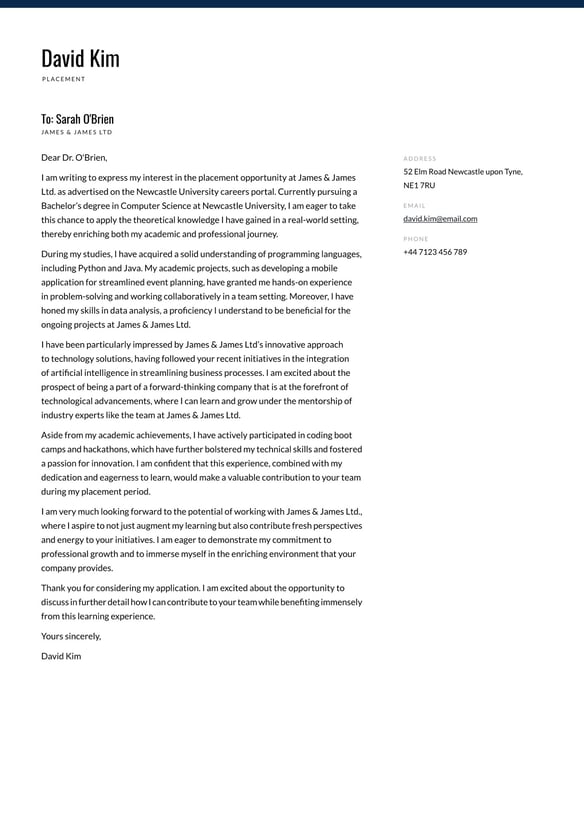
Perfect for placement roles, this clean, modern template highlights your technical skills and enthusiasm. Its structured layout and ample white space emphasize clarity, helping you communicate professionalism and potential to forward-thinking employers.
Assistant Accountant cover letter example
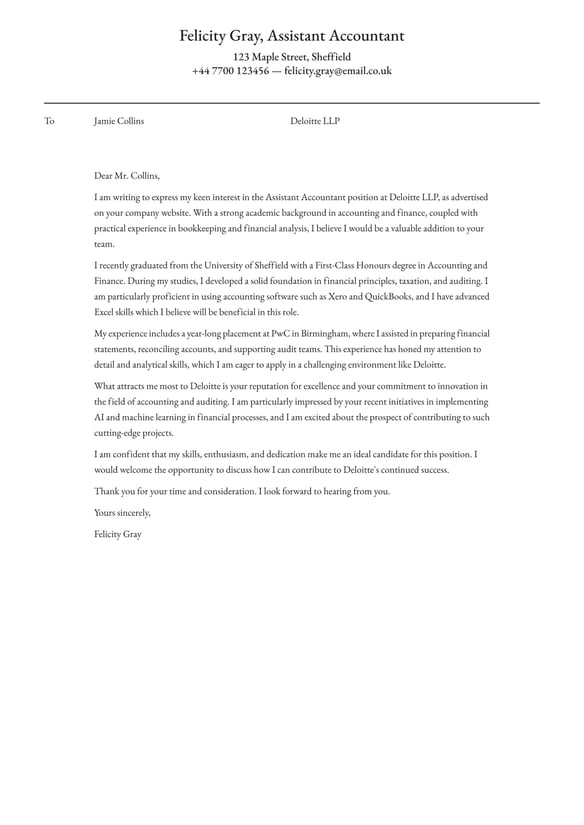
This clean, professional template highlights precision and structure, perfectly complementing the analytical and detail-oriented nature of Assistant Accountant roles. Its balanced white space and clear formatting emphasize your expertise and professionalism to hiring managers.
Software Engineer cover letter example
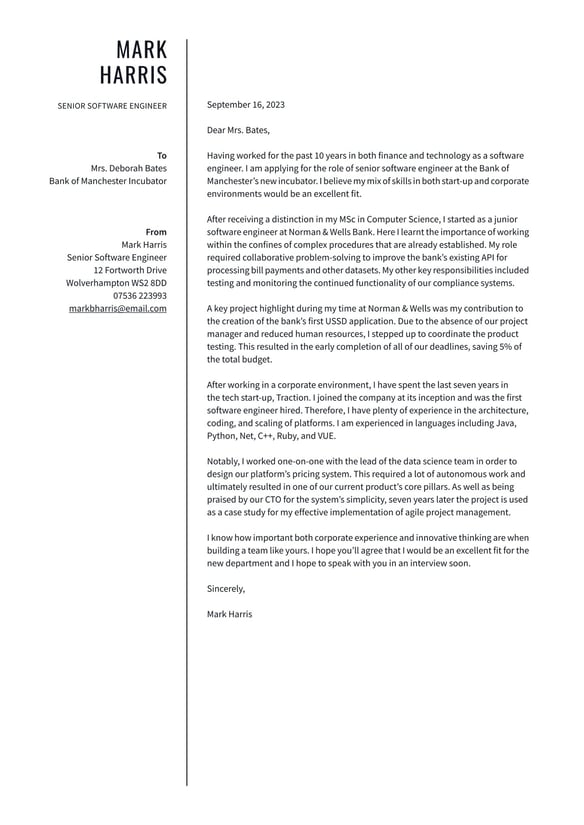
Perfect for senior software engineers, this clean, modern template balances structure and white space to highlight your technical expertise and leadership. Its professional tone and organized layout showcase your skills to hiring managers with clarity and confidence.
Research Assistant cover letter example
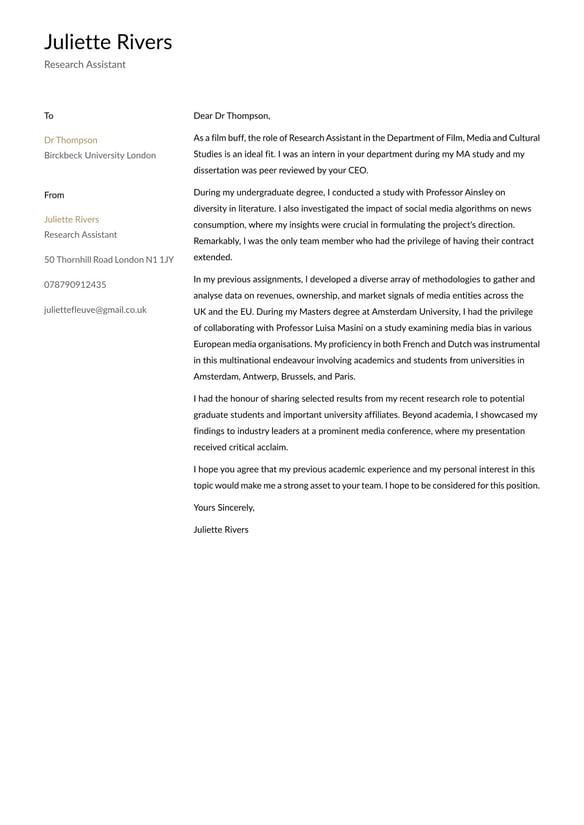
Perfect for Research Assistant roles, this template’s clean structure and ample white space highlight your analytical skills and academic achievements. Its professional tone and polished header styling ensure your expertise resonates with academic and industry audiences.
Internship cover letter example
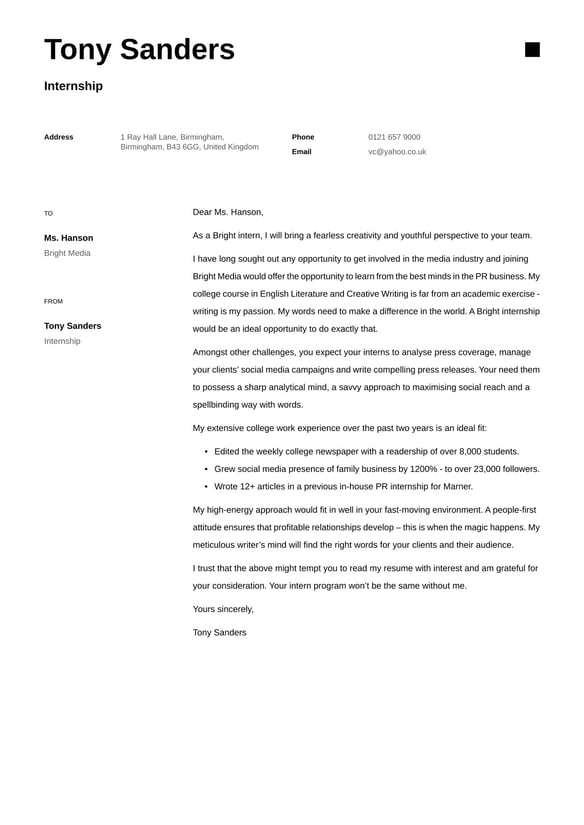
Perfect for internship seekers, this clean, modern template highlights your energy and adaptability. Its balanced white space and structured layout amplify your creativity, analytical skills, and passion, impressing fast-paced, dynamic teams like Bright Media.
Newly Qualified Teacher cover letter example
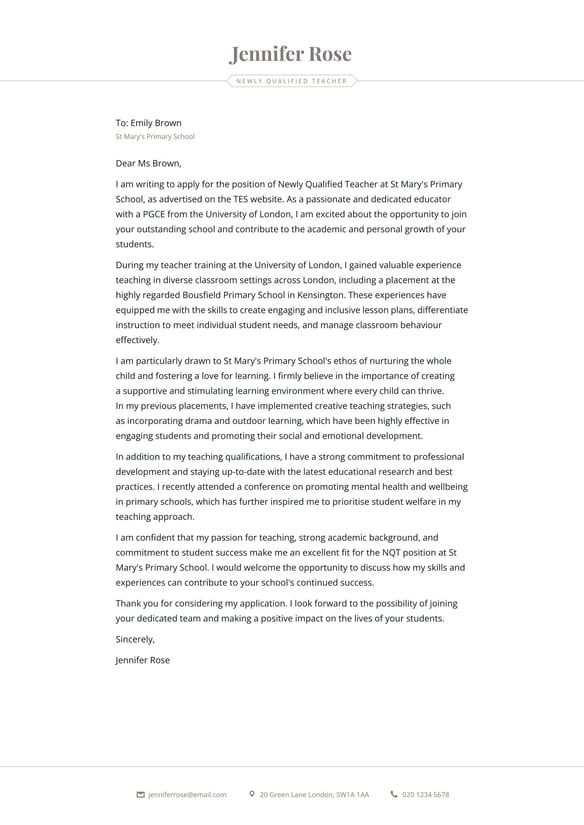
Perfect for newly qualified teachers, this clean, structured template highlights your passion and professionalism. Its balanced white space and clear headers amplify your teaching skills, ensuring your dedication resonates with school leaders.
Business Analyst cover letter example
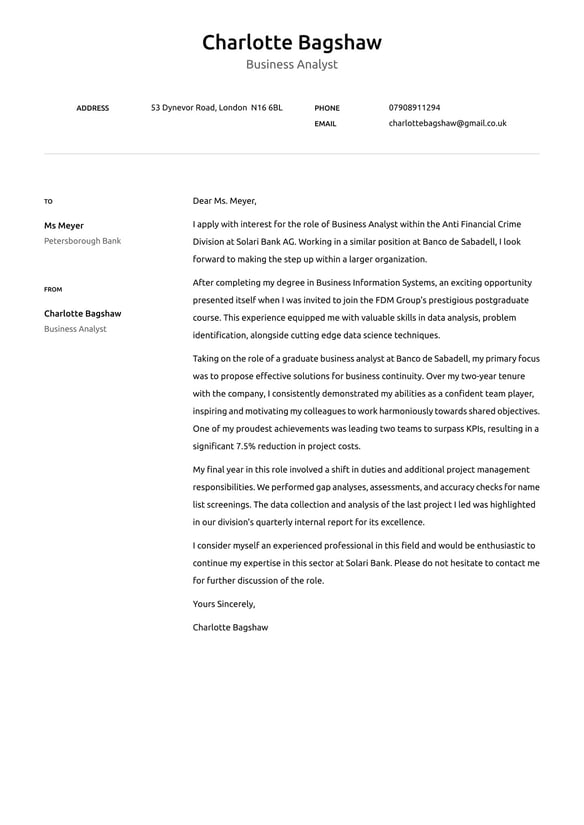
Perfect for Business Analyst roles, this clean, structured template highlights precision and professionalism. Its balanced white space and modern header styling emphasize your analytical skills and achievements, resonating with data-driven, detail-oriented hiring managers.
Teacher Assistant cover letter example
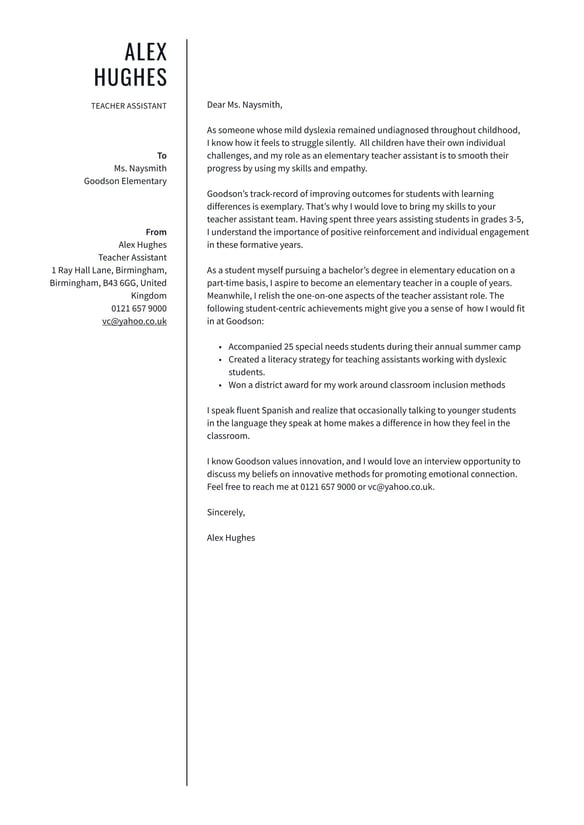
This clean, approachable template highlights your empathy and dedication, perfect for teacher assistant roles. Its balanced structure and ample white space emphasize your achievements, while the warm tone reflects your passion for student-centered education to hiring managers.
PhD cover letter example
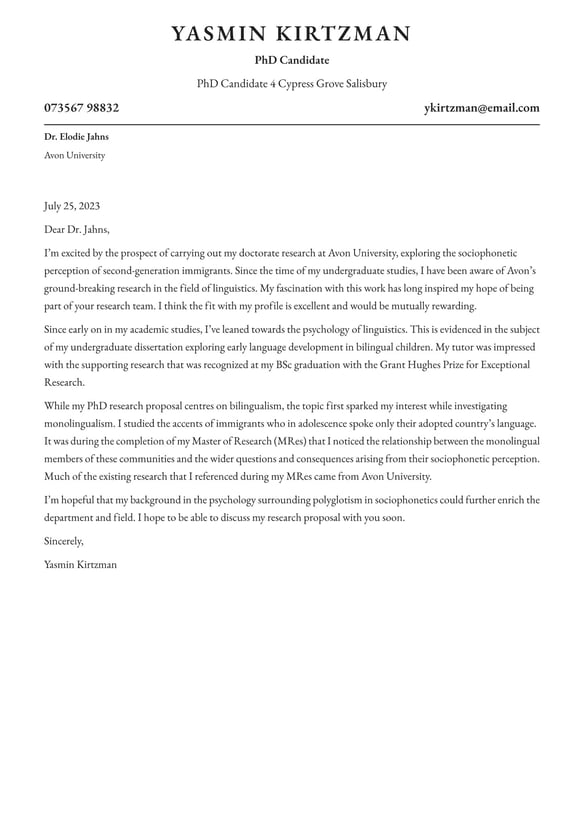
This clean, academic-inspired template highlights structure and clarity, ideal for PhD candidates. Its balanced white space and professional tone amplify your research focus and achievements, ensuring your expertise resonates with academic reviewers and advisors.
Data Analyst cover letter example
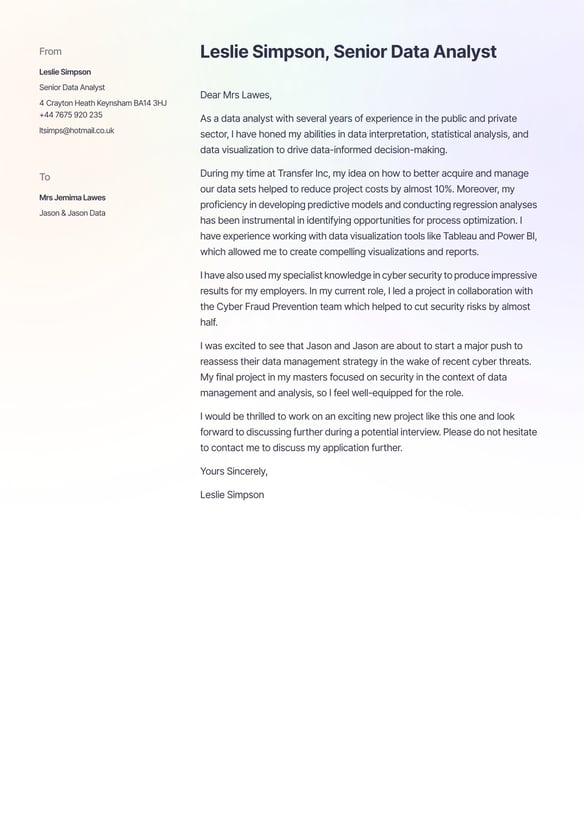
This clean, professional template highlights your analytical precision and problem-solving expertise, ideal for Senior Data Analyst roles. Its structured layout and ample white space emphasize clarity, helping you communicate complex achievements with ease to decision-makers.
We’ve got answers! This cover letter guide, together with our graduate cover letter example, will cover these topics, designed to ensure you write the best possible cover letter:
- The most appropriate cover letter format to use, and the sections of the cover letter
- Ensuring your cover letter content makes an impact
- How to set yourself apart from other candidates.
This guide is designed for a general graduate cover letter, but you can also find more job-specific advice for your industry or desired job title in our library of cover letter examples.
Best format for a graduate cover letter
The best way to approach your graduate cover letter is to work out what format and structure you intend to use before you get started with the content.
Your graduate cover letter should include these:
- Cover letter header – including your key contact details
- Greeting/salutation
- Introduction
- Main body of the letter
- Conclusion and call to action
You can use this comprehensive cover letter guide to gain a better insight into how to compile your cover letter. This guide will help you to make an impact with your cover letter and ensure the content is as appealing as possible to the hiring manager.
This graduate cover letter example will give you a base to start writing your own.
Cover letter header
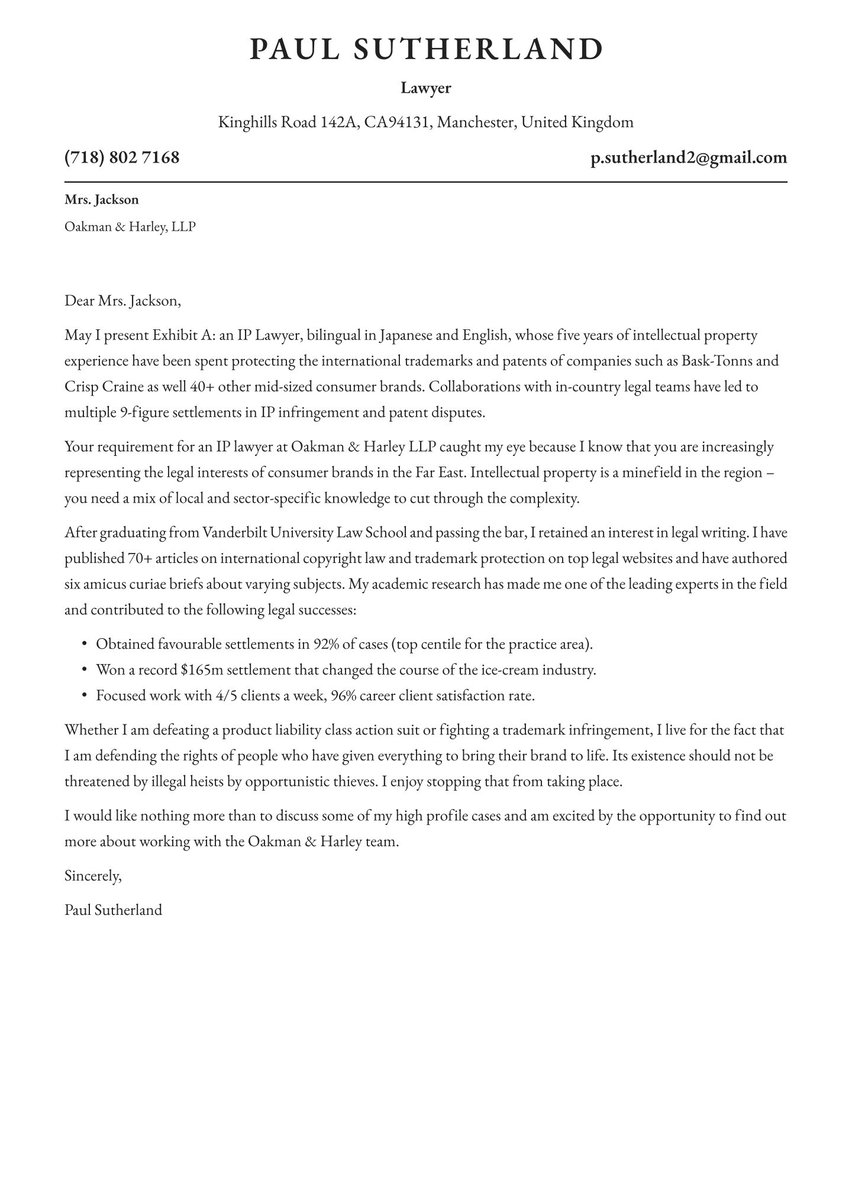
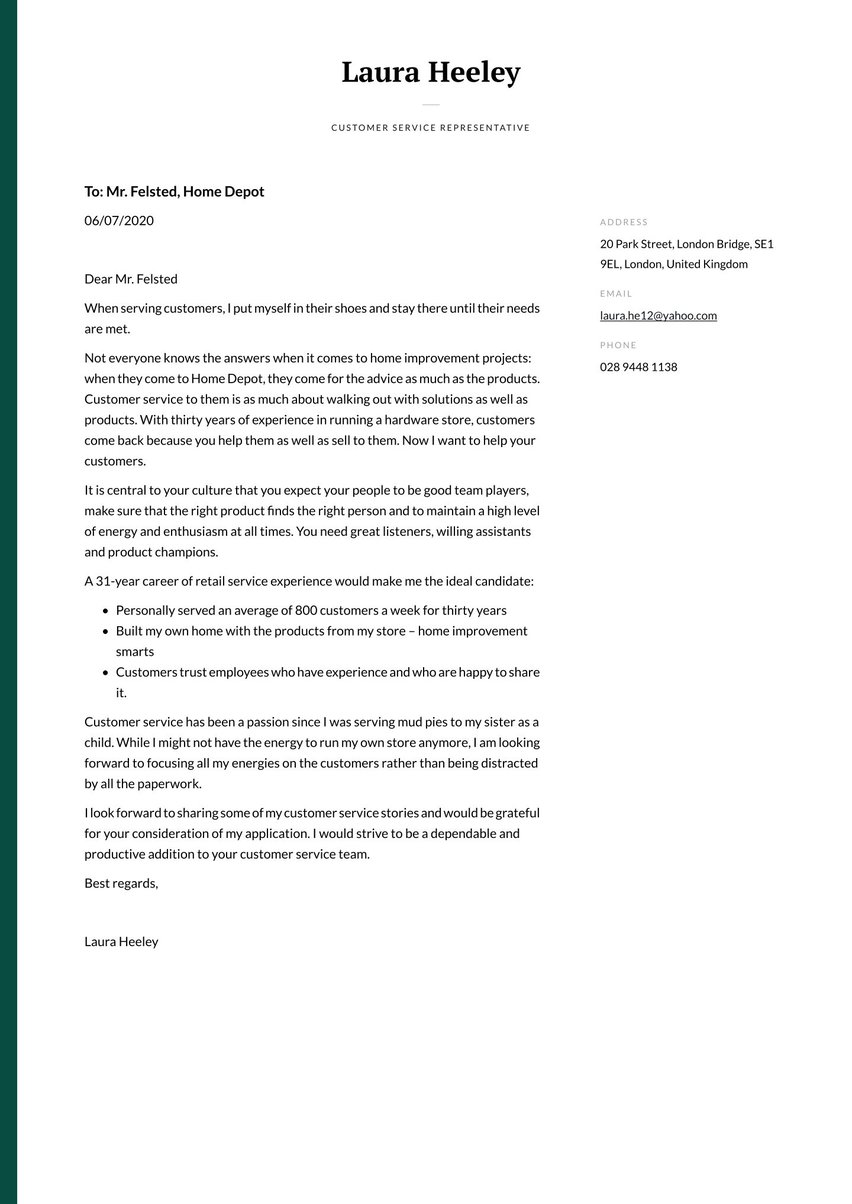
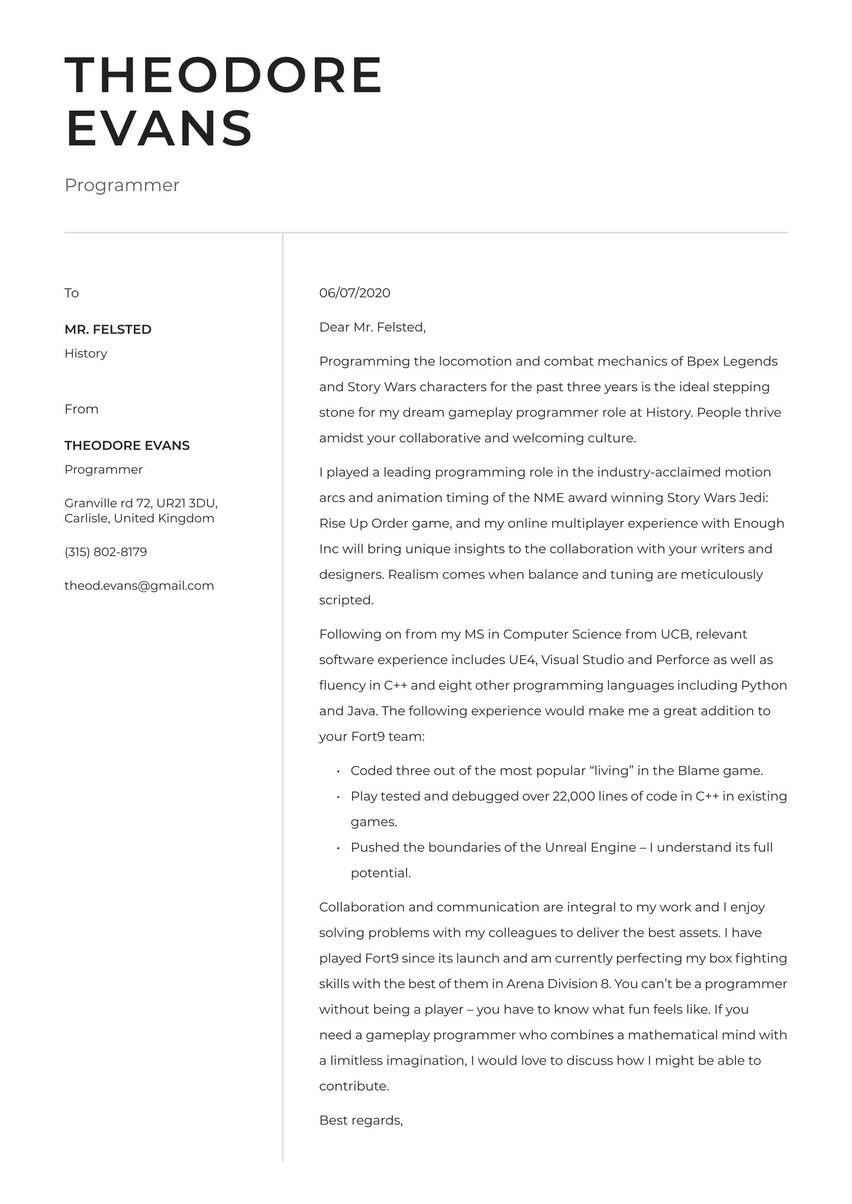
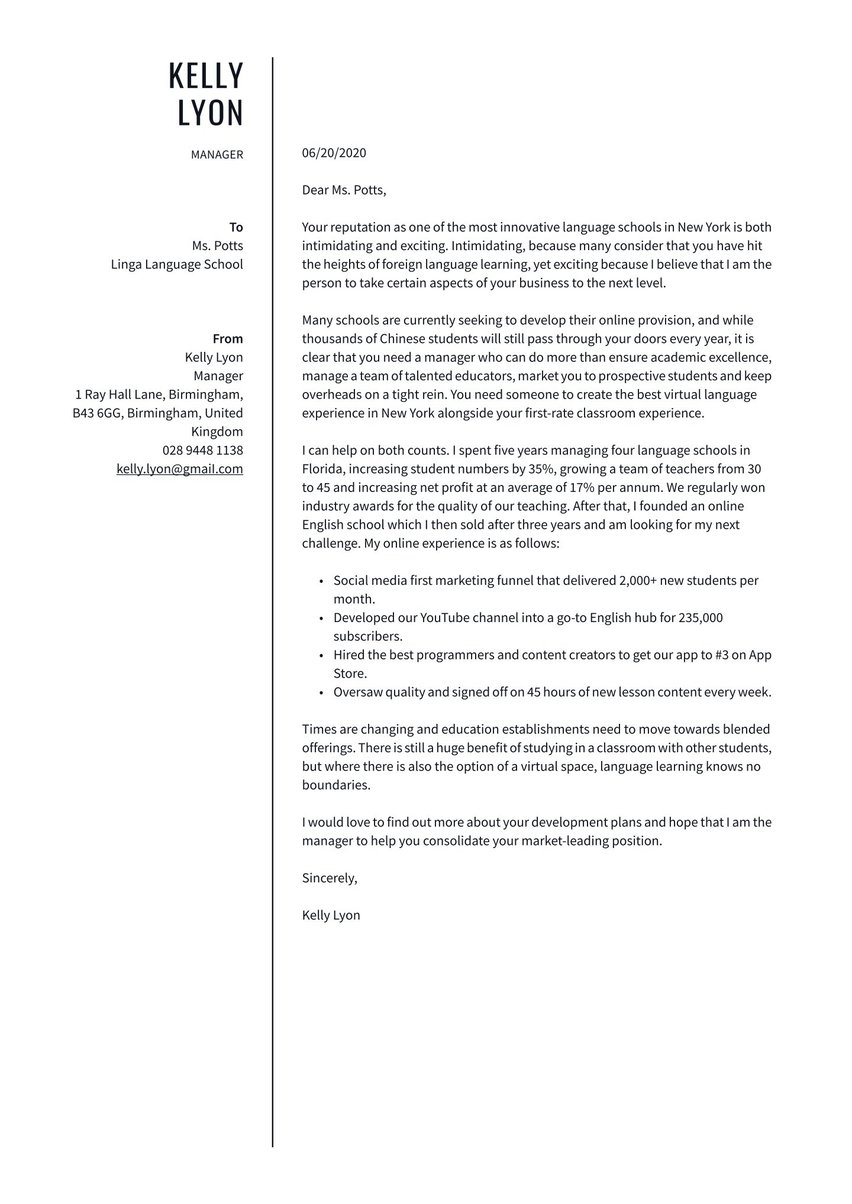
The cover letter will always have a header, which is situated at the top. This is where you put your key contact details, including your name, email address, and phone number. You may also want to add your LinkedIn profile. It should also create an attractive design for the page so make sure to choose a header that stands out (professionally, of course.) Check out the header on our graduate cover letter example for a free design you can customize.
The aim of the cover letter header: Ensuring the hiring manager can contact you, by stating your key contact information on your header.
Cover letter greeting
Your cover letter greeting is the way you initially speak to the recipient of the cover letter, so you should keep this formal. If you know the name of the recipient, you should write “Dear Mr/Mrs/Ms {Surname.} If the name of the recipient is not on the job advert, you can just write {Dear Hiring Manager} or similar. See the excerpt from our graduate cover letter sample below.
The aim of cover letter greeting/salutation: Start the conversation on a formal footing, as this shows you respect the recipient
Dear Ms., Long or Dear Recruitment Team
Cover letter introduction
As you don’t have any or little experience as a graduate, it is key that you can set yourself apart from other candidates with a great introduction. Why should the hiring manager take notice of your application? The focus will be on your qualifications and any relevant projects you have undertaken if you do not have relevant work experience. Find more inspiration in our cover letter example below.
The purpose of the cover letter intro: What is the most important message you want to get across about your expertise/skills?
Having achieved a 2:1 Distinction BA Hons Accounting and Finance, with practical experience of working in a small accounts department, I am now seeking an opportunity to put my skills and passion for finance into practice.
Cover letter middle part (body)
In most cases, a graduate won’t have experience, but if you have any that might be relevant to the role (even practical experience at university), you can include it in the body of the cover letter. Give the hiring manager a clear vision of what you can achieve for them and what they should expect from you. Here’s the body from our adaptable graduate cover letter sample.
I have worked in customer services roles for 3 years and in this time, I have developed my skills in working with a range of people. I have strong communication skills, as well as the ability to work well in a team.
How to close a graduate cover letter (conclusion and sign-off)
You can wrap up your graduate cover letter by reinforcing your interest and leaving the reader with a taste for who you are and why they should take you forward to an interview, as seen in the cover letter sample below.
The aim of the conclusion: Let the reader know you are interested in the role and encourage them to progress you to the interview stage.
I am extremely interested in your esteemed organisation, and with my strong academic achievements and transferable skills, I feel I would be a great asset to your organisation. I would welcome the chance to discuss this in more detail.
Writing psychology: how to convey your work ethic in your cover letter
The reader of your cover letter should be left with no doubt that you have a strong work ethic. This is what you should aim to accomplish:
- If you don’t have direct experience, then focus on the transferable skills you can offer.
- Reflect on what you aim to bring to the role.
- Talk about your academic achievements and why these are relevant.
Key takeaways
- The cover letter is an essential component of a graduate’s application since it can help them stand out from other candidates with similar educational backgrounds.
- Make sure to include the key sections including an attractive header and catchy introduction.
- Keep your tone professional and invite the reader to contact you for an interview without coming across as pushy or arrogant.