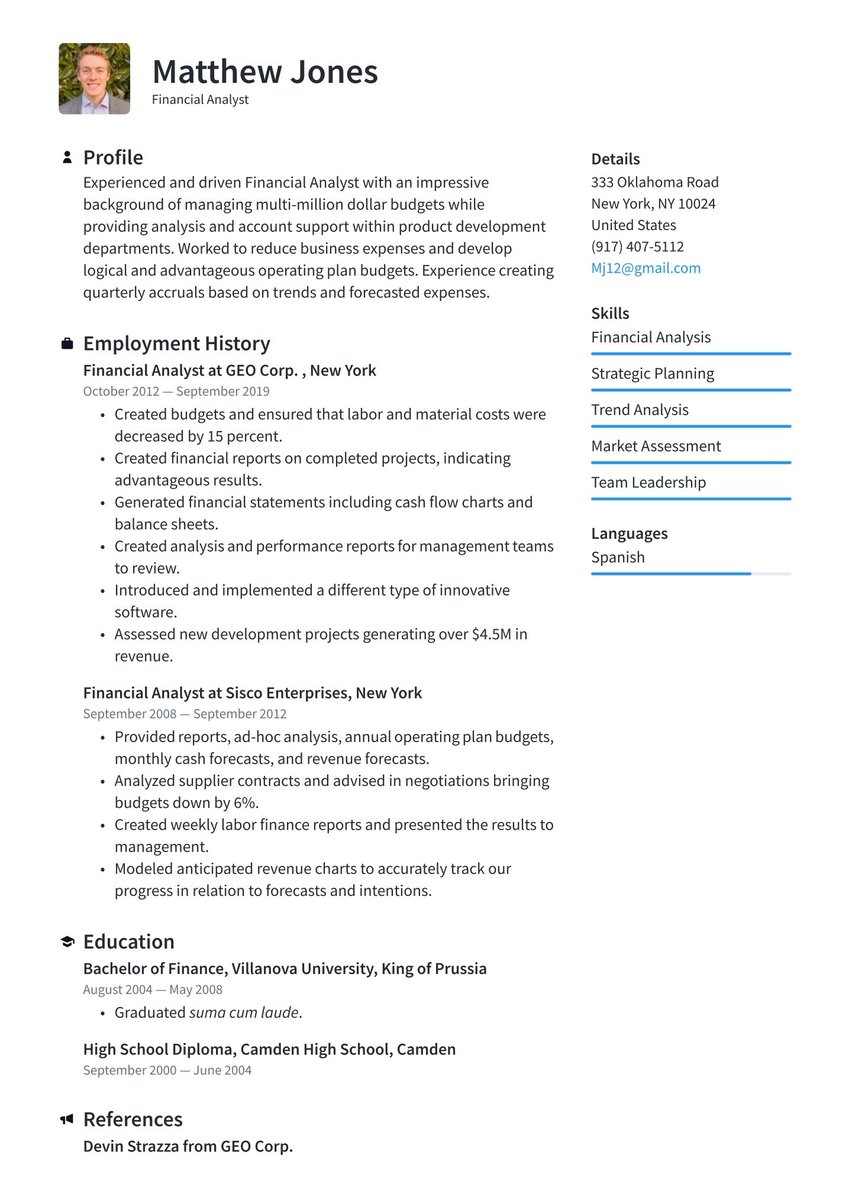


10/2012 - 08/2022, Financial Analyst, GEO Corp. , New York
- Created budgets and ensured that labor and material costs were decreased by 15%.
- Created financial reports on completed projects, emphasizing advantageous results that could be replicated.
- Generated attractively formatted, easy-to-read financial statements, including cash flow charts and balance sheets.
- Created analysis and performance reports for management teams to review, incorporating highlight summaries.
- Introduced and implemented a different type of innovative software.
- Assessed new development projects generating over $4.5M in revenue.
09/2008 - 09/2012, Financial Analyst, Sisco Enterprises, New York
- Provided diverse reports with customized emphasis and level of detail, including ad-hoc analyses, annual operating plan budgets, monthly cash forecasts, and revenue forecasts.
- Analyzed supplier contracts and advised in negotiations bringing budgets down by 6%.
- Created weekly labor finance reports and presented the results to management.
- Modeled anticipated revenue charts to accurately track our progress in relation to forecasts and intentions.
08/2004 - 05/2008, Bachelor of Finance, Villanova University, Villanova
- Graduated summa cum laude.
- Spanish
- Financial Analysis
- Strategic Planning
- Trend Analysis
- Market Assessment
- Team Leadership
You want to be a financial analyst or are looking to move up. That’s great! This field within the financial services industry offers lots of opportunities for advancement. Because of that and the relatively low bar for entry (you only need a bachelor’s degree), it is a very competitive field. You will need a stellar resume to help you get the job you desire. The great news is that you can write that stellar resume. This guide, resume.io, our resume builder tool, and expert-tested design templates will allow you to:
.jpg)

.jpg)
Related Resume Examples
Business Analyst resume example
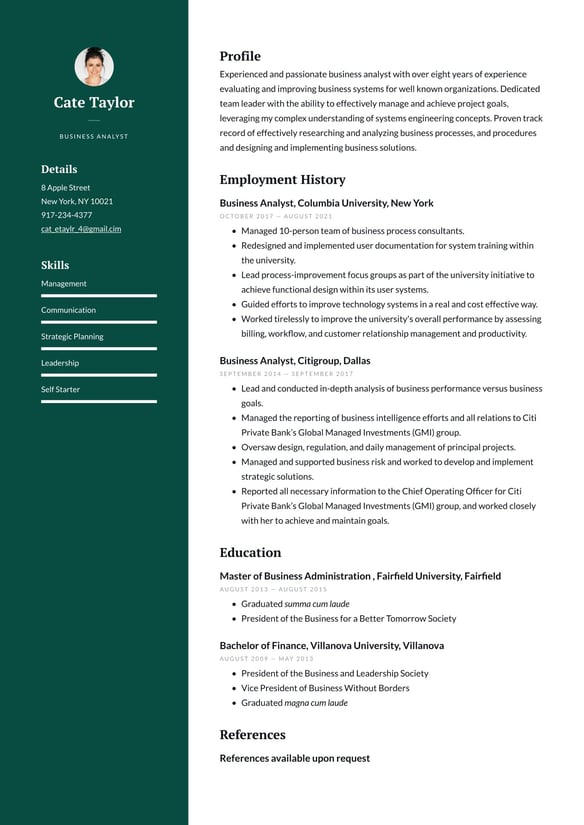
Tailored to highlight precision and professionalism, this clean, structured layout amplifies your analytical expertise as a Business Analyst. Its balanced design showcases your leadership, strategic planning, and problem-solving skills, leaving a lasting impression on decision-makers.
Compliance Officer resume example
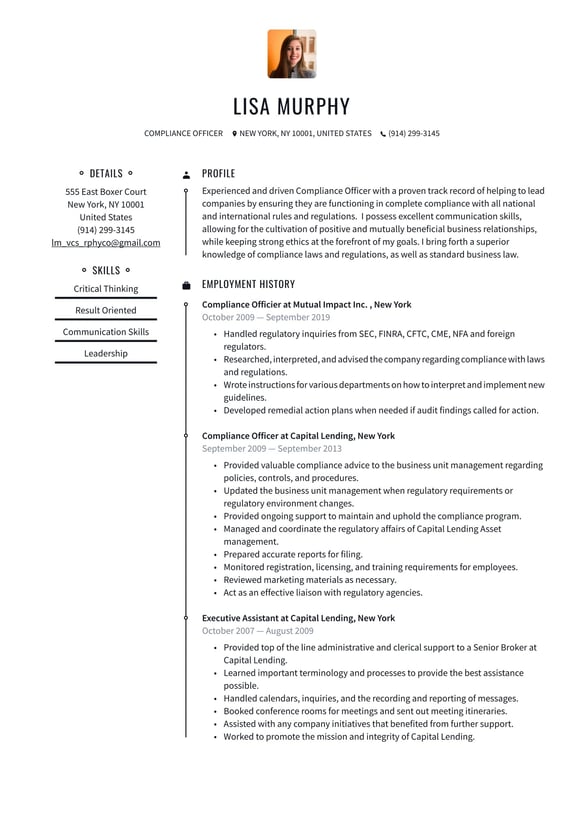
Primed for precision and professionalism, this clean, structured template highlights your expertise in compliance and regulatory affairs. Its balanced layout and subtle accents emphasize your analytical skills, fostering trust with hiring managers in corporate environments.
Data Analyst resume example
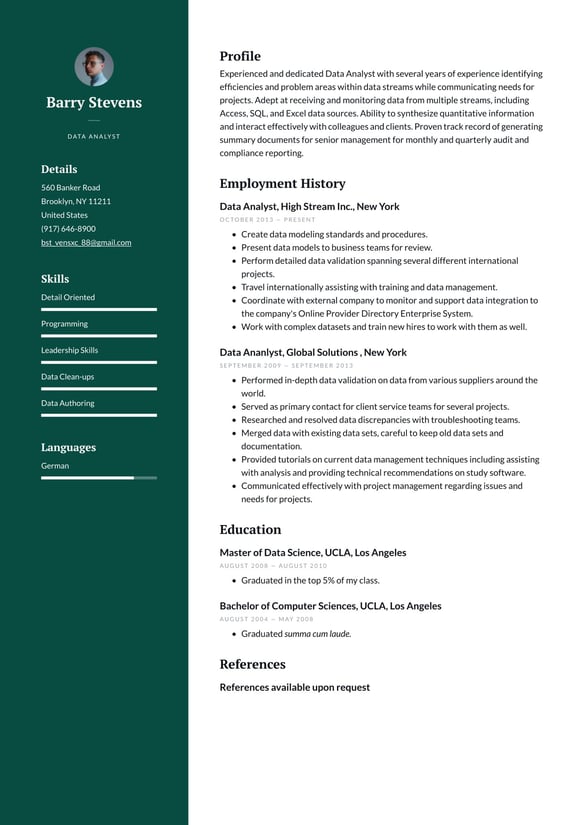
Made to match the precision and analytical mindset of a Data Analyst, this template’s clean, grid-based layout highlights your technical expertise and problem-solving skills. Its structured design effortlessly conveys your value to data-driven teams.
Investment Banker resume example
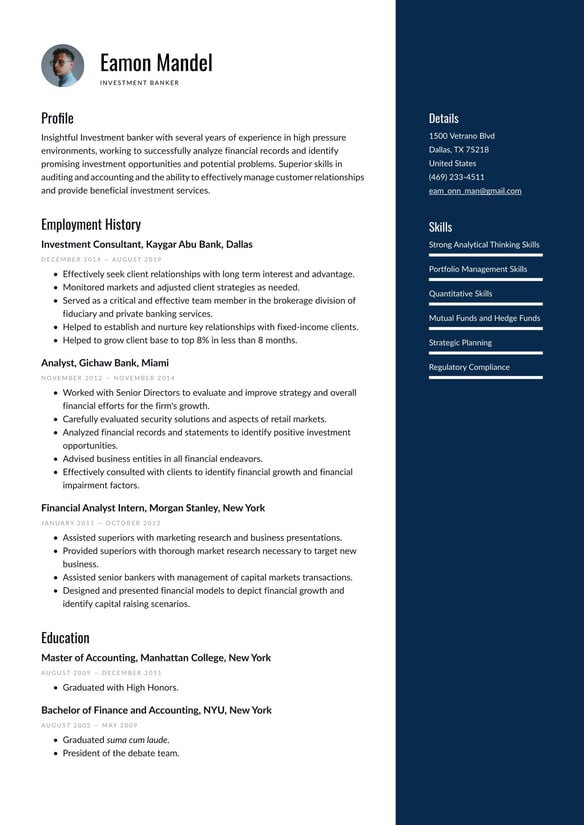
Structured for high-stakes finance, this sleek, minimalist template spotlights your analytical expertise and strategic achievements as an Investment Banker. Its clean layout and bold headers amplify your skills, ensuring you impress decision-makers in competitive markets.
CFO resume example
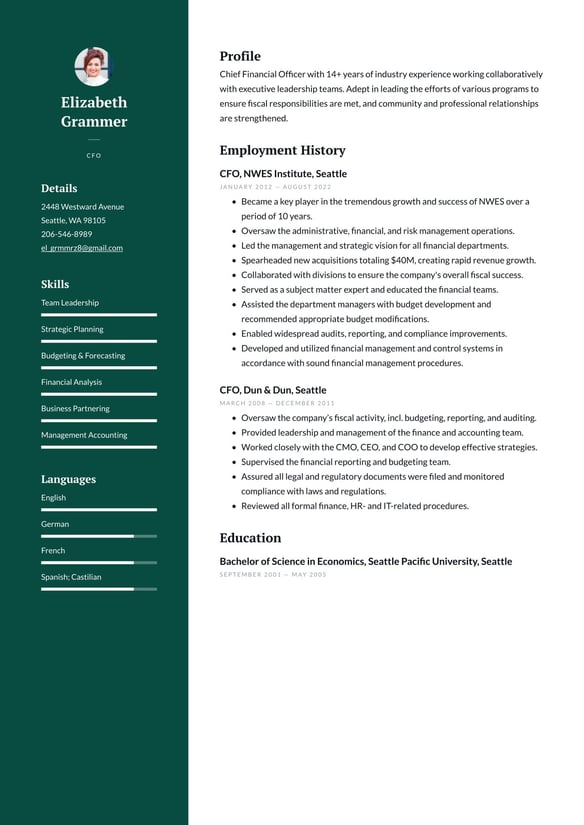
Structured for executive-level impact, this sleek, professional layout spotlights your strategic vision and financial expertise as a CFO. Its clean formatting and balanced design emphasize leadership, fiscal achievements, and decision-making prowess to impress boards and stakeholders.
Finance Manager resume example
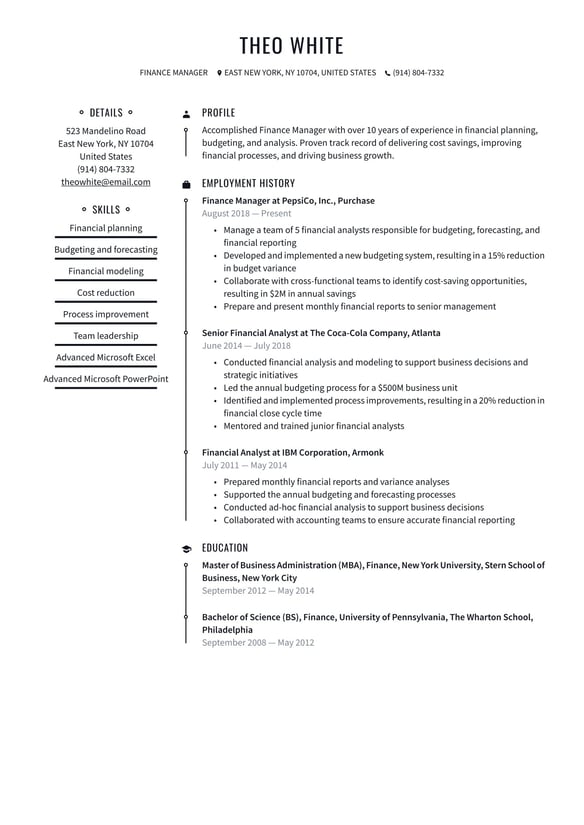
Perfectly suited to finance professionals, this clean, structured layout spotlights your analytical expertise and leadership skills. Its balanced design highlights achievements like cost savings and process improvements, helping you impress decision-makers in Finance Manager roles.
Tax Preparer resume example
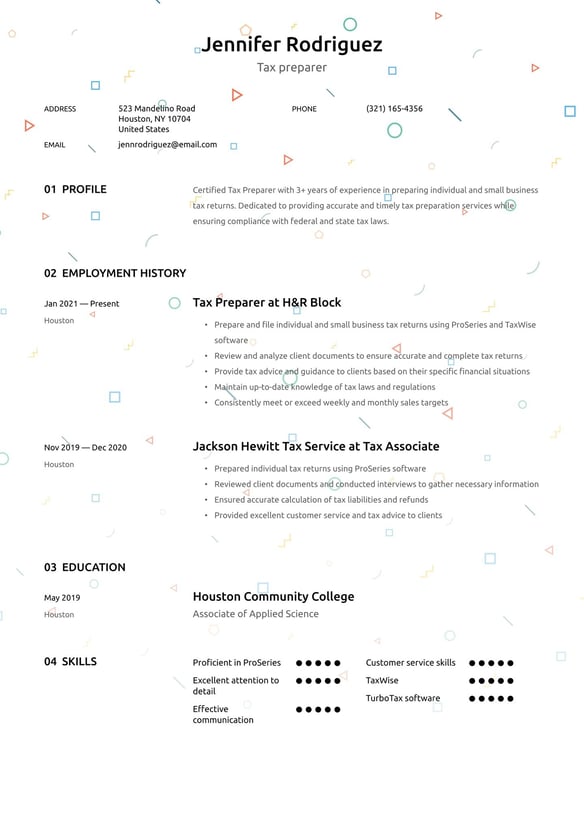
Made to match the precision and professionalism of a Tax Preparer, this template’s clean layout and structured sections highlight your expertise in tax compliance and client service. Its organized design ensures your skills resonate with detail-oriented employers.
- Organize and highlight your accomplishments
- Pass the Applicant Tracking Systems designed to weed out resumes
- Individualize your resume for each job
- Avoid costly design and formatting errors
- Impress recruiters so you get that interview.
The outlook for financial analysts

Most financial analysts work in the banking, finance, and insurance industries, but other businesses also hire financial analysts. As an analyst, the aim of your job is to gather and analyze financial data both from within the company and from an outside economic standpoint. Your predictions and models help you advise businesses or individuals so that they make sound financial decisions. While you will have opportunities for growth, you will also be working in a high-stress environment, according to the U.S. News and World Report’s best business jobs. One in three analysts works 50 to 70 hours a week, the magazine said.
If you are looking for a big paycheck, investment banking is the way to go. Third-year and up analysts earned an average of $168,000 with salary and bonuses, according to a 2020 Wall Street Oasis Compensation Report.
The industry expects growth of 6 percent by 2028, average for all careers, according to U.S. labor statistics, but the competition is especially tough among new analysts and the average analyst earns $85,660. Financial analysts can specialize in different areas. The most common are:
- Investment banking
- Equity research
- Treasury
- Financial planning
- Private equity
- Corporate development.
Most analysts work on the “buy-side,” which means they are helping their employers make financial decisions on spending their money. These analysts may also work for consulting firms that sell their advice to clients. Others work on the “sell-side.” Their job is to analyze stocks, bonds, money market securities, and other financial products in a specific industry. They then rate the securities, which gives investors recommendations on what to buy and sell. Investment banking analysts are responsible for deciding whether deals between companies are a good idea for their clients. Equity analysts work for big banks and seek out initial public offerings (IPOs) they believe will be most lucrative for their employers. Employers in these two career paths often recruit business students with undergraduate degrees from top universities. Some financial analysts are also certified public accountants (CPAs).
View other related resume examples from the same industry:
- Finance-director resume example
- Senior-accountant resume example
- Bank-teller resume example
- Accountant resume example
- Loan-officer resume example
- Loan-processor resume example
- Bookkeeper resume example
- Auditing-clerk resume example
- Banker resume example
- Compliance-officer resume example
- Financial-advisor resume example
Your profile: get a little personal

Why personal? Of course, employers are most concerned with the skills you bring to the job, but they also want to know how you will fit in with colleagues and clients. Adding a glimpse of your professional personality in your profile section allows them to get a sense of that before your interview. This is also the only section where you can distinguish yourself personally a bit. You don’t want to veer from the professional, but you do want to describe your professional demeanor. Think of this section, which sits at the top of your resume, as your elevator pitch. You have two to four sentences to convince recruiters that you are the right person for the job. You do this by highlighting your biggest accomplishments and describing your professional self. This is not the place to be modest. Without exaggerating, explain why you are a great candidate.
Think of your greatest professional achievements and make sure you describe it in your profile.
This is also a great spot to start thinking about how to beat the Applicant Tracking Systems or ATS. These algorithm-based programs help recruiters by eliminating “bad” resumes, or ones that don’t fit the criteria employers have set out. How do you do that? There’s no one guaranteed formula, but there are a number of tips and hacks to get your resume into the hands of that recruiter.
Applicant Tracking Systems
What do ATS programs do? They have a variety of functions. The most important to you as a job applicant is the initial screening. Your resume has to get past this screening before it will be seen by a person. The ATS scans resumes using algorithms that look for keywords and other information in your resume. No matter how talented you are or how much you bring to the job, if you don’t rank high enough by methodically using keywords the ATS is scanning for, your resume won’t rank high enough to make it to the next stage. ATS programs also scan and organize your contact information into employers’ databases so they can easily contact you to schedule your interview. If you’re submitting your resume through an online system or a form on a website - you’re almost guaranteed to be dealing with an ATS.
Do not “stuff” your resume full of keywords and phrases you think will help you get past the ATS. You may succeed, but recruiters will not be impressed by this.
Keywords
How do you know which keywords to use? As an analyst, you should be able to look at job listings and examine which skills and attributes are frequently mentioned. Those are the ones that are important to employers. If you are struggling, try pasting job listings into a word cloud application such as Wordle.com or WordArt.com. The most important words will jump out at you because they will be in the biggest font. Make sure you incorporate those into your resume.
Experienced and driven Financial Analyst with an impressive background of managing multi-million dollar budgets while providing analysis and account support within product development departments. Worked to reduce business expenses and develop logical and advantageous operating plan budgets. Experience creating quarterly accruals based on trends and forecasted expenses.
Skills section: analyze your abilities

It may seem obvious that you need analytical skills to be a financial analyst, but that is a broad category you need to break down into its components. Your first step is to think about all your skills, not just ones you think are relevant to a financial analyst’s career. Make a Master List of your skills that you can use for all your resumes. Then, choose the top five to ten skills to highlight in this section.
It may be easier to think about categories of skills and then all the subskills in that category. For example, financial modeling requires computer skills, data gathering, analysis, communication with colleagues, research, etc.
Hard skills are the distinct skills you need to do your job. Here are the tasks a financial analyst performs, according to the Corporate Finance Institute:
- Information and data gathering
- Information organization
- Financial results analysis
- Development of projections and forecasts of future financial growth
- Recommendations on financial actions
- Creation of financial models using Excel
- Cost-benefits analysis
- Presentation of findings
- Generation of financial reports.
These tasks can be broken down further into a series of skills. This list is incomplete, however. Employers also want to know about your soft skills, or your general interpersonal abilities and work habits. Business recruiting service Robert Half lists these as soft skills necessary for finance professionals:
- Leadership
- Business knowledge, especially in the industry to which you are applying
- Communication
- Customer-focused
- Problem-solving
- Multitasking
- Teamwork
- Ability to work well under pressure and without supervision.
This is not a complete list. You may have other talents not listed here. Include those, but make sure you individualize your list based on the specific job description. Use your word cloud if the job description is vague or, conversely, so detailed you are struggling to decide what is most important.
- Financial Analysis
- Trend Analysis
- Strategic Planning
- Team Leadership
Employment History: building your career

Before you begin to list your past jobs, think about your career path. Your Employment History is the autobiography of your work life. The best resumes show a pattern of growth and achievement. How do you do that? Look back at each job you have had. (If you have been in the workforce for more than ten years, you can drop those early positions.) Ask yourself the following questions:
- What did I accomplish in this position?
- What skills did I use and what new skills did I learn?
- What was my biggest success and how did I achieve it?
- Do I have data and details to enhance my claim?
- Did I earn a promotion or any accolades?
The answers to these questions will form the basis of your bulleted descriptions. Along with those all-important keywords as you build your Employment History section, remember to focus on the skills and attributes recruiters have specifically listed. Use Reverse Chronological order when listing your past positions (most recent job goes first, oldest goes last). Consider using the CAR format in your descriptions. Explain the challenge, the action you took, and the results you achieved. Another variation is the STAR method, which stands for Situation, Task, Action, Result. In your descriptions, use strong action verbs that tell recruiters you are a go-getter.
Try using a thesaurus to find synonyms if you are falling back on the same words repeatedly.
A typical financial analyst starts as a junior analyst. Within three to five years, they may become a senior analyst. If you are already a senior analyst and are looking at your next steps, you may consider applying for portfolio management, partnership in an investment firm, or senior management at a retail bank or insurance company. Other analysts choose to become investment advisors or financial consultants. Again, remember to individualize this section every time you apply for a job. Different accomplishments highlight different skills. Remember the overall golden rule of resume writing - custom-tailor your resume for EACH new job application. Take into account the character and needs of the employer, the job requirements and so on.
If you want to be a financial analyst, New York City is the place to be. Of the top 3 locations that employ the most financial analysts, two are in New York City and one is in Atlanta, according to DataUSA. The top 3 with relatively high concentrations of financial analysts are all areas of New York City.
- Created budgets and ensured that labor and material costs were decreased by 15 percent.
- Created financial reports on completed projects, indicating advantageous results.
- Generated financial statements including cash flow charts and balance sheets.
- Created analysis and performance reports for management teams to review.
- Introduced and implemented a different type of software to enhance communication of different organization departments.
- Assessed new development projects generating over $4.5M in revenue.
Education section: highlight your learning

While investment banking recruiters may target graduates of elite colleges and universities, that does not mean you are locked out. While there are no formal training requirements for this career, employers expect applicants to have a bachelor’s degree and prefer majors in finance, economics, or statistics, Investopedia says. And, if you did not go to an elite school, earning an MBA could get you where you want to go.
Sixty-one percent of financial analysts have bachelor’s degrees and 35 percent have earned a master’s degree. Two percent have associate’s degrees, according to O-Net.
If you are in mid-career, this section is the least important one in your resume. You have proved yourself within your career, so simply listing your degrees is perfect. If you do have a master’s degree, there’s no need to include your high school diploma.
If you have earned many accolades or are a member of several professional organizations, consider adding a Certifications, Awards, and/or Membership section. When making this decision, be aware of the limited space your resume contains.
Another path to a financial analyst’s career is a certification exam. If you have passed the Series 7, Series 63, or the Securities Industry Essential exams, you can list those here. You can also become a Chartered Financial Analyst through a CFA Institute program.
There are 167,000 Chartered Financial Analysts around the world, according to the CFA Institute.
Things to consider if you are new to the workforce or this career:
- Your education carries more weight because you don’t have as much work history
- Your GPA (if it’s high enough), awards, scholarships, and other honors are worth including
- If you completed an internship or finance-related project, that can be listed in your Employment History section; however, you should rename that section Experience.
- 2004-2008 Fordham University, Bachelor of Finance and Economics NY, NY
- 2008-2010 Columbia University, Master of Finance NY, NY
Design and Formatting

Why does design matter? While what you say is very important (especially those keywords) how you present it is also important. This is the first visual clue to who you are that recruiters will have, so you want to make sure their first impression is professional and well-organized. As a financial analyst, you know how to create a visually appealing presentation; use the same principles here: You are selling yourself the same way you sell your recommendations. Recruiters see hundreds of resumes a week so it may be tempting to try to stand out from the crowd, but that approach is likely to be counterproductive or even get your resume thrown in the garbage. Recruiters want to be able to scan your resume quickly and find your contact information, current job title and employer, and your past job and employer. If those aren’t obvious, they may just move on. To maintain a professional image:
- Limit the use of color, especially bright colors
- Vary line lengths to allow for white space
- Use a legible font
- Clearly define sections.
- Put information in headers and footers the ATS may not be able to “read”
- Use tables, which can also cause ATS problems
- Send off a resume without having a friend or colleague proofread it
- Rely on word processing programs that can create formatting glitches. Instead, use a dedicated resume-creation program like resume.io’s builder tool.,
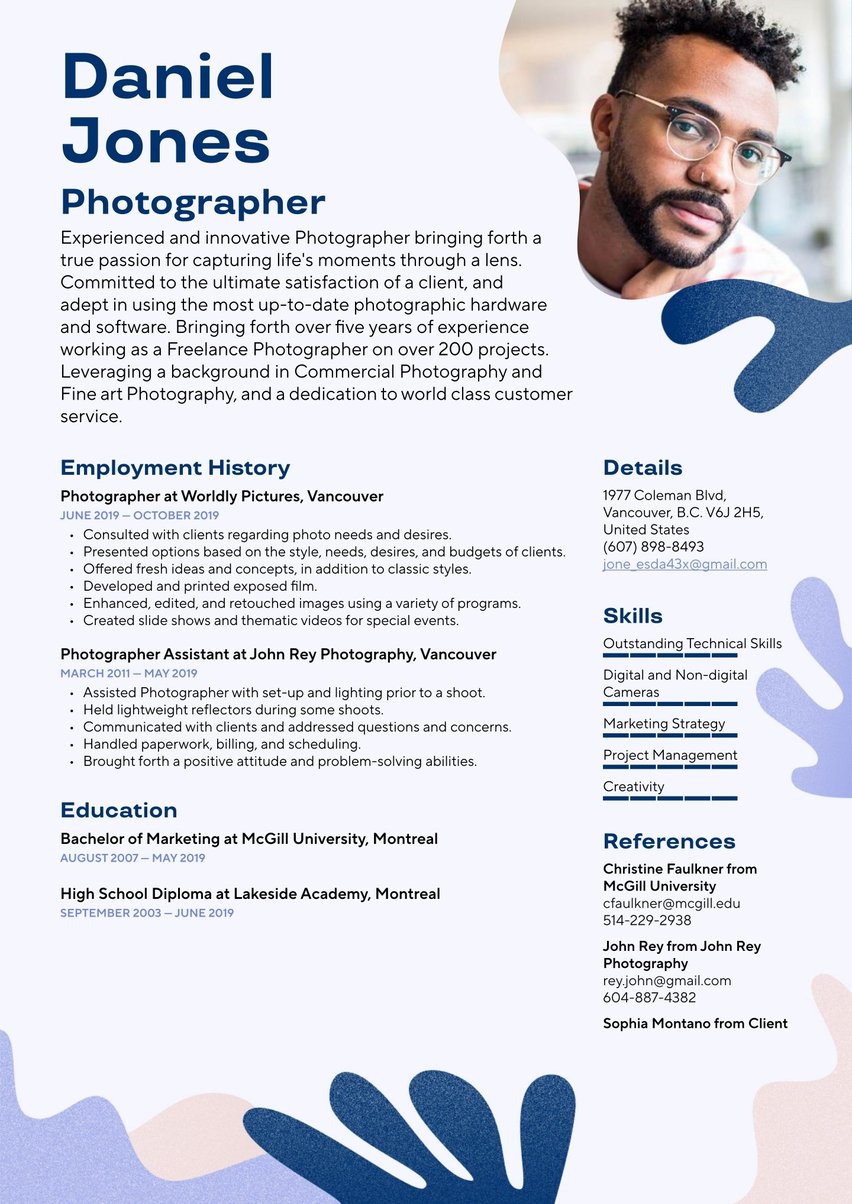
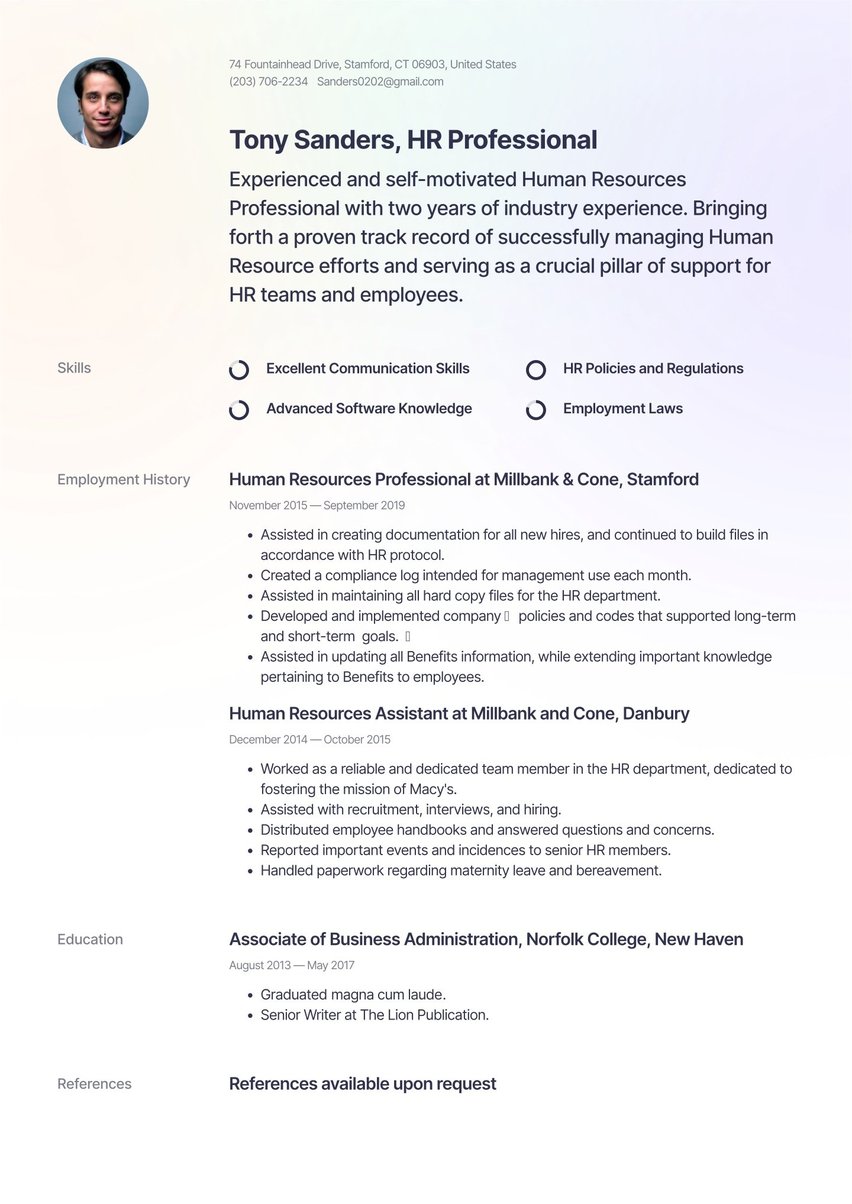
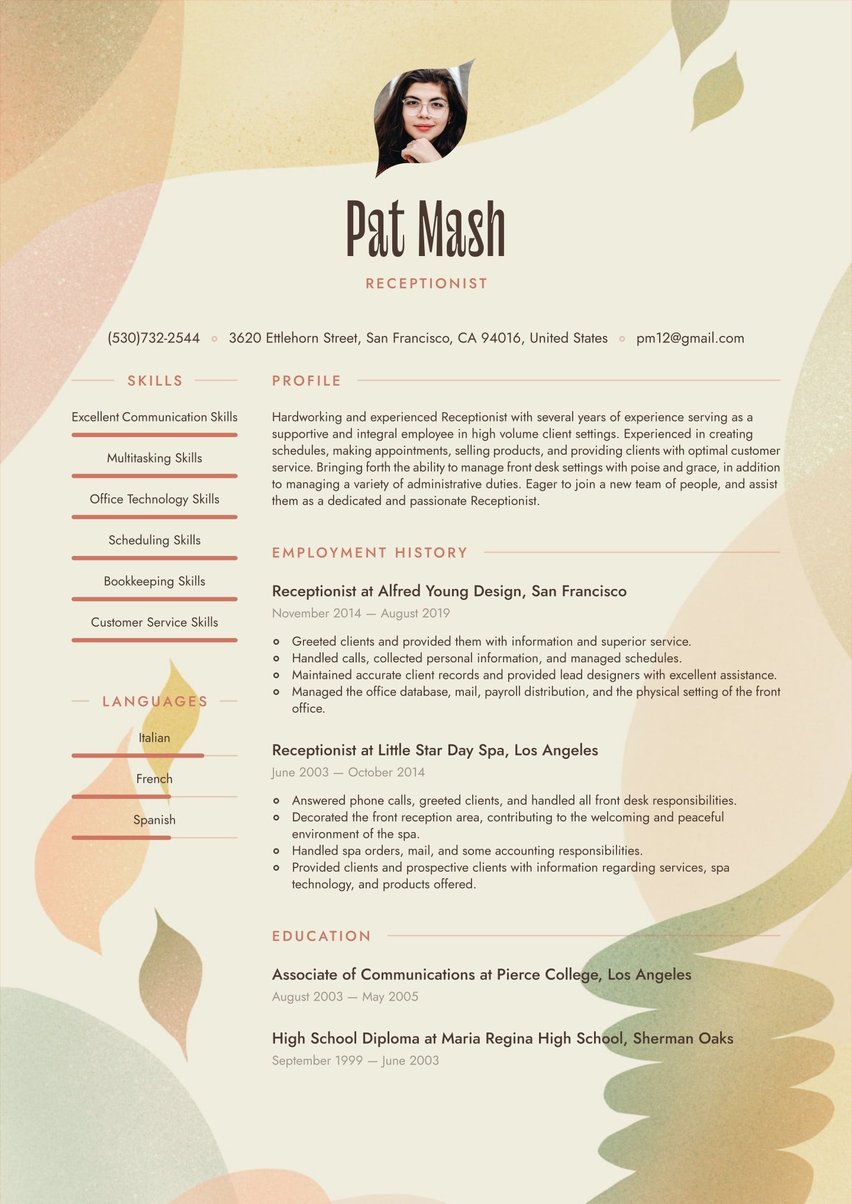
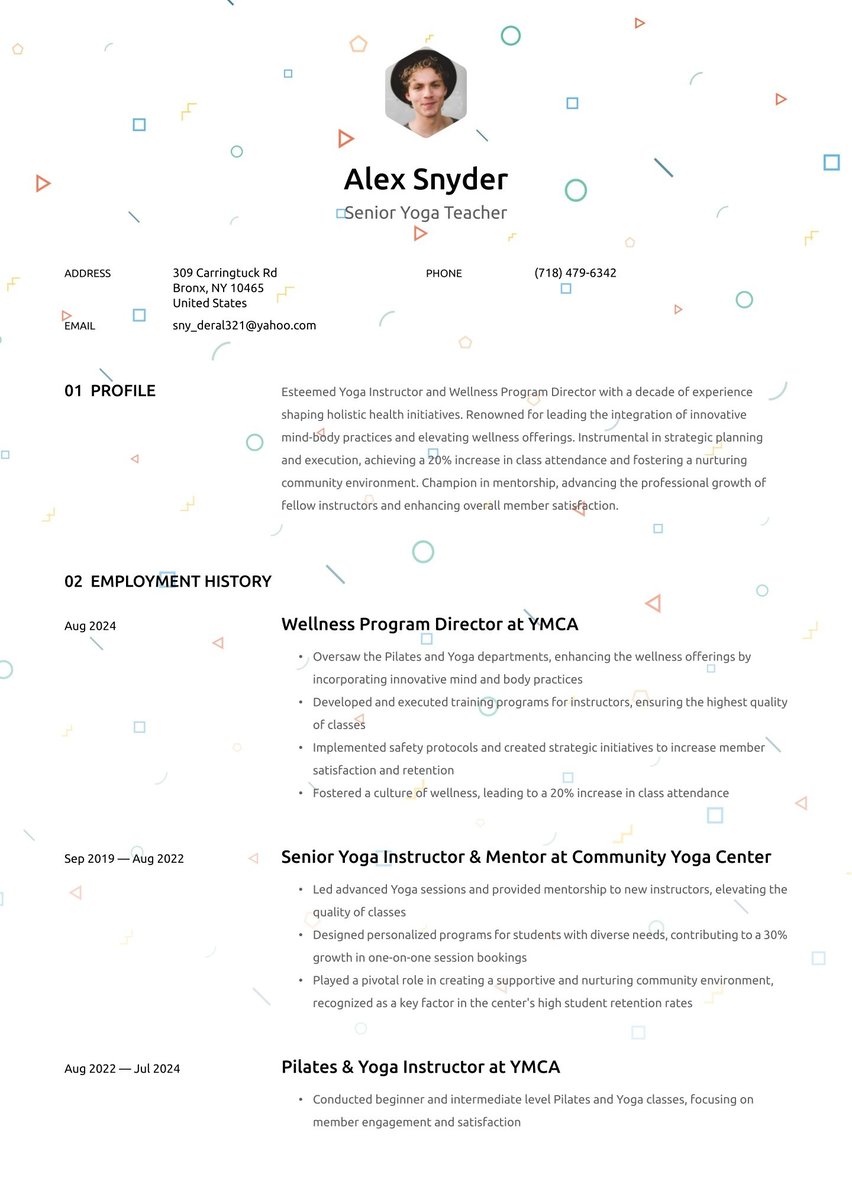
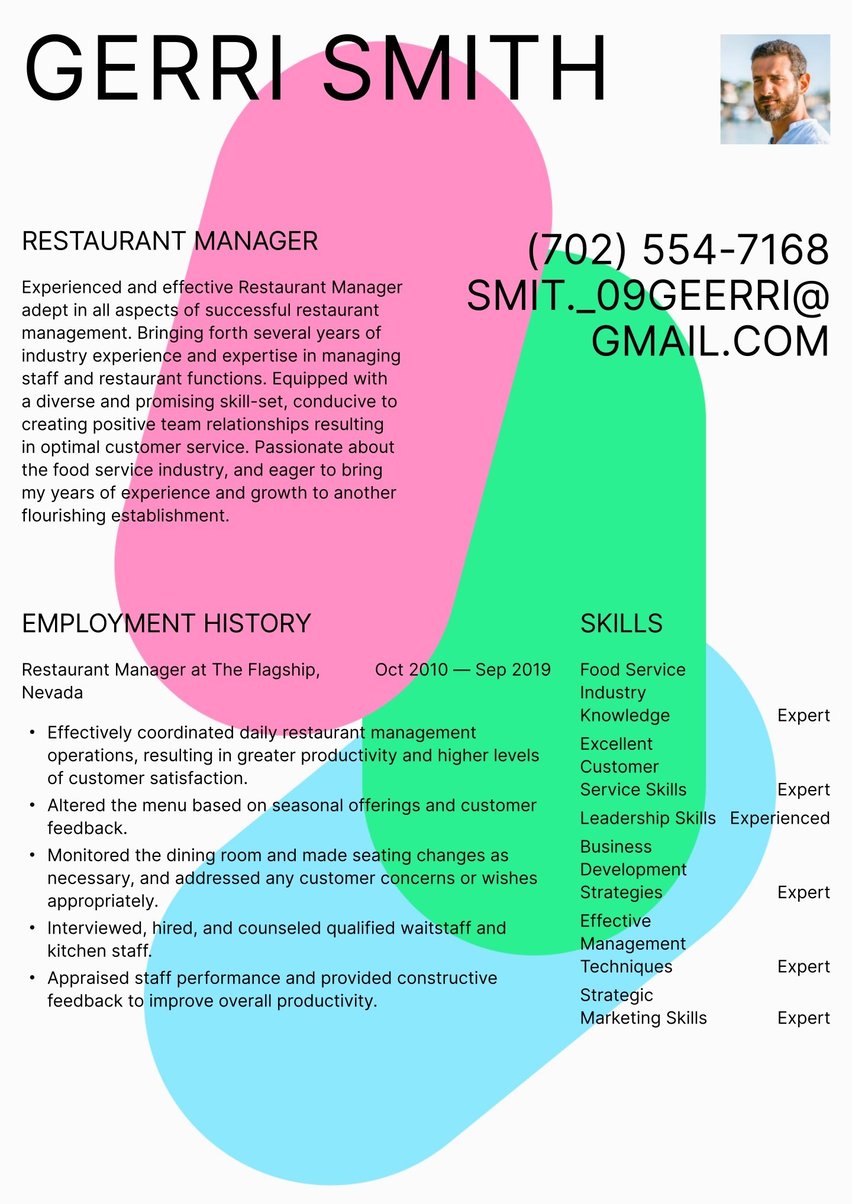
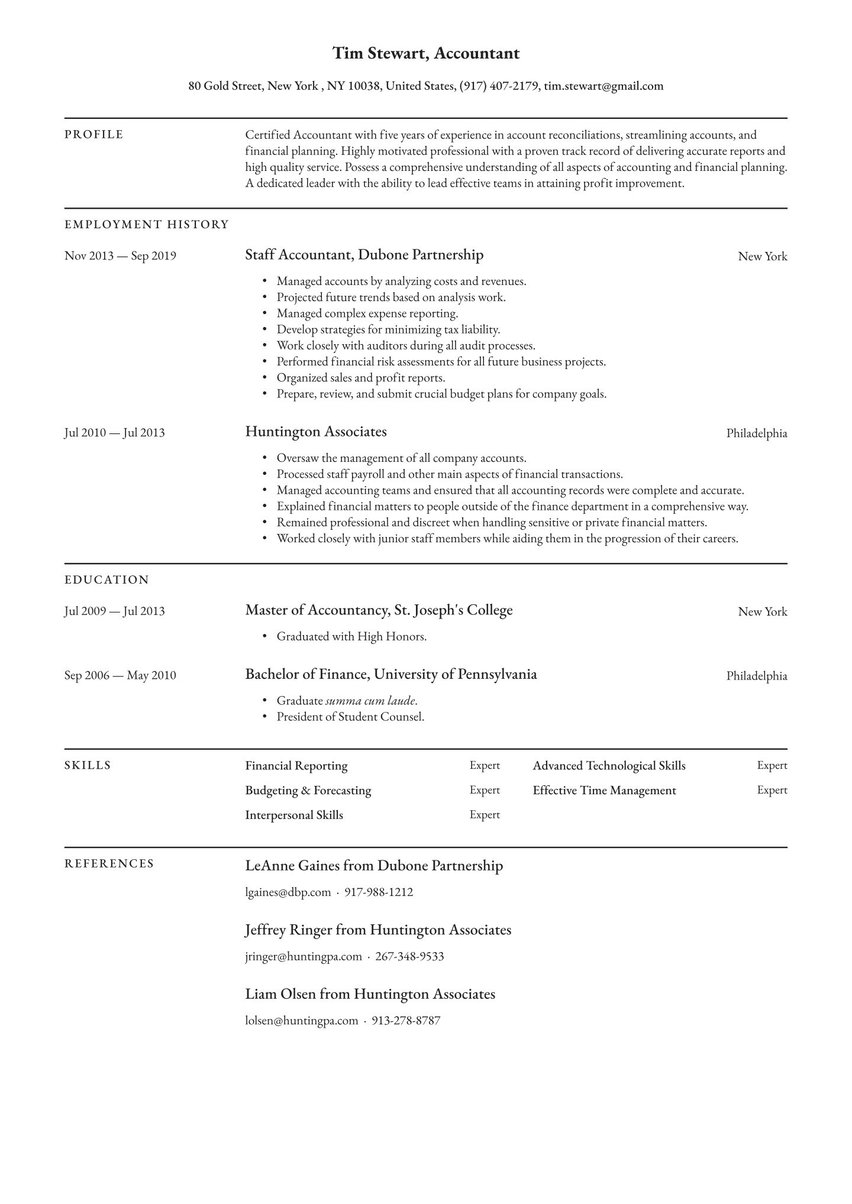
Your best bet is to leave it to the professionals. Resume.io offers a selection of recruiter-tested layouts in four different categories: Simple, Professional, Creative, and Modern. These designs can be modified to suit your individuality, but keep your focus on the do’s and don’ts if you choose to do so.
Key takeaways
- Financial analysts exist in a very competitive and demanding job market. It’s extremely important to stand out with a stellar resume. The earnings are extremely high however (compared to most other professions), so it’s worth the extra effort.
- When targeting large or medium size employers, remember that your resume is first screened by an ATS algorithm before reaching a human hiring manager. Analyze job descriptions and incorporate keywords where appropriate to bypass this.
- Your profile / summary is the only free-form section of the resume. Use this space wisely to convey some personality in an otherwise hard-structured document. Focus on achievements, milestones and professional character.
- Use a Master List to brainstorm all of the skills you have, both hard and soft. Then cherry-pick the most appropriate ones based on your target employer / job opening.
- Use professionally designed and tested resume templates to both impress hiring managers and bypass possible technical pitfalls.
Resume.io is here to make your life easier and your job hunt successful. Go ahead and try out our resume-builder for all the amazing functionality it provides