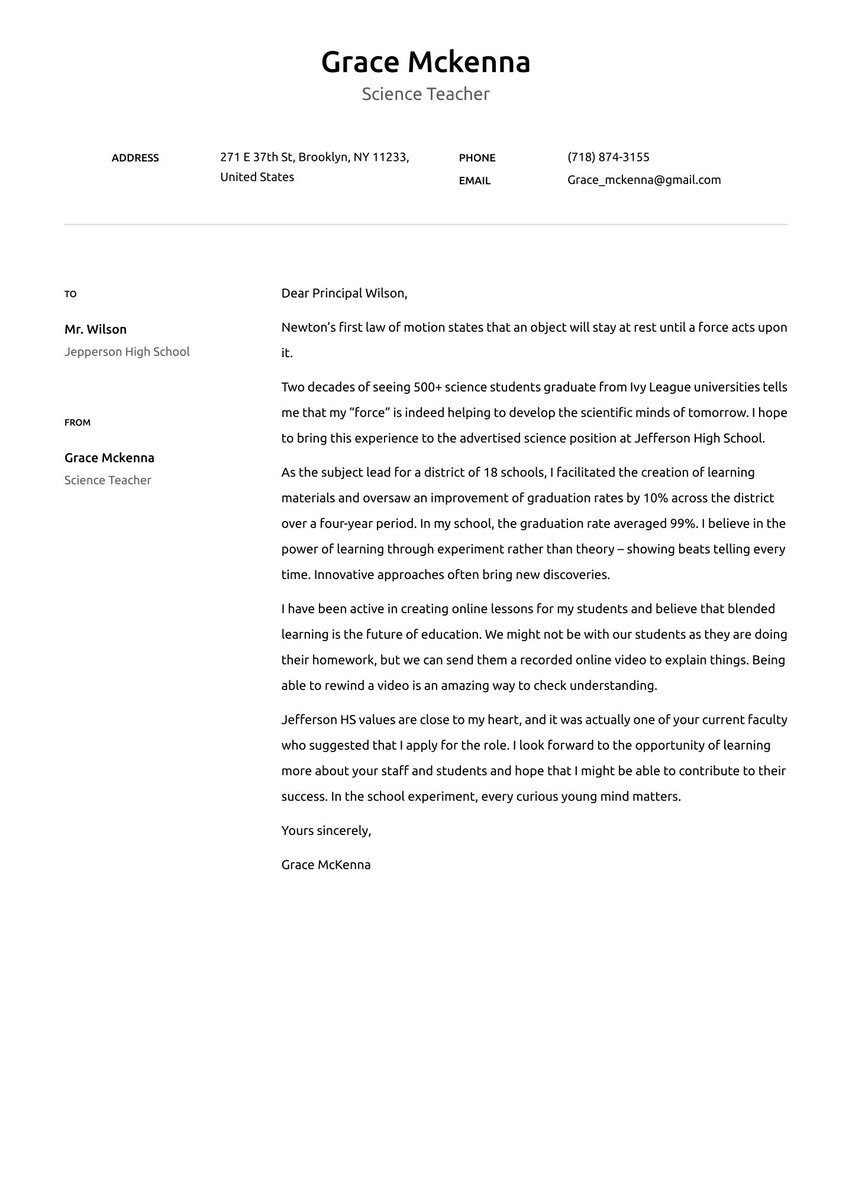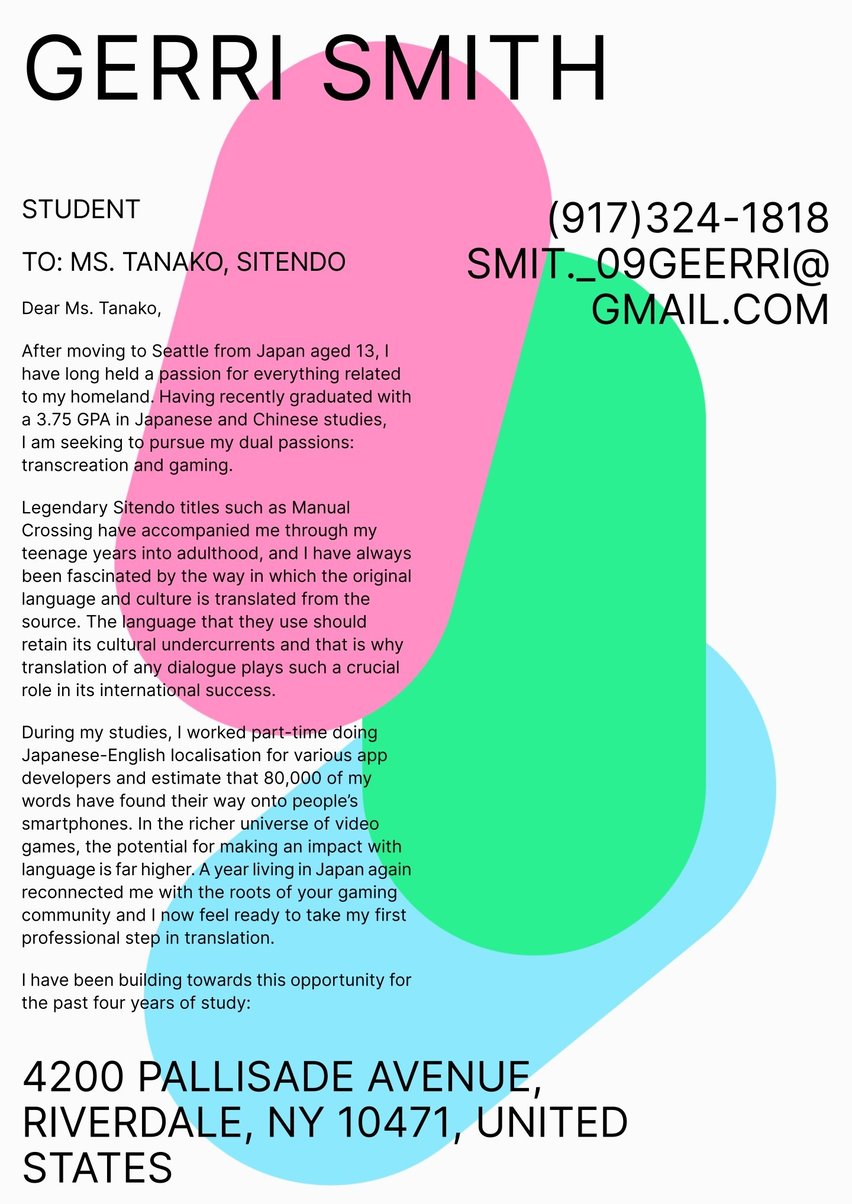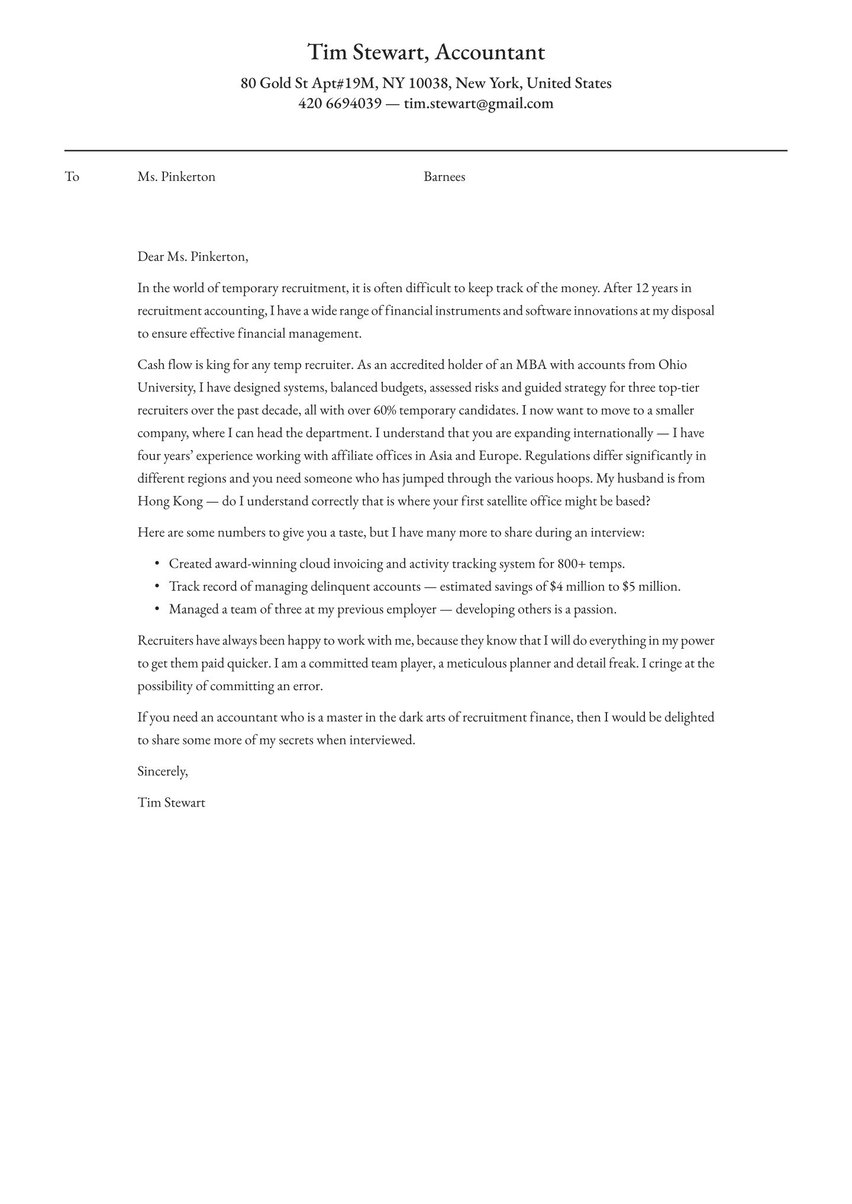


One of the most popular entry-level positions, a call center job can make a great part-time gig or even a launching pad into the fields of marketing and customer service. And the best part? To get started, you don’t need much more than a handful of interpersonal skills you likely already possess.
Related Cover Letter Examples
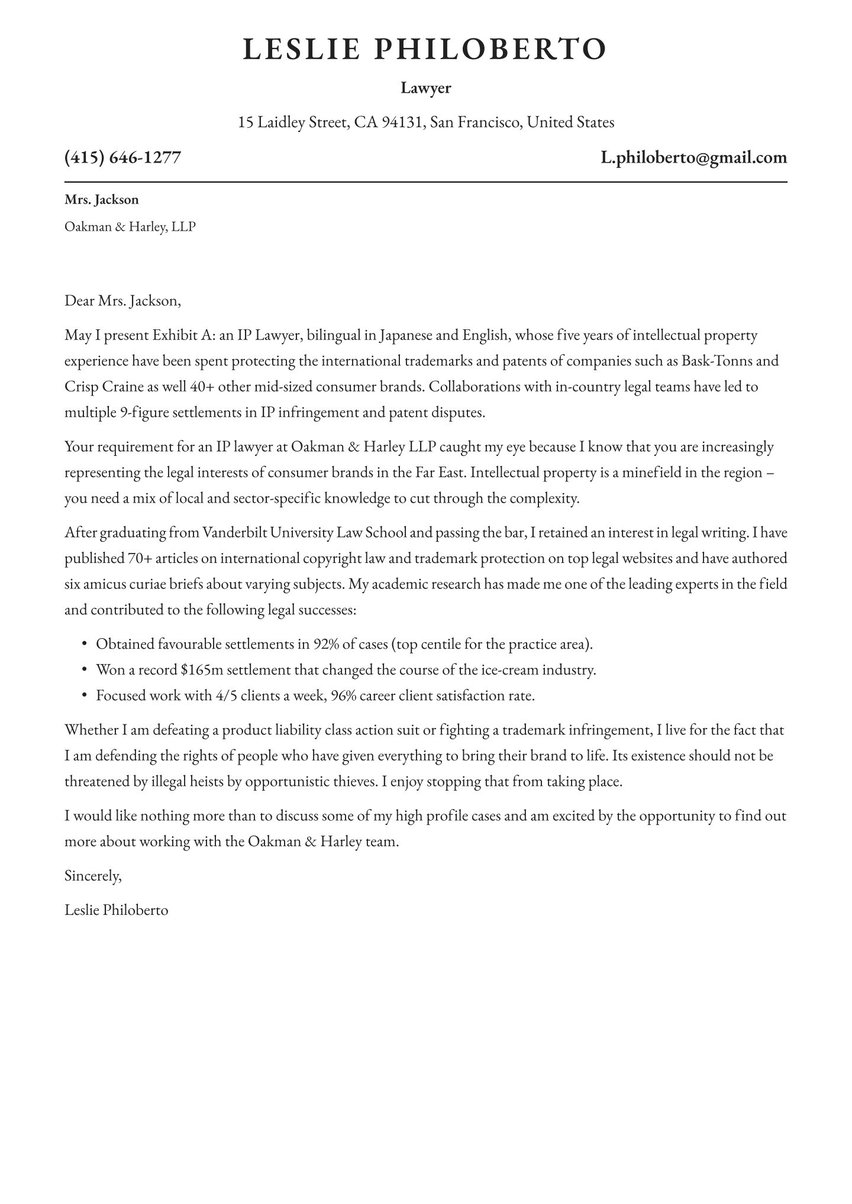
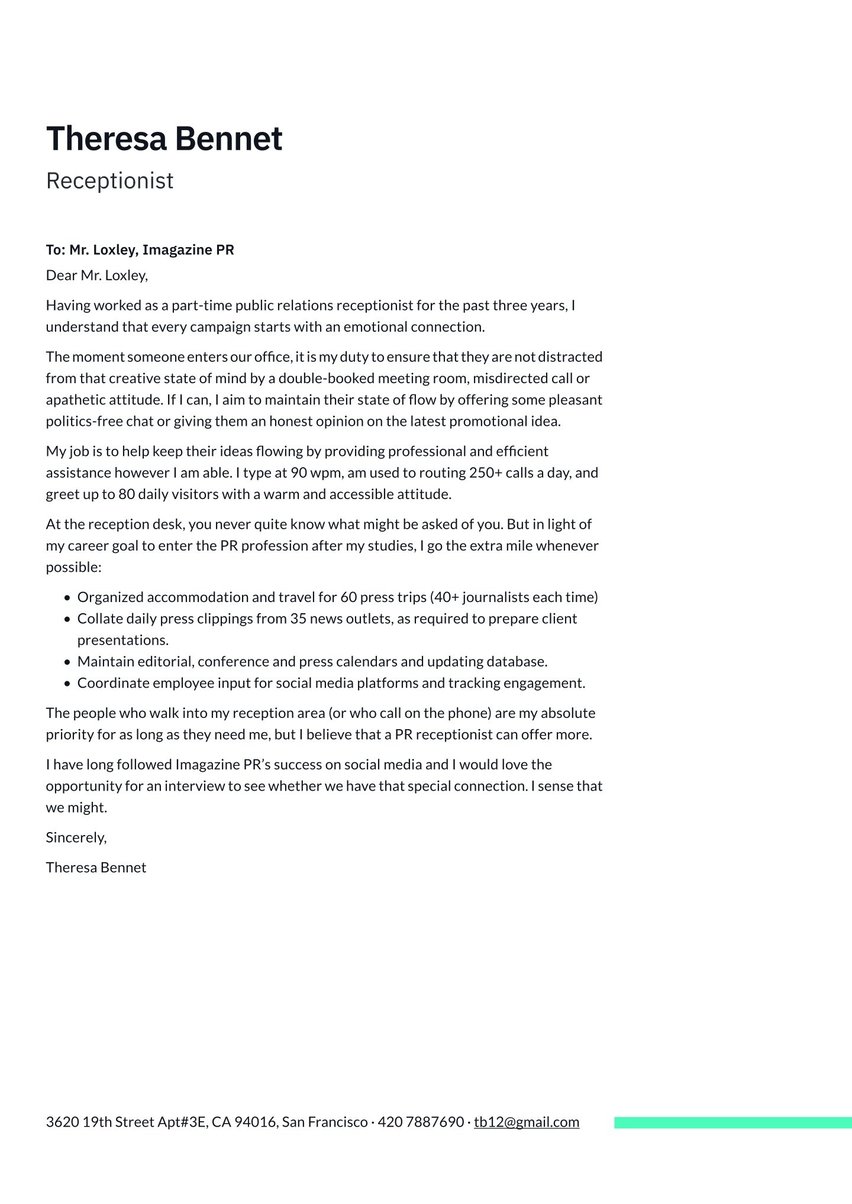
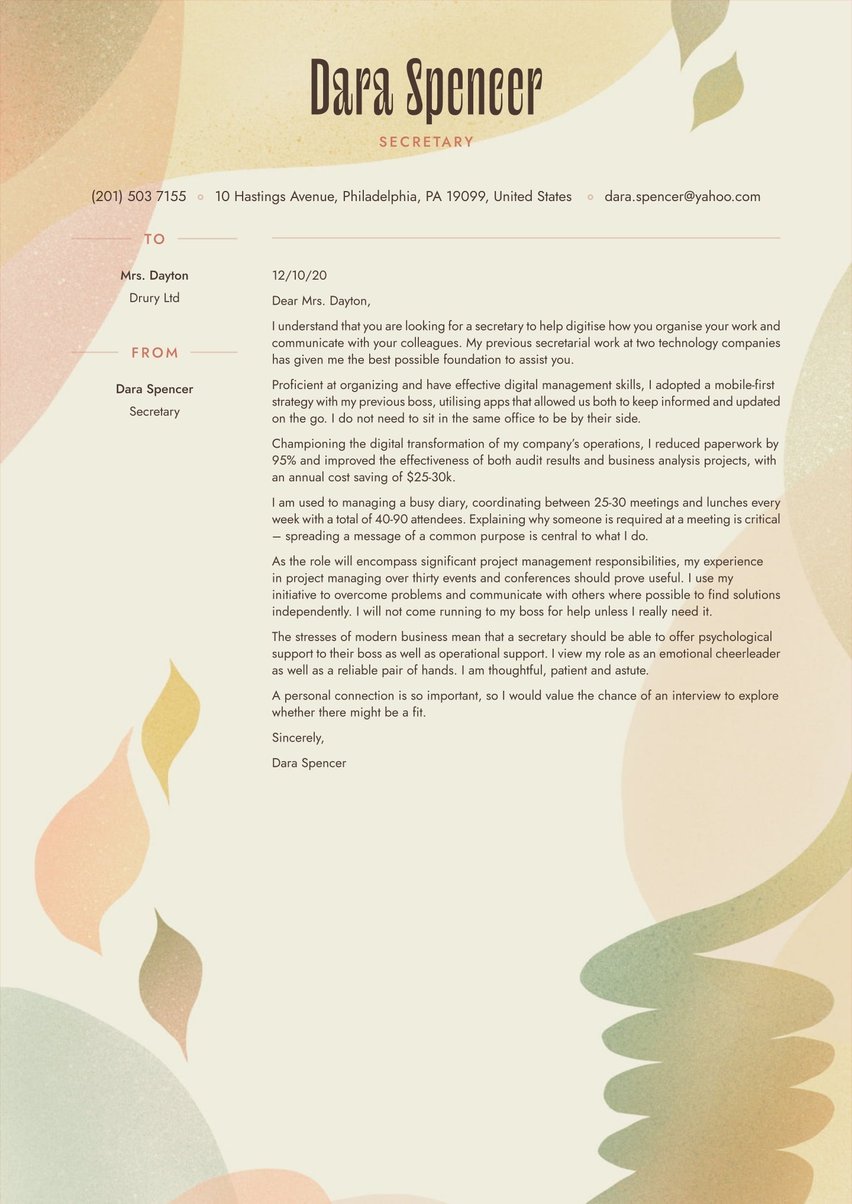
Receptionist cover letter example
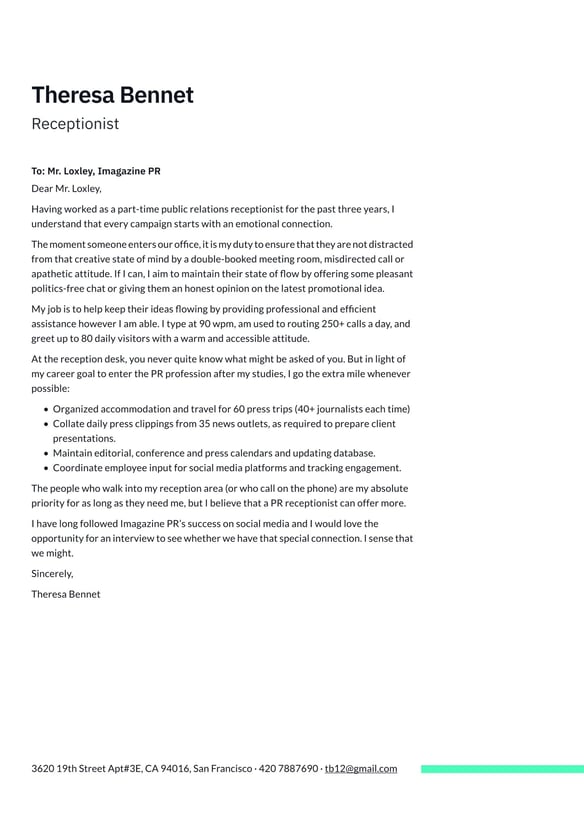
This polished yet approachable template is perfect for receptionist roles, blending a clean structure with ample white space to reflect professionalism and warmth. Its conversational tone highlights your multitasking skills and client-first mindset, impressing hiring managers.
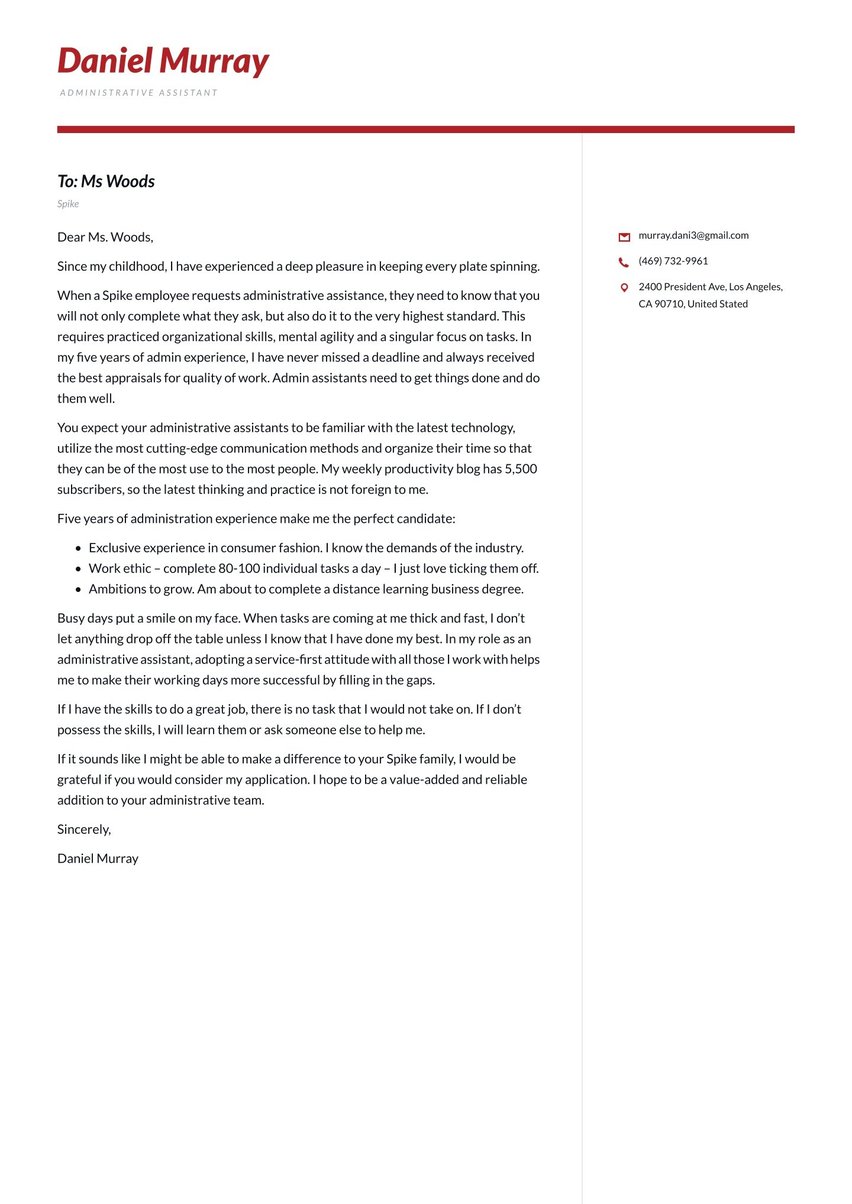
Administrative Assistant cover letter example
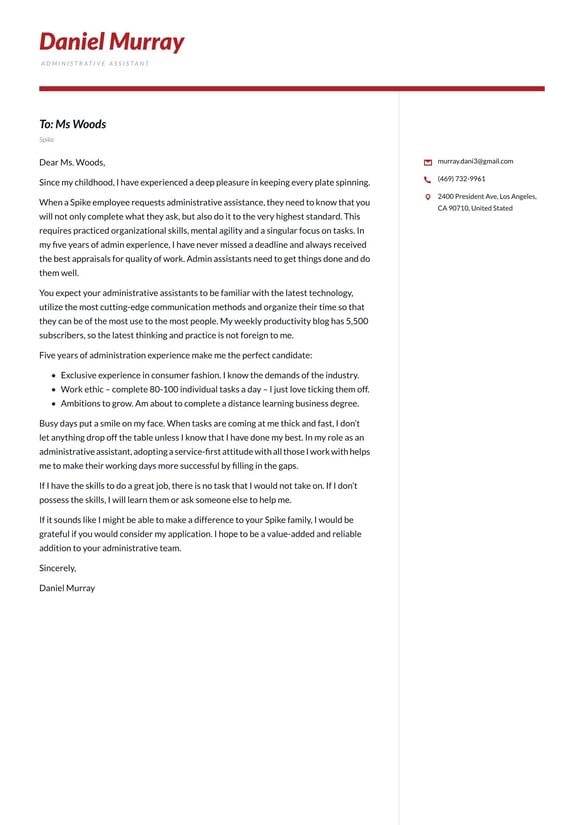
This clean, professional template is tailored for Administrative Assistant roles, balancing structure and white space to highlight your organizational skills and adaptability. Its polished header and clear layout convey reliability and efficiency to hiring managers.
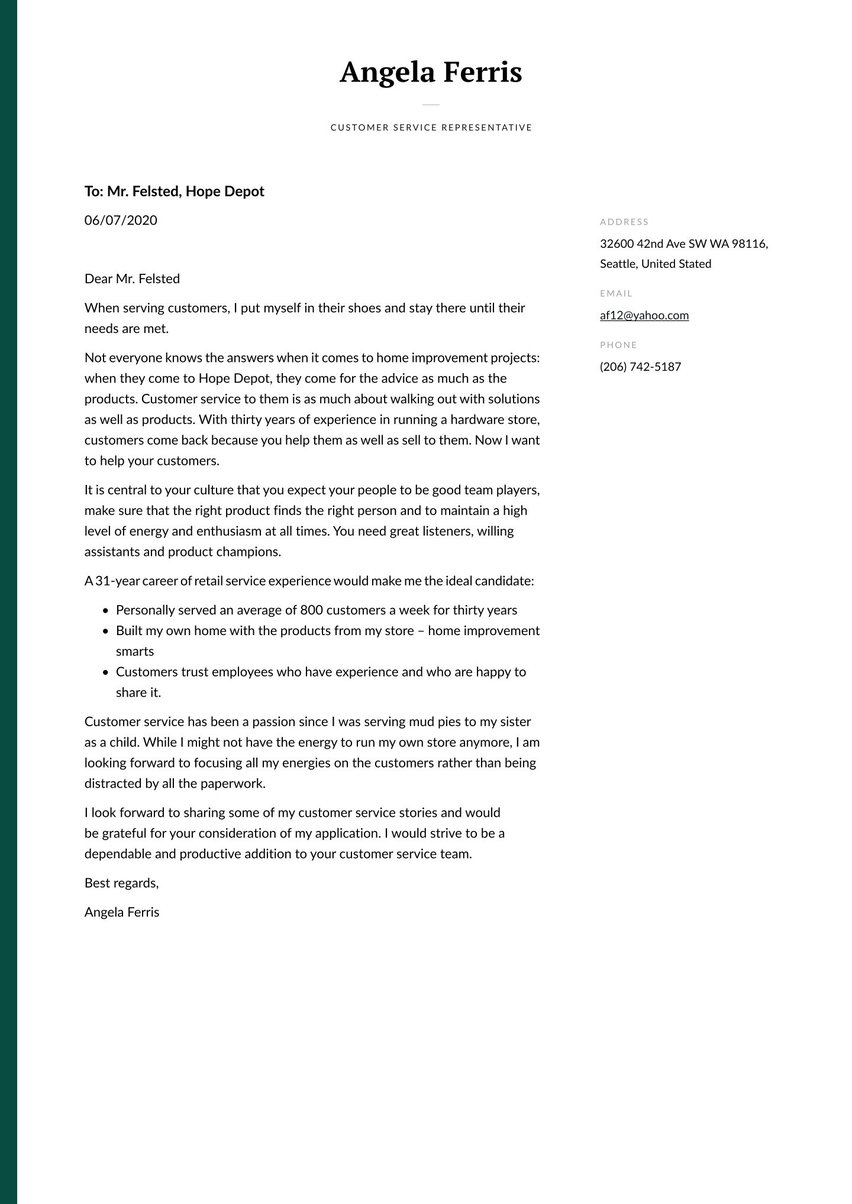
Customer Service Representative cover letter example
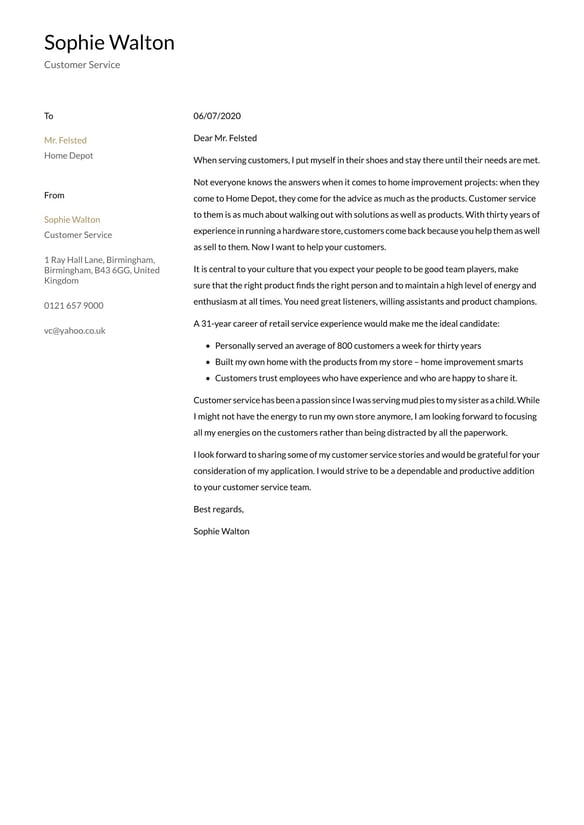
This clean, approachable template highlights your customer-focused mindset with a structured layout that mirrors the clarity and empathy needed in customer service roles. Its balanced white space and professional tone emphasize your reliability and people skills to hiring managers.
Office Assistant cover letter example
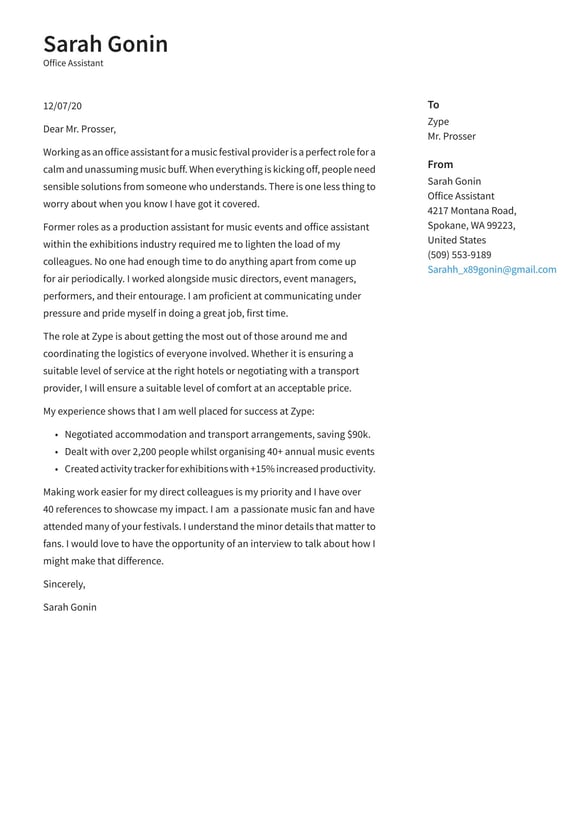
This clean, well-structured template highlights professionalism and adaptability—perfect for Office Assistant roles. Its balanced white space and clear formatting emphasize your organizational skills, helping you communicate reliability and efficiency to hiring managers with ease.
Front Desk Receptionist cover letter example

This clean, professional template highlights your polished communication skills and organizational expertise—perfect for Front Desk Receptionist roles. Its structured layout and ample white space emphasize your multitasking abilities, leaving a lasting impression on hiring managers.
Virtual Assistant cover letter example
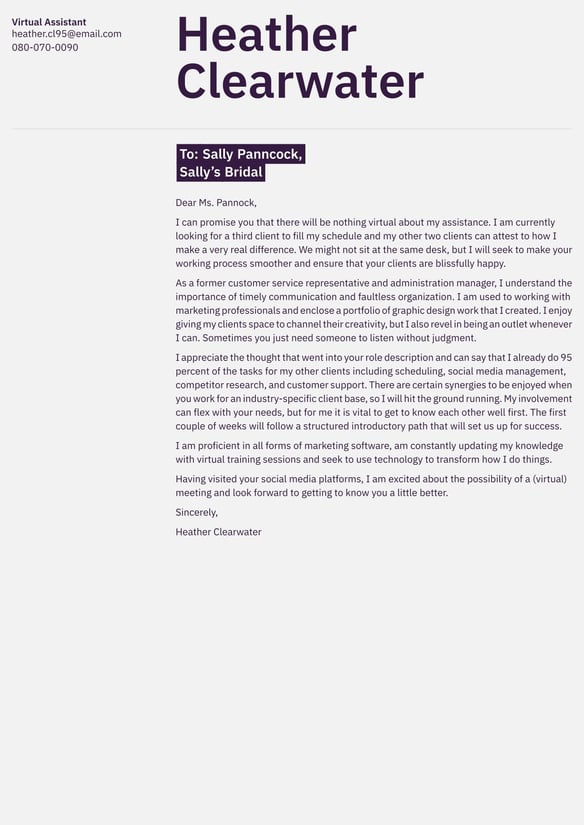
This clean, modern template highlights your organizational skills and professionalism, perfect for Virtual Assistant roles. Its balanced white space and structured layout emphasize clarity, helping you showcase adaptability and reliability to busy employers.
Customer Success cover letter example
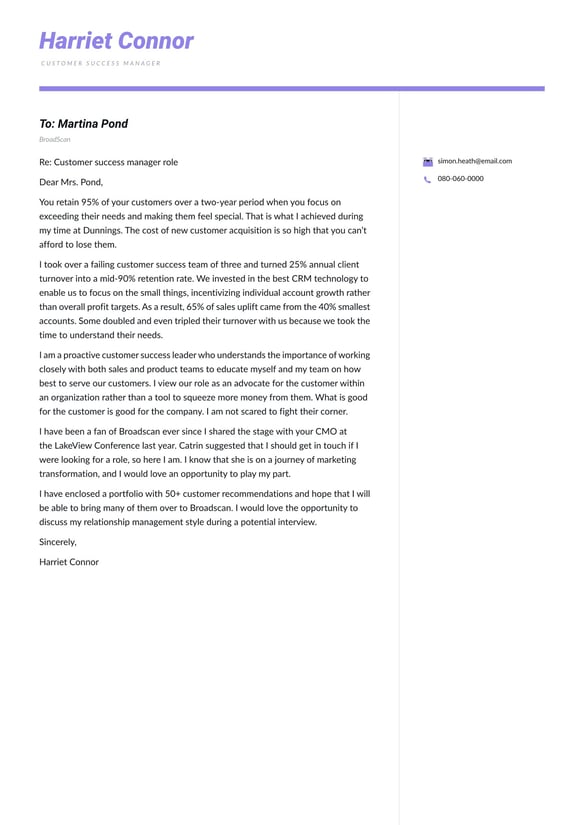
This clean, professional template highlights your strategic mindset and customer-first approach, perfect for Customer Success Manager roles. Its balanced structure and ample white space emphasize your achievements, fostering trust and connection with hiring managers.
Dispatcher cover letter example
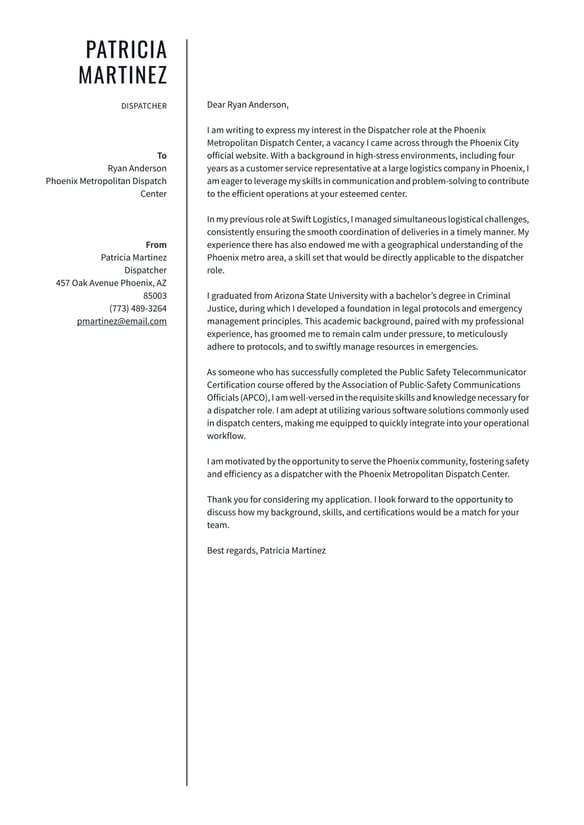
Perfect for dispatcher roles, this template’s clean structure and balanced white space highlight your ability to stay organized under pressure. Its modern header styling ensures your skills and certifications stand out to hiring managers.
Technical Support cover letter example
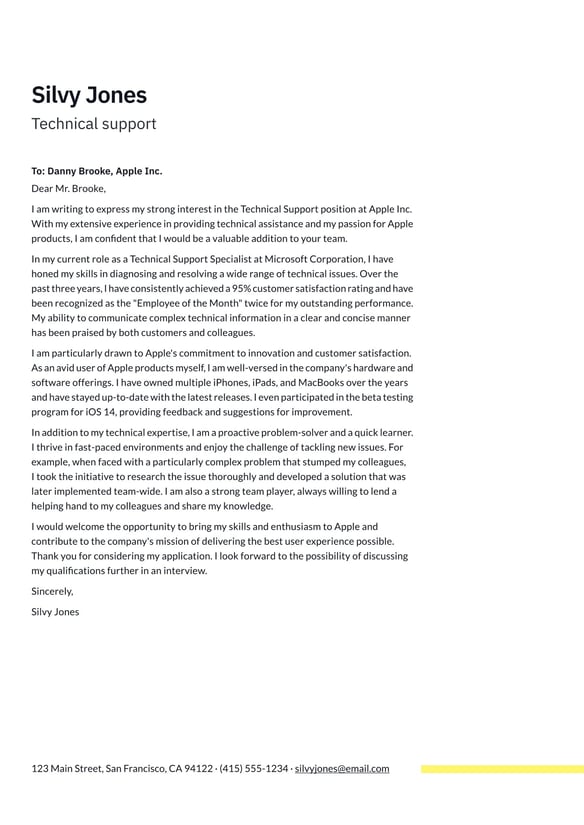
This sleek, organized template highlights clarity and professionalism, ideal for Technical Support roles. Its clean structure and ample white space emphasize your problem-solving skills and customer focus, resonating with tech-driven, user-centric employers like Apple.
Help Desk cover letter example
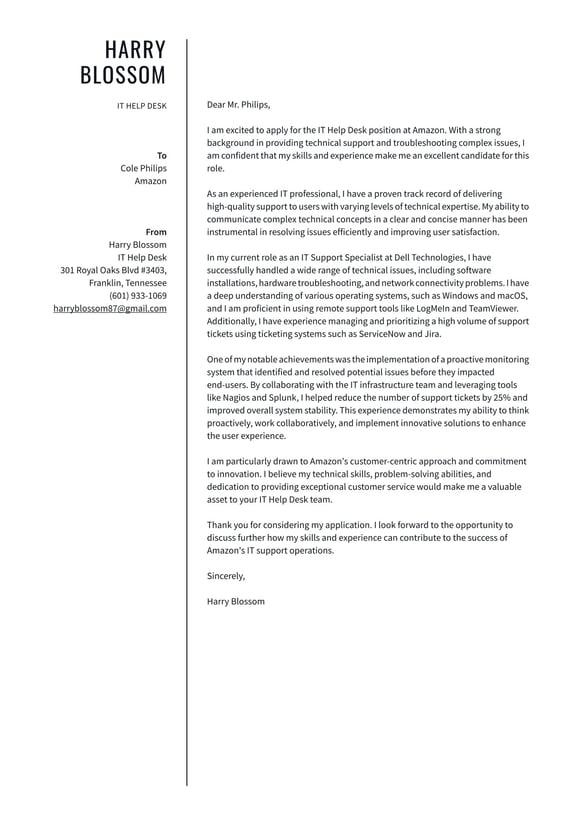
This clean, structured template highlights clarity and professionalism, ideal for IT Help Desk roles. Its balanced white space and concise formatting emphasize your technical expertise and problem-solving skills, ensuring your value resonates with hiring managers.
The customer service industry is changing. The days of 100 call center agents wearing headsets all crammed into adjacent cubicles are fading. According to Liveops, more than 80 percent of Fortune 500 companies are using or planning to use home-based call center agents. Time to tidy up the home office!
Large companies have long been known to outsource call center jobs to the Philippines and other countries. For Americans, however, some of those jobs may be coming back. According to CNN Business, companies are now looking to train “super agents” who can handle a variety of requests that go beyond answering basic questions.
So how do you prove you’ve got what it takes to land a top call center position?
This call center cover letter example along with our adaptable sample will:
- Explain the purpose and methods behind crafting the perfect call center cover letter
- Break down the cover letter format with free administrative cover letter examples, samples and templates
- Fill you in on the most important writing tips to make sure your cover letter gets noticed
- Help you avoid common mistakes and send your application to the top of the pile!
Before you dive into writing the perfect cover letter, it’s important to make sure your resume shines. Luckily, we’re here to help. Check out our free administrative resume examples plus our templates and resume builder tool to make sure your formatting is as professional as your experience.
Cover letter for call center agent: free sample and general info
Primary purpose of the cover letter
The purpose of a resume is often quite clear: convey your education and experience in a succinct format. When it comes to writing a cover letter however, it’s worth taking a moment to define your objective. A lot of job seekers believe that a cover letter is a formality to get out of the way before submitting the application. However, when crafted with care, your cover letter can often become a deciding factor in landing you a job interview.
Here’s the basics: a cover letter is a one-page document (around 400 words) that convinces a hiring manager to give you a shot by briefly explaining your most relevant experiences and skills. Instead of repeating your resume, your cover letter should expand upon it and offer new information that creates a personal connection with the hiring manager.
What if the call center job application DOESN’T require a cover letter?
Sometimes an online application makes a cover letter as “optional” or fails to mention the document at all. Many job seekers see this as an opportunity to submit only a resume with their application. Their loss, your advantage.
As discussed in the next section, a cover letter is one of the best opportunities to highlight your strengths and make yourself stand out in a crowded application pool. Unless specifically asked NOT to include a cover letter, it’s always a smart idea to write and send one. This small amount of extra effort can pay off big time when a hiring manager notices your interest and attention to detail.
In addition to clean writing, your cover letter formatting plays an important role in making a great first impression. You should stick to a single, professional font in an easily readable size and make sure to keep a balance of white space to text. You can find specific formatting guidelines (including our recommended font styles) in this overall guide on cover letters.
Now let’s look at an adaptable call center cover letter sample.
Dear Ms. Braithwaite,
Having worked in retail call centers for five years, I understand what your customers require. Customer care starts when they buy a product and a well-served customer will purchase again and again. 97.6% of my customers hung up “satisfied” with my service.
In my last role I managed to memorize 50+ call scripts and therefore reduced my time per call by 18% and increased customer satisfaction by 29%. When you are relying on reading from a screen it doesn’t sound natural and customers can easily sense that you are not listening to them.
I have worked in retail customer service for five years and am used to learning everything I can about the product ranges so that I can be as knowledgeable as possible.
My main tasks included processing customer complaints, handling returns, processing refunds and updating accounts. I type at 70wpm and over the past five years at two call center employers my data entry accuracy ranged from 98.7-99.5%.
I understand that call centre agents are measured on activity, so here are more numbers:
- Completed the most calls in one shift in the 2018 calendar year – 195 customers
- Consistently among the top 2-3 employees for customer satisfaction (97%+)
I am a considerate communicator, always listen fully to work out the issues and respond succinctly and promptly when I understand the required solution. Customers want the issue sorted as quickly as possible, so speed is always of the essence, but addressing the issues comprehensively should never be sacrificed. My colleagues voted me “best communicator in the office” last year – communicating work issues internally is equally important.
I would welcome an interview to find out more about your operation and outline how I go about my work.
Sincerely,
Arnold Foley
Secondary purpose of the cover letter
We noted in the first paragraph that call center positions make great entry-level work because they rely on many of the skills you likely already possess. Unfortunately, this fact also makes call center and customer service jobs highly competitive.
That’s where a strong cover letter comes in. This document is all about maximizing your chances of landing the position by giving you the space to express what makes you a uniquely qualified candidate. This is the place to show off your personality, goals and related skills as well as answer any questions that may arise from your resume like gaps in employment history.
Since call center jobs require a positive demeanor and friendly tone, your cover letter is also one of the best places to convey your communication skills. The writing of your cover letter should be a sample of the qualities you will convey to the company’s precious clientele: upbeat, helpful and confident. Your cover letter should leave a hiring manager with the impression that you understand the company’s needs and are ready to fill the role.
Tailoring your cover letter for success
Before submitting your cover letter, there’s one final step that’s extremely important in making sure your document is a cut above the rest. Your cover letter should be customized with the right skills, experiences and qualities for each position and company you apply to.
When applying to multiple jobs at once, there’s nothing wrong with creating a base cover letter that can be modified for each application. However, a hiring manager reading your application should have the impression it was crafted for them with attention paid to your most relevant experiences and qualities that meet the company’s goals.
Imagine two candidates apply for an entry-level call center position. Both are recent graduates with retail customer service experience on their resumes. Both submit a cover letter.
Candidate A submits a generic letter with a formal introduction and little mention of his unique qualifications, while candidate B takes the time to expand upon her college experience and explain how it taught her to treat each customer with care. She says she hopes to bring her advanced troubleshooting skills to the call center position.
With all other factors being equal, the time Candidate B invested into a customized cover letter is likely to give her the advantage when it comes to landing the job interview and eventually the position – a great cover letter makes all the difference!
Call center representative cover letter structure, writing examples
In this section, we’ll break down the steps of great cover letter writing into an easy-to-follow checklist. This structure doesn’t change much between job titles or companies, so you can follow these steps for future positions as well.
Here are the key components:
- The cover letter header
- The greeting
- The introduction
- The letter body
- The conclusion
- The signature.
You can find more tips on writing each of these sections along with free example sentences inside our overall guide on cover letters.

Cover Letter Header
Your cover letter header is the likely the first thing a hiring manager will notice as they begin to read your cover letter. That’s why this section serves two important roles. The first is to identify your document with your name and contact information. This is especially important when a recruiter may be hiring for multiple call center jobs at once.
The second purpose of your cover letter is to create attractive formatting that will make your document stand out from the rest. Make sure to choose a style that aligns with the company branding. For a call center position, simple and clean formatting is likely best.
The goal of this section: Label your document with the necessary contact information and personal data, create eye-catching formatting that’s professional and tasteful.
Align document styles!
If you want to take your application to the next level, aligning the document styles of your cover letter and resume is one of the best ways to make your application stand out. A matching header and color scheme will show that you’re an organized and serious candidate who invested extra effort into your application.
Luckily, this task isn’t too difficult to accomplish. With Resume.io’s collection of resume and templates and corresponding cover letter examples and templates, you can choose the style that suits you best, then customize the colors and font for the needs of the application. For call center jobs, a simple cover letter template can go a long way in proving your professionalism!
Cover Letter Greeting
Your cover letter greeting is a short section with an important job to do: create a polite and friendly tone for the rest of your letter and establish a personal connection by using the letter recipient’s name. “Dear” followed by the correct salutation and last name of the hiring manager is one of the most standard and effective greetings.
The goal of this section: Establish a friendly tone and create rapport with the hiring manager by addressing them by name in your cover letter greeting.
The importance of names and addressed greetings.
There’s a reason why call center agents often ask whom they're speaking with at the beginning of each call – using a customer’s name throughout the call makes them feel valued and well cared for. Personalized attention can work in many other circumstances, including in your cover letter greeting. By using the name of the letter recipient on your cover letter, you quickly establish your interest in the company and create a personal connection with the hiring manager.
However, in large companies it’s not always possible to find the name of one hiring manager, let alone be sure that’s the one who will be reading your application. This is especially true for call center positions where hiring is likely taken care of by an entire HR team. If this is the case, don’t worry – you’ve got options. Try using a collective noun instead. “Dear (Company Name) Hiring Team” often works well.
Cover Letter Introduction
If there was ever a time to make a statement, your cover letter introduction is the place to do it. That doesn’t mean you should go overboard with eccentric stories, but rather create a professional and charismatic opening line that makes you stand out from the pile of generic applications. The best way to craft a great introduction is by offering an interesting anecdote, relevant statistic or your top skill. Make sure to carefully weave in the name of the position you are applying to in the first 1-2 sentences of your cover letter.
The goal of this section: Catch the hiring manager’s attention with an interesting fact or anecdote and encourage them to keep reading into the body of your cover letter
Cover Letter Body
Your cover letter body will make up the bulk of your document. This is the section to dive into all your relevant experience and the reasons why you believe you’re the company’s next great call center agent. The STAR method can help make the body section easier to write. First, describe a Situation and the Task required, then explain the Action you took and the positive Result it caused. This is a great place to describe previous customer service interactions that have led to sales or other achievements.
You can create a second body paragraph to mention your top skills and potential contributions to the company as a call center agent. For this section, you’ll want to make sure your tone is confident without sounding presumptuous.
The goal of this section: Use the STAR method to list previous experiences and the positive results you achieved, make sure to offer potential contributions and your most refined skills
Cover Letter Conclusion and Signature
There is an art to creating the perfect cover letter conclusion and it all starts with the Call to Action. This sentence expresses genuine interest in the position and invites a hiring manager to contact you to discuss further. You may also choose to leave your contact information again in this section.
Finish your letter with a polite and professional signoff followed by your signature. “Best regards,” “Sincerely” or “Thank you” can all make good options.
The goal of this section: Create an effective call to action that encourages a hiring manager to get in touch, use the appropriate signature to finish your letter on a positive note
Writing psychology - cover letter tools and strategies
Here are a few key qualities you’ll want to convey when applying to a call center position:
- Strong communication skills: When it comes to working as a call center agent, effective communication is the job. Your cover letter should convey an ability to speak and answer questions clearly not only through your examples but also through your tone and error-free writing.
- Positive and friendly attitude: A call center agent’s demeanor can make or break the customer service experience. That’s why your cover letter should remain upbeat from the first sentence to the very last. Cover letter writing is the best place to give a hiring manager a taste of your professional personality.
- Patience: Unhappy customers are a part of the job so make sure your cover letter offers examples of times you effectively dealt with difficult requests – without losing your cool.
- Efficiency: Depending on the type of call center you work in, speed can be one of the most important qualities for an agent. If this is the case, make sure your cover letter offers concrete numbers that show your efficiency and effectiveness.
It’s not just what you say but how you say it
You’ve probably heard the adage before: It’s not what you say but how you say it. That’s especially true in any call center position. Of course, what you say is important, but your tone of voice, patience and attitude can make all the difference in how your message is received.
Turns out, the same goes for your cover letter. According to the Yale Attitude Change Approach, a multi-year study in the mid-1900s, an audience doesn’t just pay attention to the content of the speaker’s message, but also everything about how they deliver it. For your cover letter, that means a hiring manager is not only evaluating your writing but also your visual presentation. Is it clean? Does it fit the company branding? Is it aligned across all the application materials?
An audience is more likely to be convinced of a message when they believe the speaker is credible, i.e they know what they’re talking about. Your visual presentation is one of the best ways of showing that you understand the company’s goals and you are ready to rise to the challenge. Combined with the right tone and concrete experiences, you’ll quickly find yourself at the top of the list when it’s time to schedule job interviews!
Call center agents are in demand
According to a survey by eConsultancy, phone calls are still the top choice for customers when it comes time to reach a customer service representative – call centers aren’t going away any time soon!
Call center cover letter no experience - format and common mistakes
Make sure your cover letter impresses by avoiding these common mistakes often made by candidates applying to call center positions.
- Typos and grammatical errors: Nothing says poor communication like spelling mistakes and hard-to-read sentences. Make sure to avoid these issues with spell check and by asking a friend to proofread before you submit.
- Formatting mistakes: Sloppy visual presentation will be the first thing a hiring manager notices when they evaluate your application. Luckily a cover letter template can make professional style a breeze.
- Generic writing: Not all call center jobs are the same. Take the time to familiarize yourself with the company’s needs and use your cover letter to explain how you’ll meet them.
- Poor tone: The balance between confident and arrogant can be hard to find, but numbers can help. Make sure to back up your claims with concrete proof of your successes.
A call center job is a great choice even for candidates with no experience because it can open numerous doors in the administrative field including positions like:
Key takeaways
- A cover letter is an essential tool to differentiate yourself and land a call center position because many candidates may have identical qualifications on their resumes.
- Follow the general cover letter structure to make sure your information is organized and easy-to-read.
- Numbers and statistics offer concrete proof of your successes in driving sales or aiding customers – essential for this role.
- Don’t let silly mistakes like typos dash your chances of landing a top call center role: make sure to proofread and use spell check before you submit.
- Visual presentation is just as important as great writing. Cover letter templates can offer polished formatting in just a few clicks.