



Artificial intelligence (AI) is changing how businesses operate. More than ever, employers are looking for people who can use AI tools to improve efficiency and solve problems. Listing AI skills on your resume can give your application a boost when searching for your next job.
In this article, we’ll go over the most common AI skills for a resume and how you can include these skills to make your resume stand out.
Why should you include AI skills in your resume?
You don’t need to be a developer or engineer to list AI skills on your resume. Being skilled in AI technology can be a serious advantage in your job search.
Some reasons to mention AI skills on your resume include:
- High demand for AI knowledge. Most companies (92%) plan to invest more in AI technology over the next few years, according to a McKinsey & Company report. Having these in-demand skills can make you a valuable asset to many teams.
- Versatility across industries. It’s not only tech companies and startups using AI technology. Companies in nearly every industry, from finance to healthcare to manufacturing, use AI tools to automate tasks and improve workflows.
- Ongoing development and adaptability. Employers value workers who continue to expand their knowledge and learn new tools. Highlighting AI skills on your resume can show your willingness to keep learning and adapting in your career.
- Competitive job market. When applying for competitive jobs, having AI skills might be the differentiator you need to stand out from other applicants. Employers want to hire people who can bring advanced skills and technical knowledge to their companies.
More employees using AI at work
The use of AI technology in the workplace has increased significantly in recent years. Between 2023 and 2025, the number of US employees using AI at work jumped from 21% to 40%, according to a 2025 Gallup study.
Top 10 AI skills for your resume
AI technology is advancing quickly, so staying updated on new tools and trends is a must.
Right now, these are some of the best AI skills for your resume:
- Generative AI tools. These tools create content like text and images using AI algorithms, which are based on existing data. Some popular generative AI tools include ChatGPT, Claude, and Midjourney.
- Automation. AI-powered automation tools such as Zapier can automate tasks and processes to make them more efficient.
- Machine learning. This branch of AI involves training computers to recognize patterns and make predictions, similar to the way humans do.
- Natural language processing. NLP is another type of AI that teaches computers to understand and interpret human language.
- Computer vision. This type of AI technology analyzes visual content like images and video for various uses, such as pattern recognition and detection.
- Data visualization. AI data visualization tools such as Tableau can create visual representations of data so that it’s easier to understand.
- Programming languages: Building and training AI models requires a knowledge of programming languages, such as Python, Java, and SQL.
- Big data technologies. These tools like Hadoop and Apache Spark can store, clean, and process massive amounts of data for analysis.
- AI ethics. This skill focuses on knowing how to use AI technology responsibly to prevent bias and keep data secure.
- Prompt engineering. This practice involves developing prompts for AI models to get accurate, specific responses.
Where to include AI skills on your resume
Depending on the job you’re applying for, you might feature AI skills heavily on your resume or mention them in a few key spots.
Here are some places to include these AI skills on your resume:
In your skills section
The resume skills section is an obvious but important place to include AI skills. Employers usually scan this area quickly, so use a bulleted list to make your skills stand out.
Your list should focus on hard skills, including specific AI tools you’re comfortable using, like ChatGPT or Microsoft Copilot. Include any AI frameworks, platforms, or programming languages you know, such as Python or TensorFlow.
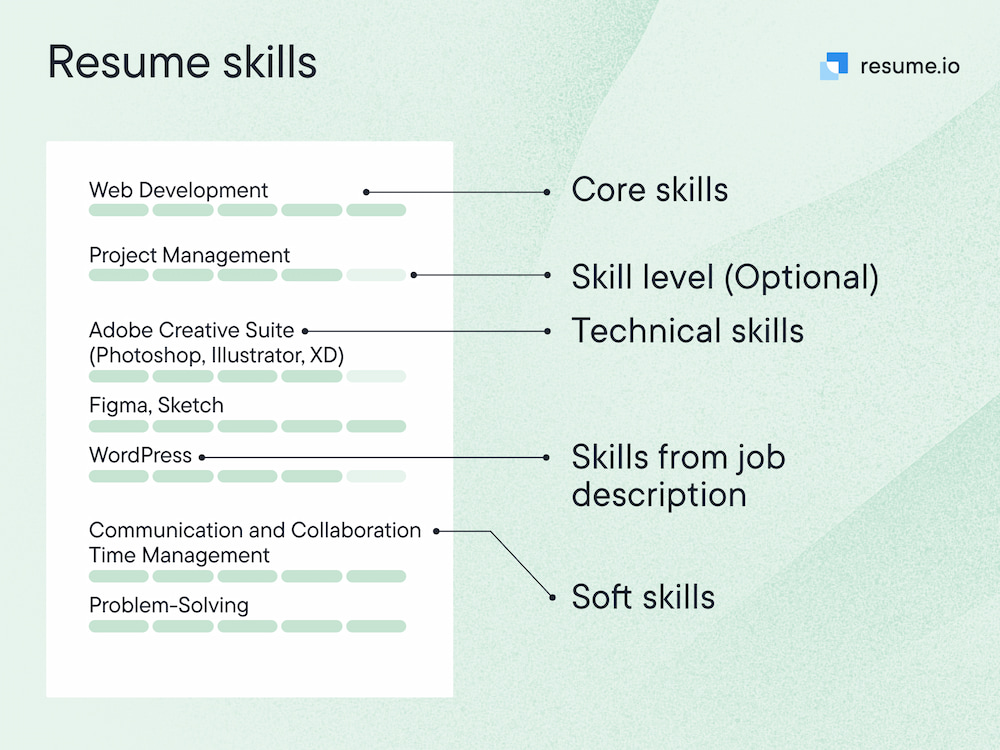
Study the job description closely to learn what skills an employer requires for the role. If you have the same skills, make sure that they’re listed in this section. Including similar skills from the job posting can help your resume get through an applicant tracking system (ATS).
Check out an example of AI skills in a resume skills section below:
Skills
- Machine learning
- Natural language processing
- Generative AI tools
- Data visualization
- Automation
In your resume summary
A resume summary can immediately get a hiring manager to notice your in-demand AI skills. This short paragraph at the top of your resume is an excellent place to highlight your AI abilities and explain how you’ve used them to make a difference in other jobs. If you’re applying for an AI-focused role, your resume summary should center on these skills.
Write two to three sentences describing your top technical abilities and relevant projects. Describe the outcomes you’ve achieved using AI technology, such as building predictive models or automating business processes. Include measurable data to show employers what you can achieve with these tools.
Even if your target job isn’t in the technology field, it can still be helpful to mention these AI skills in your resume summary. Describe how you’ve used AI tools to automate a repetitive task or make data-driven business decisions. These achievements can impress prospective employers who understand the benefits and potential of AI technology.
Here’s an example of highlighting AI skills in a resume summary:
Summary
Highly motivated and driven data analyst with over five years of experience in machine learning, using Python and TensorFlow to build predictive models. Skilled in AI-powered analytics tools with a record of delivering measurable results, including a 23% increase in sales forecasting accuracy through AI modeling.
In your work experience section
In the resume work experience section, you can show how you’ve used AI skills on the job to make a difference. This section should focus on the tangible impact you’ve had because of your AI expertise.
Write bullet points to describe how you used AI tools and platforms in your past positions. Start each bullet point with a strong action verb like “implemented” or “automated.” The rest of the statement should focus on the task you completed or problem you solved, along with the result you achieved.
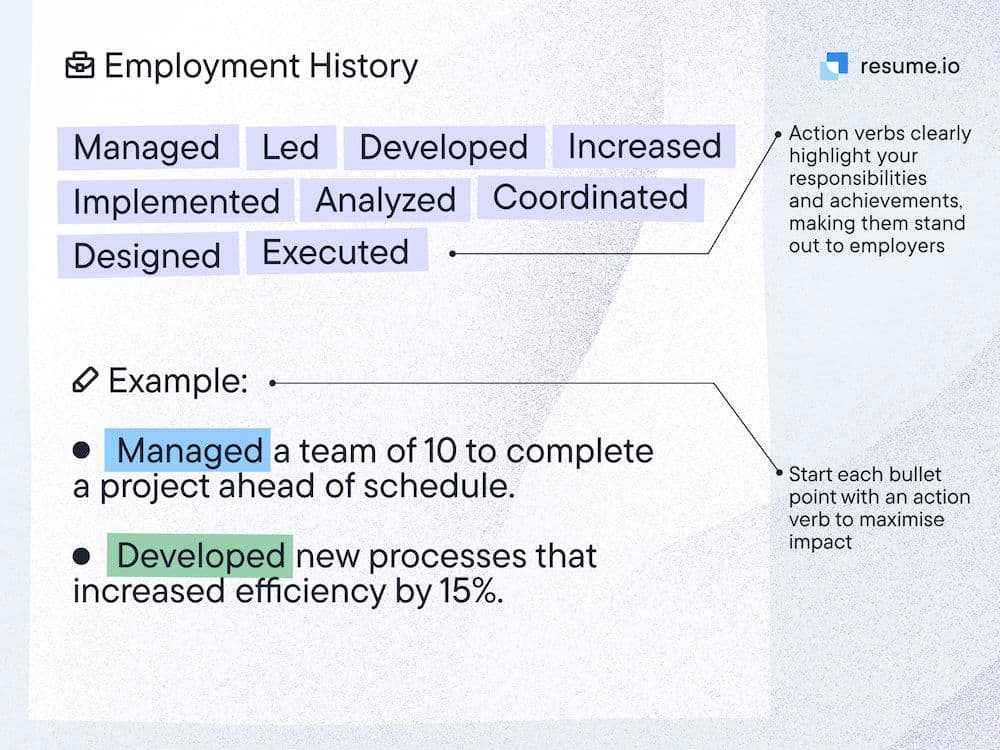
Be clear and specific about the AI technologies you used and the outcomes you delivered. Highlight your contributions with quantifiable data, such as the number of tasks automated or an increase in team productivity.
View an example of AI skills in a resume work experience section below:
Work Experience
Data Analyst | Amazon Web Services
July 2022–Current
- Build machine learning models to forecast customer churn, leading to a 15% increase in retention rates within six months.
- Implement AI-powered dashboards to automate reporting and minimize data processing time by 36%.
- Apply NLP techniques to analyze customer feedback and create reports to facilitate actionable product improvements.
In your education section
You might think you need to have a degree in artificial intelligence or computer science to mention your AI skills in a resume education section. But this area can also be a great place to highlight your ongoing learning, including any AI-specific training you’ve done.
Start this section with your degree or diploma and field of study. Below this information, list other academic credentials:
- AI certifications, such as AWS Certified AI Practitioner or Microsoft Azure AI Fundamentals
- Online courses in artificial intelligence, machine learning, programming languages, or other related areas
- AI bootcamps or workshops
- Relevant college coursework, such as programming or AI ethics
Showcasing this AI training on your resume can prove that you’re committed to staying up to date on new technologies.
Follow this example to include AI skills in your resume education section:
Education
Bachelor of Science in Computer Science
University of South Dakota
- Relevant coursework: Machine learning, natural language processing, data analytics
Azure AI Fundamentals Certification, Microsoft
In a project section
Did you teach yourself to use AI tools? Including a project section on your resume can be a great way to showcase your self-taught skills, especially if you’re changing careers to go into a technical field.
Projects show employers your hands-on experience and commitment to broadening your skill set. Besides personal projects, you can also list freelance work or academic projects you did for a class.
When listing projects on your resume, explain the tools you used and the results you achieved. Provide examples showing how you used AI technology to complete the project.
Check out this example of including AI skills in a resume project section:
Projects
AI Image Classification Project
Personal Project | 2025
- Developed a computer vision model using PyTorch to scan images and classify plant species.
- Implemented an interface to allow users to upload images and receive classifications.
- Distributed the model to over 50 users and achieved 95% model accuracy.
Tips for including AI skills on your resume
When putting AI skills on your resume, follow these tips for success:
Include keywords from the job description
Companies often use applicant tracking software to scan resumes for skills-based keywords. Incorporating AI keywords from a job description can help your application move forward.
Some valuable AI keywords for a resume include:
- Large language models (LLMs)
- Computer vision
- Neural networks
- Predictive modeling
- Automation
- AI algorithms
- AI optimization
- Generative AI
If a job posting lists these or similar skills, integrate them naturally into your resume summary, work experience, and skills sections. Make sure that your resume includes a mix of keywords, but don’t force them into places where they don’t fit. Every skill on your resume should reflect your actual experience and expertise.
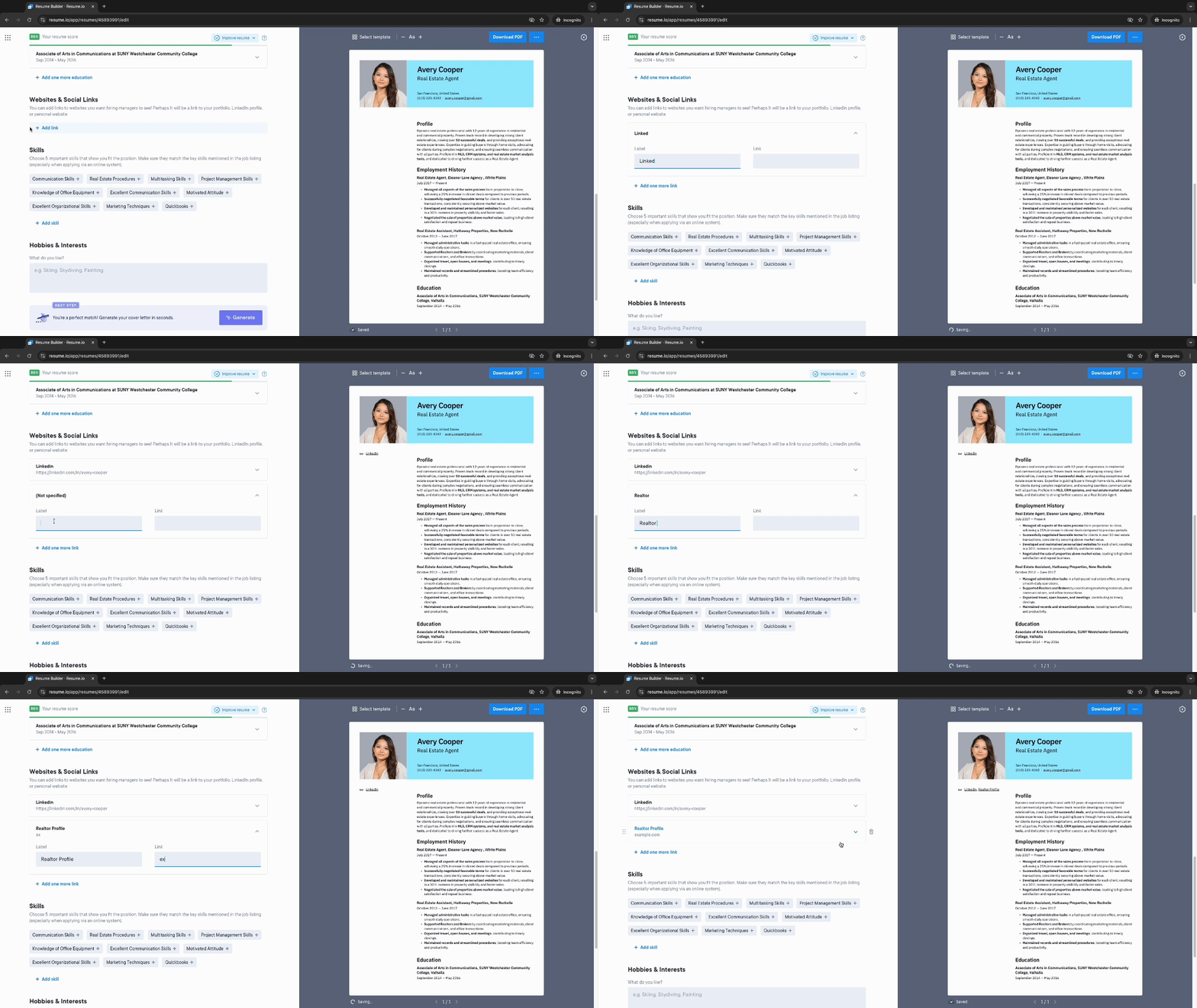
Add links to projects or a portfolio
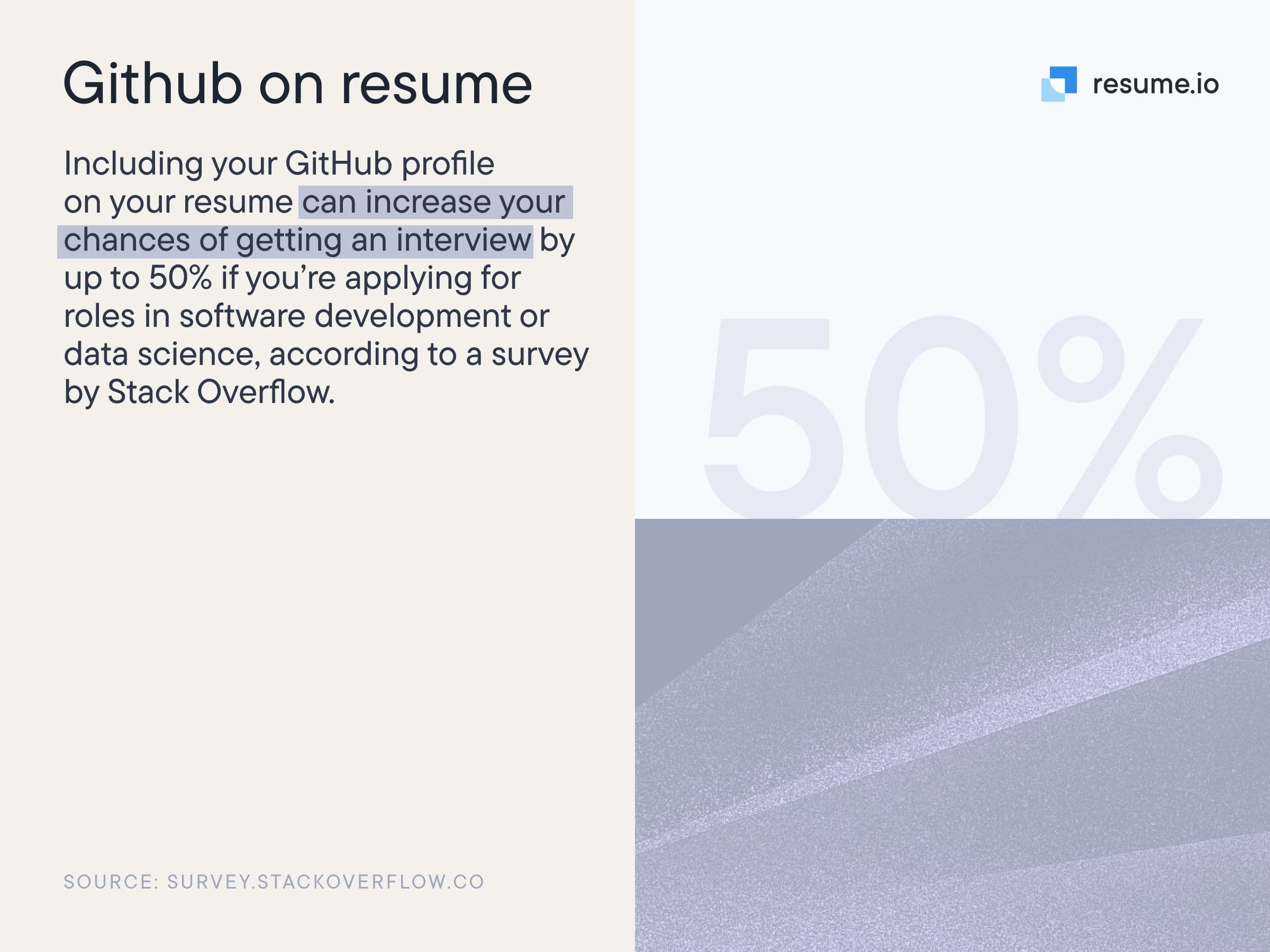
If you want to go a step further, add links to a project or portfolio of work showing your AI skills. This practical experience can go a long way toward setting your resume apart in a crowded field.
For example, share links to GitHub projects or interactive dashboards you developed with artificial intelligence. In a project or work experience section, you can expand on how you created the project, the tools you used, and the results.
These examples can give hiring managers a way to evaluate your skills and view the outcomes of your work.
Use an AI-powered resume tool
If you’re struggling with how to describe these skills, why not turn to AI for help? AI-powered resume tools can offer ideas and advice about how to showcase your technical skill set.
Our online resume builder, for example, can review job descriptions to identify AI-related keywords and suggest ways to include them on your resume. It can also recommend the top AI skills to include for your role or industry.
If you use an AI tool to write your resume, make sure you read it over and make adjustments before sending it to employers. While helpful for brainstorming ideas and improving bullet points, AI tools can also generate overly generic or repetitive content. Your resume should sound like you and reflect your unique skills and achievements.
Show a willingness to learn
Unless you’re applying for jobs in the AI industry, few employers will expect you to be an expert on this technology. AI tools continue to change, and new ones emerge constantly. Rather than exaggerating your skills on your resume, show a willingness to learn and adapt to it instead.
In your resume summary and education sections, mention workshops, certifications, or training you’ve completed to learn new AI tools. When discussing your professional experience, explain how you’ve experimented with AI technology to increase your productivity or efficiency.
You may not have it all figured out yet, but showing a willingness to learn can make you stand out to potential employers.
FAQs about AI skills on a resume
Here are answers to other commonly asked questions about AI skills for your resume:
Should I put ChatGPT as a skill on my resume?
Yes, you should list ChatGPT as a skill on your resume if you’ve used it professionally and it’s relevant to the job you’re applying for.
You can include ChatGPT as a specific tool in your skills section, or you can explain how you’ve used it on the job in your work experience section.
What are the best AI skills to put on my resume?
The best AI skills for your resume will depend on your skill level, job, and industry.
Some of the most in-demand AI skills include:
- Machine learning
- Natural language processing
- Data visualization
- Automation
- Computer vision
- Prompt engineering
- Python, Java, and SQL
If you’re not sure what AI skills to put on your resume, review some job descriptions in your field. Job postings can give you a sense of what skills employers want to see on resumes.
How can I learn AI skills to stay competitive?
Developing AI skills is a fantastic way to broaden your technical knowledge and set yourself apart. Look for online courses or certification programs you can enroll in to build AI skills. Websites like Coursera and Udemy offer classes you can take, including some free options.
Many classes will even walk you through the basics of AI if you’re just starting to learn about this technology. Google AI has courses specifically for beginners, such as Introduction to Generative AI and Google AI Essentials. These are good places to start if you want to learn but feel a little overwhelmed by the technology.
Do employers care about AI skills?
Definitely! Businesses continue to integrate AI technology into their decision-making processes and core operations. Showing employers that you have these skills can give you an edge in a competitive job market.


