

If you’ve applied for a job recently, you may have gotten a message asking if you’d prefer to opt out of artificial intelligence (AI) resume screening. Some worry that opting out may hurt their chances, while others wonder about how the AI screening process works.
In this article, we’ll give you all of the information you need to confidently answer the question, “Should I opt out of AI resume screening?”
Should you opt out of AI resume screening?
Most of the time, it’s in your best interest to allow AI resume screening unless you have a valid reason to opt out. Many companies now use AI software in their hiring processes, and opting out of this screening may put you at a disadvantage. According to the World Economic Forum, around 88% of companies use some type of AI technology to screen candidates.
Many of these tools review resumes to find ones with matching keywords, skills, and experience. The good news is that knowing how to optimize your resume for AI screening can make a big difference in your job search.
Know the laws in your area
While AI technology isn’t widely regulated, a few states and cities have passed laws related to its use in the hiring process. In New York City, for example, employers must notify candidates if they use AI screening and give applicants the option of choosing another selection process.
What are the benefits & drawbacks of AI screening?
Like any technology, AI resume screening software comes with pros and cons, both for hiring managers and job seekers.
Some advantages of artificial intelligence resume screening include:
- Quicker processing. AI technology can scan and process large volumes of resumes much faster than a human reviewer. This quicker processing helps companies fill jobs faster and shortens the job search for applicants.
- Consistency. These AI tools use consistent criteria to screen each resume, without the risk of human error.
- Ability to target keywords. Job seekers who understand these systems can create targeted resumes with relevant keywords and information. This knowledge can potentially improve your chances of moving on to the next stage.
However, AI screening systems also have some disadvantages, including:
- Potential for bias. Some research suggests that AI tools may show bias or discriminate against certain candidates. For example, a University of Washington study found that three AI large language models (LLMs) showed racial and gender bias when ranking resumes.
- Lack of a human touch. AI tools can miss important context on a resume, such as career gaps or transferable skills. Without a human touch in the hiring process, some candidates with non-traditional backgrounds might get overlooked.
- Keyword stuffing. While it’s important to include keywords, some candidates may overstuff their resumes with keywords in an attempt to trick the system. Some applicant tracking system (ATS) software can spot keyword stuffing and may even flag those resumes as spam.
When should you opt out of AI resume screening?
While it usually benefits you to allow AI tools to review your resume, that’s not always the case.
These are some situations when opting out of AI resume review screening may be the better choice:
- You’ve had an unconventional career path. If your career progression hasn’t followed a straight line, it might be better to decline AI resume screening. A real person will better understand an unconventional career path, which may include employment gaps or career changes.
- You’re applying for a specialized role. In niche job markets, such as medical research or aerospace engineering, it’s more likely that a human recruiter or employer will review your resume. If very few people can claim to have your skills and experience, it’s better to opt out of AI resume screening.
- You have a referral or contact with a recruiter. When a real person can vouch for your skills and experience, AI screening becomes less relevant. In this situation, send your resume directly to the recruiter or hiring manager and include the name of your referral, if applicable.
- You’re concerned about potential bias. If you feel uncomfortable with AI screening because of concerns about potential bias, it’s perfectly fine to opt out. The choice is yours, and you should always do what you feel most comfortable with.
How to make your resume AI-friendly without losing a personal touch
With so many employers now using some AI tools in the hiring process, it’s a good idea to optimize your resume for these systems. There are ways to create an AI-friendly resume while still conveying your unique experience and personality.
Follow these tips to write a resume that can beat automated resume screening and resonate with hiring managers:
- Use keywords naturally. Identify keywords from the job description and include them naturally throughout your resume. Before submitting, however, read over your resume to make sure that it still sounds like you—not a robot.
- Include quantifiable metrics. Your resume should include data and numbers to back up your accomplishments. Both ATS software and hiring managers will notice these quantifiable metrics.
- Keep your resume simple and straightforward. Choose a streamlined, professional resume template and clearly organize the information on your resume. It should be easy for both an ATS and an employer to scan your resume quickly.
- Show more personality in a cover letter. A cover letter gives you a chance to show employers your passion and personality. Pair your AI-optimized resume with a thoughtful, personal cover letter to make a real connection.
FAQs about AI resume screening
Here are some other frequently asked questions about AI resume screening practices and opting out of this AI resume review:
Should I opt out of having my resume reviewed by AI?
Ultimately, the choice is up to you. But it’s more likely that opting out will hurt—not help—your chances of getting further in the hiring process.
Keep in mind that even if you opt out, there’s no guarantee a human will review your resume.
What do I do if I want to opt out from having my resume reviewed by artificial intelligence?
If you absolutely do not want an AI system to screen your resume, there are a couple of methods you can pursue:
- Email your resume and cover letter directly to the hiring manager, instead of submitting an application through an online system.
- Leverage your network to find a mutual connection in the company or someone who can refer you to the position.
How do I beat automated resume screening?
It’s impossible to guarantee that your resume will pass an artificial intelligence resume screening, but following the tips and advice shared here will give it the best chance of moving on to the next hiring phase.
It can also help to run your resume through a checker tool like our AI ATS resume checker to see how well it matches what employers are looking for and flag any areas for improvement.
Should I let AI write my resume?
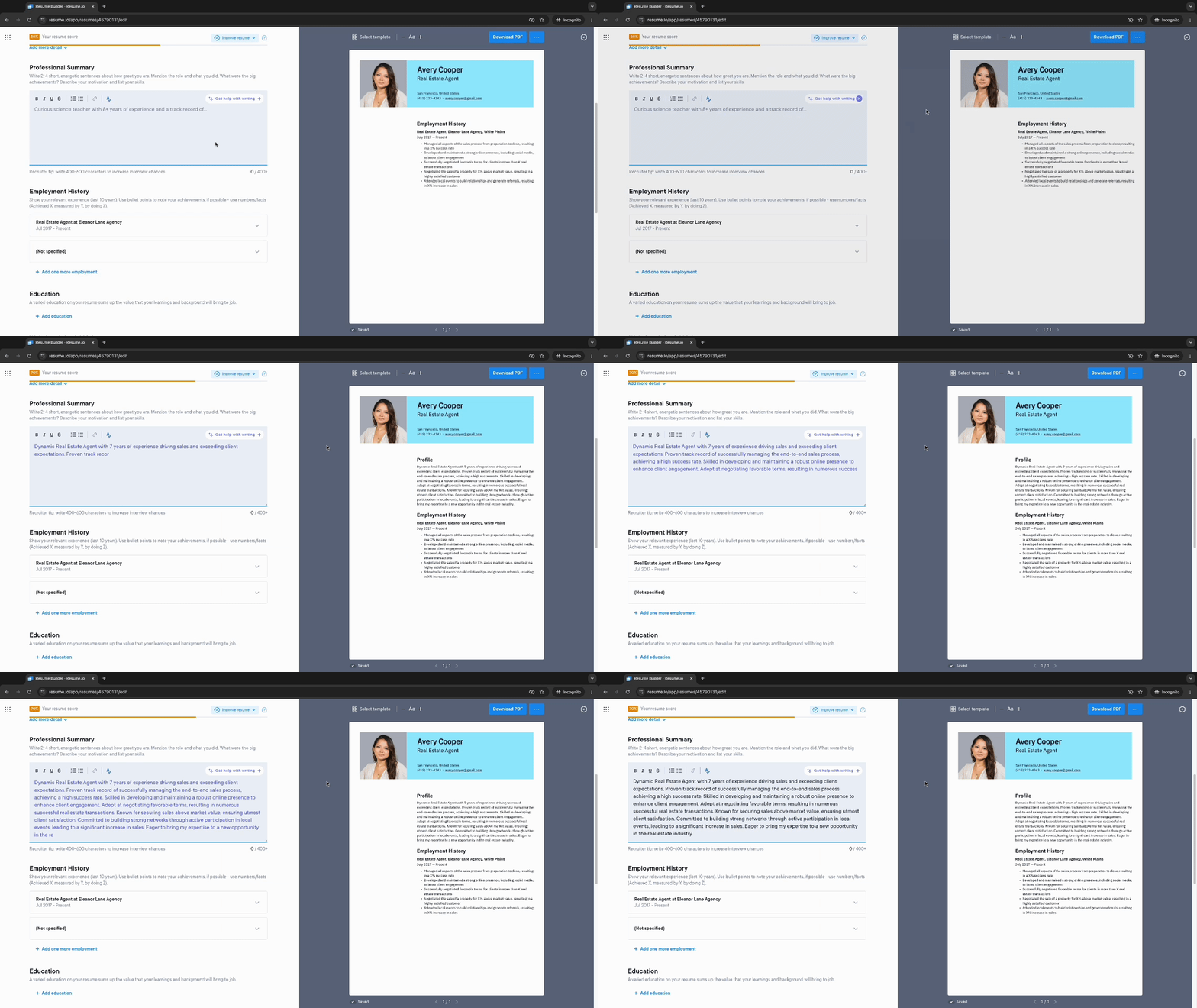
AI-powered resume writing tools like our advanced resume builder can help with brainstorming bullet points, including job-specific keywords, and handling the design and layout of your resume. However, using AI to write your entire resume comes with risks.
Hiring managers have become good at spotting AI-generated content because they see the same words and phrases across many applicants’ resumes. It’s best to use AI as a starting point and then adjust the content to reflect your voice and represent who you are as a professional.