

Should you opt out of AI CV screening? It’s a decision more job seekers are facing as some companies now give applicants the option to bypass an AI CV review.
Since applicant tracking systems (ATS) are still used by around 70% of large companies and 20% of SMEs, opting out could be a shortcut to the hiring manager or a gamble that sends your CV straight to the rejected pile.
In this article, we’ll explain how ATS screening works, weigh the pros and cons of opting out, and share strategies to give your CV the best chance of reaching a human reviewer.
Should you opt out of AI CV screening?
In most cases, it's sensible to allow AI CV screening unless you have a clear reason to opt out. Given how many organisations use applicant tracking systems (ATS) to filter job applications, opting out could place you at a disadvantage.
AI tools like ATS review CVs for key skills, experience, and keywords from the job description. The good news is that keeping your CV clear, well-structured, and aligned with the job specifications can significantly boost your chances of getting through this initial screening.
The benefits and drawbacks of AI CV screening
AI CV screening has its strengths and weaknesses, and knowing both sides is key to understanding how it may shape your job search.
Here’s a breakdown of the pros and cons of AI CV screening:
| BENEFITS: | DRAWBACKS: |
|
|
When should you opt out of AI CV screening?
Opting out might feel risky, but in some cases, it’s the smartest way to make sure that your application is evaluated with a wider lens.
Here are some situations where opting out could work in your favour:
- You’ve followed a non-linear career path. Maybe you took time off for caregiving, switched industries, freelanced, or returned to work after a break. These experiences demonstrate growth, adaptability, and transferable skills, but they don’t always translate into AI logic. A real person can better appreciate the full scope of your experience.
- You’re applying for creative or human-centric roles. For roles that rely heavily on creativity or emotional intelligence, such as graphic design or coaching, AI can struggle to evaluate your strengths. A human reviewer is far better equipped to assess your potential in these areas.
- Your industry values networks. In fields like sales, marketing, or consulting, referrals and relationships often carry weight. If you have a connection in the company, submitting your CV directly to this contact first can improve your chances.
- You’re applying for a highly specialised role. Jobs requiring niche expertise, such as aerospace, research, or advanced technical fields, are often best assessed by experts. Opting out of AI screening allows your unique background to be recognised.
- You have concerns about bias. While AI is often marketed as “neutral,” it reflects the patterns present in the data it’s trained on. If you’re worried that AI screening might not evaluate your application fairly, opting out can give you more confidence.
According to the Information Commissioner’s Office (ICO), some AI tools can filter out candidates unfairly, even making assumptions about ethnicity.
In order to reduce the risk of bias, keep your CV clear, skills-focused, and free from personal details. Then use your cover letter, portfolio, and/or networking to add context and personality.
How to optimise your CV for human and AI screening
AI tools like ATS software are now a major part of recruitment, scanning and shortlisting candidates faster than ever. But no matter how sophisticated the technology, a human will still need to read your CV to move you forward in the hiring process.
The trick is making your application work for both:
- Use CV keywords naturally and strategically. Pull key terms from the job description and incorporate them thoughtfully. Avoid keyword stuffing, which can make your CV repetitive and hard to read.
- Keep your CV format simple and ATS-friendly. Choose a clean layout with standard fonts and clear headings. Skip graphics, tables, and text boxes that could confuse ATS software or slow down a recruiter’s review.
- Focus on achievements, not just duties. Highlight what you’ve accomplished with specific examples. Whenever possible, add measurable results to demonstrate your impact, such as “Increased sales by 20%” or “Reduced processing time by 10 days.”
- Lead bullet points with powerful verbs. Start your bullet points with strong action verbs such as “streamlined,” “delivered,” or “optimised” to make your CV more dynamic.
- Use your cover letter to add personality and context. Your CV details your skills and experience, but your cover letter lets you show enthusiasm, motivation, and cultural fit—all things that AI can’t evaluate.
FAQs about AI CV screening
Here are some other frequently asked questions about AI CV screening practices and opting out of an AI CV review:
What happens if I choose to opt out of AI CV screening?
Opting out means that your CV won't be evaluated by the AI system. However, it doesn't guarantee a human review. Your application will likely be placed in a manual review queue instead, which could result in delays or even it being overlooked entirely.
Will opting out improve my chances of getting hired?
Not necessarily. While opting out might seem like a way to ensure that a human reads your CV, many companies rely heavily on AI to streamline the hiring process. Opting out could reduce your visibility, especially if the company uses AI to match candidates to multiple roles.
What’s the best approach if I choose to bypass AI CV screening?
If you decide to opt out of AI screening, make sure that your CV is clear, concise, and tailored to the role. Consider reaching out directly to the recruiter or hiring manager, especially if you have a referral or personal connection. A brief, personalised message can help ensure that your CV gets noticed.
Should I let AI write my CV?
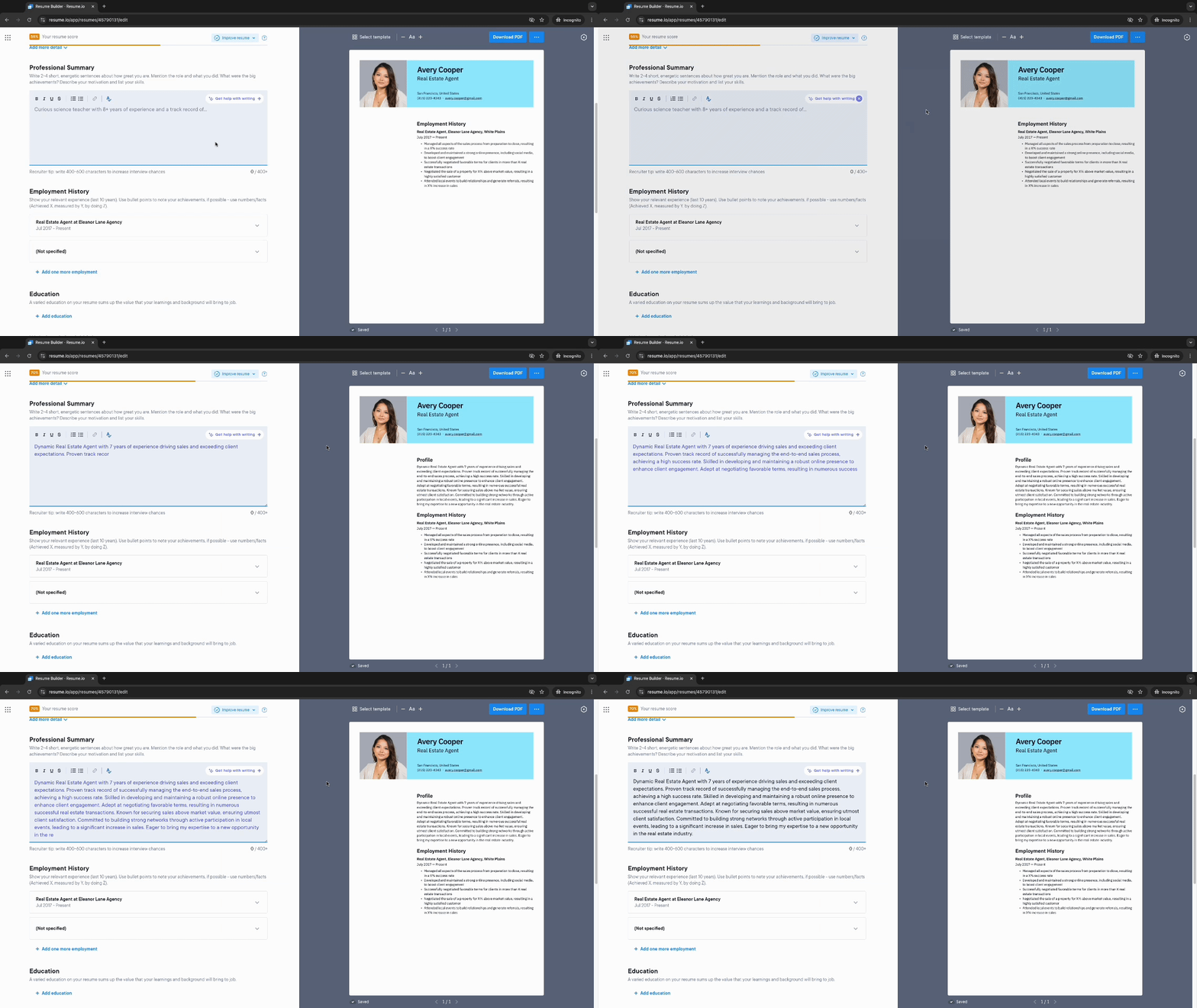
While AI can guide you in the right direction, it’s not a good idea to let it write your CV from start to finish. Recruiters in the UK are becoming increasingly familiar with AI-generated content and can easily spot generic phrases that commonly appear in applications.
Instead, think of AI as a writing assistant, not the author. Use it to spark ideas or overcome writer’s block, but always take the time to personalise your CV so that it reflects your individual tone, experience, and professional style.
Tools like our advanced CV builder can be a great help, whether you’re looking to structure your CV, find the right language for your experience, or identify keywords that match the job description.


